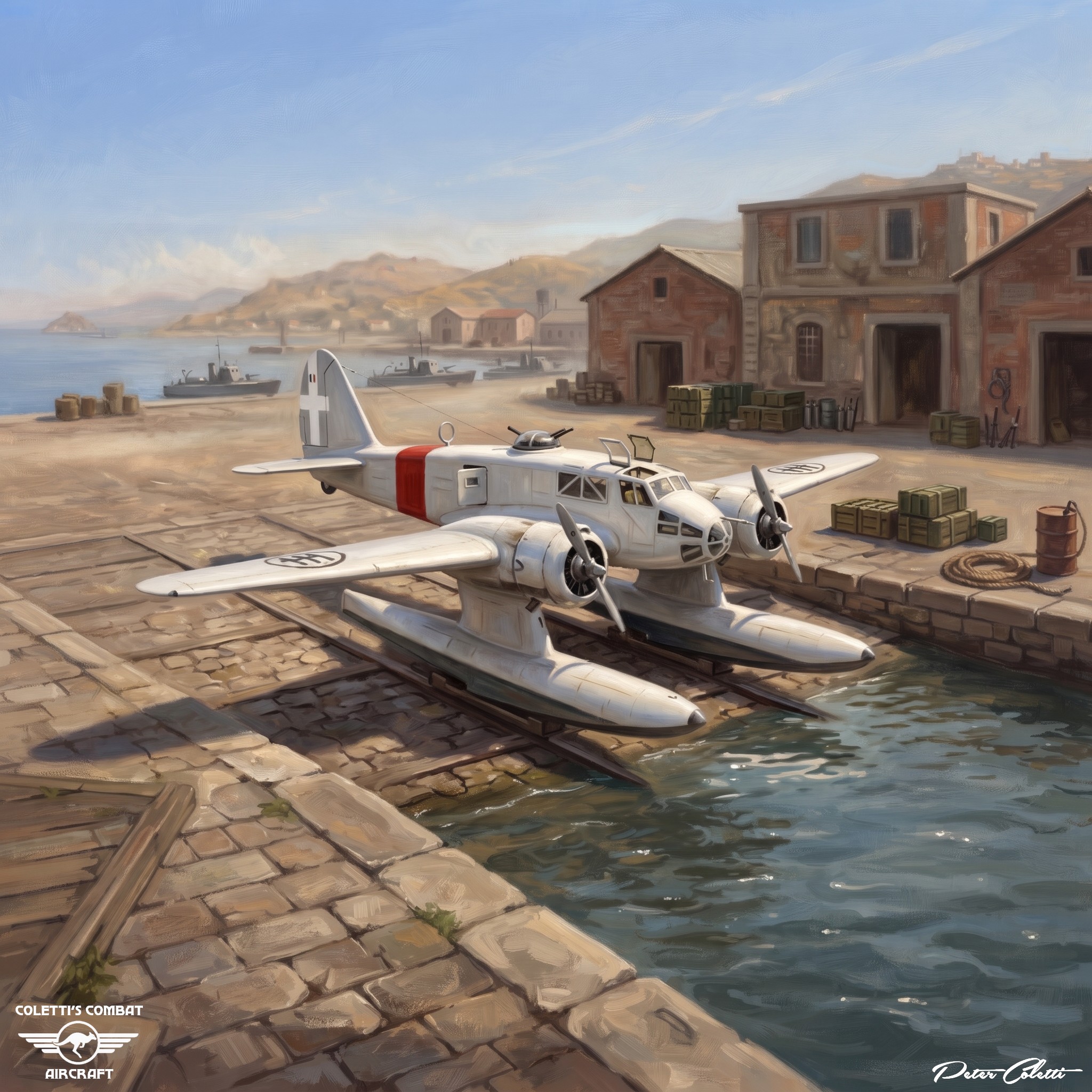
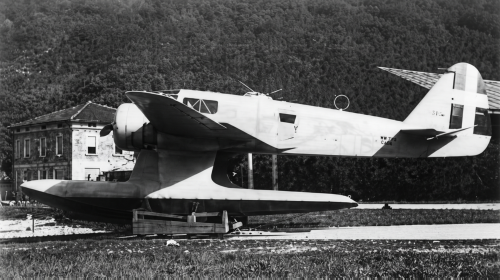
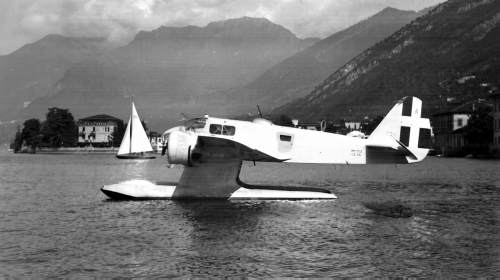
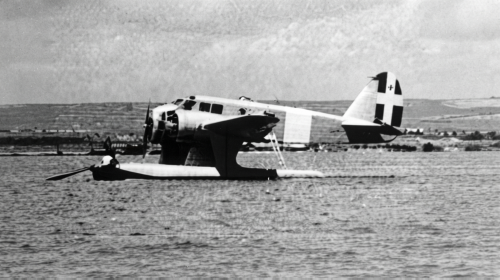
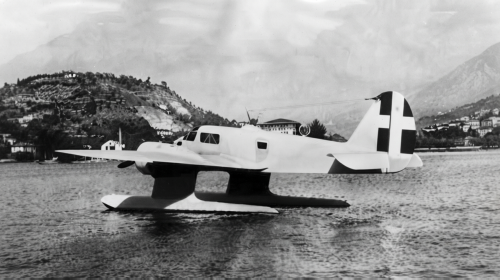
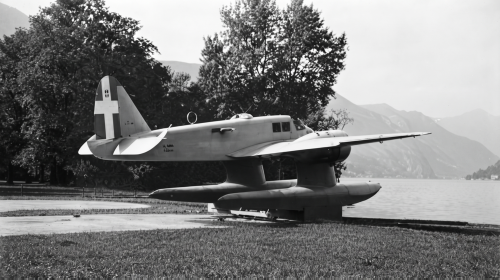
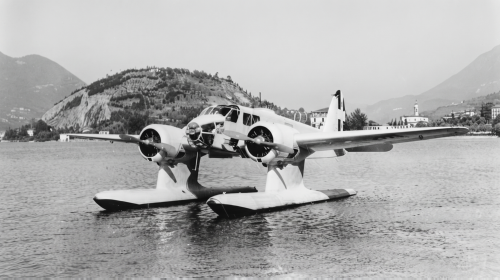
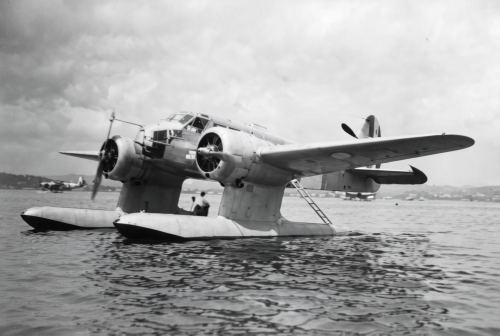
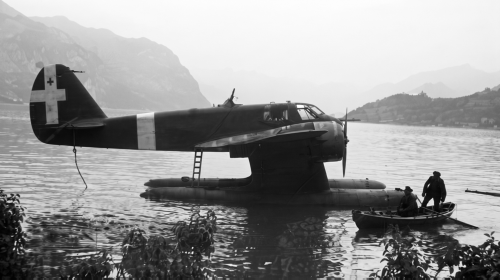
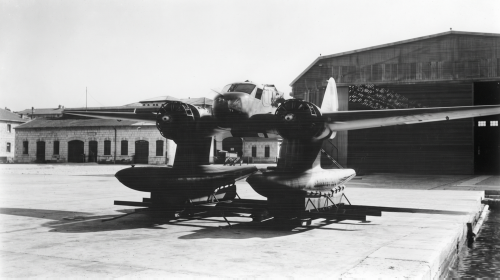
The Caproni Ca.316 was a twin‑engine reconnaissance floatplane developed in Italy during the Second World War, intended specifically for catapult launch from the capital ships of the Regia Marina.
It represented one of the final evolutions of the extensive Caproni Bergamaschi family of light twin-engine aircraft derived from the Ca.306 Borea airliner prototype of 1935.
Origins and Development Lineage
The Ca.316’s lineage began with the Ca.306 Borea, a six‑passenger low‑wing transport that debuted at the 1935 Milan Exhibition.
This civil prototype became the structural and aerodynamic basis for a long series of military aircraft, including the Ca.309 Ghibli and Ca.310 Libeccio, which introduced reconnaissance, colonial policing, and light bombing capabilities.
The Ca.310 Idro (floatplane version) served as the direct predecessor of the Ca.316.
By the late 1930s, the Italian Navy sought a modern replacement for the IMAM Ro.43, a biplane reconnaissance seaplane used aboard Littorio‑class battleships.
Caproni responded by adapting the Ca.310 Idro into a more robust, catapult‑capable floatplane with improved visibility and range.
The resulting Ca.316 first flew on 14 August 1940, piloted by Mario de Bernardi at Lake Iseo, before undergoing further trials at the Guidonia Research Centre.
Airframe and Structural Design
The Ca.316 was a low‑wing monoplane of mixed construction:
Fuselage: steel‑tube structure covered with alloy and fabric
Wings: primarily wooden
Floats: all‑metal, mounted beneath the engine nacelles on streamlined pylons
Crew: three, housed in a heavily glazed nose that provided excellent downward and forward visibility for maritime observation
The design retained the general aerodynamic layout of the Ca.310 families but incorporated major modifications:
A revised nose with extensive ventral glazing
Large pontoons attached directly under the engines rather than under the fuselage, improving balance but introducing structural stress issues
Reinforced pylons intended to withstand catapult launch forces, though these proved insufficient in practice
These structural weaknesses—particularly in the float pylons—ultimately prevented the aircraft from becoming a reliable shipboard reconnaissance platform.
Powerplant and Performance
The Ca.316 was powered by two Piaggio P.VII C.16 radial engines, each producing 460 hp (460 kW).
Performance figures varied slightly across sources, but the aircraft demonstrated:
Maximum speed: 328–331 km/h
Range: 1,450–1,600 km
Service ceiling: ~5,850 m
Gross weight: ~4,650–4,804 kg
These numbers placed the Ca.316 among the faster floatplanes of its class, with a range adequate for extended maritime patrols.
However, its structural issues overshadowed its otherwise respectable performance.
Armament and Mission Profile
The Ca.316 was designed for maritime reconnaissance, spotting, and light attack roles.
Armament included:
1 × 7.7 mm Scotti‑I.F. machine gun in the nose
1 × 7.7 mm dorsal Scotti‑I.F. machine gun
In some configurations:
1 × 12.7 mm Breda‑SAFAT in the wing
Up to 400 kg of bombs or a light torpedo
This made the aircraft capable not only of observation but also of limited offensive action against small naval targets.
Testing, Production, and Operational Fate
Prototype and Evaluation
The prototype flew in August 1940 and entered evaluation with the Regia Marina in 1941.
Early tests revealed structural weaknesses in the floats and pylons, especially under catapult launch stresses.
A fatal crash on 15 May 1941 further undermined confidence in the design.
Production
Only 14 aircraft were built between 1940 and 1942.
Some sources state that none entered full operational service, while others note limited evaluation deployment.
The Italian Air Force assigned surviving aircraft to the 3a Squadriglia of the Scuola Osservazione Marittima in 1942 for training and observation duties.
Export Plans
A small order of six aircraft for the Yugoslav Navy was placed but never fulfilled due to wartime disruptions; the aircraft were redirected to Italian units.
End of Service At the 1943 armistice, remaining Ca.316s were sabotaged to prevent their capture by German forces.
None survived the war.
WWII Context and Strategic Role
Italy’s naval aviation during WWII faced chronic shortages of modern reconnaissance aircraft.
The Ro.43, though widely used, was obsolete by 1940.
The Ca.316 was intended to modernise battleship reconnaissance capability, especially for the Littorio‑class.
Competing demands for land-based aircraft (Ca.313, Ca.314)
Limited industrial capacity
A fatal early crash
The shifting strategic situation after 1941, including fuel shortages and reduced Italian naval activity
As a result, the Ca.316 never fulfilled its intended role and remained a footnote in Italian naval aviation history—an ambitious but flawed attempt at modernising shipborne reconnaissance.
Technical Specifications (Consolidated)
Crew: 3
Length: 12.89–13.26 m
Wingspan: 15.9 m
Height: 4.4–5.44 m
Wing area: ~38 m²
Empty weight: ~3,300–3,360 kg
Gross weight: ~4,650–4,804 kg
Engines: 2 × Piaggio P.VII C.16 radial, 460 hp each
Max speed: 328–331 km/h
Range: 1,450–1,600 km
Service ceiling: ~5,850 m
Armament: 1–2 machine guns; up to 400 kg bombs or light torpedo