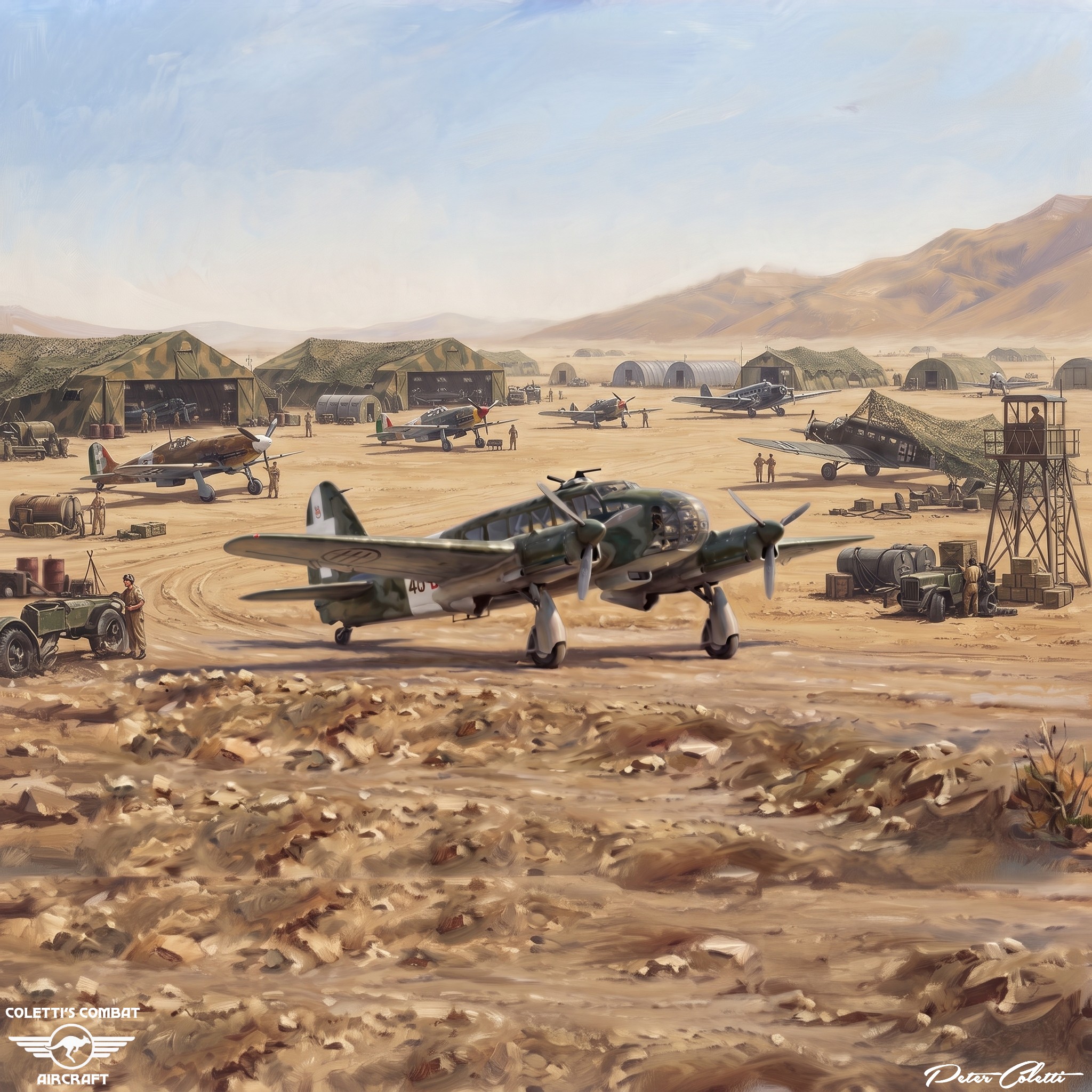
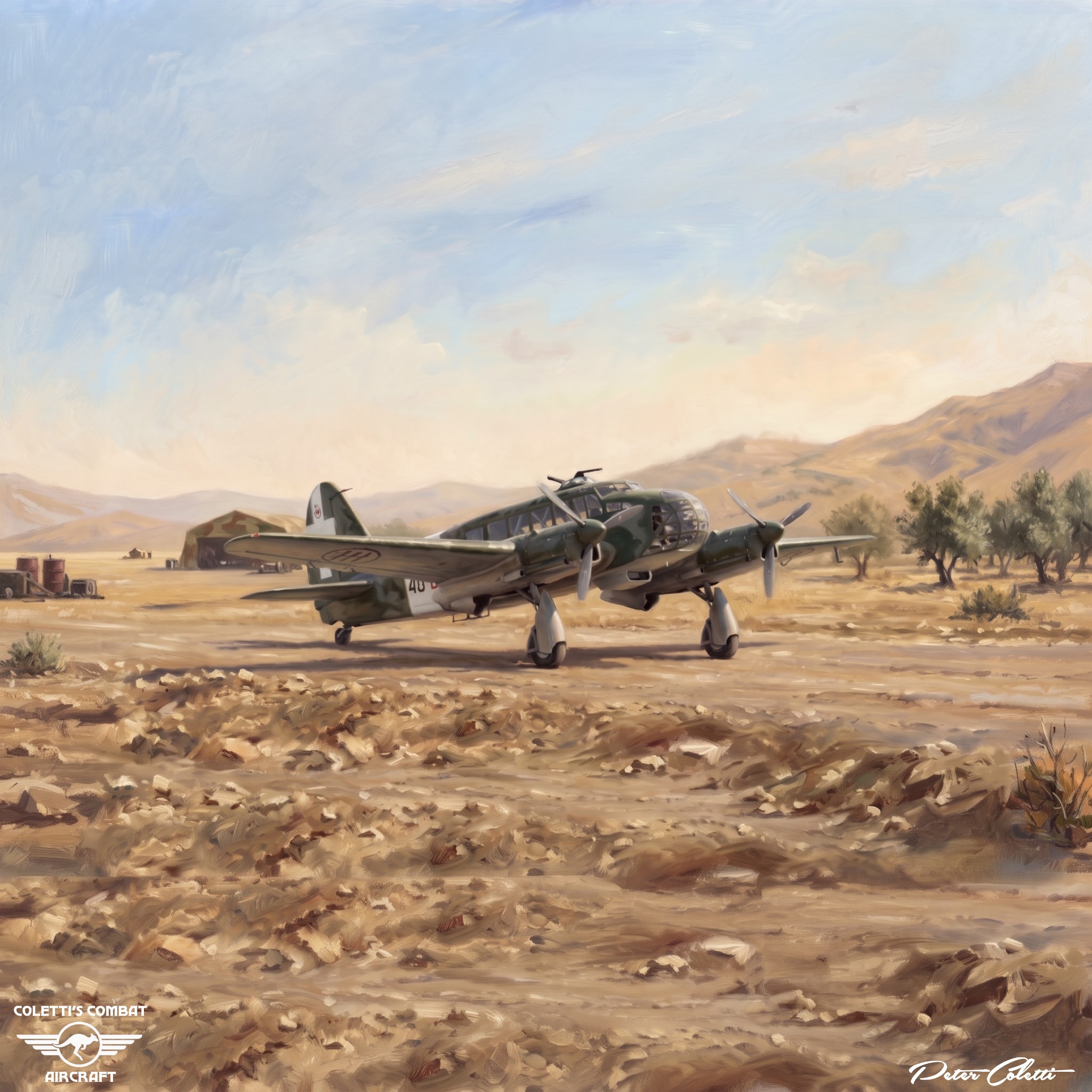
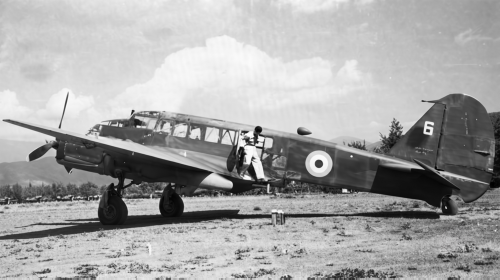
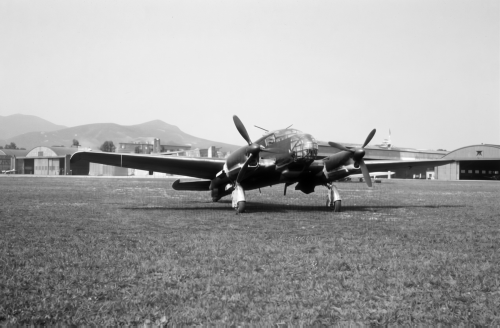
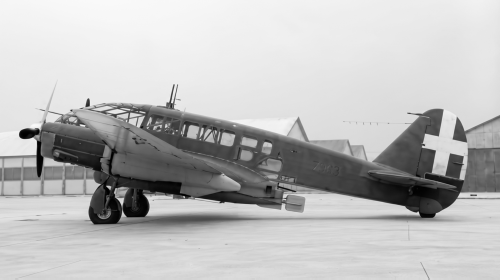
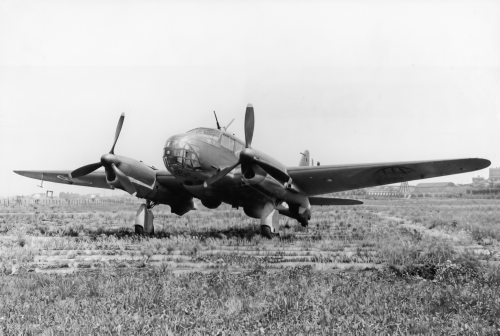
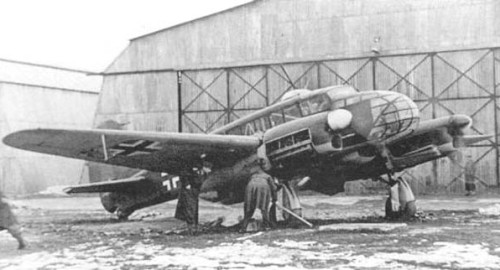
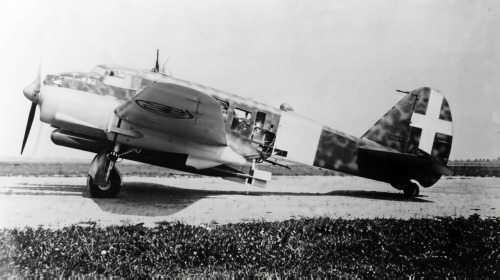
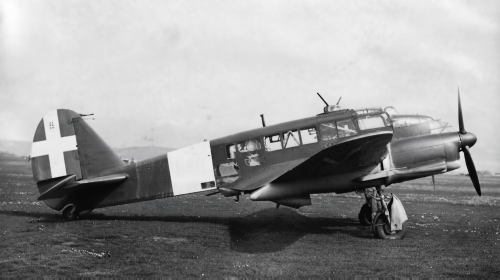
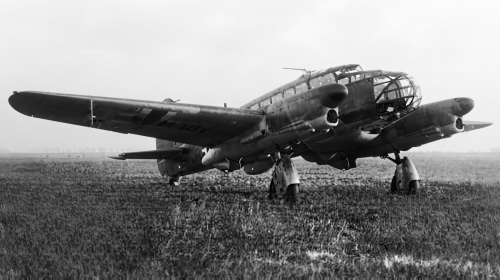
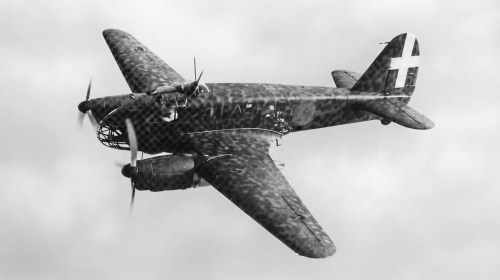
The Caproni Ca.314 emerged from a long lineage of light twin‑engine aircraft developed by Caproni Bergamaschi beginning in the mid‑1930s.
The family started in the Ca.306 Borea, a civilian low-wing transport that introduced the basic airframe architecture later adapted for military roles.
This design evolved into the Ca.309 Ghibli, used in Libya as a reconnaissance bomber and light transport and then in the Ca.310 Libeccio, which introduced retractable landing gear and Piaggio P.VII radial engines.
The Ca.310 line continued to evolve through the Ca.310bis and Ca.311, which added improved glazing and defensive armament.
A modified Ca.310 with Isotta‑Fraschini engines became the Ca.313 prototype, first flown in December 1939.
France, Britain, and Sweden placed orders for the Ca.313, but Italy’s entry into WWII prevented most deliveries.
The Ca.314 was developed as the most extensively built member of this family, intended to provide a versatile multi-role combat aircraft for the Regia Aeronautica.
The Ca.314 prototype flew in 1941, derived from the Ca.313 but incorporating more powerful Isotta‑Fraschini Delta RC.35 inverted V‑12 engines (approx. 730 hp each).
Italian authorities ordered it in late 1941 for roles including reconnaissance, assault, night fighting, and torpedo bombing.
A total of 407 units were produced, with 148 in service by September 1943.
Design and Technical Characteristics
The Ca.314 was a twin‑engine, low‑wing monoplane with a conventional fuselage optimised for multi‑role flexibility.
Its structure closely followed the Ca.313 and Ca.310 lineage, retaining the general aerodynamic layout but incorporating refinements for improved performance and mission adaptability.
Airframe
Low‑wing monoplane with stressed‑skin construction.
A three‑man crew housed in a stepped cockpit (on later modified versions).
Internal bomb bay and external racks depending on variant.
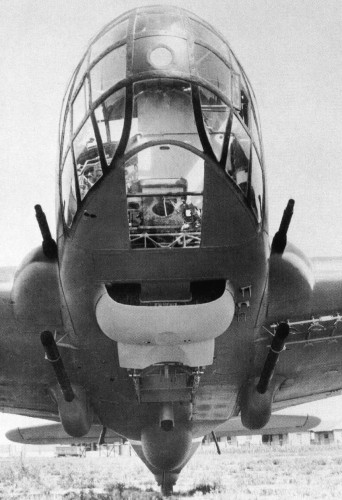
Defensive armament typically included Breda‑SAFAT machine guns in wing roots and a dorsal turret.
Powerplant
The Ca.314A variant used two Isotta‑Fraschini Delta R.C.25 I‑DS inverted air‑cooled V‑12 engines rated at 540 kW (724 hp) each.
Some ground‑attack versions (Ca.314C) used Delta RC.35 engines rated at 780 hp, trading fuel capacity for an increased bomb load.
Dimensions (Ca.314A)
Length:11.8 m
Wingspan:16.65 m
Height:3.7 m
Wing area:39.2 m²
Empty weight:4,560 kg
Gross weight:6,620 kg
Maximum speed:395 km/h
Range:1,690 km
Service ceiling:6,400 m
Armament:
2 × 12.7 mm forward‑firing machine guns
1 × 7.7 mm dorsal machine gun
Up to 500 kg of bombs (or torpedo on torpedo‑bomber variants)
Pilots criticised the aircraft’s handling when fully loaded, especially in ground‑attack configurations, where the heavier armament and reduced fuel capacity affected stability and climb performance.
Variants
The Ca.314 was designed as a modular platform, though full interchangeability proved difficult.
Major variants included:
Ca.314A — Light bomber / reconnaissance aircraft.
Ca.314SC (“Scorta”)— Convoy escort and maritime patrol; deliveries were sparse due to factory difficulties.
Ca.314B (also Ca.314‑RA)— Torpedo bomber capable of carrying a 900‑kg torpedo, a 500‑kg bomb, or two 250‑kg bombs; 80 built.
Ca.314C— Ground‑attack aircraft with two 12.7 mm under‑wing guns and an increased bomb load; 254 built.
Ca.314C — Close air support and anti-tank operations.
Operational History and WWII Context
The Ca.314 served primarily with the Regia Aeronautica and, in smaller numbers, the Hungarian Air Force.
Roles
Its missions included the following:
Ground attack (North Africa, Mediterranean)
Maritime patrol and convoy escort
Torpedo bombing
Light bombing and reconnaissance
Limited night‑fighting duties (planned but not widely implemented)
The aircraft saw action on all major Italian fronts except the Eastern Front.
Units such as the 30th Assault Group used it for ground support in North Africa, while maritime patrol squadrons like the 13th Stormo operated it in the Mediterranean.
Post‑Armistice Service
After Italy’s 1943 armistice:
About 10 aircraft served with Allied‑aligned Italian forces.
Others were taken over by the Italian Social Republic and even the Luftwaffe.
Few survived the war; some continued briefly in post‑war Italian service.
Synthesis:Significance of the Ca.314
The Caproni Ca.314 represents Italy’s attempt to field a flexible, multi-role combat aircraft during WWII despite industrial limitations, engine supply issues, and shifting operational demands.
Although produced in substantial numbers and used across multiple theatres, it never achieved the performance or reliability of contemporary Allied or German equivalents.
Its importance lies in its role as the most extensively built derivative of the Ca.310 families and as a workhorse platform for Italy’s reconnaissance, maritime, and ground-attack missions during the war.