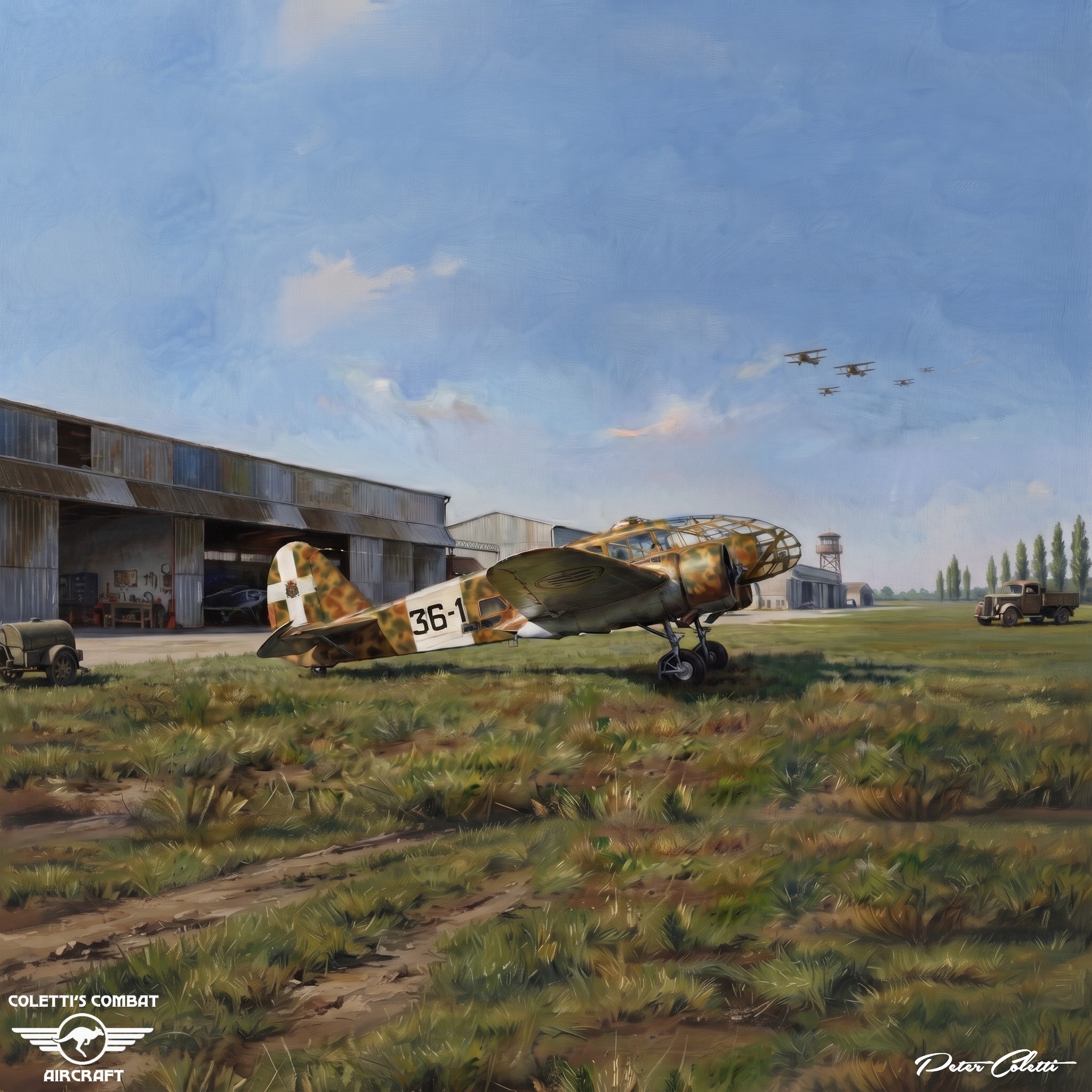
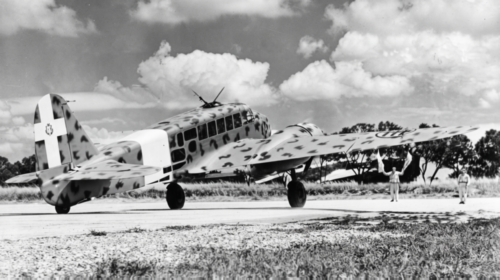
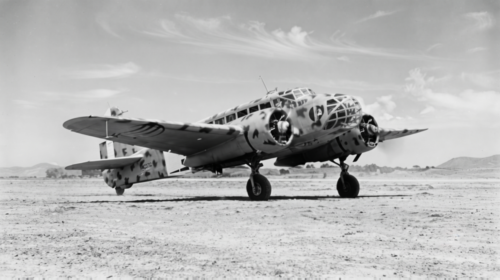
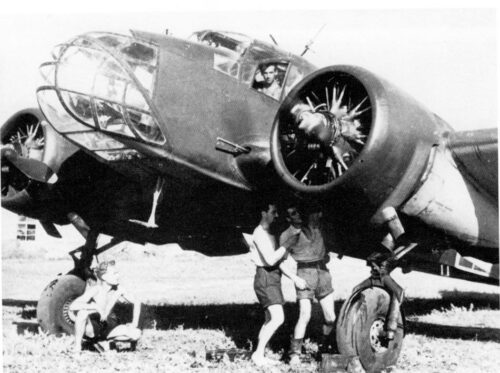
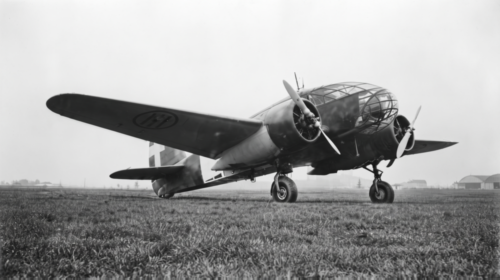
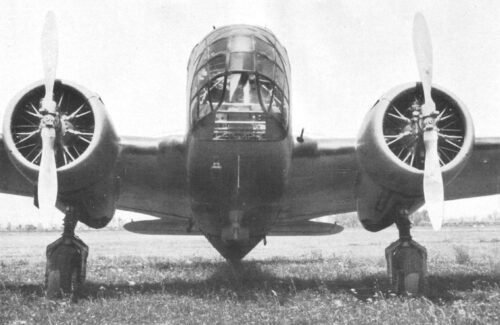
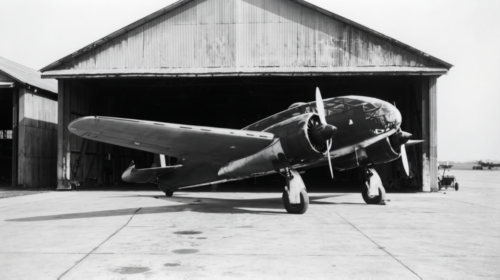
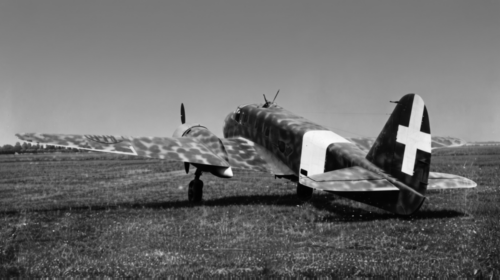
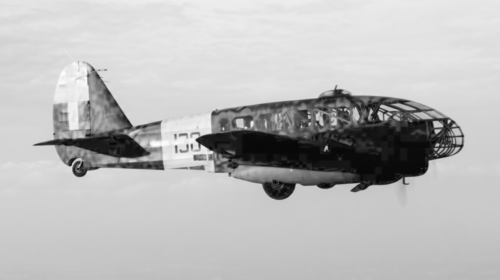
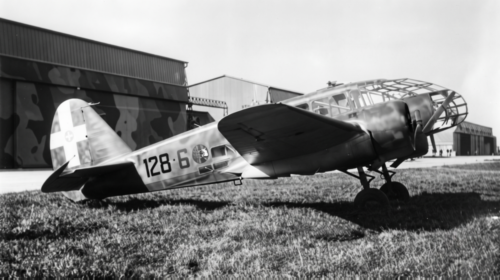
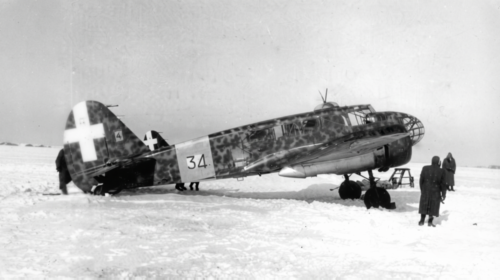
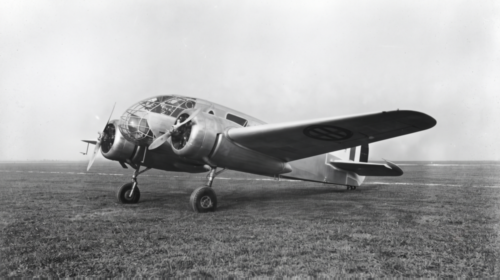
The Caproni Ca.311 was a twin‑engine light reconnaissance‑bomber developed in Italy in the late 1930s and produced before and during World War II.
It first flew on 1 April 1939, entering service with the Regia Aeronautica in 1940 and ultimately reaching a production total of 335 aircraft.
Development Origins
The Ca.311 emerged from a long lineage of Caproni twin‑engine aircraft that began with the Ca.306 airliner prototype of 1935, followed by the Ca.309 Ghibli and the Ca.310 Libeccio.
The Ca.310, although produced in significant numbers and exported widely, suffered from reliability and performance shortcomings that led several foreign customers—such as Norway and Hungary—to cancel or return orders.
Caproni responded by refining the Ca.310 design for domestic military use.
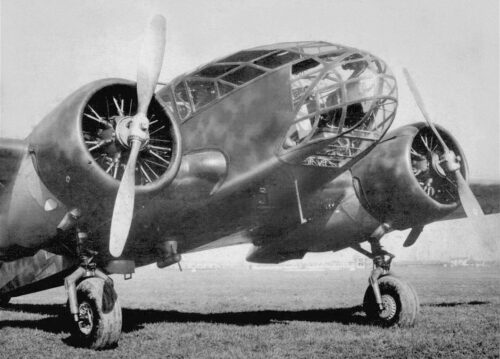
The Ca.311 incorporated lessons from the Ca.310bis, which had tested a heavily glazed nose for improved visibility.
The new aircraft retained the Ca.310’s retractable main undercarriage but added extensive fuselage glazing and repositioned the dorsal turret immediately aft of the cockpit.
By 1940, the Ca.311 began replacing the older IMAM Ro.37 reconnaissance aircraft in Italian service, completing this transition by 1941.
Airframe and Design Characteristics
The Ca.311 was a low‑wing cantilever monoplane of conventional configuration.
Its structure combined fabric‑covered fuselage sections with wooden construction elements, typical of Italian aircraft manufacturing of the era.
Key design features included the following:
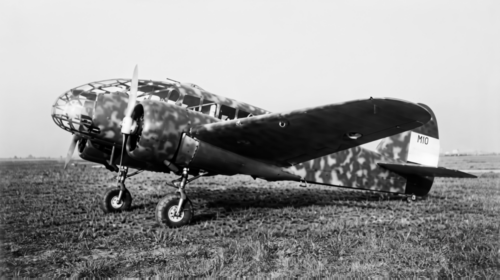
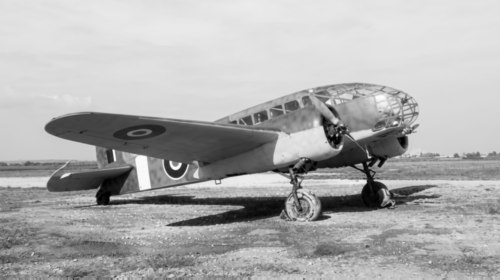
Heavily glazed nose for reconnaissance visibility (derived from Ca.310bis).
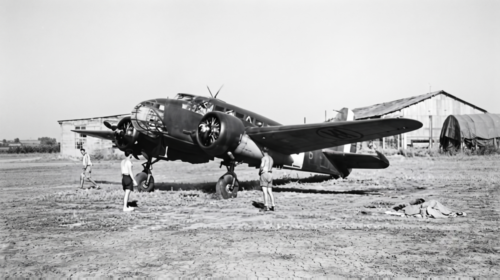
Retractable main landing gear, improving aerodynamic cleanliness.
The relocated dorsal turret is placed directly behind the cockpit for improved defensive arcs.
The aircraft typically carried a crew of three, though some sources note accommodation for up to four.
Powerplant and Performance
The Ca.311 was powered by two Piaggio Stella P.VII C.35 seven-cylinder radial engines, each producing 350 kW (470 hp).
Its performance characteristics included the following:
Maximum speed: 307 km/h (191 mph)
Range: 1,600 km (1,000 mi)
Service ceiling: 7,400 m (24,300 ft)
Some accounts note slightly higher speeds (up to 365 km/h) at optimal altitude, likely reflecting test conditions or minor production variations.
Despite respectable range and altitude performance for a light reconnaissance aircraft, the Ca.311’s engines were considered underpowered compared to contemporary Allied designs, limiting its survivability in contested airspace.
Armament and Bomb Load
The Ca.311 carried a modest defensive and offensive armament:
One fixed forward‑firing 7.7 mm Breda‑SAFAT machine gun in the port wing.
One 7.7 mm Breda‑SAFAT in the dorsal turret.
One flexible 7.7 mm Breda‑SAFAT firing rearward from a ventral hatch.
Bomb load: up to 400 kg (880 lb) of small bombs or incendiaries.
This armament made the Ca.311 suitable for tactical reconnaissance, light attack, and close support but inadequate for heavy combat environments.
Operational Use and WWII Context
The Ca.311 entered service as Italy prepared for World War II.
Its early deployments occurred in North Africa and the Balkans beginning in late 1940.
In 1941, Italy committed aircraft—including Ca.311 units—to the Eastern Front, where harsh winter conditions exposed weaknesses in cold-weather reliability and engine performance.
The aircraft’s modest capabilities relegated it increasingly to secondary roles such as liaison, training, and short‑range reconnaissance as the war progressed.
After Italy’s armistice in 1943, surviving Ca.311s were used briefly by allied-aligned Italian forces.
Production and Export Notes
Production peaked around 20 aircraft per month in 1941 as part of Italy’s wartime industrial expansion.
A notable episode involved a planned British order for 100 unarmed Ca.311s in early 1940, intended for training and communication roles.
Mussolini personally blocked the sale, redirecting all production to Italian military needs.
Operators
The Ca.311 served with several air forces:
Regia Aeronautica (Italy).
Independent State of Croatia Air Force.
Kingdom of Yugoslavia Royal Air Force (pre‑war).
Postwar Yugoslav Air Force (SFR Yugoslavia).
Variants
Two principal variants existed:
Ca.311 – Standard reconnaissance‑bomber model.
Ca.311M (“Modificato”) – Featured reduced glazing and a stepped cockpit for improved pilot visibility.
Ca.311M prototype
Summary
The Caproni Ca.311 was a transitional aircraft—an improved derivative of earlier Caproni light bombers that filled Italy’s need for a reconnaissance platform at the start of World War II.
Its extensive glazing, retractable landing gear, and conventional monoplane layout made it a capable observer aircraft, but its limited power and light armament restricted its effectiveness in high‑intensity combat.
Despite these limitations, it served widely across Italian theatres—from North Africa to the Balkans and the Eastern Front—and remained in use until Italy’s 1943 armistice, with some airframes continuing service postwar.