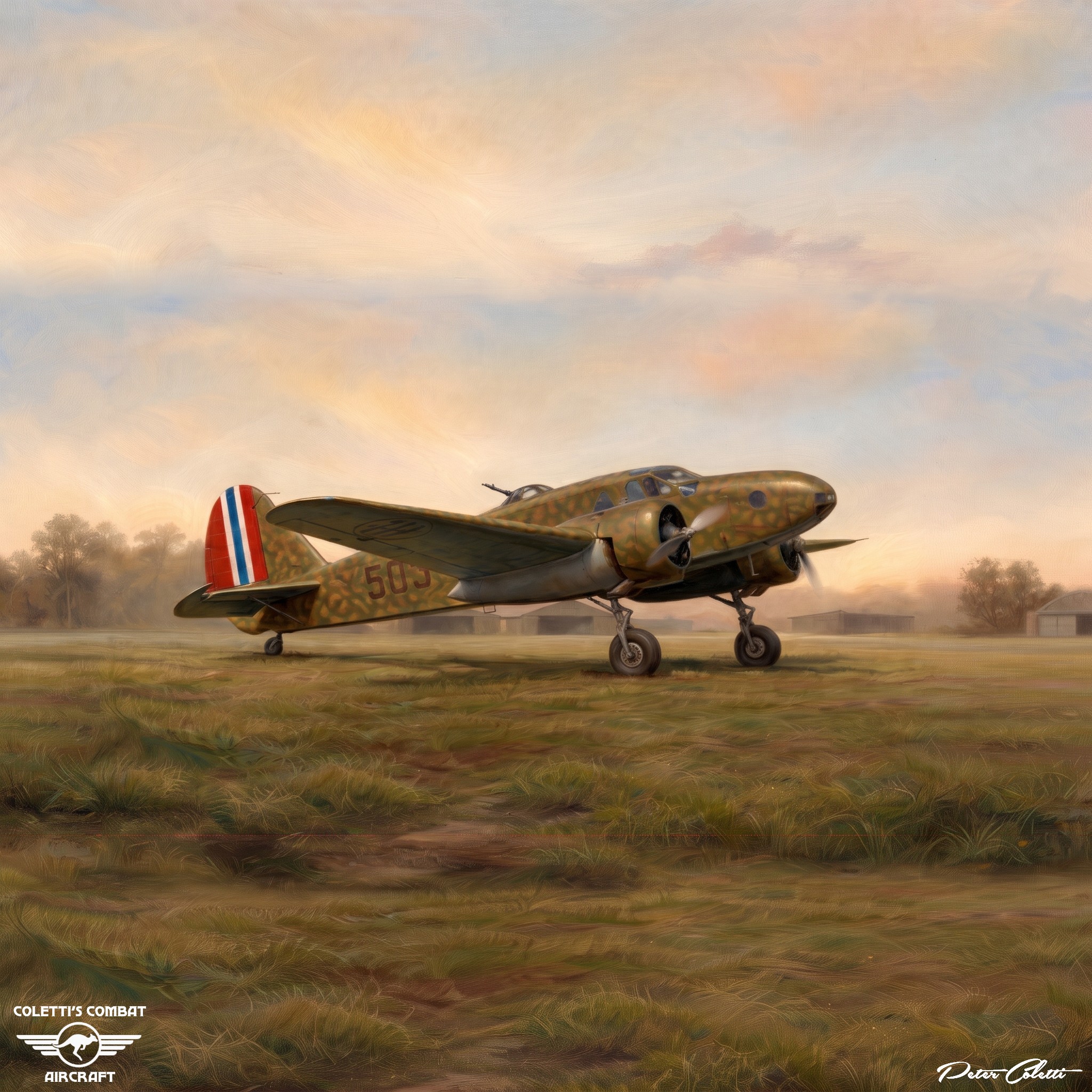
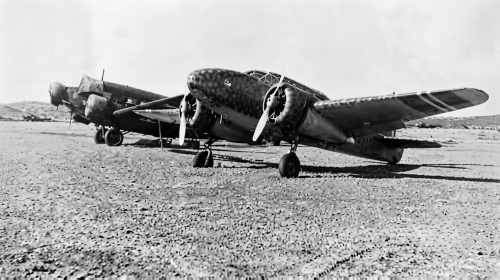
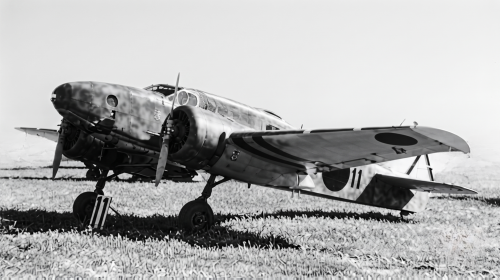
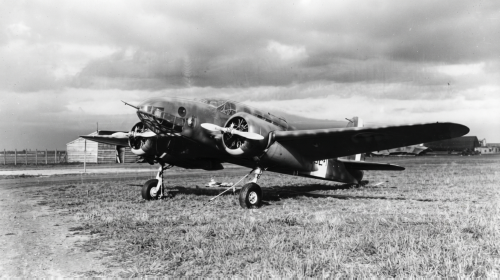
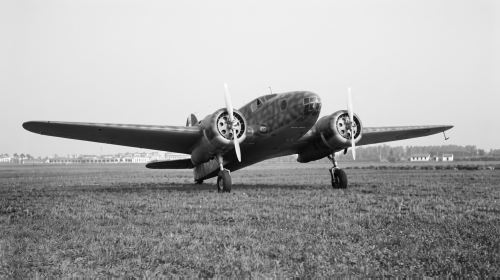
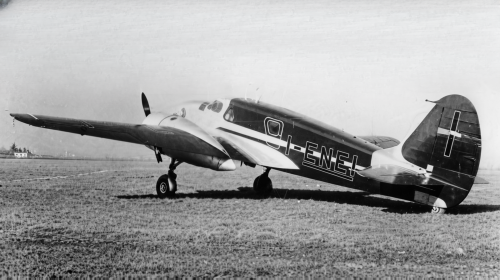
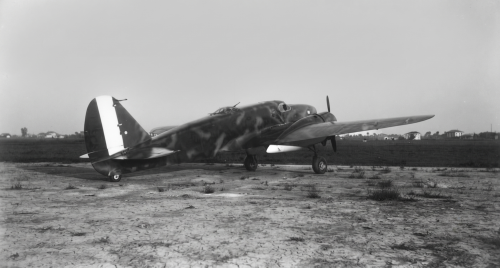
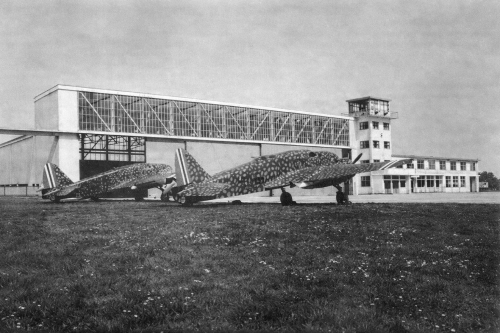
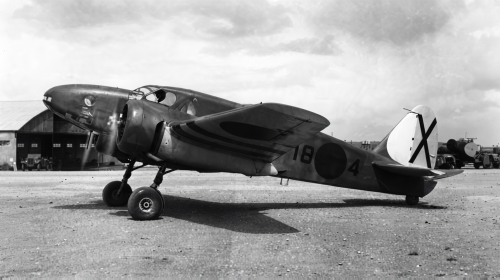
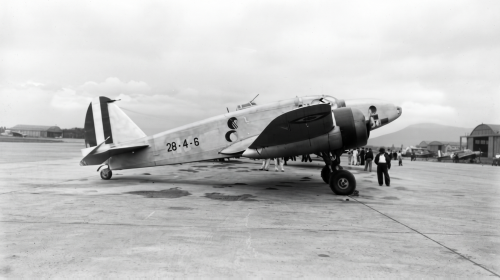
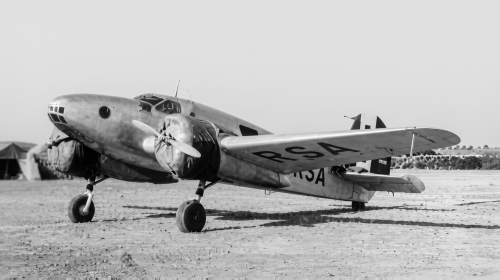
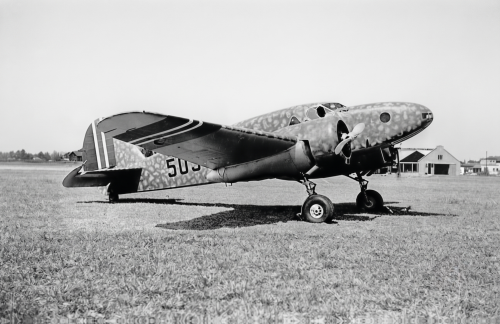
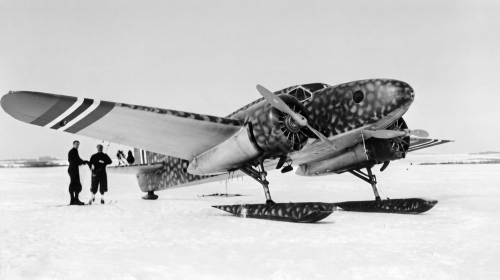
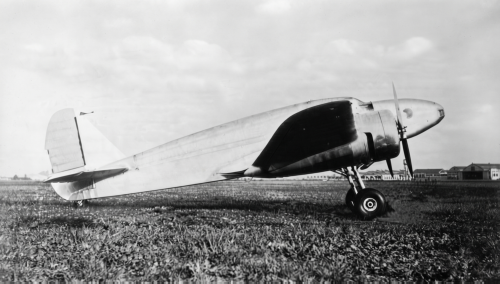
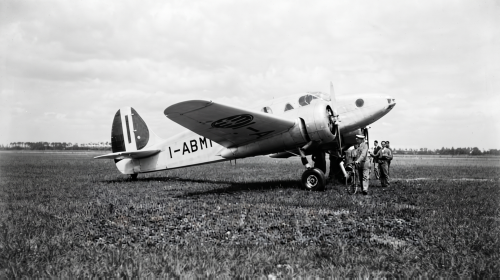
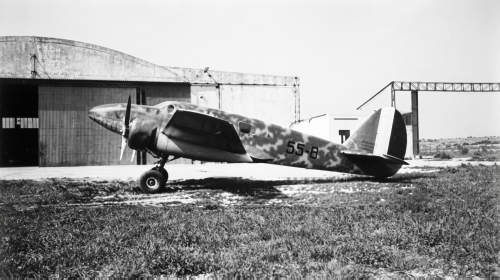
The Caproni Ca.310 Libeccio was an Italian twin‑engine reconnaissance and light bomber aircraft developed in the late 1930s by Caproni Bergamaschi, entering service in 1938 and seeing limited combat use during the Spanish Civil War and the early phases of World War II.
Although intended as a modernised successor to the Ca.309, the Ca.310 ultimately suffered from underpowered engines and disappointing performance, restricting its operational value and curtailing several export ambitions.
A total of 312 aircraft were produced.
Development History
Origins and Strategic Context
During the mid‑1930s, Italy sought to modernise the Regia Aeronautica with versatile twin‑engine aircraft capable of reconnaissance, light bombing, and training roles.
Caproni—already a major Italian aviation manufacturer—pursued this modernisation through a family of multi‑engine designs.
The Ca.310 emerged as a refined evolution of the Ca.309, incorporating retractable landing gear and aerodynamic improvements.
Its development was led by engineer Cesare Pallavicino.
First Flight and Early Testing
The prototype Ca.310 made its first flight on 20 February 1937, demonstrating incremental improvements over its predecessor but failing to achieve the performance levels Caproni had promised.
Despite this, the Regia Aeronautica ordered a small batch for evaluation, and Caproni aggressively marketed the aircraft abroad.
Combat Trials in Spain
To validate its combat potential, 16 Ca.310s were dispatched to the Aviazione Legionaria in July 1938, supporting nationalist forces in the Spanish Civil War.
These trials revealed the aircraft’s limitations—particularly its lack of speed and vulnerability—yet provided valuable feedback for later Caproni designs.
Design and Technical Characteristics
Airframe and Construction
The Ca.310 was a low-wing monoplane with mixed construction typical of Italian aircraft of the era:
Fuselage: welded steel‑tube structure covered by light alloy panels and fabric.
Empennage: wooden tail unit with plywood skin on fixed surfaces and fabric‑covered control surfaces.
Crew: typically, three—pilot, observer/bomb‑aimer, and gunner.
Powerplant
The aircraft was powered by two Piaggio P.VII C.35 radial engines, each producing 470 hp.
These engines were reliable but ultimately underpowered, contributing to the aircraft’s modest speed and climb performance.
Armament
Standard armament included:
Three 7.7 mm Breda‑SAFAT machine guns
Two fixed forward‑firing guns in the wing roots
One manually operated gun in a dorsal turret
Bomb load: up to 450 kg of bombs
Performance
Key performance figures:
Maximum speed: ~365 km/h
Cruise speed: 285–312 km/h
Range: 1,690 km
Service ceiling: 7,000 m
These numbers placed the Ca.310 behind contemporary foreign designs and even some domestic competitors, limiting its appeal.
Operational History
Regia Aeronautica Service
Although initially hopeful, the Italian Air Force found the Ca.310 are unsuitable for high‑risk combat roles.
It was relegated to reconnaissance and light bombing missions in low‑opposition environments, including early WWII operations in Libya.
Some units temporarily replaced the Breda Ba.65, which had proven unsatisfactory.
Export Attempts and Failures
Caproni pursued multiple export deals, many of which faltered due to performance issues:
Norway: Received four aircraft in 1939 as part of a dried cod barter deal.
After testing, Norway refused further deliveries, cancelling the remaining order of 24 aircraft.
A planned replacement order for Ca.312s was never fulfilled due to the German invasion.
Hungary: Returned 33 Ca.310s to Italy after disappointment with their capabilities; these were refurbished and reassigned to Italian assault units.
Peru: Operated 16 Ca.310s, which saw combat in the 1941 Ecuadorian–Peruvian War, conducting bombing missions alongside NA.50 fighters.
Yugoslavia: Received 12 Ca.310bis aircraft with a redesigned glazed nose.
WWII Use
By the outbreak of WWII, the Ca.310 was already considered obsolete.
Its wartime use was limited to:
Reconnaissance flights in low‑threat theatres
Light bombing where enemy air defences were minimal
Training and secondary roles as more capable aircraft became available
The aircraft’s shortcomings prevented it from serving in frontline roles once Italy faced modern Allied air power.
Retirement
The Ca.310 remained in diminishing service until 1948, after which it was fully retired.
One surviving example was restored in Norway and completed in 2025.
Variants
Ca.310 (Base Model)
The standard reconnaissance‑bomber configuration with retractable landing gear and Piaggio P.VII engines.
Ca.310bis
Featured an unstepped, fully glazed nose for improved visibility.
Served as the basis for the later Ca.311 development.
Ca.310 Idro
A floatplane version intended for maritime reconnaissance.
Production was limited.
Assessment and Legacy
The Caproni Ca.310 occupies a transitional place in Italian aviation history.
Intended as a modern reconnaissance bomber, it ultimately demonstrated the limitations of Italy’s pre‑war aircraft industry, which struggled to produce competitive twin‑engine designs before WWII.
Although its operational impact was modest, the Ca.310 contributed valuable lessons that shaped later Caproni aircraft and remain historically significant as part of Italy’s interwar modernisation efforts.
Its surviving example—restored in Norway—stands as a rare artefact of pre‑WWII Italian aviation and the complex international relationships surrounding aircraft procurement in the late 1930s.