Italy’s expanding colonial ambitions in the mid‑1930s—especially in Libya—created a need for a modern aircraft capable of reconnaissance, patrol, light bombing, and general utility work across vast desert regions.
The existing IMAM Ro.1 biplane was outdated, slow, and poorly suited to long‑range Saharan operations.
In response, Caproni’s chief designer Cesare Pallavicino developed a new aircraft based on the civil Ca.308 Borea transport.
The resulting Ca.309 was conceived as a rugged, multi-role colonial aircraft optimised for harsh conditions, long patrols, and simple maintenance.
The prototype flew in August 1936, and serial production began shortly afterwards at Caproni’s Ponte San Pietro factory.
By 1942, roughly 200–243 aircraft had been produced across multiple series, including licensed production in Bulgaria.
Design Characteristics
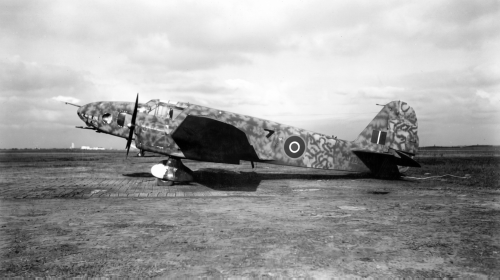
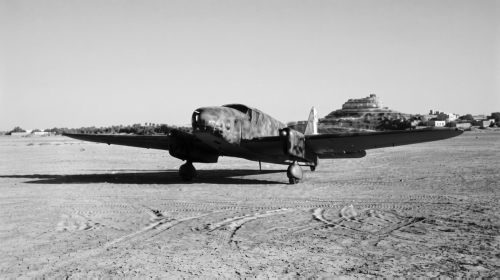
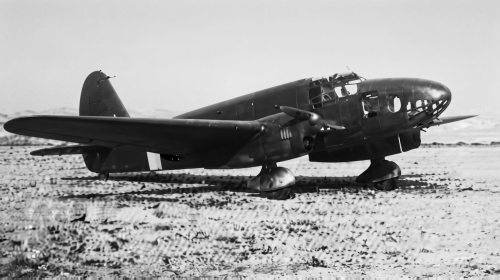
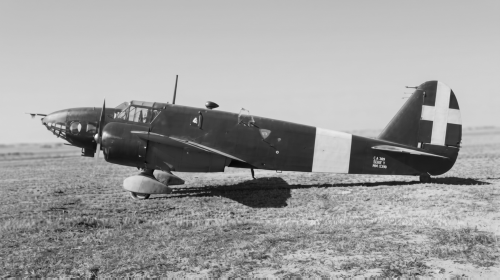
The Ca.309 was a low-wing cantilever monoplane with a fixed tailwheel undercarriage, designed for simplicity and reliability.
Its construction was mixed: a welded steel‑tube fuselage with fabric covering and an all‑wood wing—materials chosen for ease of repair in remote colonial outposts.
Key design features included the following:
Twin engines mounted on the wings, providing redundancy for long desert patrols.
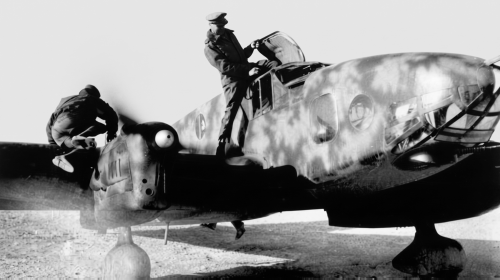
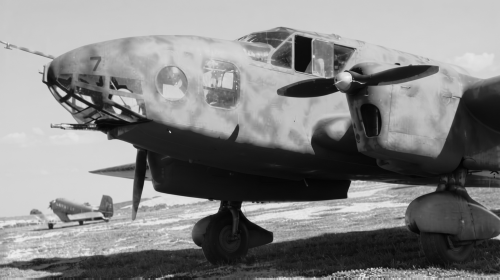
Glazed nose on reconnaissance/bomber versions for observation and camera work.
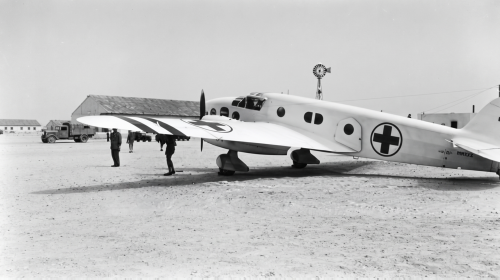
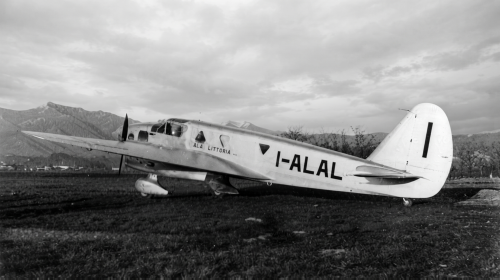
Unglazed nose on transport variants, with seating for up to six passengers.
Three‑man crew: pilot, observer/gunner, and radio operator. Fixed spatted undercarriage, reducing maintenance complexity.
Provision for dual controls on some aircraft.
The aircraft’s nickname, Ghibli, referred to a hot Libyan desert wind—symbolic of its intended environment.
Powerplant and Performance
Italian‑built Ca.309s used two Alfa Romeo 115‑I or 115‑II inverted air‑cooled inline engines rated at 390 hp each.
Bulgarian KB‑309s used Argus As 10C engines.
Performance Summary
Maximum speed: ~250 km/h
Cruise speed: ~209–210 km/h
Range: 670–1,544 km (figures vary by source and load)
Service ceiling: ~4,500 m
Climb: ~174 m/min
Crew: 3
These figures made the Ca.309 is adequate for colonial patrols but modest compared to contemporary European combat aircraft.
Armament and Equipment
Standard colonial reconnaissance bombers carried:
Three 7.7 mm Breda‑SAFAT machine guns (one fixed in the wing, one forward, one dorsal).
Up to 330–336 kg of bombs on under‑fuselage racks.
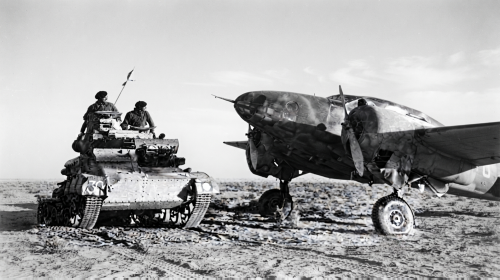
A notable late variant, Series VI, experimented with a 20 mm Breda cannon mounted in the nose for close-support missions against British armoured cars—an adaptation to evolving desert warfare.
Reconnaissance equipment included:
Cameras
Radio sets
Glazed observation nose
Operational History and WWII Context
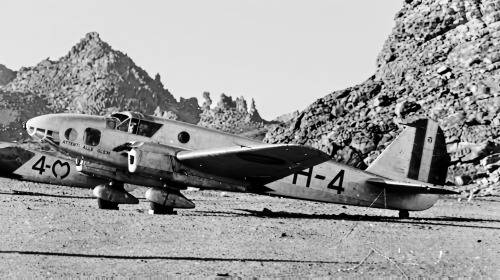
Pre‑War Colonial Service The Ca.309 entered service in Libya in 1937, operating from remote desert bases such as El Adem, Kufra, and Tripoli–Mellaha.
It performed:
Long‑range desert patrols
Reconnaissance over Saharan caravan routes
Light bombing and strafing
Convoy escort
Its simple construction and twin‑engine reliability made it well‑suited to colonial policing, though desert conditions caused mechanical wear and reduced long‑term reliability.
WWII Deployment
At the outbreak of WWII in 1940, seven squadrons of Ca.309s were active in North Africa.
They conducted:
Reconnaissance of British troop movements
Light ground‑attack missions
Anti‑vehicle patrols
Transport and liaison flights
Despite good early results, the aircraft’s limited speed, modest armament, and mechanical fragility under harsh conditions reduced its effectiveness as the Desert War intensified.
After Italy’s defeat in North Africa, surviving Ca.309s were withdrawn to Italy and used mainly as transports.
International Use
Bulgaria: 24 KB‑309 Papagal aircraft built under licence.
Paraguay: Two Ca.309s were used from 1939 to 1945, later transferred to the national airline LATN.
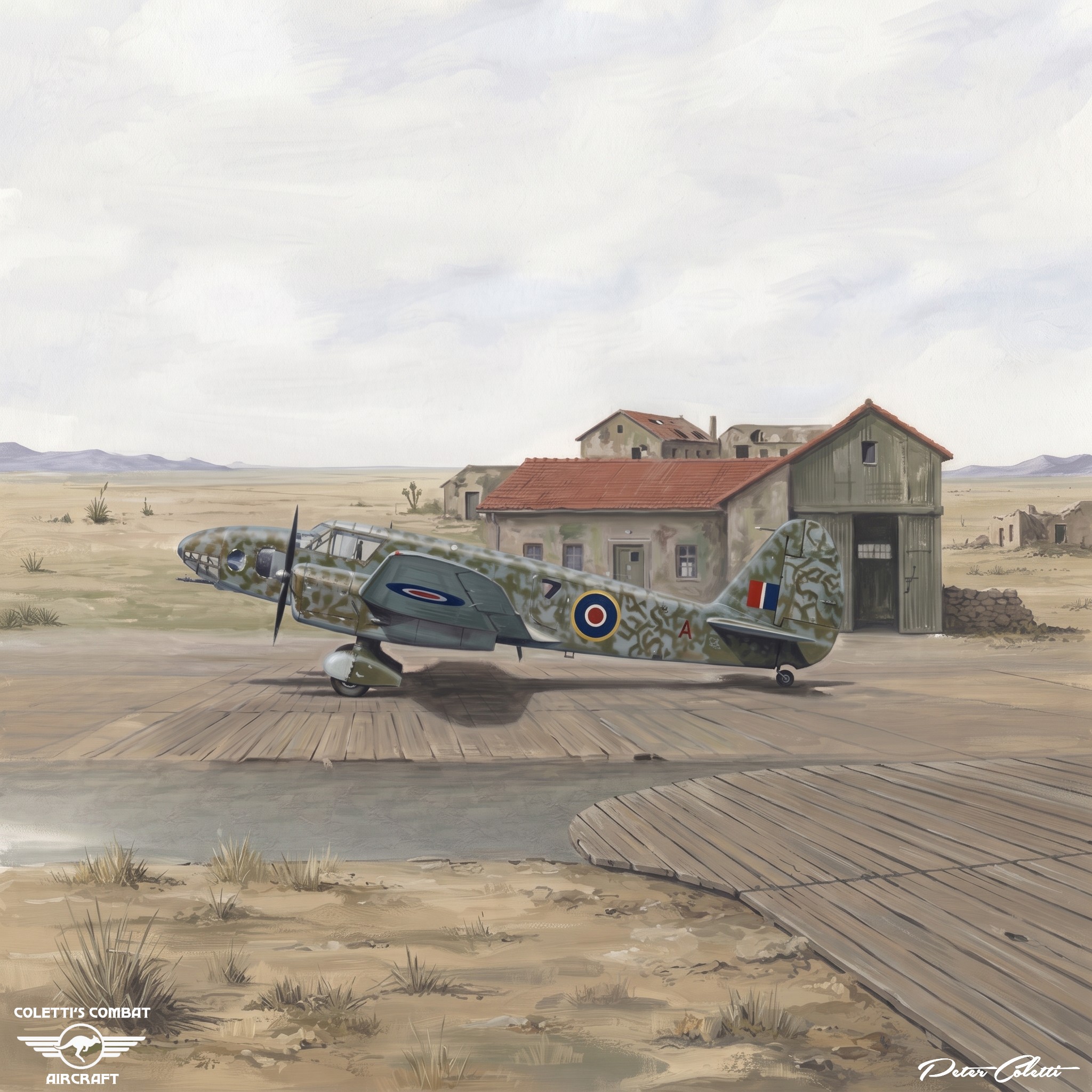
Captured Allied Use: No. 3 Squadron RAAF captured and operated a Ca.309 (“Gibby’s Ghibli”) in 1943 for transport duties.
Retirement
Most Ca.309s were lost by 1943; remaining aircraft served in Italy until retirement in 1948.
Variants and Derivatives
Although the Ca.309 itself had limited subvariants, it spawned an entire family of related aircraft: