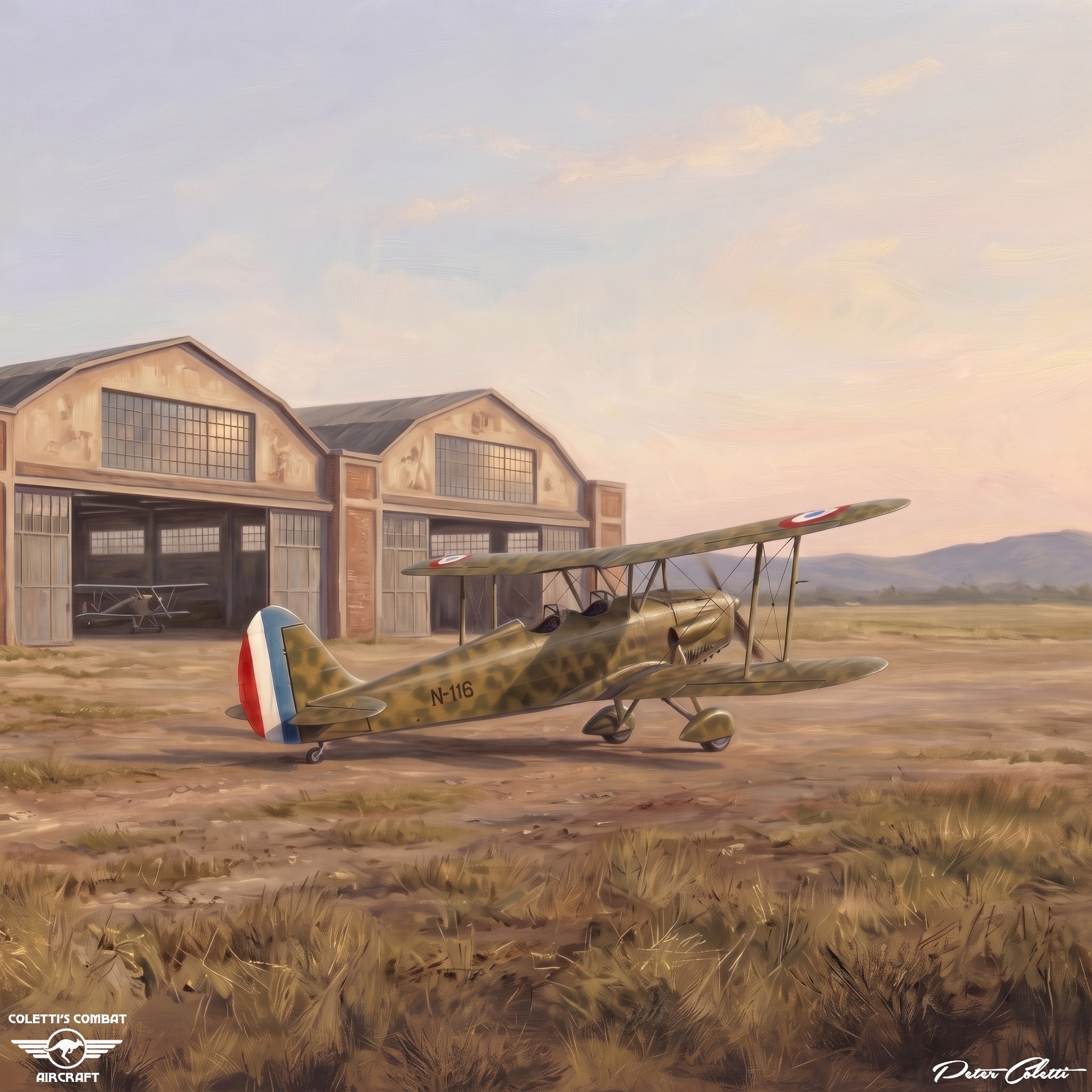
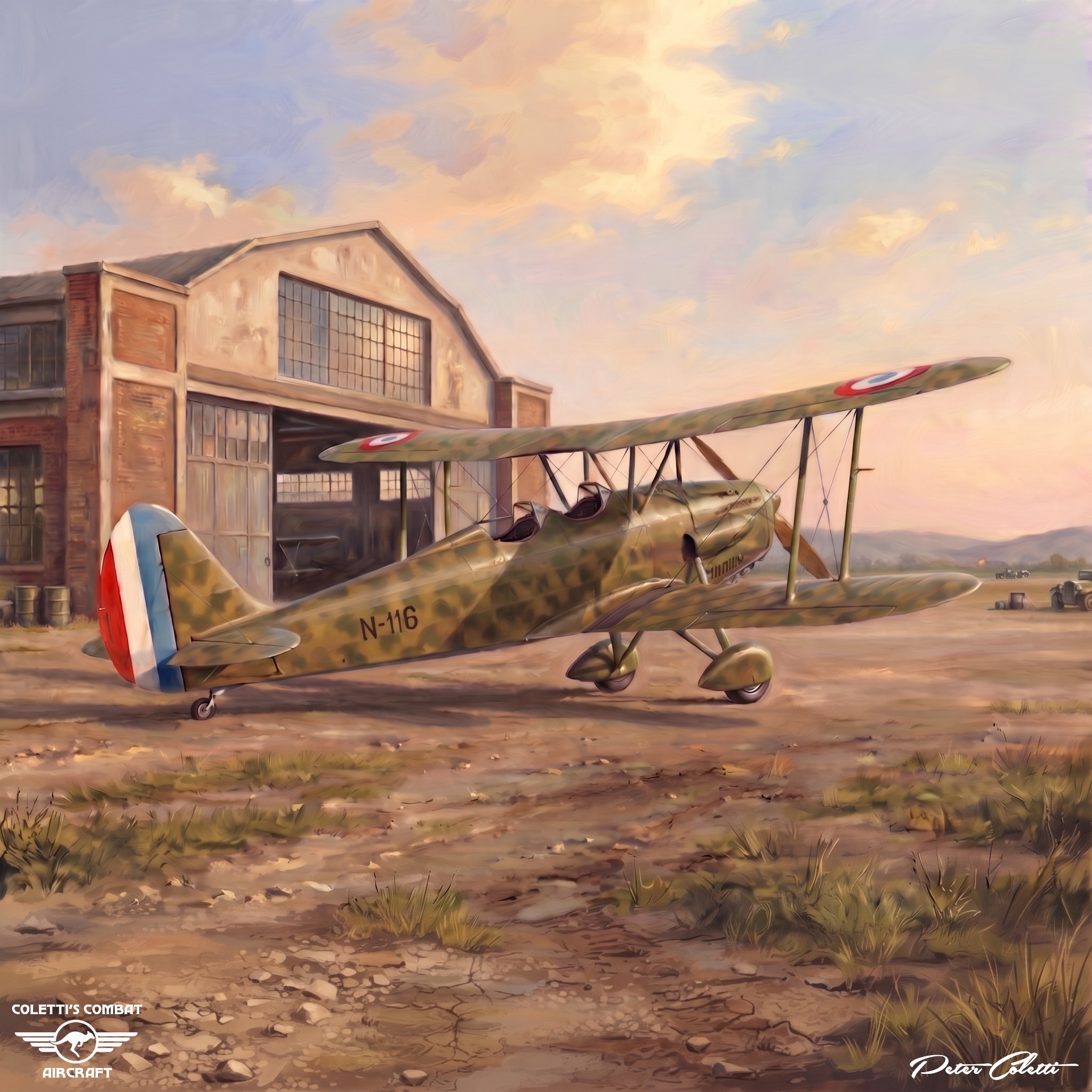
The Caproni Ca.164 emerged from a 1937 Italian Air Ministry requirement for a new single‑engine primary trainer to replace the ageing Caproni Ca.100 and the Breda Ba.25.
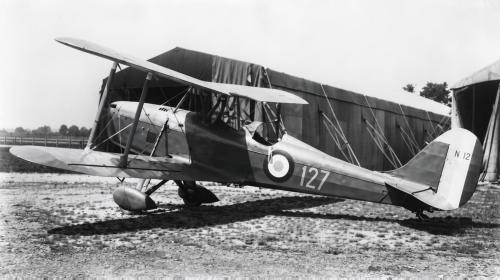
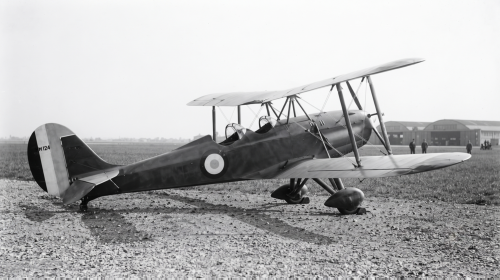
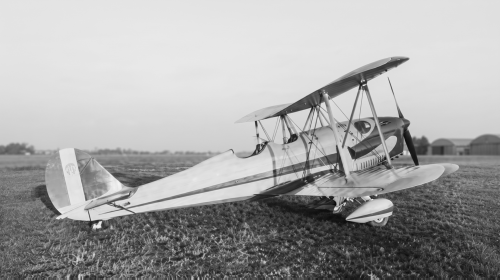
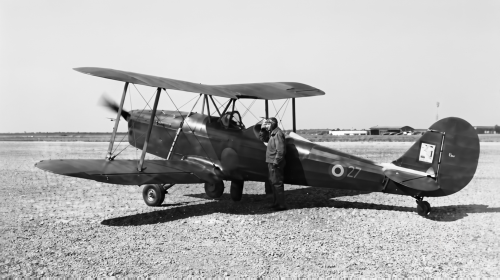
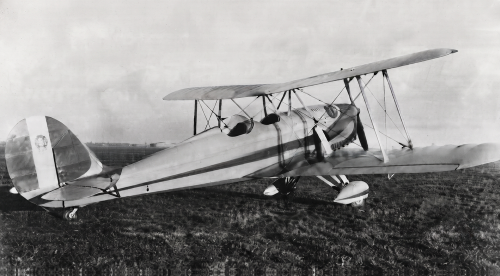
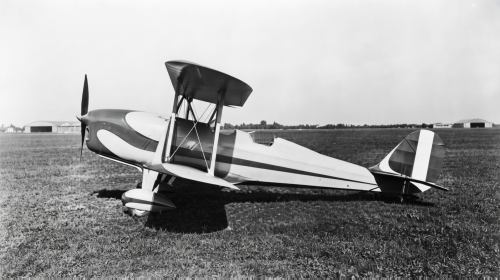
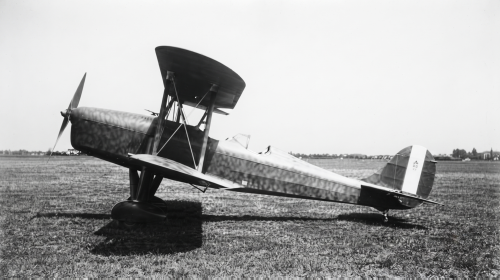
Caproni’s response, designed by Raffaele Conflenti, was a conventional two‑seat biplane that retained the Ca.100’s inverted sesquiplane layout—a configuration in which the upper wing was shorter than the lower one.
This was intended to improve downward visibility and reduce structural weight while maintaining the familiar handling characteristics of earlier Caproni trainers.
The prototype, designated Ca.163, was built at Caproni Taliedo and first flew on 17 November 1938 at Forlì airfield.
Its construction followed Caproni’s established mixed‑material approach:
Fuselage: welded steel‑tube structure, fabric‑covered except for a duralumin forward section.
Wings: wooden structure with plywood leading edges and fabric covering.
Tail surfaces: steel‑tube frame, fabric‑covered.
Controls: full dual‑control arrangement, with the instructor seated in the rear cockpit.
Although the Ca.164 was intended as a modernised successor to the Ca.100 early flight tests revealed poor manoeuvrability and unsatisfactory handling, especially compared to the Breda Ba.25.
Despite these shortcomings, the Air Ministry initially issued a favourable opinion in December 1938, then requested modifications.
Even before improvements were validated, General Giuseppe Valle ordered 50 aircraft, and later additional batches followed.
Serial production began in July 1939, and by autumn the first aircraft were delivered to flying schools.
Ultimately 281 airframes were built, including the prototype.
Structural and Technical Characteristics
Although simple and robust, the Ca.164 was not an advanced aircraft.
Its design emphasised ease of manufacture and maintenance rather than performance.
Wings: wooden construction, plywood leading edges, fabric covering.
Interplane bracing: steel struts and cables.
Landing gear: fixed, tailskid type.
Cockpits: tandem, dual controls.
Powerplant
Engine: Alfa Romeo 115 or 115‑I, a six‑cylinder inverted air‑cooled inline engine producing 138 kW (185 hp).
Origin: based on the British de Havilland Gipsy Six design.
Propeller: two‑bladed wooden fixed‑pitch.
Performance (typical production aircraft)
Maximum speed: 217–230 km/h
Cruise speed: ~185 km/h
Range: 530–550 km
Service ceiling: ~4,200–4,250 m
Rate of climb: approx. 216 m/min
Stall speed: 85 km/h
Time to 3,000 m: ~15 min 56 s
Fuel capacity: 135 L
Dimensions
Length: 7.74 m
Wingspan: 9.45 m
Height: 3.0 m
Wing area: 22.4–23.5 m²
Empty weight: 780–850 kg
Loaded weight: 1,040–1,175 kg
Operational History and WWII Context
Failure as a Primary Trainer
Despite its intended role, the Ca.164’s poor handling made it unsuitable for basic flight training.
By early 1939, comparative trials confirmed that it offered no improvement over the Ca.100 or Breda Ba.25.
As a result, the aircraft was withdrawn from primary training and reassigned to secondary roles.
Adoption by the Regia Aeronautica
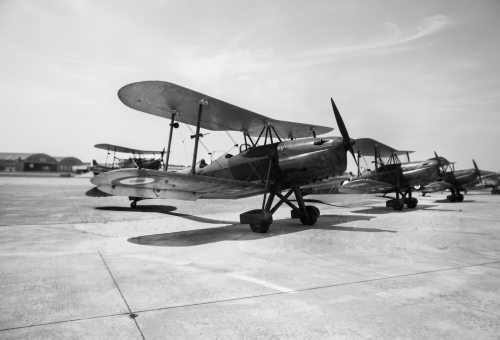
The Regia Aeronautica, nevertheless, acquired around 280 aircraft, using them primarily for:
Liaison duties within bomber units
Communications flights
General utility roles
Advanced or continuation training (not primary instruction)
By 1942, Italy operated 252 Ca.164s, dispersed across minor and peripheral units, including the Lecce training school.
Combat and Special‑Duty Use
Although not designed for combat, wartime necessity led to several improvised roles:
Tactical reconnaissance: At least one aircraft was used in Croatia in 1942 for short-range reconnaissance from Grobnico airfield.
Night‑fighter training: From June 1941, some airframes were used to train night‑fighter pilots.
Target tug conversions: A number were modified for towing aerial gunnery targets.
Light attack / counter‑guerrilla: Some aircraft were armed with a 7.7 mm machine gun or, in certain field configurations, two 12.7 mm Breda‑SAFAT guns for anti‑partisan duties in North Africa and on both western and eastern fronts.
Foreign Operators
France (Armée de l’Air): Ordered 100 aircraft in January 1940; most were sent to North Africa.
Germany (Luftwaffe): Requisitioned some aircraft after Italy’s 1943 armistice.
Italian Co‑Belligerent Air Force: Operated surviving aircraft alongside Allied units after September 1943.
Anecdotal Service
One Ca.164 was captured by No. 3 Squadron RAAF at Castel Benito, Tripoli, in 1943 and used informally as a squadron hack.
Its final fate is unknown.
Variants
Ca.163 (Prototype)
First flight: 17 November 1938
Essentially identical to the Ca.164 but served as the development prototype.
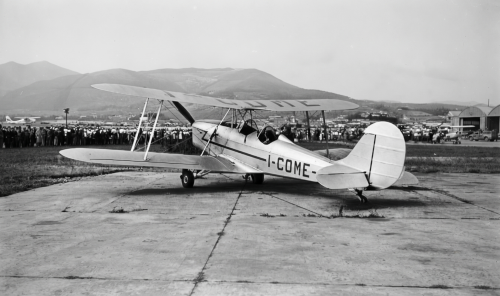
It was later registered as I-WEST and survives today at the Gianni Caproni Museum of Aeronautics in Trento.
Ca.164 (Production Model)
Main production version (281 built).
Minor sub‑variants existed only in the form of field modifications (armament, target‑tug equipment, and night‑training instrumentation).
No major factory‑produced variants beyond the prototype.
Assessment and Legacy
The Caproni Ca.164 occupies an unusual niche in WWII aviation history.
Intended as a modern trainer, it instead became a stopgap liaison and utility aircraft due to its mediocre handling and limited performance.
Nevertheless, its widespread distribution across Italian units made it a familiar sight throughout the early war years.
Its adaptability allowed it to serve in reconnaissance, night‑fighter training, target towing, and even light combat roles—tasks far beyond its original design intent.
No production, Ca.164 survives today, but the prototype Ca.163 remains preserved, offering a tangible link to Caproni’s interwar training aircraft lineage.