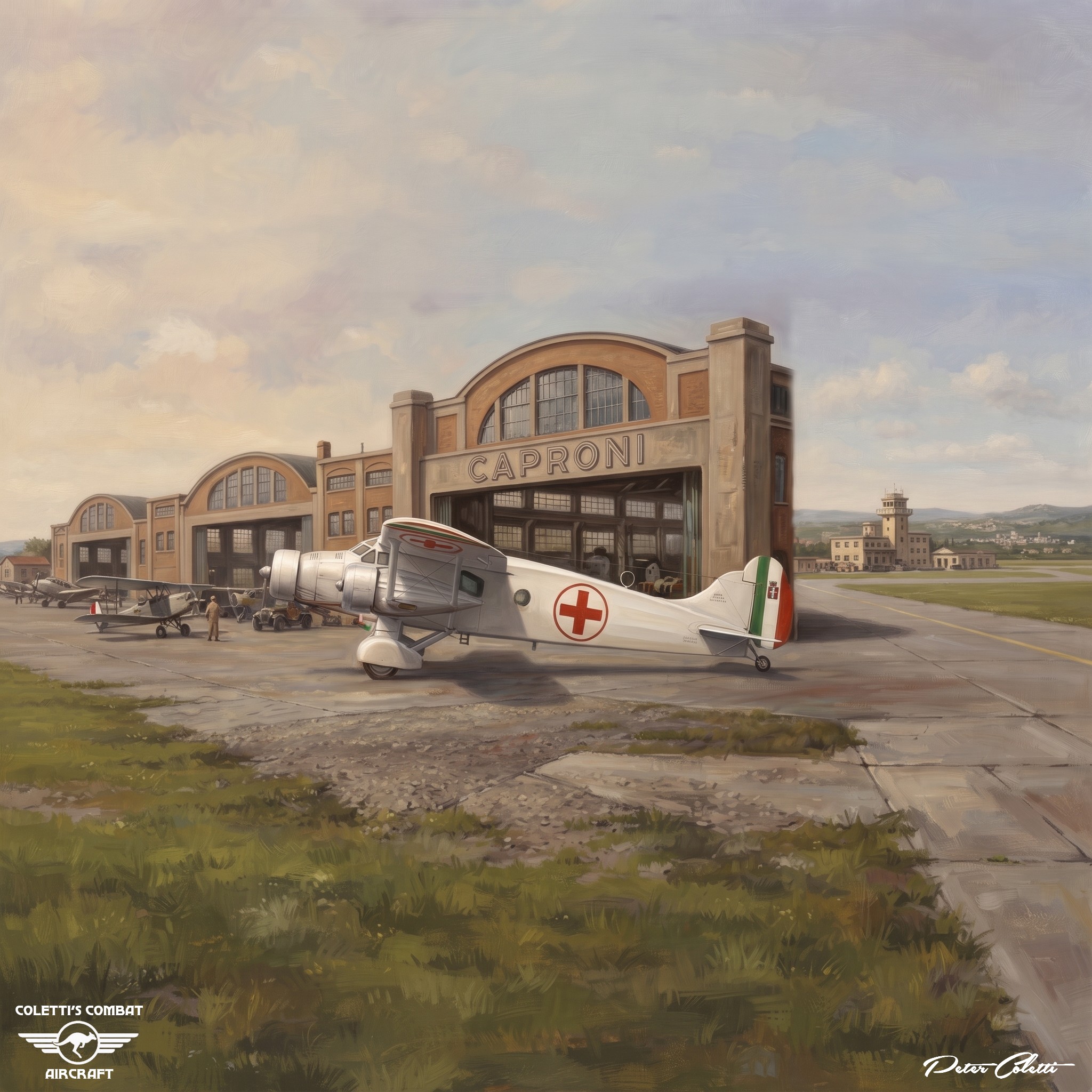
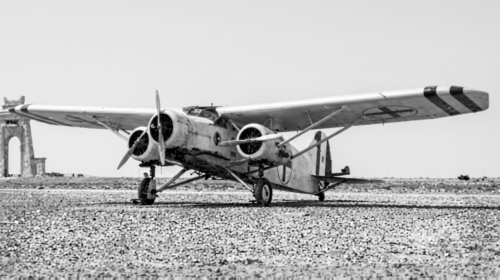
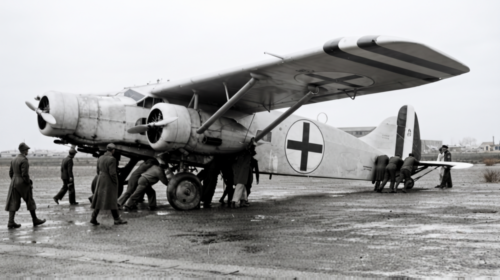
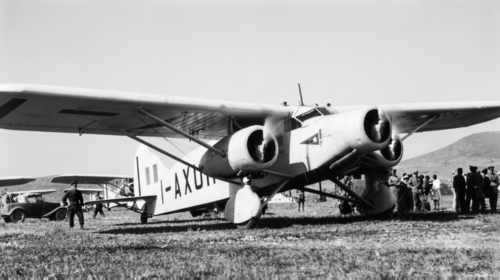
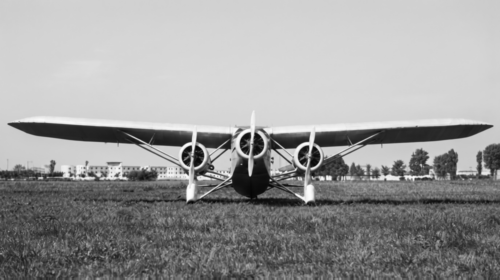
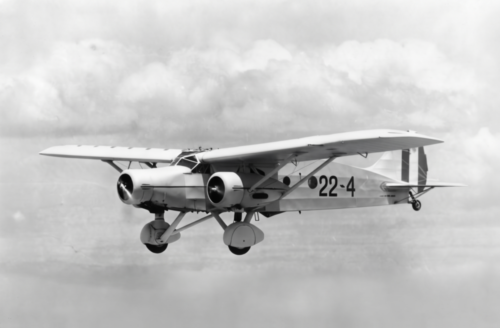
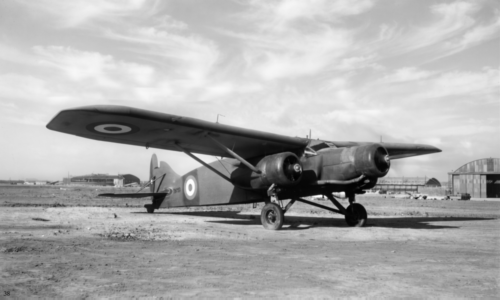
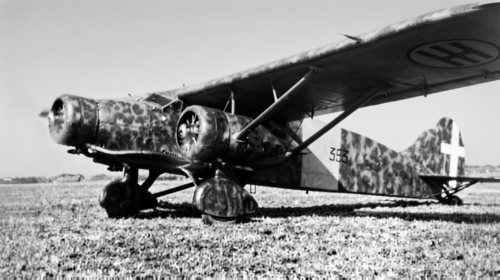
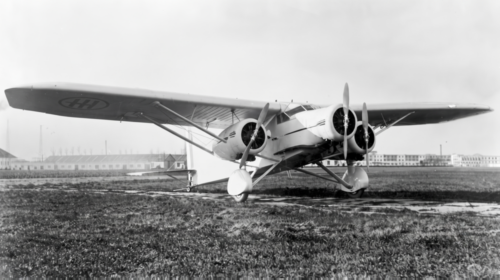
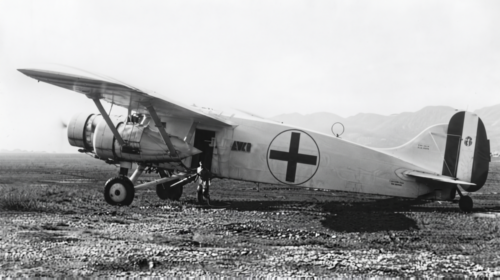
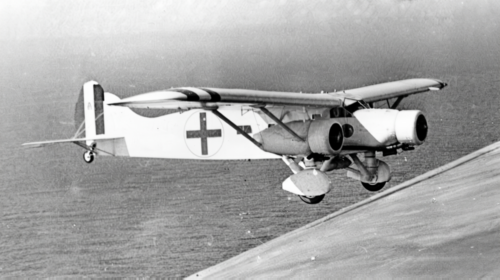
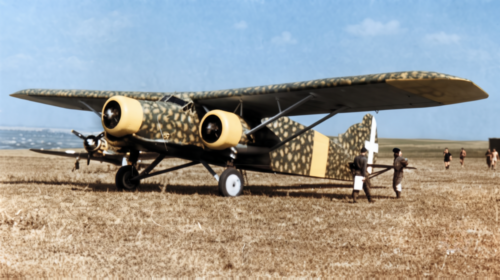
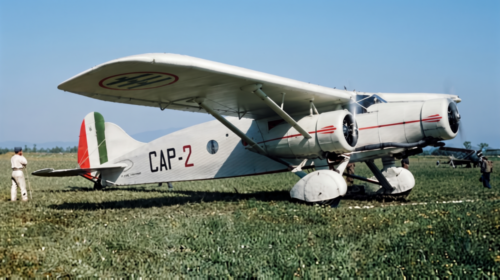
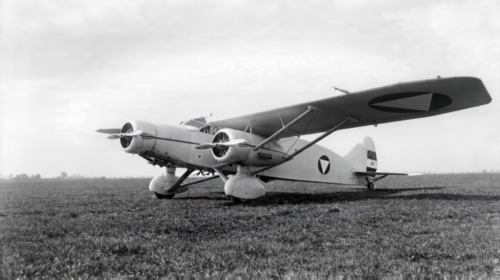
The Caproni Ca.133 was a rugged, slow, but highly adaptable Italian three‑engine transport and light bomber introduced in the mid‑1930s.
It became one of the most widely used Italian aircraft in East Africa, serving as a workhorse for troop transport, colonial policing, bombing, and liaison duties throughout the Second Italo‑Ethiopian War and World War II.
Origins and Development The Ca.133 emerged from Caproni’s long line of multi-engine transports, particularly the earlier Ca.101 and Ca.111.
These aircraft had proved effective in colonial operations, but by the early 1930s the Regia Aeronautica needed a more capable platform with the following:
Greater payload
Improved reliability
Better range for operations in East Africa
Flexibility to serve as both a transport and a bomber
Caproni responded by designing the Ca.133 in 1934 as a modernised evolution of its predecessors.
Although conservative in layout, the aircraft emphasised simplicity, maintainability, and robustness, which were essential for operations in remote colonial theatres with limited infrastructure.
The prototype flew in 1934, and production began shortly thereafter.
By 1935, the Ca.133 was already being deployed to Italian East Africa, where it quickly became indispensable.
Design Characteristics
Airframe
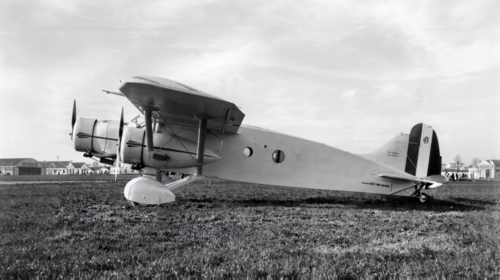
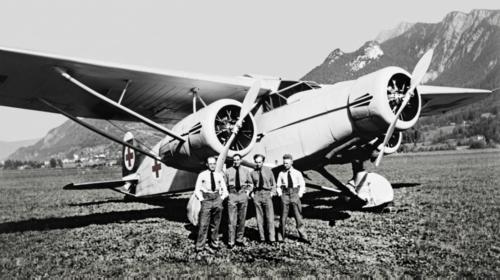
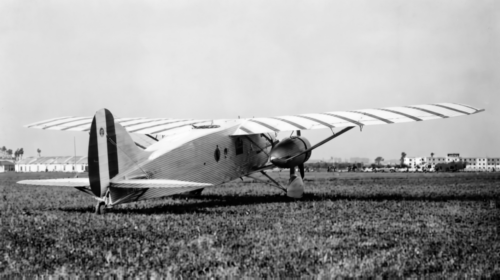
The Ca.133 was a high-wing, braced monoplane with a welded steel-tube fuselage covered in fabric and light alloy panels.
This construction was intentionally rugged and easy to repair in the field.
Key structural features:
High wing for stability and good downward visibility
Fixed, spatted landing gear suitable for rough strips
Spacious cabin configurable for passengers, cargo, or bombs
Open defensive gun positions
Engines
The aircraft used three radial engines, typically the Piaggio P.VII C.35 or similar variants, each producing around 370–450 hp.
The tri-motor layout provided the following:
Redundancy for long flights over hostile terrain
Sufficient lift for heavy loads
Modest but reliable performance
Crew and Interior
Typical crew: 3–4
Pilot
Co-pilot or navigator
Radio operator
Gunner (when configured as a bomber)
The cabin could carry up to 18 troops, medical stretchers, or cargo.
In bomber configuration, internal racks held light bombs.
Armament (Bomber Variant)
Up to 3 defensive machine guns in dorsal, ventral, and beam positions
Bomb load is typically 500–800 kg, depending on the mission.
Performance
Maximum speed: ~250 km/h
Cruise speed: ~200 km/h
Range: ~1,000 km
Service ceiling: ~5,000 m
These numbers made the Ca.133 slow even by 1930s standards, but its reliability and endurance were valued more than speed in colonial service.
Operational Use and WWII Context
Second Italo‑Ethiopian War (1935–1936)
The Ca.133’s first major deployment was in East Africa, where it served as the following:
Transport for troops and supplies
Light bomber against Ethiopian forces
Reconnaissance and liaison aircraft
Its ability to operate from primitive airstrips made it ideal for Italy’s campaign.
It became one of the most common Italian aircraft in the theatre.
Interwar Colonial Policing
After the conquest of Ethiopia, the Ca.133 remained in service across Italian East Africa.
It performed:
Patrol flights
Medical evacuation
Mail and personnel transport
Occasional punitive bombing missions
Its versatility made it a backbone of Italian colonial aviation.
World War II
When Italy entered WWII in 1940, the Ca.133 was still heavily used in East Africa, where more modern aircraft were scarce.
During the East African Campaign (1940–1941):
Ca.133s flew bombing raids against British and Commonwealth forces.
They transported reinforcements and supplies between isolated garrisons
They performed reconnaissance over vast desert and mountain terrain.
However, by WWII standards the Ca.133 was obsolete.
It was slow, lightly armed, and vulnerable to modern fighters.
Many were lost during the British advance into Ethiopia and Eritrea.
Later Service
A small number continued flying in secondary roles in Italy and the Balkans, mainly as transports.
Production ended before WWII, but the aircraft lingered in service due to its simplicity and utility.
Variants
Ca.133 — Standard transport/light bomber
Ca.133S — Ambulance version with stretcher accommodations
Ca.133T — Dedicated transport variant
Ca.148 — Improved derivative with refined aerodynamics and better performance
Ca.164 — Trainer variant based loosely on Ca.133 design principles
The Ca.148 in particular extended the lineage into the late 1930s, showing the durability of Caproni’s tri-motor concept.
Assessment and Legacy
The Caproni Ca.133 was never a cutting‑edge aircraft.
It was slow, vulnerable, and technologically conservative.
Yet it succeeded because it was the following:
Reliable
Easy to maintain
Adaptable
Well-suited to colonial environments
In Italian East Africa, where infrastructure was minimal and distances were vast, the Ca.133 became a workhorse.
Its legacy is tied to Italy’s colonial and early WWII aviation history, representing the practical, rugged aircraft that sustained operations far from Europe’s industrial centres.