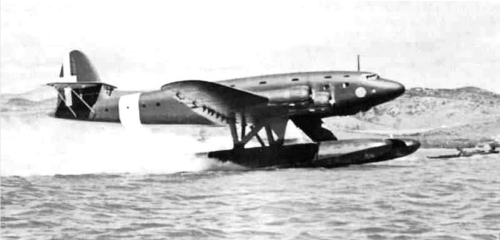
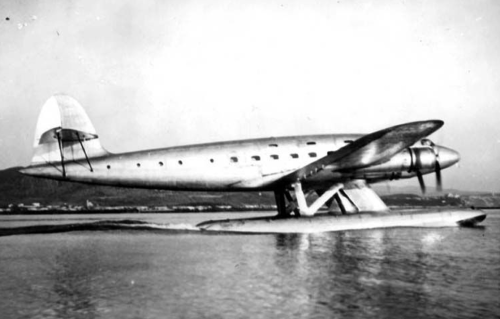
The CANT Z.511 emerged from Italy’s late‑1930s ambition to establish reliable long‑range air routes across the Atlantic.
In September 1937, the technical office of Cantieri Riuniti dell’Adriatico (CRDA) began designing a large four‑engined seaplane after LATI (Compagnia Ala Littoria) requested an aircraft capable of carrying mail, cargo, and passengers between Italy and Latin America.
Ala Littoria’s 1937–1938 planning emphasised that existing aircraft lacked the range and comfort needed for transatlantic service.
The company favoured a four‑engine metal seaplane over landplanes due to the abundance of water landing sites and the limited availability of long‑range airfields.
This design philosophy aligned with contemporary choices by Short, Boeing, Latécoère, Dornier, and Blohm & Voss, all of whom pursued large seaplanes for intercontinental routes.
CRDA’s preliminary drawings (September 29–October 1, 1937) defined a floatplane rather than a flying boat, using twin floats to reduce drag compared to a hull‑fuselage design.
This also made potential landplane conversion easier and attracted military interest for wartime adaptation.
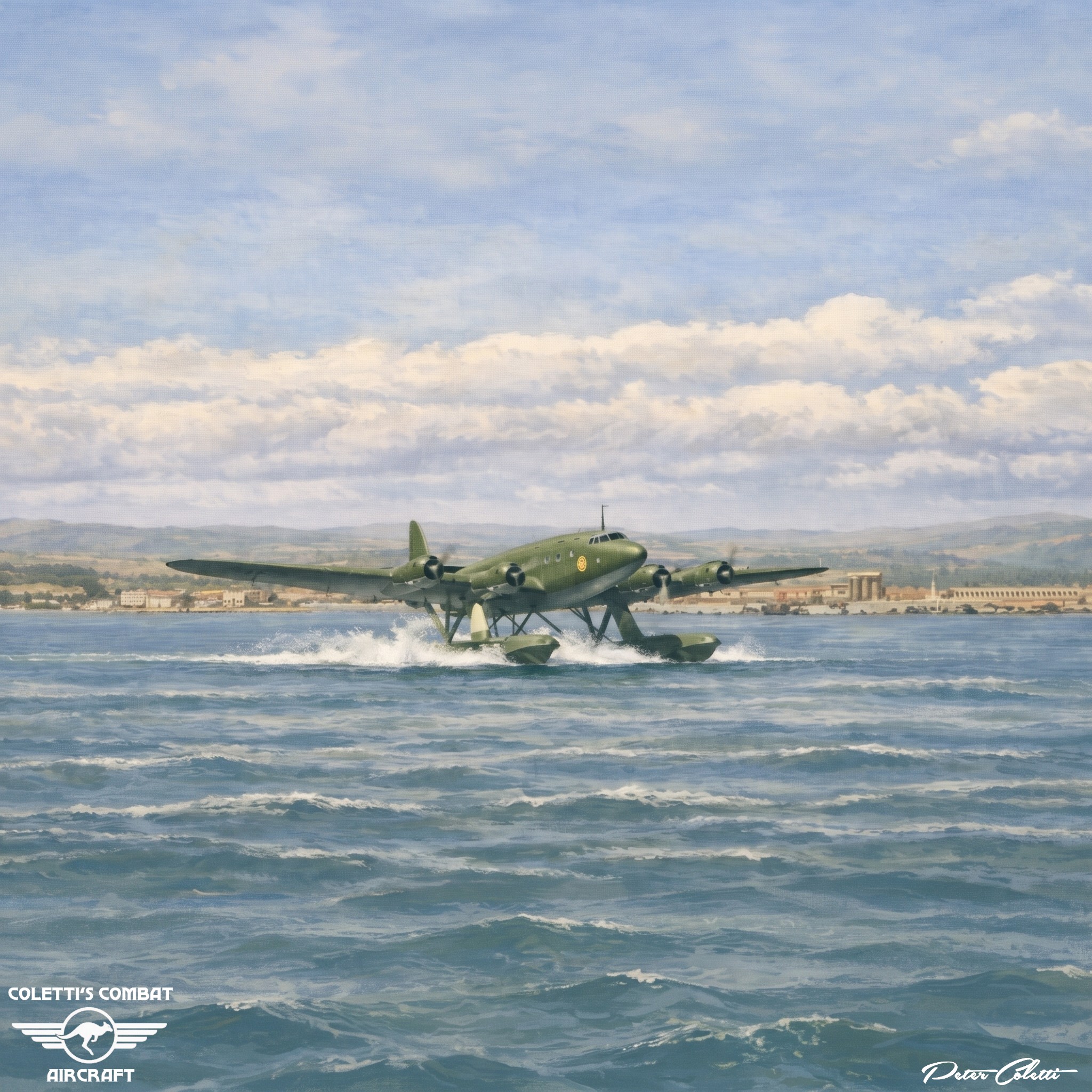
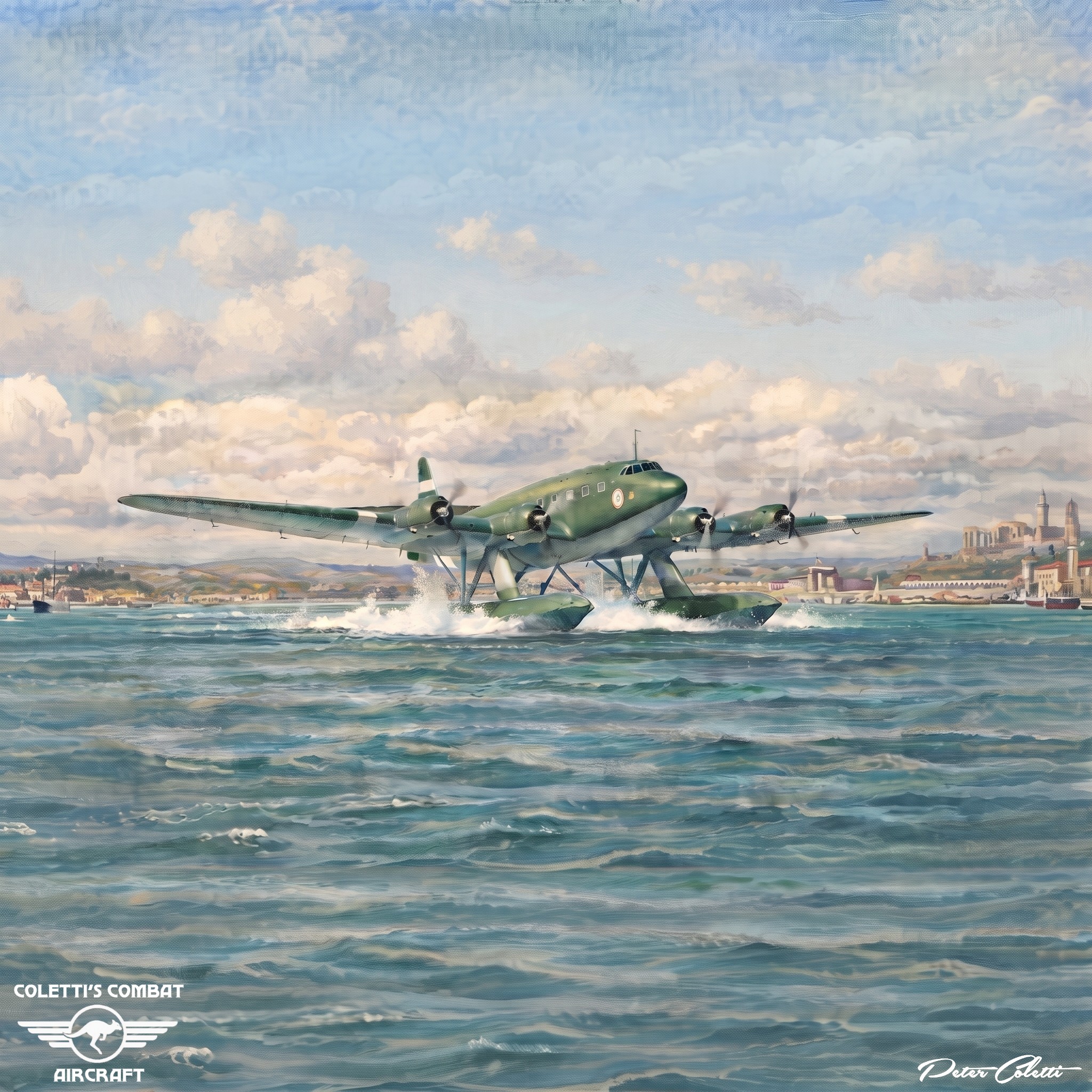
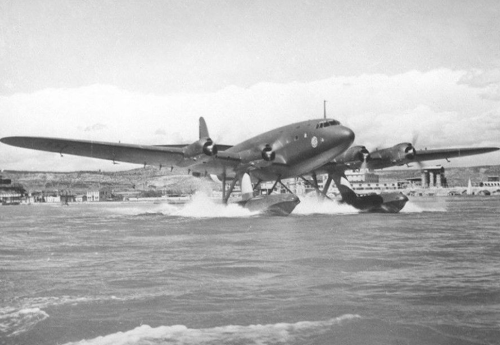
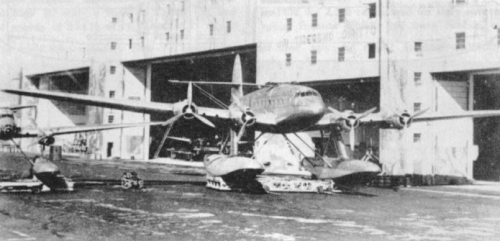
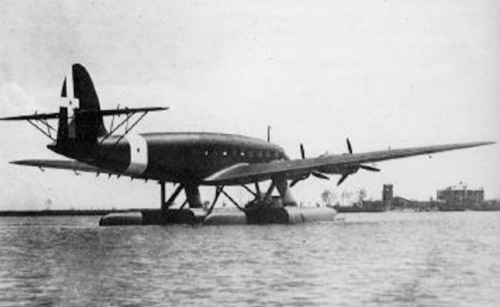
The resulting aircraft, designed by Filippo Zappata, became the largest floatplane ever built.
The civil version, designated Z.511A (Atlantico), reportedly made its first flight in 1939, though formal test programmes began later.
It was intended to carry 16 passengers over 5,000 km, making it suitable for South Atlantic routes.
Transition to Military Requirements
The outbreak of World War II in 1940 halted Italy’s civil transatlantic plans.
The Z.511 was quickly reoriented towards military roles, including long‑range maritime patrol, transport, and special operations raiding.
The Regia Aeronautica envisioned the aircraft as a heavy, long‑range strike platform capable of carrying bombs, torpedoes, or even unconventional payloads.
Its large internal volume and long endurance made it attractive for missions far beyond the Mediterranean.
Design and Technical Characteristics
Airframe and Configuration
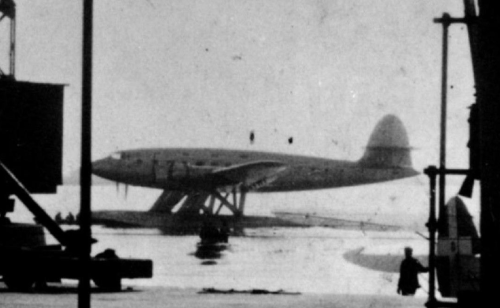
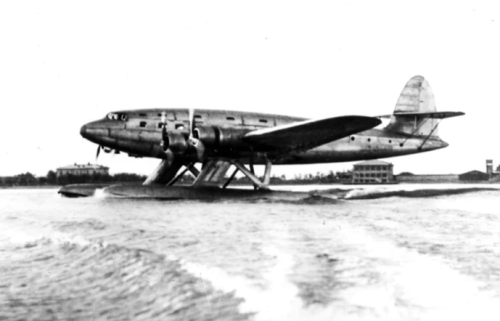
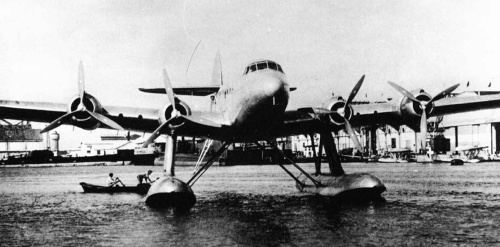
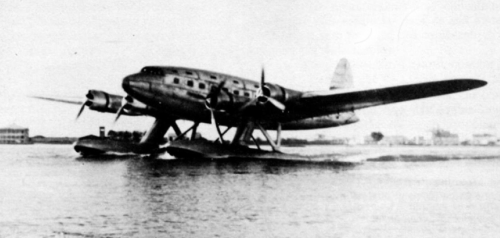
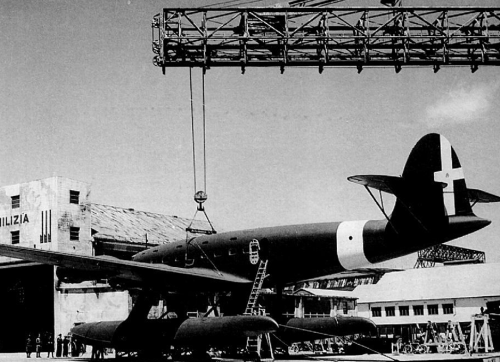
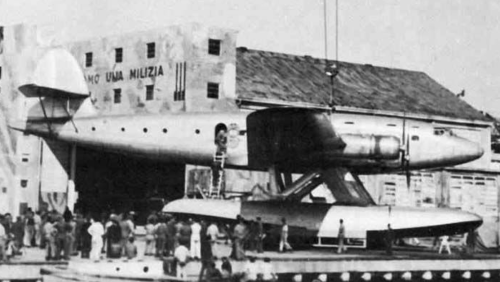
The CANT Z.511 was a four‑engine, all‑metal, twin‑float seaplane with a streamlined fuselage mounted above two massive floats.
This configuration reduced hydrodynamic drag and improved seaworthiness while preserving aerodynamic efficiency.
Its size was exceptional: at 34 tonnes maximum weight, it was the largest floatplane ever constructed.
Powerplant
The original civil design sought Wright R‑2600 Double Cyclone engines (1,600 hp), but Italy could not obtain them due to deteriorating international relations.
Instead, the military prototypes used four Piaggio P.XII R.C.35 engines (1,501 hp each).
These provided only adequate power for the aircraft’s weight, limiting performance.
Crew and Internal Layout
The aircraft featured a large fuselage with ample space for passengers (civil version) or cargo and crew stations (military version).
Its twin‑float design allowed a clean fuselage without a boat hull, improving internal volume and reducing vibration compared to central‑engine flying boats.
Armament (Military Configuration)
The Z.511 was heavily armed for a seaplane:
Ten 12.7 mm machine guns in side positions, upper turrets, and belly mounts.
Planned 20 mm cannon in a front turret or glazed nose.
Proposed tail armament (not confirmed as installed).
Bombs, Torpedoes, and Special Payloads
The aircraft could carry:
Up to 4,000 kg of bombs in an internal bay and on wing racks.
454 mm air‑launched torpedoes (up to four).
“Maiale” manned torpedoes or midget submarines for special operations—most notably a proposed mission to attack New York Harbour, a concept never executed.
Performance
Range: ~4,500 km (military) and 5,000 km (civil theoretical).
Take-off capability: Demonstrated ability to take off fully loaded in 1.5 m waves and 55–65 km/h winds, an impressive feat for such a large floatplane.
Testing and Operational History
Flight testing occurred at Monfalcone between October 1940 and March 1942.
Test pilot Mario Stoppani proved the aircraft’s seaworthiness under rough conditions.
In 1942, the prototype was moved to Grado for further evaluation.
The final recorded test flight took place on 1 September 1943, just two days before Italy’s armistice.
After Italy’s surrender, one aircraft was seized by the Aeronautica Nazionale Repubblicana (the air arm of Mussolini’s RSI).
However, British fighters had already damaged it during strafing attacks on Lake Trasimeno, where it was undergoing trials.
The aircraft was later transferred to Vigna di Valle, where it remained until the end of the war.
Intended for Ala Littoria’s South American routes.
First flight reported in 1939.
Z.511 (Military Prototype)
Adapted for maritime patrol, bombing, torpedo attack, and special operations.
Two prototypes built (1942–43).
No further variants were produced due to wartime constraints and Italy’s 1943 collapse.
WWII Context and Strategic Significance
The CANT Z.511 represents one of Italy’s most ambitious aviation projects of WWII—a massive, long‑range seaplane conceived for intercontinental civil service but redirected towards military use.
Its development illustrates:
Italy’s desire for global aviation prestige before the war.
The shift from civil to military priorities after 1940.
The technical challenges of producing large aircraft under wartime shortages.
The Regia Aeronautica’s interest in unconventional long‑range strike capabilities, including special operations far beyond Europe.
Ultimately, the aircraft’s potential was never realised.
Engine limitations, wartime resource scarcity, and Italy’s political collapse prevented the Z.511 from entering service.
It remains a “what-if” aircraft—an impressive engineering achievement that arrived too late and in too small numbers to influence the war.