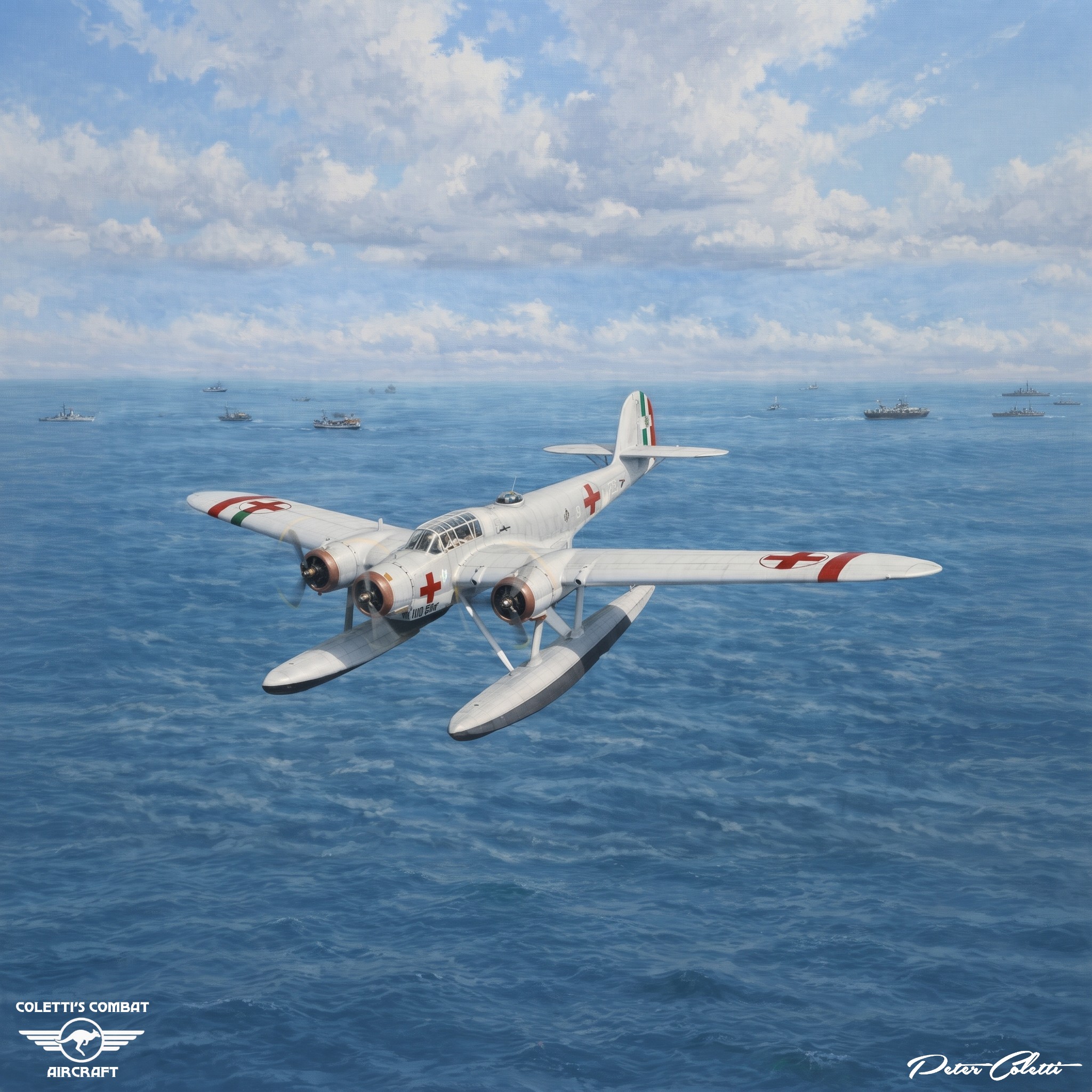
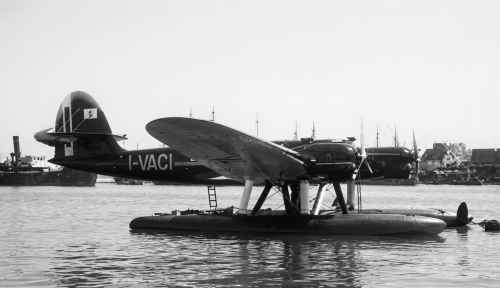
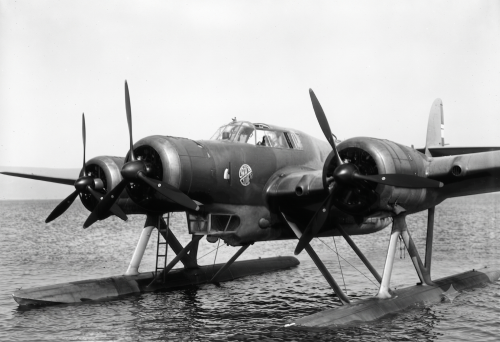
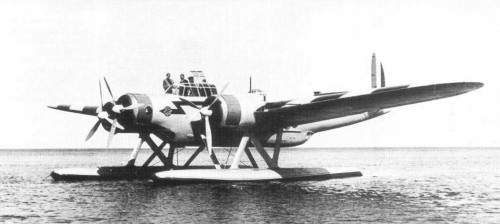
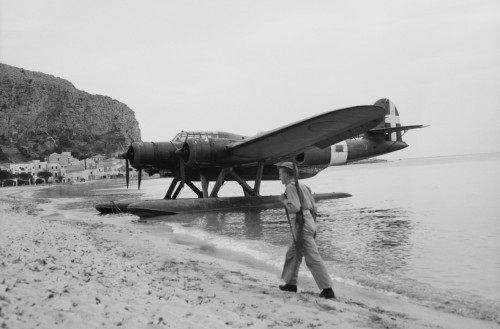
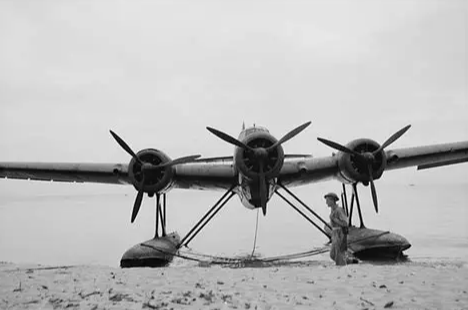
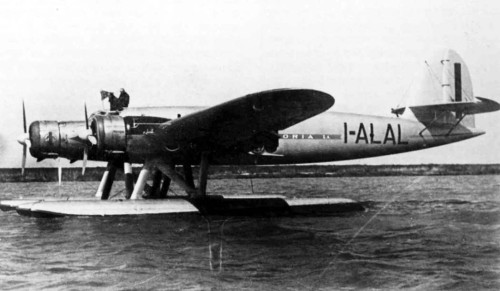
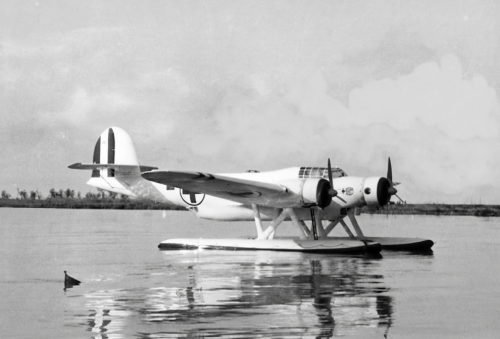
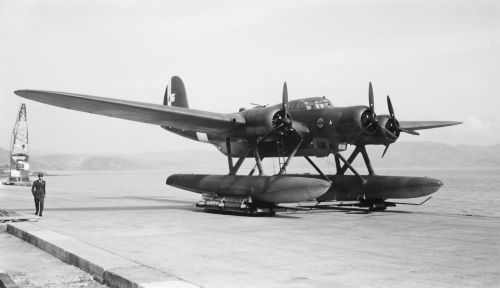
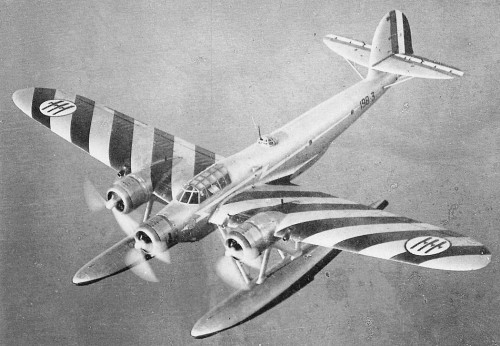
The CANT Z.506 Airone (“Heron”) was conceived in the mid‑1930s as a modern, fast trimotor floatplane for Italy’s expanding network of over‑water routes.
In 1934, the national airline Ala Littoria issued a requirement for a 12–14‑seat transport seaplane capable of operating from coastal bases and serving postal and passenger routes across the Mediterranean.
Designer Filippo Zappata, working for CRDA CANT (Cantieri Riuniti dell’Adriatico), responded with a low‑wing, three‑engine aircraft mounted on twin floats—a departure from the bulkier flying boat hulls then common.
The Z.506 was derived from the larger, heavier Z.505 seaplane but refined for higher speed and better handling.
The prototype, powered by three Piaggio Stella P.IX radial engines of about 610 hp each, first flew on 19 August 1935 (often cited as 10 July in some sources, reflecting early test flights).
Early testing showed the basic concept was sound but underpowered.
Zappata re-engined the design with more powerful Alfa Romeo 126 RC.34 nine-cylinder radials, each rated at about 750 hp (780 CV on take-off), creating the Z.506A.
This version met Ala Littoria’s performance expectations and entered production in 1936 as a fast transport and postal aircraft.
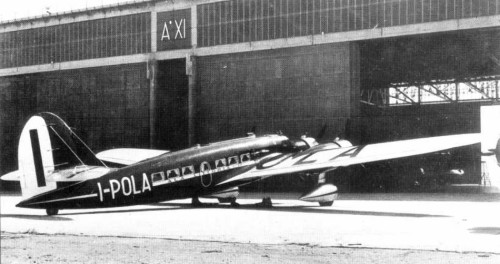
In civil service, the Z.506A quickly became a prestige machine.
Flown extensively by test and record pilot Mario Stoppani, it set 10 world records in 1936 and another 10 in 1937, including long‑distance speed records over 1,000, 2,000, and 5,000 km.
These achievements were heavily used in Mussolini’s propaganda, showcasing Italian aeronautical prowess and the reliability of the new trimotor floatplane.
Design and construction
General configuration
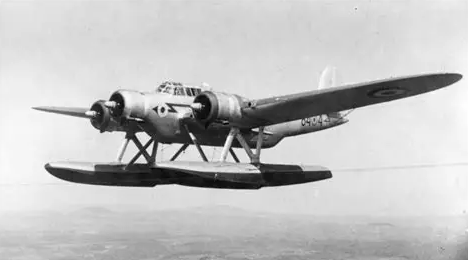
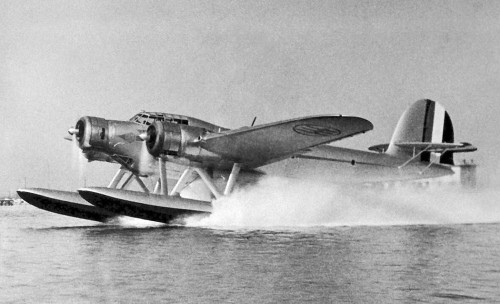
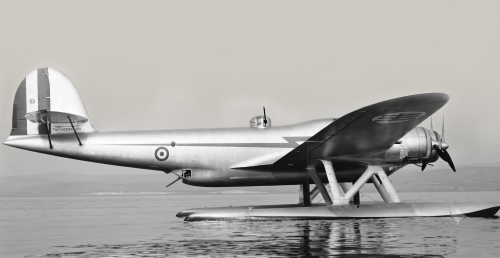
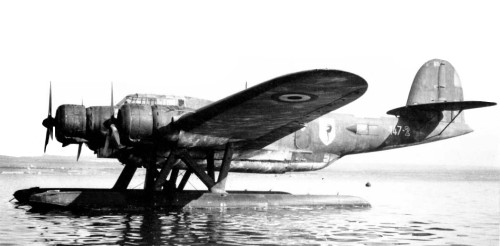
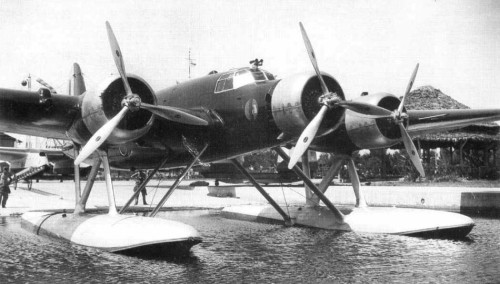
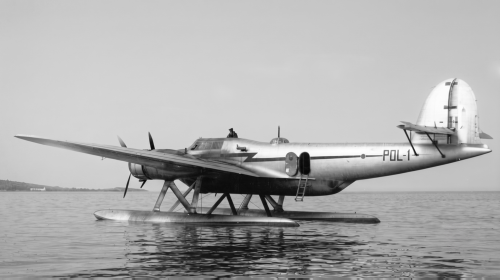
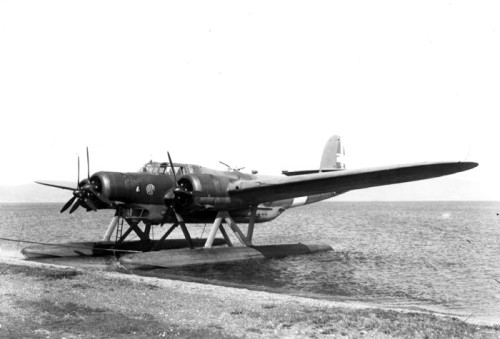
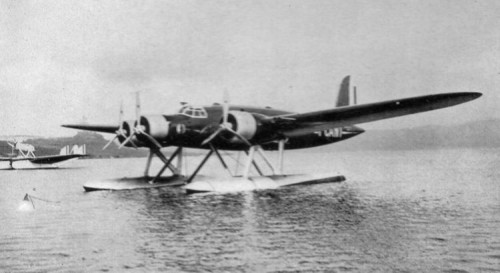
The CANT Z.506 was a low‑wing, trimotor, twin‑float seaplane.
The fuselage sat above two long, slender floats attached under the engine nacelles and wing roots, giving good stability on the water and reducing spray.
This layout also kept the fuselage relatively high, improving seaworthiness and reducing corrosion compared to hull‑type flying boats.
Structure
Despite its modern lines, the Z.506 used a largely wooden airframe:
Fuselage: Wooden structure covered with tulipier wooden lamellas, giving a smooth, aerodynamic surface and good strength‑to‑weight ratio.
Wings: Three box‑type spars with wooden ribs, covered in plywood.
Floats: Built of duralumin and covered with a protective material (often cited as “chitonal”), each is about 12.5 m long, providing ample buoyancy and robustness in rough seas.
This “old‑school” wooden construction proved surprisingly tough.
The Z.506 could operate in relatively rough sea states, a key advantage for maritime patrol and rescue work later in its career.
Powerplant
The main production and military versions were powered by three Alfa Romeo 126 RC.34 radial engines:
Power (each): about 559–560 kW (750 hp)
Output: 780 CV at takeoff, 750 CV at around 3,400 m altitude
Earlier prototypes used the less powerful Piaggio P.IX engines, but all operational aircraft adopted the Alfa Romeo units, which gave the Z.506 its characteristic performance and reliability.
Crew and layout
A typical crew for military versions was five (pilot, co‑pilot, navigator/bomb‑aimer, radio operator, and gunner) with space for additional personnel or passengers depending on role.
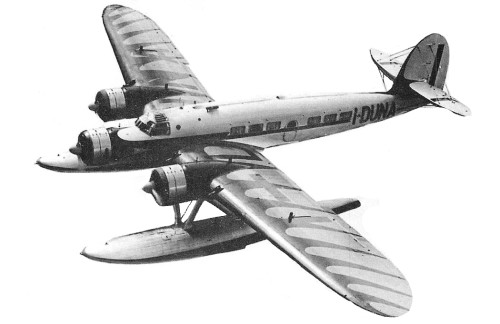
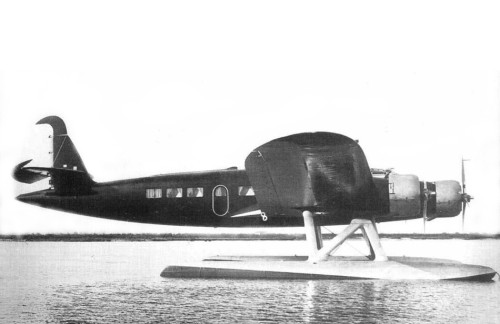
The civil Z.506A carried 12–14 passengers plus crew, with a relatively comfortable cabin for medium‑range routes.
CANT Z.506A with Alfa-Romeo 126 RC.34 radial engines.
Performance and capabilities
For the Z.506B (the main military version), typical performance figures were:
Maximum speed: ~365 km/h (about 227 mph)
Range: ~2,745 km (1,705 miles)
Service ceiling: ~7,850 m (25,755 ft)
Empty weight: ~8,300 kg
Maximum takeoff weight: ~12,300 kg
Wingspan: ~26.5 m
Wing area: ~92.8 m²
Length: ~19.45 m
Height: ~7.46 m
These figures made the Z.506 relatively fast for a floatplane, with good range and altitude performance.
Its ability to maintain speed and endurance while operating from water bases was a major asset for Italy’s maritime forces.
In record flights, the Z.506A demonstrated sustained speeds of around 320 km/h over long distances (up to 5,000 km), confirming its efficiency and robustness.
Militarisation and armament
Z.506B – patrol and strike version
As international tensions rose, CANT developed the Z.506B, a militarised variant optimised for maritime reconnaissance, bombing, and torpedo attack.
It retained the basic airframe but added armament, military equipment, and internal bomb/torpedo stowage.
Typical armament included the following:
One 12.7 mm Breda‑SAFAT machine gun in a dorsal turret.
Three 7.7 mm machine guns: one ventral, two in lateral fuselage positions.
Provision for bombs and torpedoes under the wings or in racks, allowing use as a torpedo bomber against shipping.
Despite the wooden structure, the Z.506B was widely regarded—by Italian sources and later commentators—as one of the best floatplanes of its era, often compared favourably to land‑based bombers like the Savoia‑Marchetti SM.79 in terms of handling and reliability over water.
Variants
Z.506A – civil transport
Role: 12–14‑seat transport and postal aircraft for Ala Littoria.
Service: Mediterranean routes; numerous world records in 1936–1937.
Z.506B – military patrol/bomber
Role: Maritime reconnaissance, bomber, torpedo bomber, and general utility.
Production: Around 314 Z.506B plus two prototypes (the most numerous variant).
Armament: Dorsal 12.7 mm gun, multiple 7.7 mm guns, bomb/torpedo load.
Operators: Regia Aeronautica, Regia Marina, later Italian co‑belligerent and RSI forces, and the Luftwaffe.
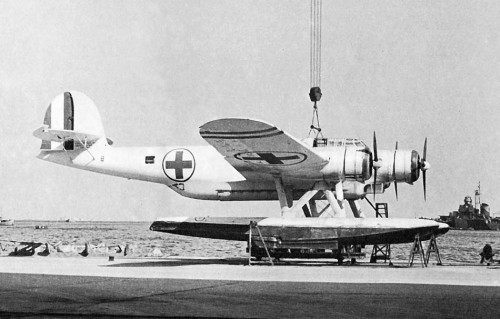
Z.506S – air‑sea rescue
Role: Dedicated SAR (Search and Rescue) and ambulance floatplane.
Features: Modified interior for stretchers, medical equipment, and rescue gear; reduced armament.
Service: Continued in Italian air‑sea rescue roles well into the post‑war period, with some aircraft remaining in service until 1959.
Z.509 – enlarged derivative
Role: Enlarged development of the Z.506 for heavier loads and longer range.
Status: Limited production and use; essentially a derivative rather than a direct variant of the standard Airone.
Operational history and WWII context
Pre-war and Spanish Civil War
Before WWII, the Z.506A served Ala Littoria on Mediterranean routes, proving its reliability and speed.
Its record flights boosted Italy’s aviation prestige.
The type’s combat debut came in the Spanish Civil War, where Z.506s were used by Italian volunteer units as reconnaissance aircraft and torpedo bombers against Republican shipping and coastal targets.
This experience validated the aircraft’s military potential and encouraged further production of the Z.506B.
Regia Aeronautica and Regia Marina in WWII
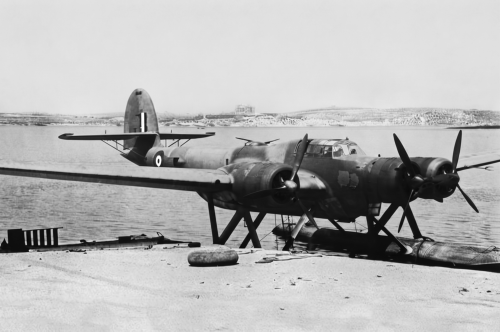
During Italy’s involvement in World War II, the Z.506B became a standard maritime patrol and strike seaplane:
Roles:
Long‑range aerial reconnaissance over the Mediterranean.
Torpedo bombing and conventional bombing against Allied shipping.
Maritime patrol, convoy escort, and anti‑submarine surveillance.
Air‑sea rescue, especially in the Z.506S configuration.
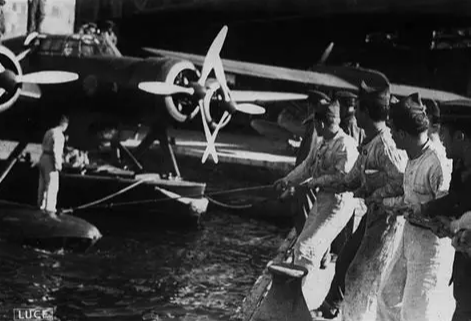
The aircraft served both the Regia Aeronautica and the Regia Marina, operating from coastal bases and seaplane stations.
Its ability to take off and land in relatively rough seas made it valuable for rescue missions and for operations from forward, lightly equipped bases.
Vulnerabilities and later war use
Despite its strengths, the Z.506 was vulnerable to modern fighters.
Its wooden structure and lack of heavy defensive armament meant that, when intercepted by Allied aircraft, it could be shot down relatively easily.
As the war progressed and Allied air superiority increased, Z.506s were increasingly relegated to secondary duties, such as rescue, transport, and liaison, rather than front‑line strike missions.
After the 1943 armistice
Following Italy’s armistice in September 1943, surviving Z.506s were split among several forces:
Aeronautica Cobelligerante del Sud (Italian Co‑belligerent Air Force) used them mainly for maritime patrol and rescue in support of the Allies.
The Aeronautica Nazionale Repubblicana (RSI air force) operated others in the north, often under German influence.
The Luftwaffe also employed some Z.506s for maritime duties.
Post‑war service
In the post‑war years, the Z.506S air‑sea rescue variant continued to serve the Italian Air Force.
Its combination of range, seaworthiness, and cabin space made it well suited to peacetime SAR missions.
The last examples were retired around 1959, giving the type a service life of more than two decades from its first introduction.
Significance
The CANT Z.506 Airone occupies a distinctive place in aviation history as the following:
A successful civil trimotor floatplane that set numerous world records.
One of the most capable maritime patrol and rescue seaplanes of WWII, despite its wooden construction.
A versatile platform that served in transport, reconnaissance, bombing, torpedo attack, and SAR roles across multiple air forces.