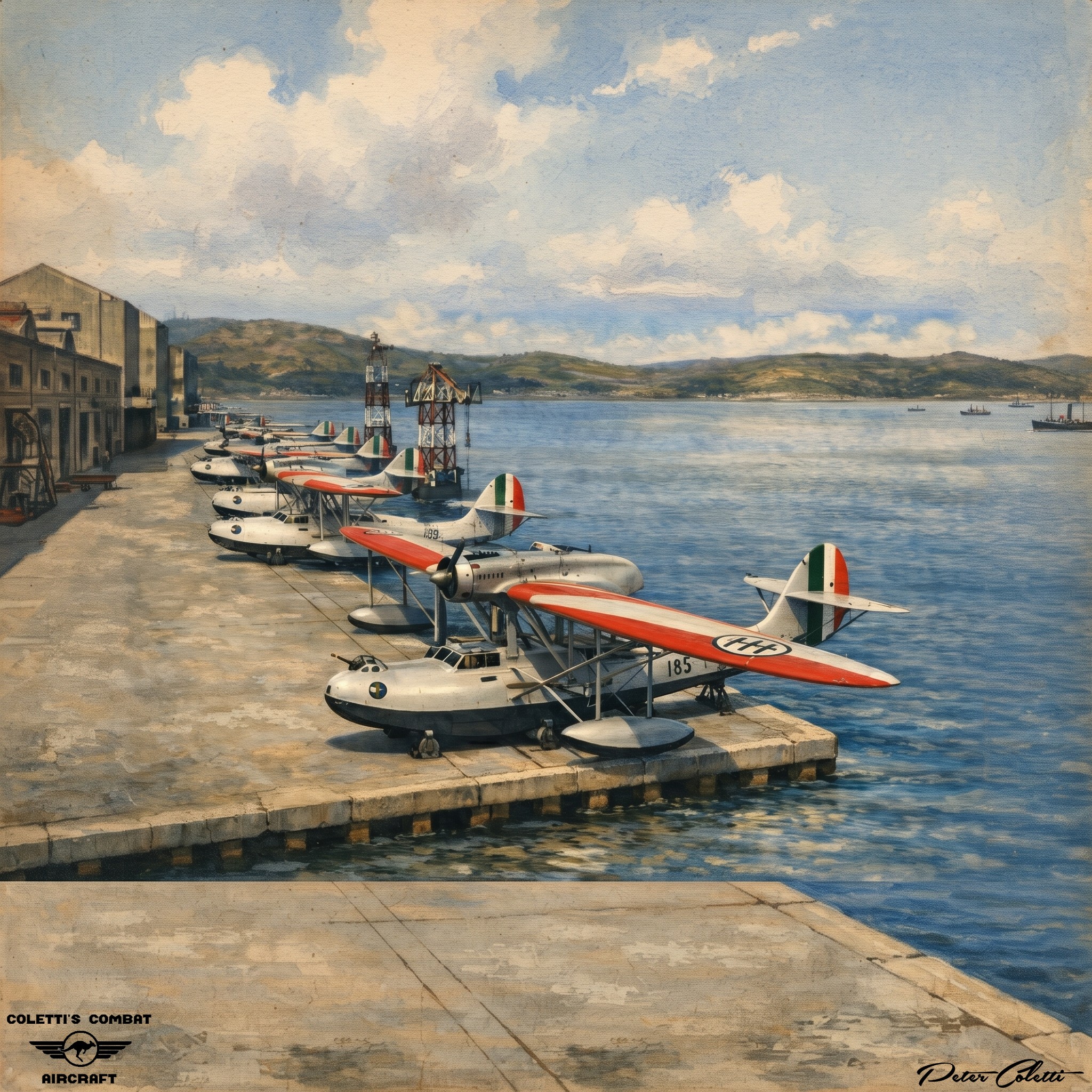
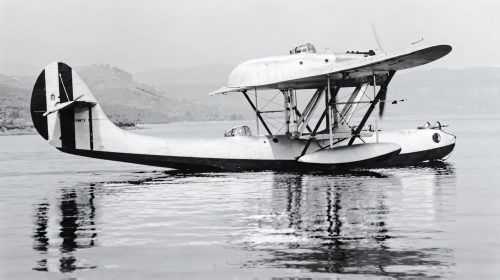
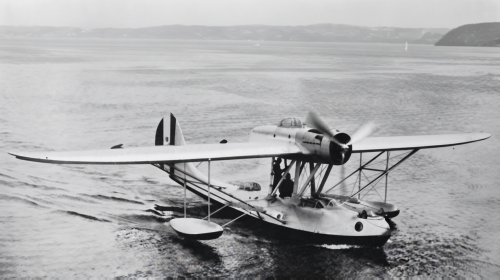
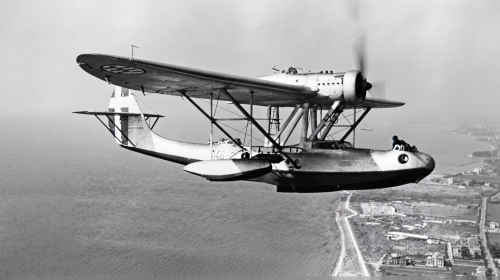
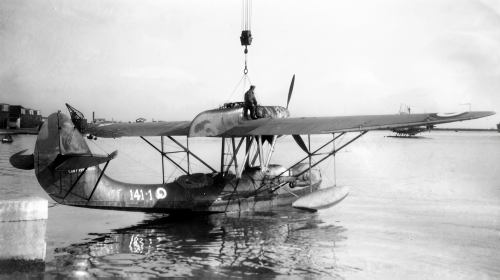
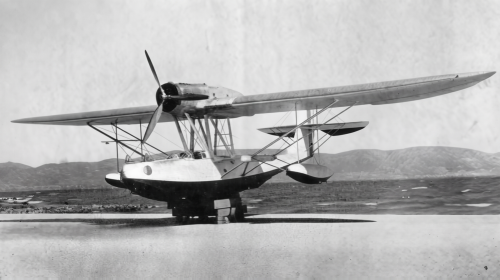
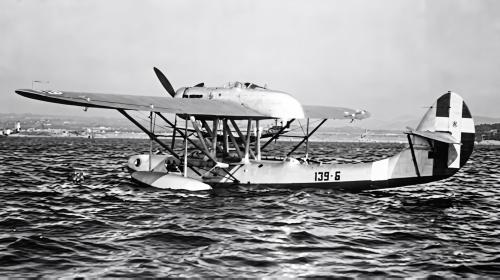
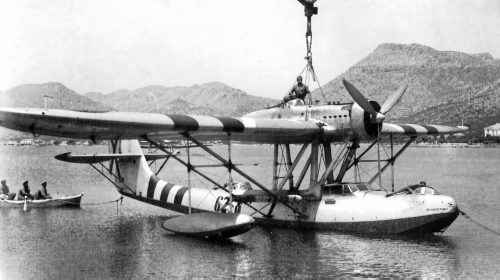
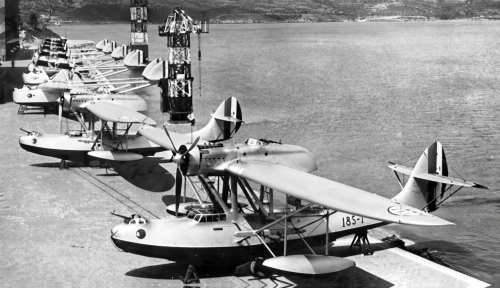
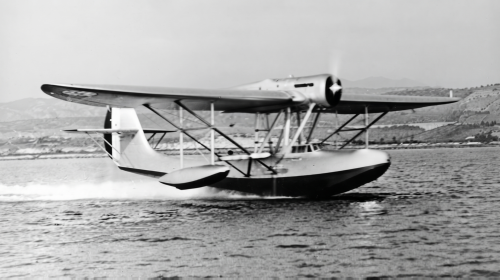
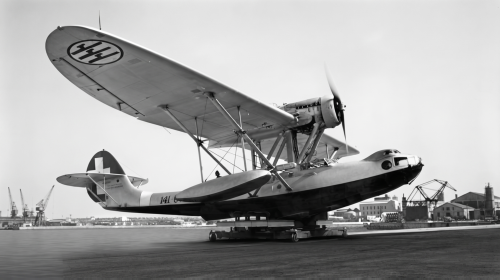
The CANT Z.501 Gabbiano emerged from Italy’s early‑1930s push to modernise its maritime reconnaissance fleet.
The Regia Aeronautica sought a replacement for the Savoia‑Marchetti S.78, which had only recently entered service but was already considered inadequate for long‑range patrol duties.
The project was entrusted to Filippo Zappata, one of Italy’s foremost aircraft designers.
Zappata had returned to Italy from France—where he had worked for Blériot—at the urging of Air Minister Italo Balbo, who wanted a new generation of advanced seaplanes.
Balbo assembled a team within Cantieri Aeronautici e Navali Triestini (CANT) and gave Zappata broad freedom, with one major constraint: the aircraft had to be single‑engine, despite Zappata’s preference for a twin‑engine layout due to the limited power of Italian engines at the time.
Zappata selected the Isotta Fraschini Asso XI series of liquid‑cooled V‑12 engines, originally developed for Schneider Trophy racing seaplanes.
Engineers promised additional power through refinement, enabling the aircraft to meet endurance and payload requirements.
The prototype flew on 7 February 1934, piloted by Mario Stoppani, and quickly demonstrated exceptional range—setting multiple world distance records that gave the aircraft international attention.
Design Characteristics
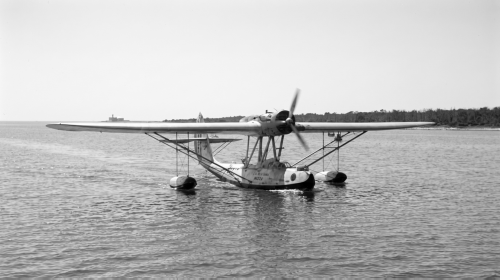
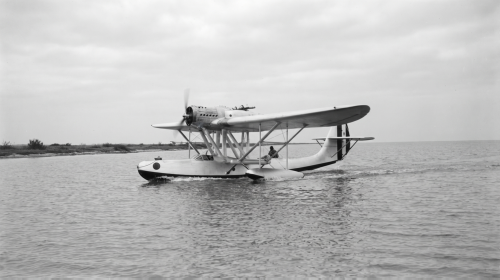
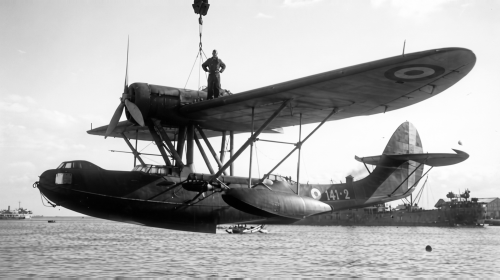
The CANT Z.501 was a parasol-wing flying boat with a central hull and two stabilising floats.
Its structure was almost entirely wooden, a typical feature of Zappata’s aerodynamic, low‑drag designs.
Airframe
Configuration: High parasol wing mounted above a boat‑shaped fuselage.
Hull: Wooden construction with a single step for water take-off.
Floats: Outboard stabilising floats under the wings.
Crew: 4–5 men.
Engine Installation
The aircraft’s most distinctive feature was its wing‑mounted engine nacelle, housing a single Isotta Fraschini Asso XI R.2C.15 V‑12 producing 880 hp (656 kW).
The nacelle extended aft to form a rear‑facing defensive gun position, and its annular radiator gave the appearance of a radial engine.
Armament
Machine guns: Three 7.7 mm Breda‑SAFAT guns
Nose, Dorsal/central fuselage
Rear‑facing gun in engine nacelle
Bomb load: Up to 640 kg (typically 4 × 160 kg bombs) mounted under the wings.
Dimensions
Length: 14.3 m
Wingspan: 22.5 m
Height: 4.4 m
Maximum take-off weight: 7,050 kg
Performance
The Z.501 prioritised endurance over speed or survivability.
Top speed: 275–280 km/h
Range: Up to 2,400 km (ferry flights; standard endurance ~12 hours)
Service ceiling: 7,000 m
Its long range made it ideal for maritime patrol, but its slow speed and fragile wooden structure made it vulnerable in rough seas and combat.
Variants
Although the Z.501 did not spawn a large family of variants, several subtypes and special-purpose modifications existed:
Record‑breaking variant
A specially modified aircraft (civil registration I‑AGIL) was used to reclaim distance records for Italy.
It featured:
A special metal three‑blade propeller
Additional aerodynamic refinements
This aircraft achieved flights of 4,130 km (Monfalcone–Massawa, 1934) and 4,957 km (Monfalcone–Berbera, 1935).
Production variants
Production aircraft varied slightly in equipment and armament but retained the same basic airframe and engine.
Approximately 454 units were built between 1934 and 1943.
Operational History and WWII Context
Pre‑war Service
The Z.501 entered service in 1936, replacing the S.78 in maritime reconnaissance roles.
It served with:
Regia Aeronautica
Aviazione Ausiliaria per la Regia Marina (naval aviation branch)
It also saw early combat in the Spanish Civil War, performing reconnaissance and light bombing missions.
World War II
By 1940, the Z.501 was obsolete, yet it remained Italy’s primary long‑range maritime patrol aircraft due to slow production of its intended successor, the CANT Z.506 Airone.
Roles
Anti‑submarine patrol
Convoy escort
Long‑range reconnaissance
Air‑sea rescue
Despite its endurance, the aircraft suffered heavily:
Over 100 Z.501s were shot down between 1940 and 1943, mostly by Allied fighters.
Its slow speed and fragile construction made it easy prey.
Post‑Armistice Service
After Italy’s 1943 armistice:
19 aircraft served with the Italian Co‑Belligerent Air Force
Others flew for the Aeronautica Nazionale Repubblicana
Additional exports operated in Spain and Romania
The last Z.501s were retired in 1950, marking an unusually long service life for a pre‑war wooden flying boat.
Assessment and Legacy
The CANT Z.501 was a paradoxical aircraft:
Technically elegant, with aerodynamic lines and impressive range
Operationally vulnerable, slow, and fragile
Historically significant, setting world records and serving throughout WWII despite obsolescence.
Its longevity reflected Italy’s industrial constraints more than its combat effectiveness.
Yet the Z.501 remains an important example of interwar flying-boat design and a testament to Filippo Zappata’s engineering skill.
Digital Artworks by Peter Coletti.
Sources
Ali d’Italia Vol. 17 – CANT Z.501 – Tullio Marcon
Ali d’Italia C.D.R.A. CANT Z.501 – Tullio Marcon
Aero Publishers, Italian Civil and Military Aircraft 1930–1945 – Jonathan W. Thompson
IBN Editore, Italian Seaplane Fighters and Flying Boats of World War II – Gregory Alegi
Squadron/Signal, Italian Aircraft of World War II – Nico Sgarlato
Hikoki Publications, Regia Aeronautica: Italian Air Force 1935–1943 – Chris Dunning
Monogram / La Bancarella Aeronautica, Italian Warplanes of World War II, Volume 2: Bombers, Transports, and Seaplanes – Giorgio Apostolo
Zenith Press, Flying Boats and Seaplanes: A History from 1905 – Stéphane Nicolaou
Macdonald & Co, Warplanes of the Second World War, Volume 6: Floatplanes – William Green