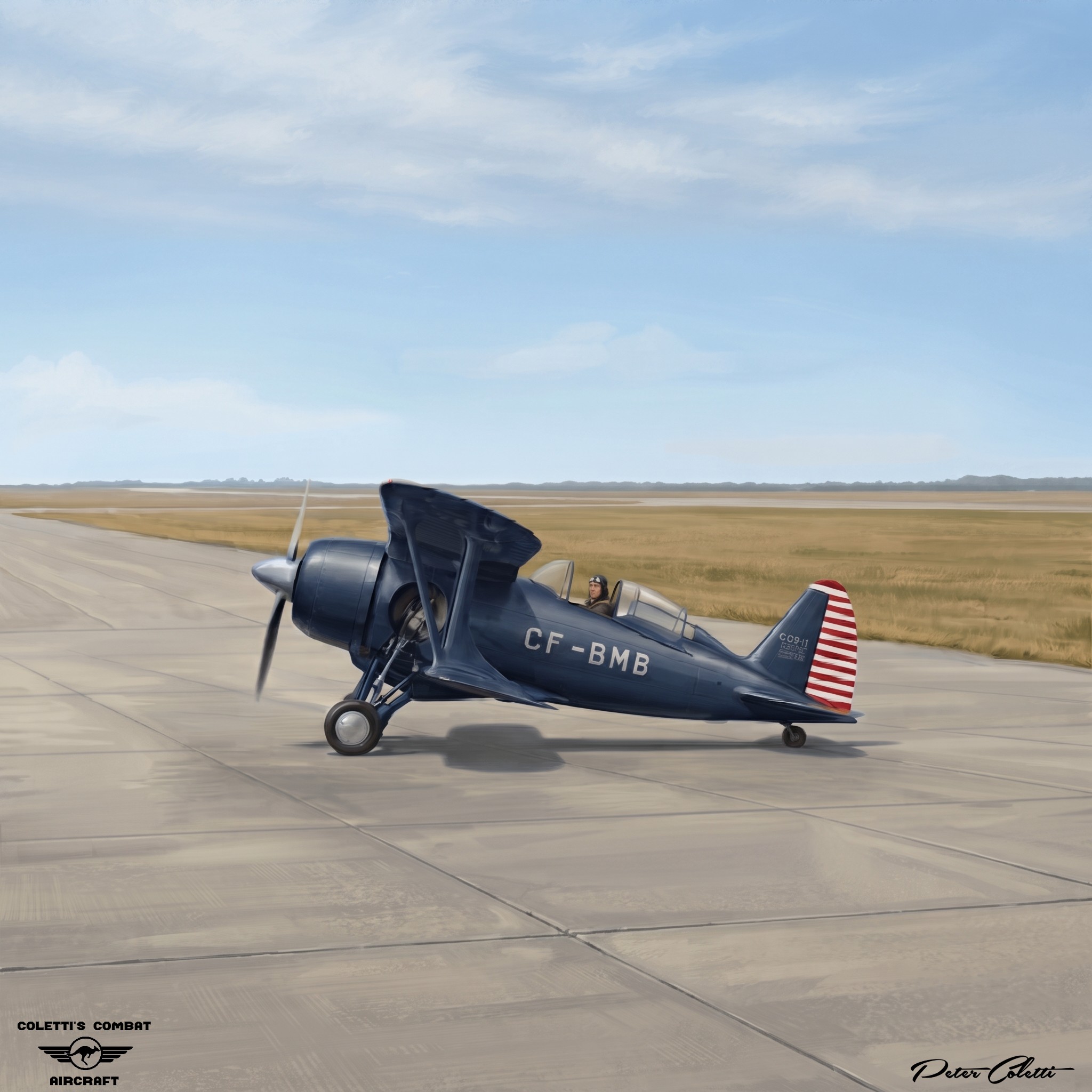
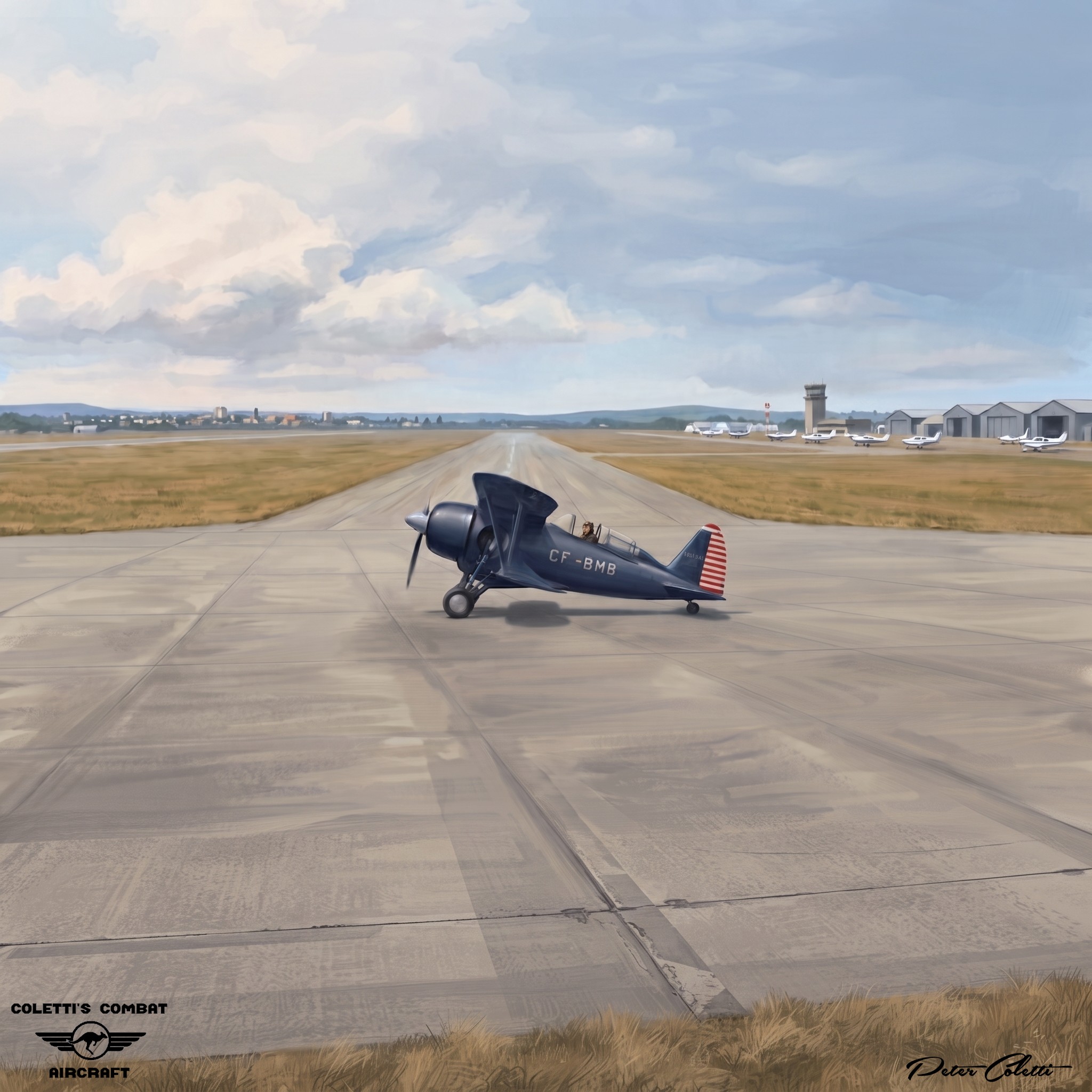
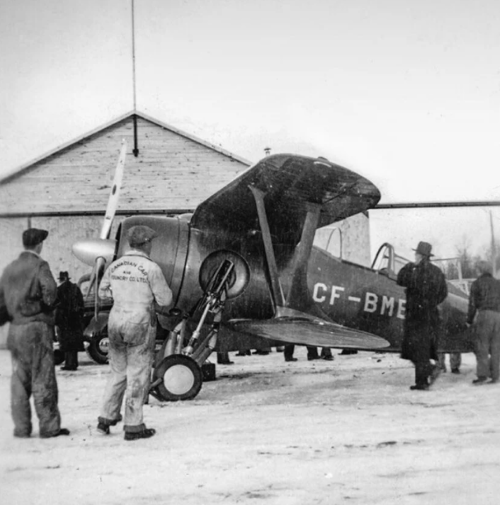
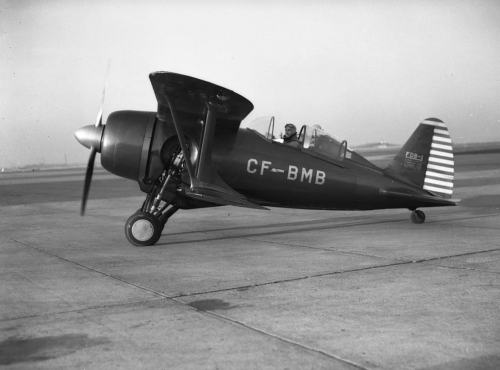
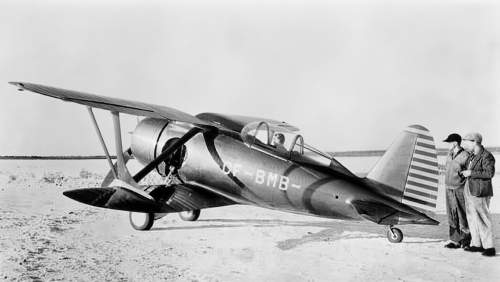
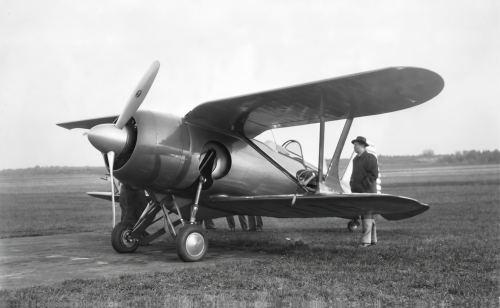
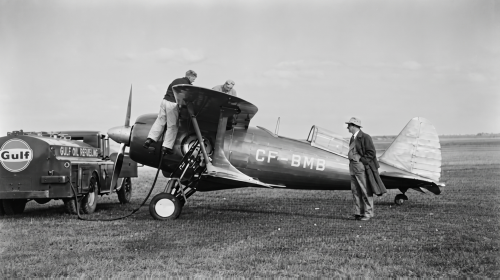
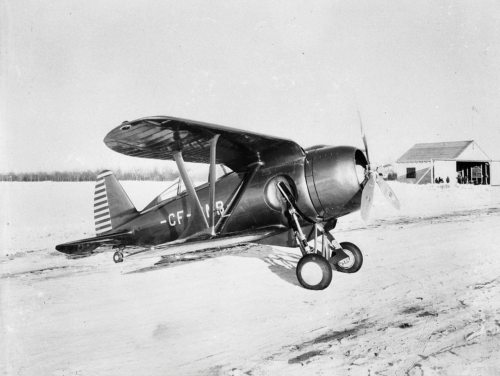
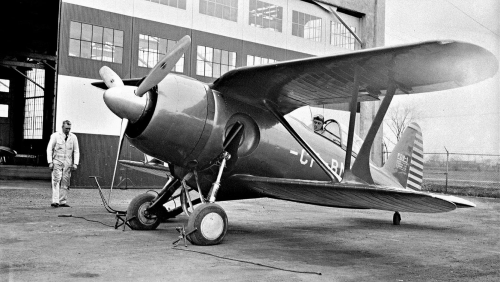
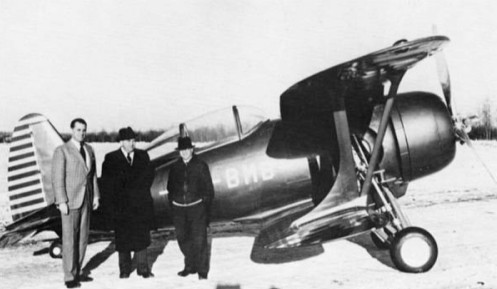
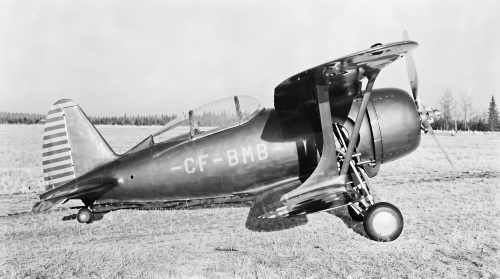
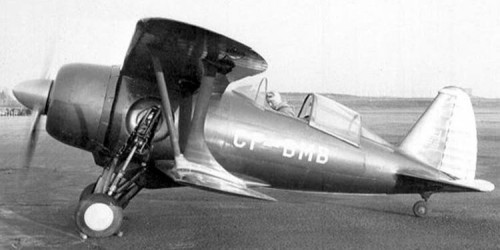
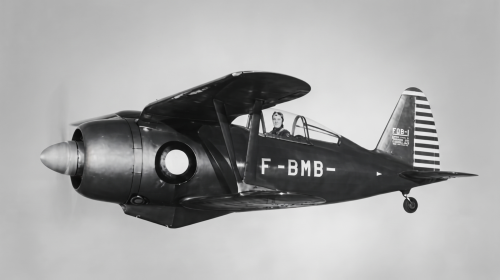
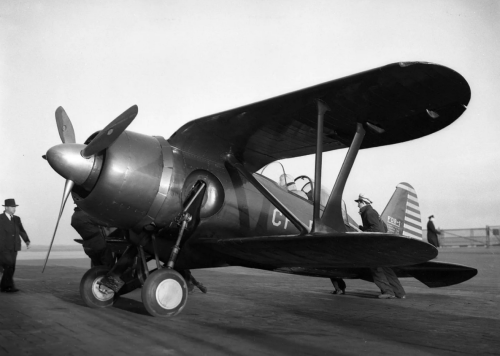
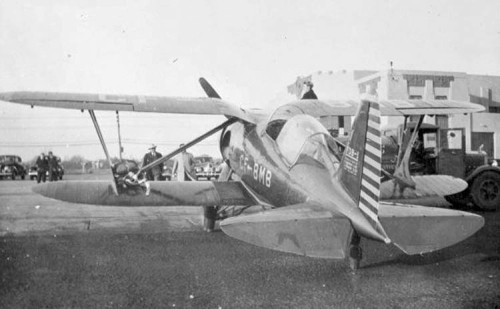
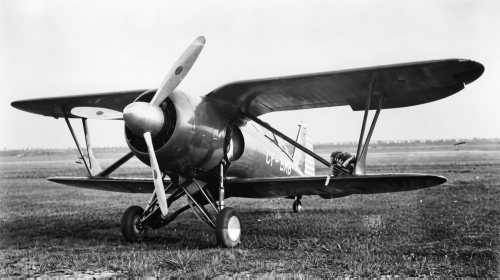
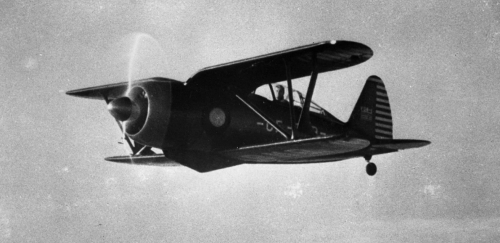
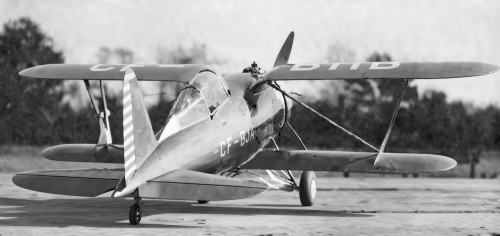
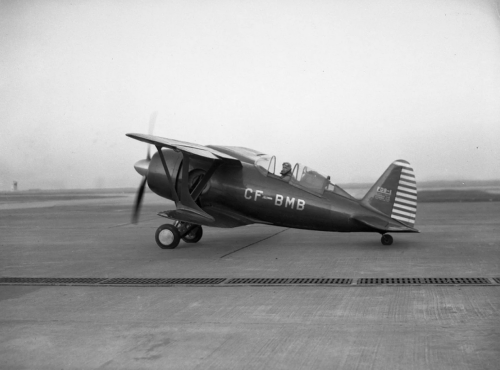
The Canadian Car and Foundry FDB‑1—often called the Gregor FDB‑1 after its designer, Michael Gregor—was conceived in the late 1930s as Canada’s first indigenous attempt to produce a modern, combat-ready fighter aircraft.
Gregor, born Mikheil Grigorashvili, was a Georgian‑Russian aeronautical engineer who joined Canadian Car and Foundry (CCF) in 1938, at a time when the company was transitioning from railcar manufacturing and licensed aircraft production towards original aircraft design.
CCF had previously built the Grumman GE‑23 Goblin under license, and this experience encouraged the firm to consider designing its own fighter.
Gregor believed that advanced biplanes still had untapped potential, even as monoplanes like the Hawker Hurricane and Supermarine Spitfire were proving decisively superior in speed and firepower.
His proposal was to create a biplane that incorporated the latest aerodynamic and structural innovations—an aircraft that could match monoplane performance while retaining the manoeuvrability and climb advantages of biplanes.
The aircraft’s designation, FDB‑1, stood for Fighter Dive Bomber, reflecting its intended dual-role capability.
Development and Prototyping
Wind‑tunnel testing of scale models was conducted in the UK (Hawker) and at Canada’s National Research Council, validating Gregor’s aerodynamic concepts.
Construction began at CCF’s Fort William facility (now Thunder Bay) in early 1938.
The prototype rolled out in December 1938 and made its first flight on 17 December 1938, piloted by George Ayde at Bishop’s Field, Fort William.
Reports from the maiden flight indicated good handling and promising manoeuvrability.
Despite these positive signs, the aircraft entered testing at a moment when global air forces were abandoning biplanes entirely.
The Royal Canadian Air Force (RCAF), though desperate for modern fighters, was already committed to monoplane procurement.
The FDB‑1 never secured a production order.
Technical Design and Construction
Airframe and Structure
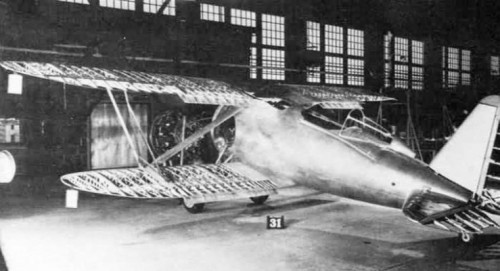
The FDB‑1 was one of the most technologically advanced biplanes ever built.
Its construction featured:
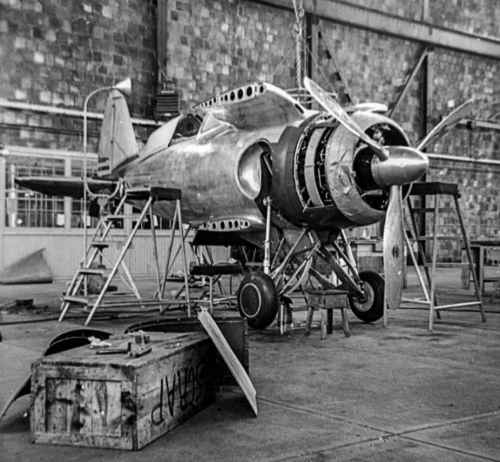
All‑metal monocoque fuselage with flush‑riveted stressed skin, a technique used on cutting‑edge monoplanes like the Spitfire and Bf 109.
Retractable landing gear, hydraulically operated—extremely rare for biplanes.
The wheels retracted into fuselage wells ahead of the lower wing.
Gull‑wing upper wing, improving forward visibility and aerodynamic efficiency.
Fabric‑covered metal wings with trailing‑edge flaps on both planes and automatic leading‑edge slots on the upper wing.
An anti‑spin parachute is housed in the tail cone, an experimental safety device.
Fuel was stored in two semicircular tanks between the wheel wells, totalling 95 US gallons (360 L).
The structure was stressed 60% above requirements, indicating Gregor’s emphasis on durability and dive‑bombing capability.
Cockpit and Pilot Environment
The cockpit was fully enclosed with a rearward‑sliding canopy, providing excellent all‑around visibility except directly forward, where the gull wing obstructed the view.
The pilot sat in an adjustable seat, another modern feature.
Powerplant
The aircraft was powered by a Pratt & Whitney R‑1535 Twin Wasp Junior, rated at 700–750 hp, depending on the variant.
This engine was widely used in American aircraft of the era and gave the FDB‑1 competitive power for a biplane.
Armament (Planned but Never Installed)
Although the prototype flew unarmed, the design included:
Two fuselage‑mounted .50 cal machine guns, synchronised to fire through the propeller arc.
Two 116 lb (53 kg) bombs, one under each lower wing.
This combination would have made the FDB‑1 a true fighter‑bomber, capable of interception and ground‑attack missions.
Performance and Flight Characteristics
Test pilot reports and engineering assessments indicated:
Excellent manoeuvrability, consistent with biplane heritage.
Good climb rate and handling, especially at low speeds.
Forward visibility issues due to the gullwing.
Lower‑than‑predicted top speed, a critical shortcoming.
Control and flap problems, likely related to the complex multi‑wing flap system.
Although exact performance numbers were never finalised, the aircraft could not match the speed of contemporary monoplanes, which were exceeding 300 mph by 1938.
Variants
Only one prototype was ever built.
No variants entered production.
The aircraft is sometimes referred to as the following:
Model 10 FDB‑1
Gregor Fighter
CCF FDB‑1
These are all designations for the same prototype.
Operational Fate and WWII Context
By the time the FDB‑1 flew, the world’s air forces had decisively shifted to monoplanes.
Even nations still operating biplanes (Italy, the USSR, and Japan) were rapidly replacing them.
Canada, preparing for war in Europe, sought modern fighters from abroad rather than investing in an unproven domestic biplane.
Despite the RCAF’s urgent need for fighters in 1939–1940, the FDB‑1 was never purchased, likely due to the following:
Insufficient speed compared to monoplane fighters.
Limited industrial capacity for mass production.
The availability of proven foreign designs.
The sole prototype was stored at Cartierville, Quebec, during the war.
In 1945, it was destroyed in a hangar fire, ending the story of Canada’s last biplane fighter.
Historical Significance
Although it never entered service, the FDB‑1 remains historically important as the following:
Canada’s only indigenous fighter design of the pre‑WWII era.
One of the most advanced biplanes ever built, incorporating features that were otherwise exclusive to top‑tier monoplanes.
A symbol of the transitional period in aviation when designers attempted to push biplane technology to its limits before the monoplane rendered it obsolete.
Its failure was not due to poor engineering but rather the rapid pace of global aeronautical innovation.