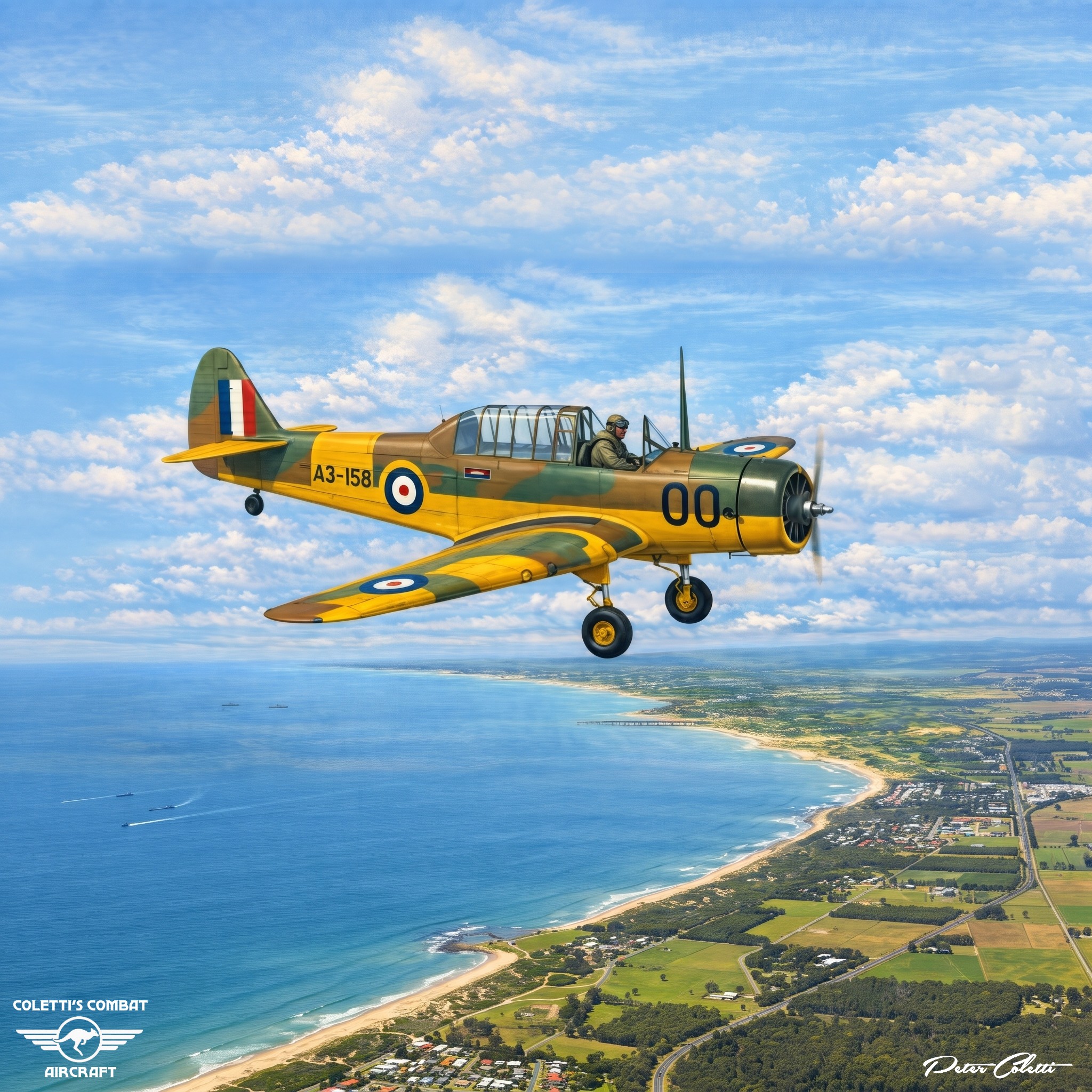
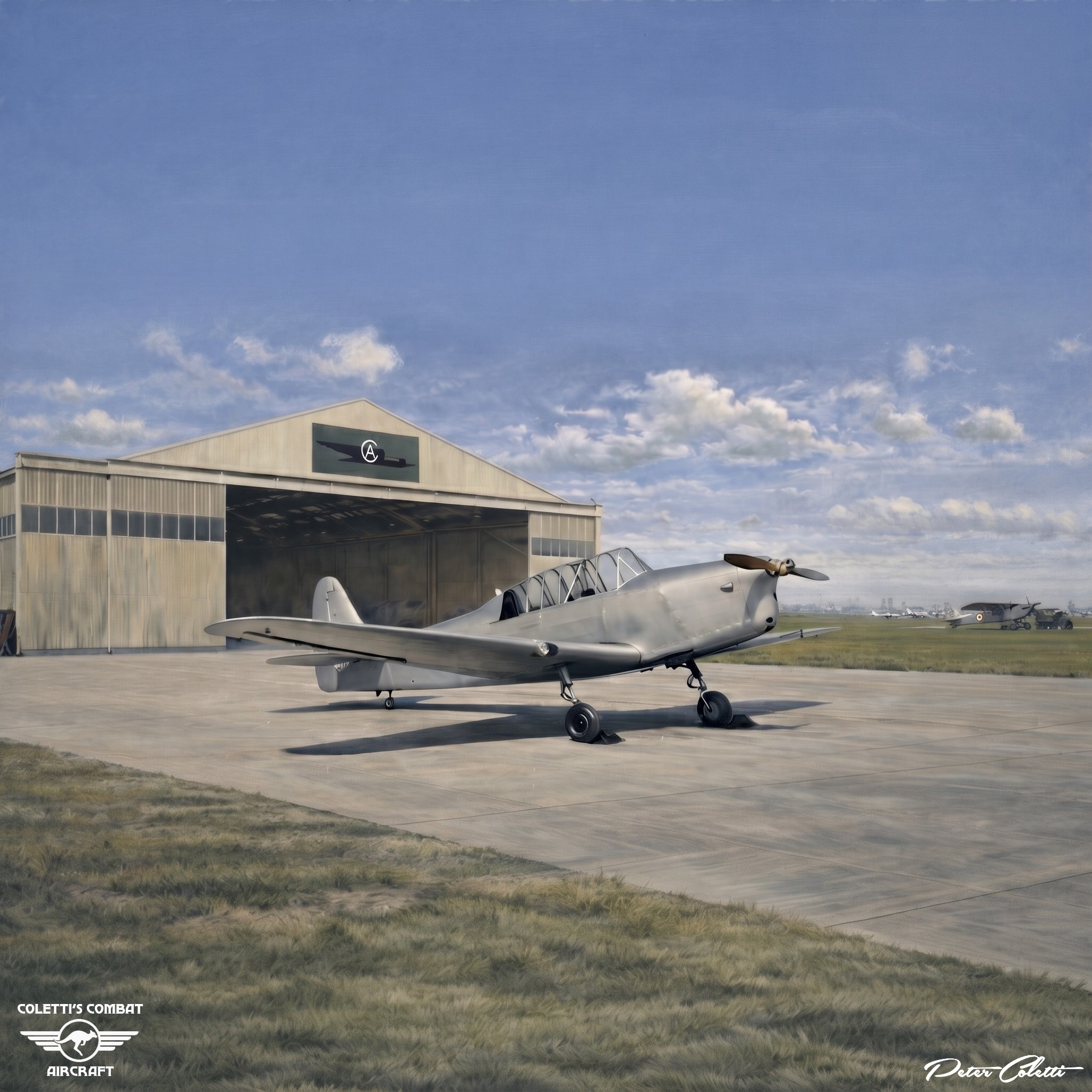
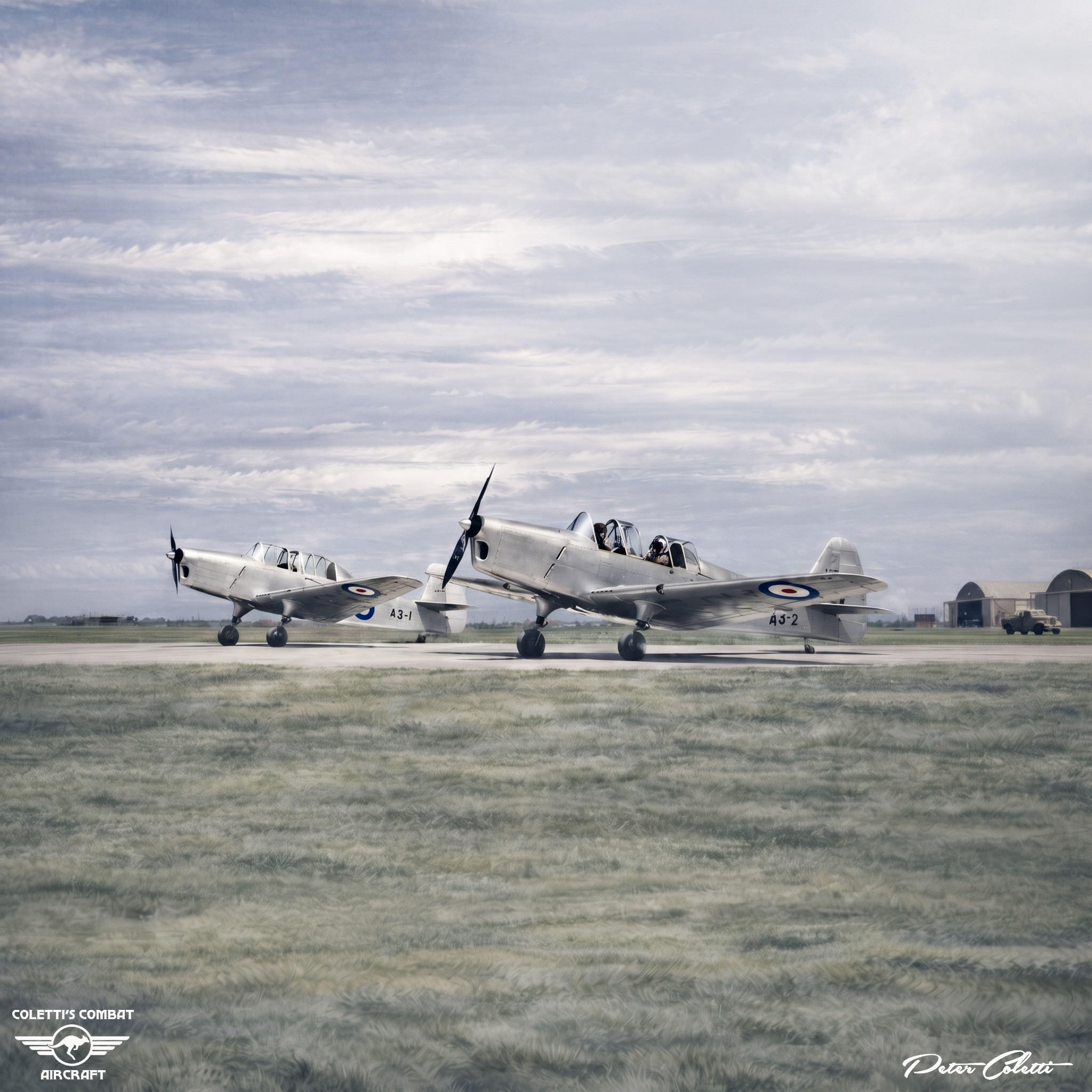
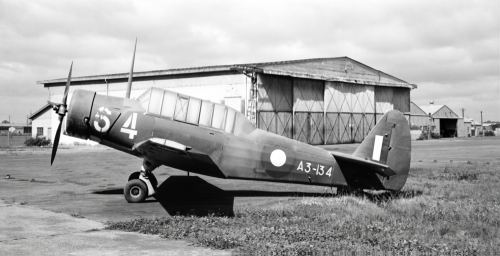
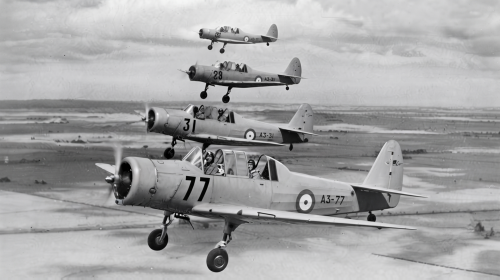
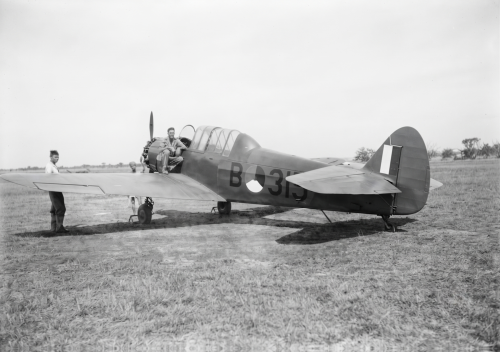
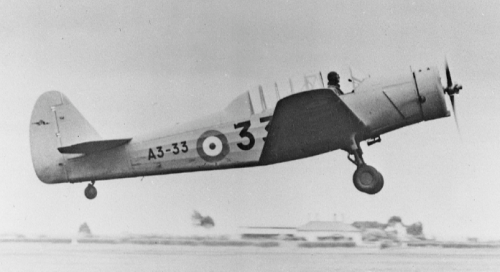
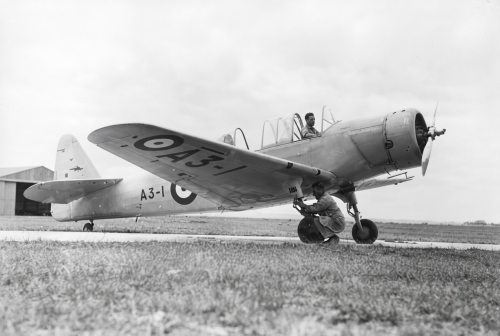
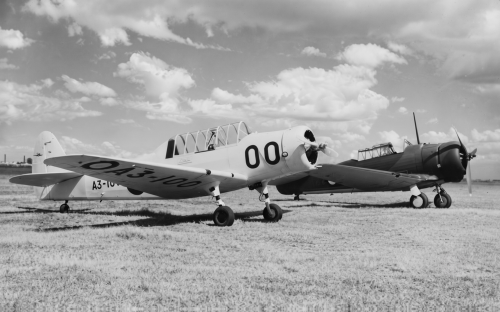
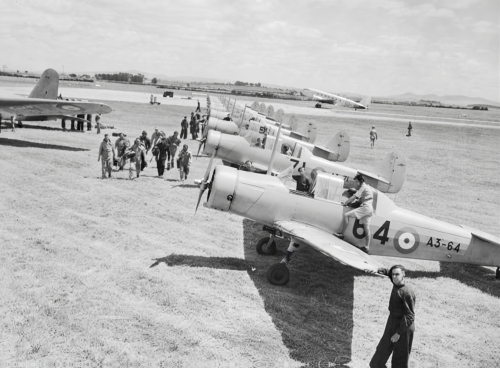
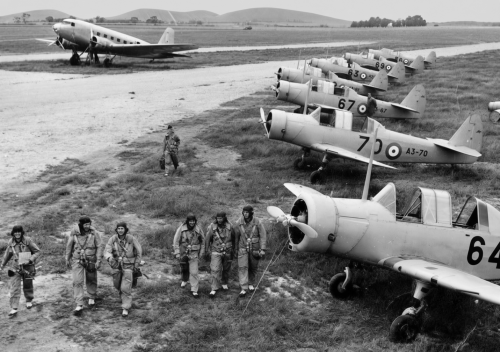
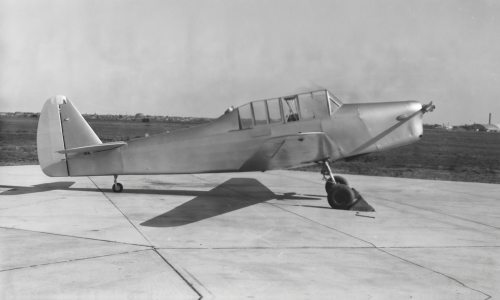
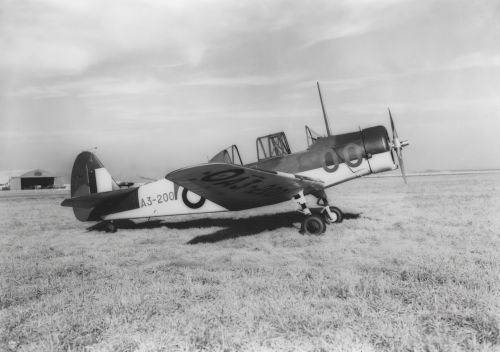
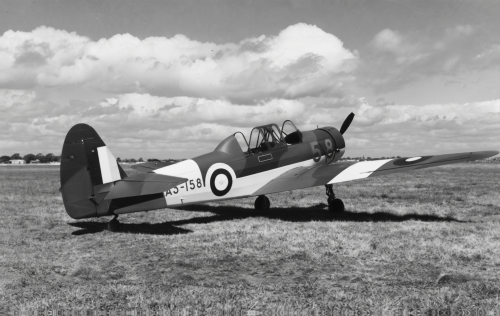
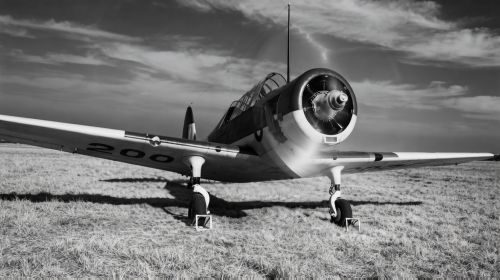
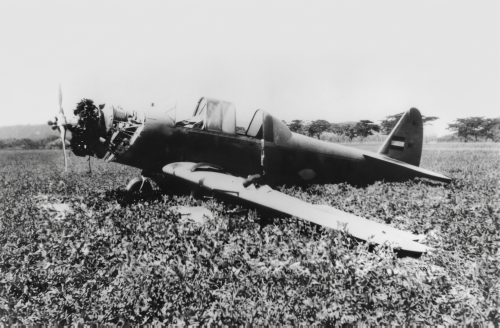
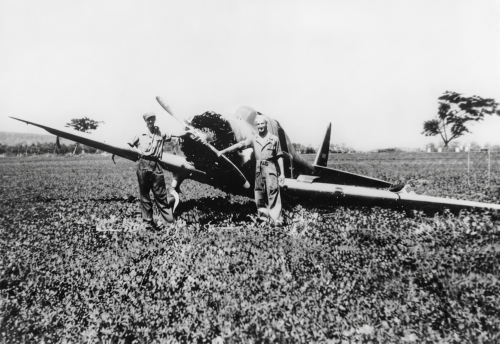
The CAC Wackett sits right at the moment when Australia decided it needed its own aviation industry, not just imported machines.
It’s a modest trainer on paper, but its story is basically the story of Australia learning to design, build, and support military aircraft under wartime pressure.
Origins and development
Australian industry and RAAF Specification 3/38
National context:
In the late 1930s, with war looking increasingly likely, the Australian government pushed for locally designed and manufactured aircraft so the Royal Australian Air Force (RAAF) wouldn’t be entirely dependent on British supply lines.
The newly formed Commonwealth Aircraft Corporation (CAC), based at Fishermans Bend in Melbourne, was central to that plan.
RAAF requirement:
In June 1938 the RAAF issued Specification No. 3/38 for a basic trainer: a single‑engine, low‑wing, two‑seat monoplane with tandem cockpits under a canopy; a fixed undercarriage, flaps and brakes; full aerobatics; and suitability for ab initio training.
The engine was specified as the de Havilland Gipsy Major.
CAC proposal and prototypes:
CAC submitted a design in October 1938 and was authorised to build two prototypes, designated CA‑2 and named “Wackett Trainer” after Sir Lawrence Wackett, CAC’s general manager and chief designer.
A wooden mock‑up of the fuselage was ready by April 1939, but progress was slowed because CAC was still completing its factory and airfield at Fishermans Bend while building the aircraft.
Engine evolution and flight testing
First flights:
The first CA‑2 prototype flew on 19 September 1939 with a Gipsy Major Series II engine driving a de Havilland variable‑pitch metal propeller.
It quickly proved underpowered.
The second prototype was therefore fitted with a more powerful Gipsy Six taken from a Tugan Gannet with a wooden propeller and flew in early November 1939.
The first prototype was subsequently re‑engined with a Gipsy Six as well.
Performance and supply problems:
Although the Gipsy Six improved in‑flight performance, its extra weight largely cancelled out gains in take‑off performance.
More critically, de Havilland in Britain could not guarantee sufficient deliveries of Gipsy Six engines due to wartime demands.
CAC therefore turned to the American Warner Scarab radial engine, which was available in the required numbers.
Both prototypes were re-engined with 165–175 hp Warner Scarab radials in the mid‑1940s, driving Hamilton Standard 2B20 two‑blade propellers.
Flight trials confirmed that this combination gave acceptable performance for the trainer role.
From CA‑2 to CA‑6 and production
RAAF hesitation and commitment:
Delays with engines and the slow ramp‑up of CAC’s facilities meant the RAAF initially leant heavily on imported de Havilland DH.82 Tiger Moths for elementary training under the Empire Air Training Scheme (EATS).
For a time it looked as if the Tiger Moth would cover most basic training needs, and the Wackett might remain a small‑scale project.
However, in August 1940 the RAAF issued Specification 1/40 for the supply of the CAC Wackett, formally committing to the type as a production trainer.
The production version was designated CA‑6 Wackett Trainer.
Production run:
The first CA‑6 production aircraft flew on 6 February 1941 and entered service in March 1941.
Ultimately about 200–202 Wacketts were built between early 1941 and April 1942, making it the first Australian‑designed aircraft to enter mass production.
Propeller and engine supply issues:
Even after the design was settled, production was hampered by erratic supplies of Hamilton Standard propellers (manufactured locally under licence by de Havilland Australia) and Warner Scarab engines.
In the first half of 1941, completed airframes accumulated at Fisherman’s Bend awaiting propellers and engines.
CAC used this downtime to incorporate structural refinements, notably thicker lower wing skins based on early service experience.
Design and construction
General configuration
Layout:
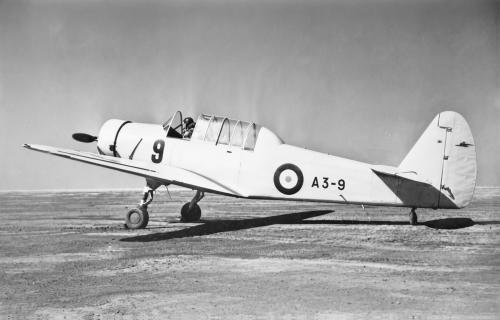
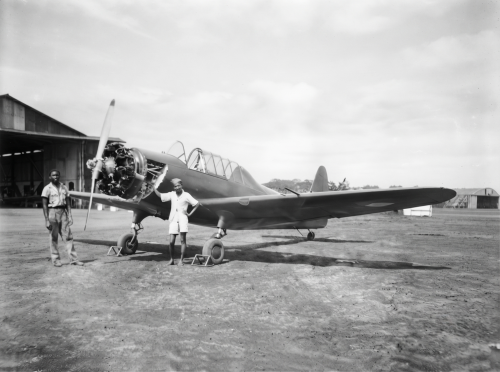
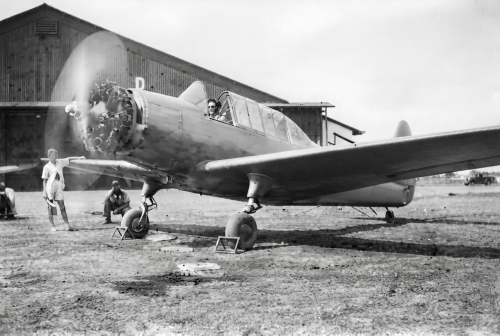
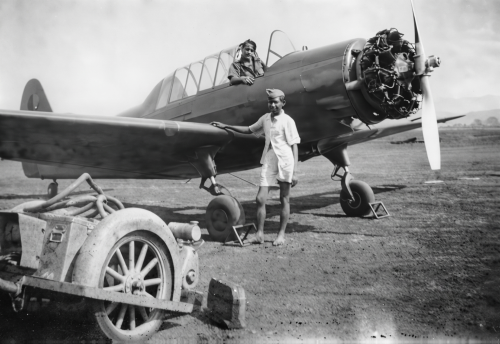
The Wackett is a low‑wing monoplane with tandem seating under a long, translucent canopy and a fixed tailwheel undercarriage.
It was designed to be fully aerobatic yet simple enough for elementary training, with flaps and brakes but no retractable gear.
A dummy undercarriage lever was fitted in the cockpit so trainees could practise “gear” operation and develop habits for later transition to retractable‑gear aircraft like the CAC Wirraway.
Structure and materials
Fuselage:
The fuselage is a welded steel‑tube structure, fabric‑covered, chosen for robustness and ease of repair with relatively simple tooling.
This approach also reduced dependence on large quantities of light alloys, which were more constrained in wartime.
Wings and tail:
The wings, tailplane, and fin/rudder are of wooden construction, plywood-skinned.
Wood was abundant in Australia and could be worked by a broader industrial base, including furniture and boat-building trades, which made it a pragmatic choice for rapid expansion of aircraft production.
Cockpit and controls:
The cockpit layout closely mirrors that of the CAC Wirraway, with conventional flight controls, throttle and mixture levers, and instrumentation suitable for basic and intermediate training.
Tandem seating allows the instructor in the rear cockpit to monitor and override the student’s actions.
The canopy can be opened in flight, and the arrangement allows both occupants to exit by parachute without obstructing each other – explicitly required by the original RAAF specification.
Powerplant and systems
Engine:
Production Wacketts use the Warner R‑500 Super Scarab, a 7‑cylinder air‑cooled radial rated at about 175 hp.
This engine is mounted in a neat radial cowling, giving the aircraft a compact nose and good forward visibility over the wing.
Propeller:
The standard propeller is a two‑blade Hamilton Standard 2B20, manufactured under licence in Australia.
Earlier prototypes used de Havilland variable‑pitch propellers with inline engines, but the radial installation settled on the simpler two‑blade unit.
Undercarriage and equipment:
The fixed main undercarriage uses faired legs and spats in some configurations, with a small tailwheel at the rear.
Brakes and flaps are fitted, as specified, giving trainees experience with systems they would encounter on more advanced types.
Some aircraft were equipped with radio training equipment when used at wireless air gunners’ schools.
Performance and handling
Dimensions and weights
Typical figures (CA‑6):
Length: about 26 ft (≈7.9 m)
Wingspan: about 37 ft (≈11.3 m)
Height: about 9 ft 10 in (≈3.0 m)
Empty weight: around 1,900–1,910 lb (≈865–870 kg)
Maximum weight: around 2,590 lb (≈1,175 kg)
These numbers place the Wackett in the same general size class as other basic trainers of the era, such as the Tiger Moth and Fairchild PT‑19.
Performance envelope
Speeds and range:
Maximum speed: about 100 kt (≈115 mph / 185 km/h)
Cruise speed: somewhat lower, suitable for training circuits and local area flights
Range: roughly 425 miles (≈684 km)
The Warner Scarab gives the Wackett adequate climb and cruise performance for its role, though it is not fast.
The aircraft’s relatively low wing loading and simple systems make it forgiving for students while still capable of aerobatics.
Handling characteristics
In service, the Wackett was regarded as a stable, predictable trainer with good control harmony and sufficient power for basic aerobatic manoeuvres.
The low‑wing layout and enclosed canopy gave it a more “modern” feel compared to the open‑cockpit biplane Tiger Moth, helping bridge the psychological and practical gap to more advanced monoplanes like the Wirraway and, later, combat types.
Variants and derivatives
CA‑2 prototypes
Role:
The CA‑2 designation covers the two prototypes built to prove the design and explore engine options.
They went through the sequence of Gipsy Major → Gipsy Six → Warner Scarab, and their flight testing shaped the final CA‑6 configuration.
CA‑6 production Wackett Trainer
Main variant:
The CA‑6 is the standard production trainer used by the RAAF. Around 200–202 were built, carrying RAAF serials in the A3‑1 to A3‑200 range (with some gaps).
They served primarily as basic and intermediate trainers and as radio training aircraft.
Civil and agricultural conversions
Post‑war, many surplus Wacketts were sold into civilian hands and registered with VH prefixes.
Several were converted for agricultural work—crop‑dusting and spraying—by companies such as Kingsford Smith Aviation Services, leading to the Kingsford Smith Cropmaster and later Yeoman Cropmaster developments.
These aircraft used Wackett airframes as a starting point but were substantially modified, including changes to engines, cockpits, and agricultural equipment.
Operational history and WWII context
Role in the RAAF training system
Empire Air Training Scheme:
Under the Empire Air Training Scheme, Australia became a major contributor of trained aircrew to the wider Commonwealth war effort.
The DH.82 Tiger Moth was selected as the primary elementary trainer, and large numbers were imported and built locally.
This decision limited the Wackett’s production run, but the type still found a niche as a follow‑on trainer and specialist training platform.
Training units:
Wacketts served at various RAAF training schools from 1941 to 1945, including Wireless Air Gunners Schools, where they were used as radio training aircraft.
Their more modern monoplane configuration and enclosed cockpit made them useful for familiarising students with the environment they would encounter in operational aircraft.
Strategic significance
Industrial learning curve:
The Wackett’s greatest impact was arguably industrial rather than tactical.
It was the first aircraft wholly designed and developed by CAC and the first Australian‑designed aircraft to be mass‑produced.
The experience gained in designing the structure, integrating engines and systems, managing supply chains, and solving production bottlenecks fed directly into later projects, including the Wirraway and, eventually, more advanced types.
Local autonomy:
By fielding a home‑grown trainer, Australia demonstrated that it could support at least part of its training pipeline with domestic production.
In a war where shipping lanes were threatened and priorities in Britain were focused on home defence, this autonomy mattered—even if the Wackett’s numbers were modest compared to imported types.
Post‑war service and exports
Civil use in Australia:
After the war, more than 40 Wacketts were sold to private owners and entered the Australian civil register.
They were used for general flying, training, and agricultural work.
Many deteriorated over time due to outdoor storage and limited support, but a handful survived into the 1960s and beyond.
Royal Netherlands East Indies Army Air Force and Indonesia:
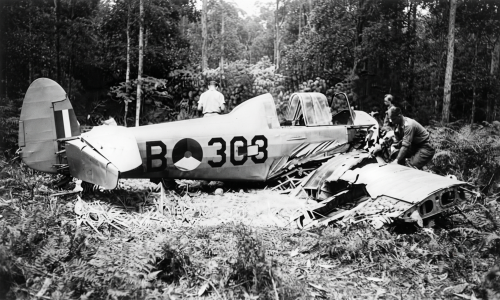
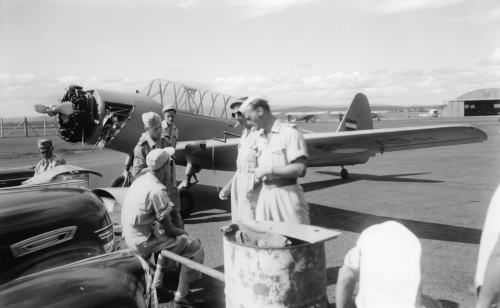
Between 1947 and 1950, about 30 Wacketts were exported to the Royal Netherlands East Indies Army Air Force, making them the first Australian‑designed and built aircraft to serve a foreign air arm.
After Indonesian independence, surviving aircraft were taken over by the Indonesian Air Force.
Surviving examples: Today only a small number of Wacketts remain, mostly in museums.
One notable survivor is CA‑6 Wackett A3‑22 at the Moorabbin Air Museum, undergoing restoration to display standard.
These aircraft are valued not just as trainers but as physical evidence of Australia’s early steps into indigenous military aviation design.
Place in WWII aviation history
The CAC Wackett is not a frontline combat aircraft, and it never became a large‑scale international trainer like the Tiger Moth or Harvard.
Its importance lies in three intertwined threads:
Industrial foundation: It proved that Australia could design, test, and mass‑produce a modern monoplane trainer, building the skills and infrastructure that wartime and post‑war projects depended on.
Training bridge: It gave RAAF trainees experience in a low‑wing, enclosed‑cockpit monoplane with flaps and brakes, easing the transition from simple biplanes to more complex combat aircraft.
Symbol of autonomy: In the broader WWII context, the Wackett symbolised Australia’s determination to stand on its own aviation capability rather than rely entirely on overseas supply.