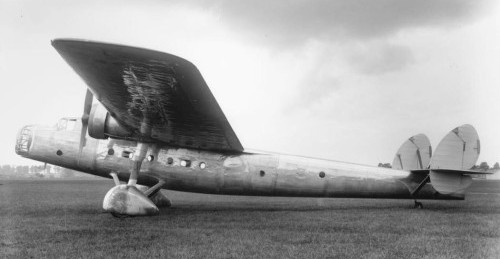
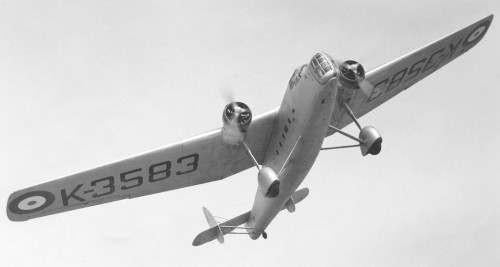
The Bristol Bombay emerged from a 1931 Air Ministry requirement—Specification C.26/31—calling for a modern monoplane capable of serving simultaneously as a troop transport and a medium bomber, replacing the ageing Vickers Valentia biplane then used in Britain’s Middle Eastern and Indian commands.
The aircraft needed to carry 24 troops or equivalent cargo while also possessing a meaningful bombload and defensive armament for bomber duties.
This dual‑role concept was typical of British interwar thinking, which sought economical designs capable of multiple missions.
Competing designs included the Armstrong Whitworth A.W.23 and Handley Page HP.51, but Bristol’s proposal—designated Type 130—was selected for prototype construction.
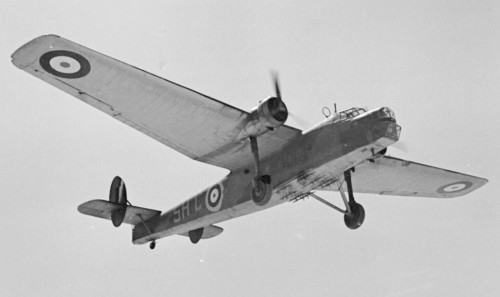
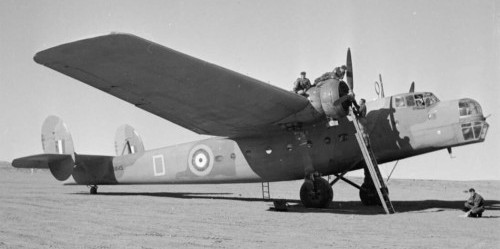
Bristol Type 130A Bombay (Early)
Design and Engineering
Structural Innovations
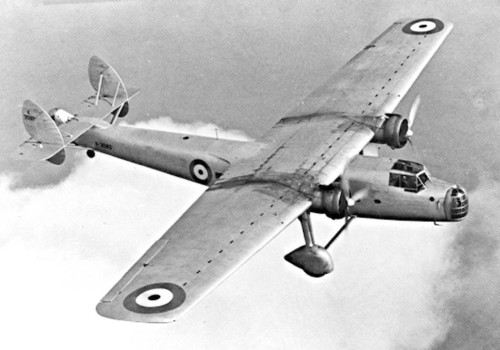
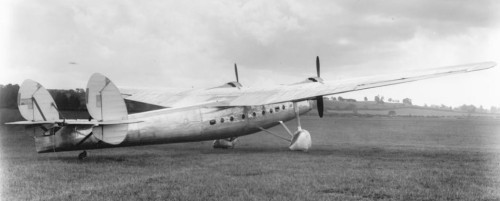
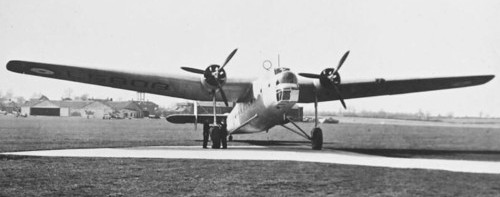
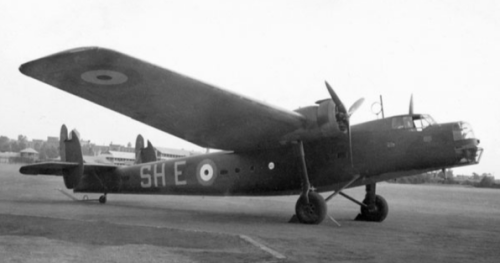
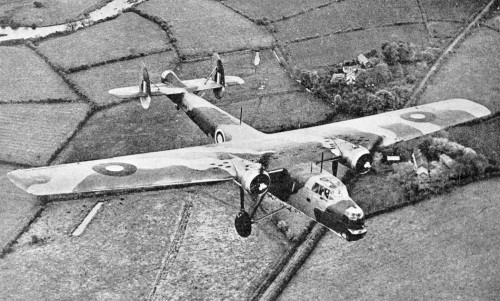
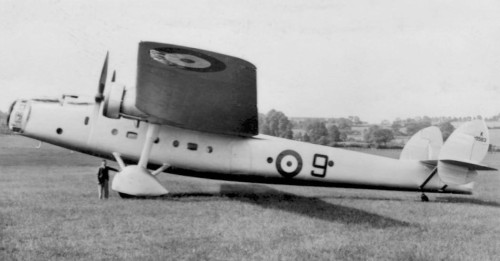
The Bombay was a high‑wing, all‑metal cantilever monoplane with a fixed tailwheel undercarriage and twin fins and rudders.
Its most significant engineering feature was its advanced wing structure.
Bristol’s earlier Bagshot monoplane had suffered dangerous aileron reversal due to inadequate torsional rigidity, prompting a major research effort into stressed‑skin wing construction.
The resulting Bombay wing used seven spars with high‑tensile steel flanges and alclad webs, forming a robust, torsion‑resistant structure that became a hallmark of Bristol’s later designs.
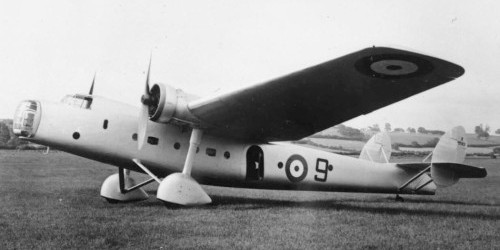
Bristol Type 130A Bombay (final update)
Crew Layout and Armament
The aircraft carried a crew of three to four:
Pilot in an enclosed cockpit
Navigator/bomb‑aimer in the nose
Radio operator/gunner, alternating between radio station and nose turret
Additional tail gunner when used as a bomber
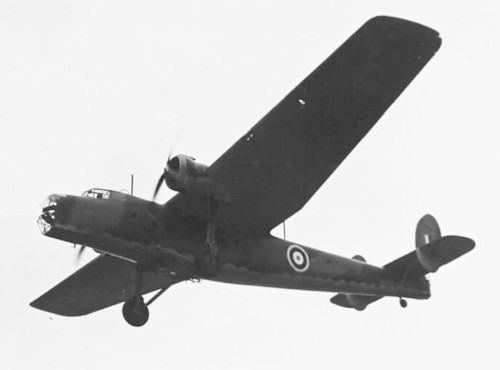
Production aircraft were mounted with hydraulically operated turrets in both nose and tail, each armed with a Vickers K machine gun.
Bombs—typically eight 250‑lb weapons—were carried externally on under‑fuselage racks.
Bristol Type 130A Bombay (Early)
Powerplant Evolution
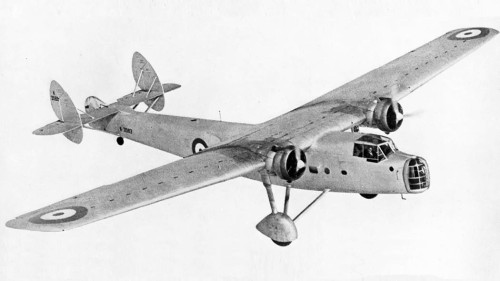
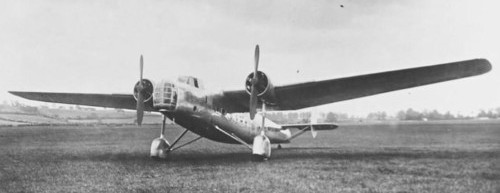
The prototype flew on 23 June 1935, powered by two 750 hp Bristol Pegasus III radial engines with two‑bladed propellers.
Production aircraft upgraded to Pegasus XXII engines delivering 1,010 hp, driving three‑bladed Rotol variable‑pitch propellers.
Wheel spats used on the prototype were deleted from service aircraft.
Bristol Type 130A Bombay (final update)
Production Challenges
Although an order for 80 Bombays was placed in 1937, Bristol’s Filton factory was fully committed to Blenheim bomber production.
Manufacturing was therefore assigned to Short & Harland in Belfast.
The Bombay’s complex wing structure caused significant delays, and the first production aircraft was not delivered until 1939.
Ultimately, 30 aircraft were cancelled, leaving a total production run of 51.
Bristol Type 130 Bombay Prototype
Technical Performance (Bombay Mk I)
Crew: 3–4
Capacity: 24 troops or 10 stretchers
Length: 69 ft 3 in
Wingspan: 95 ft 9 in
Empty/Gross Weight: 13,800 / 20,180 lb
Bristol Type 130A Bombay (final update)
Powerplant: 2 × Bristol Pegasus XXII, 1,010 hp each
Max Speed: 192 mph
Cruise Speed: 160 mph
Range (ferry): 2,230 miles
Rate of Climb: 750 ft/min
Armament: 2 × Vickers K guns; up to 2,000 lb of bombs
The Bombay was not fast, but it was reliable, spacious, and capable of long-range transport missions—qualities that made it invaluable in desert warfare.
Bristol Type 130A Bombay (final update)
Operational History in WWII
Early Service
The first production aircraft flew in March 1939, and deliveries began to No. 216 Squadron RAF in Egypt later that year.
Although obsolete as a bomber in Europe, it briefly served with No. 271 Squadron ferrying supplies to the British Expeditionary Force in France in 1940.
One notable episode involved French pilot Jean Demozay, who used an abandoned Bombay to escape France with 15 troops, later becoming an RAF ace.
Bristol Type 130A Bombay (Early)
Middle Eastern Combat
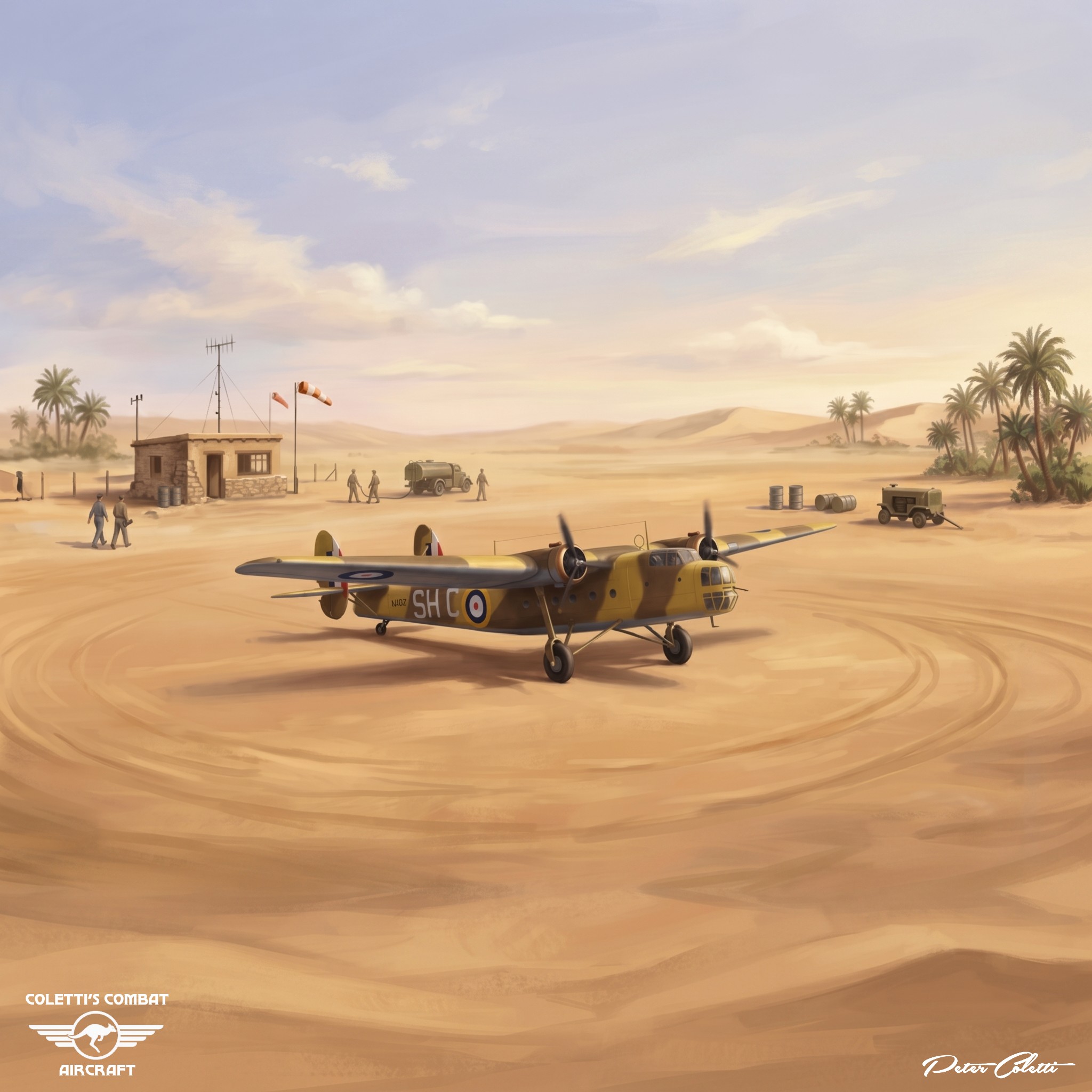
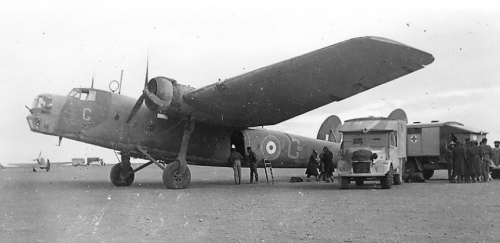
Bombay’s principal theatre was the Middle East, where 216 Squadron operated most of the fleet at some point.
When war with Italy began in June 1940, Bombays were pressed into service as night bombers, supplementing their standard transport role due to a shortage of modern aircraft.
Crews even improvised additional bombs by throwing them manually from the cargo door.
Bombay’s flew strikes against Benghazi, Tobruk, and targets in Italian Somaliland until Wellington bombers arrived in theatre and the Bombay returned to transport duties.
Bristol Type 130A Bombay (final update)
Transport and Special Operations
The type became essential for the following:
Medical evacuation during the Siege of Tobruk
Evacuating the Greek Royal Family from Crete in May 1941
Supporting the Anglo‑Iraqi War with troop movements
Bristol Type 130A Bombay (final update)
Delivering the first official SAS combat operation, dropping raiders on five German airfields on 17 November 1941
Loss of Lt Gen William Gott
On 7 August 1942, a Bombay carrying Lt Gen. William Gott—the intended new commander of the Eighth Army—was shot down, killing him and altering the course of British command in North Africa.
His death led to the appointment of Bernard Montgomery, a pivotal figure in the desert campaign.
Bristol Type 130A Bombay (final update)
Final Wartime Service
Bombays evacuated over 2,000 wounded during the Allied invasion of Sicily in 1943, with one crew credited with transporting 6,000 casualties over the course of the Italian campaign.
The type was finally withdrawn in 1944.
Variants
Type 130: Prototype
Type 130A / Bombay Mk I: Production bomber‑transport (originally Type 130 Mk II)
Type 137A: Proposed civil transport (unbuilt)
Type 137B: Proposed combi version (unbuilt)
Type 144: Proposed retractable‑undercarriage development for Specification B.4/34 (unbuilt)
Bristol Type 130 Bombay Prototype
Assessment and Legacy
The Bristol Bombay was never a cutting‑edge combat aircraft.
By the outbreak of WWII, its speed, defensive armament, and fixed undercarriage were already outdated.
Yet its robust construction, long range, and large cabin made it indispensable in the vast expanses of the Middle East and the Mediterranean.
Bristol Type 130A Bombay (Early)
Its wing design directly influenced later Bristol aircraft, including the Bristol Freighter, whose wing was based on the Type 130’s stressed‑skin structure.
Although produced in small numbers, the Bombay played a disproportionately important role in early-war desert operations, special forces development, and medical evacuation—earning a quiet but meaningful place in RAF history.