The Bristol Buckmaster was born from the RAF’s late‑war need for a modern, high‑performance twin‑engine trainer.
During the early 1940s, Bristol had developed the Buckingham, a fast medium bomber intended to meet shifting air ministry requirements.
By the time the Buckingham was ready, RAF doctrine had moved decisively towards the de Havilland Mosquito, leaving the Buckingham without a meaningful operational role.
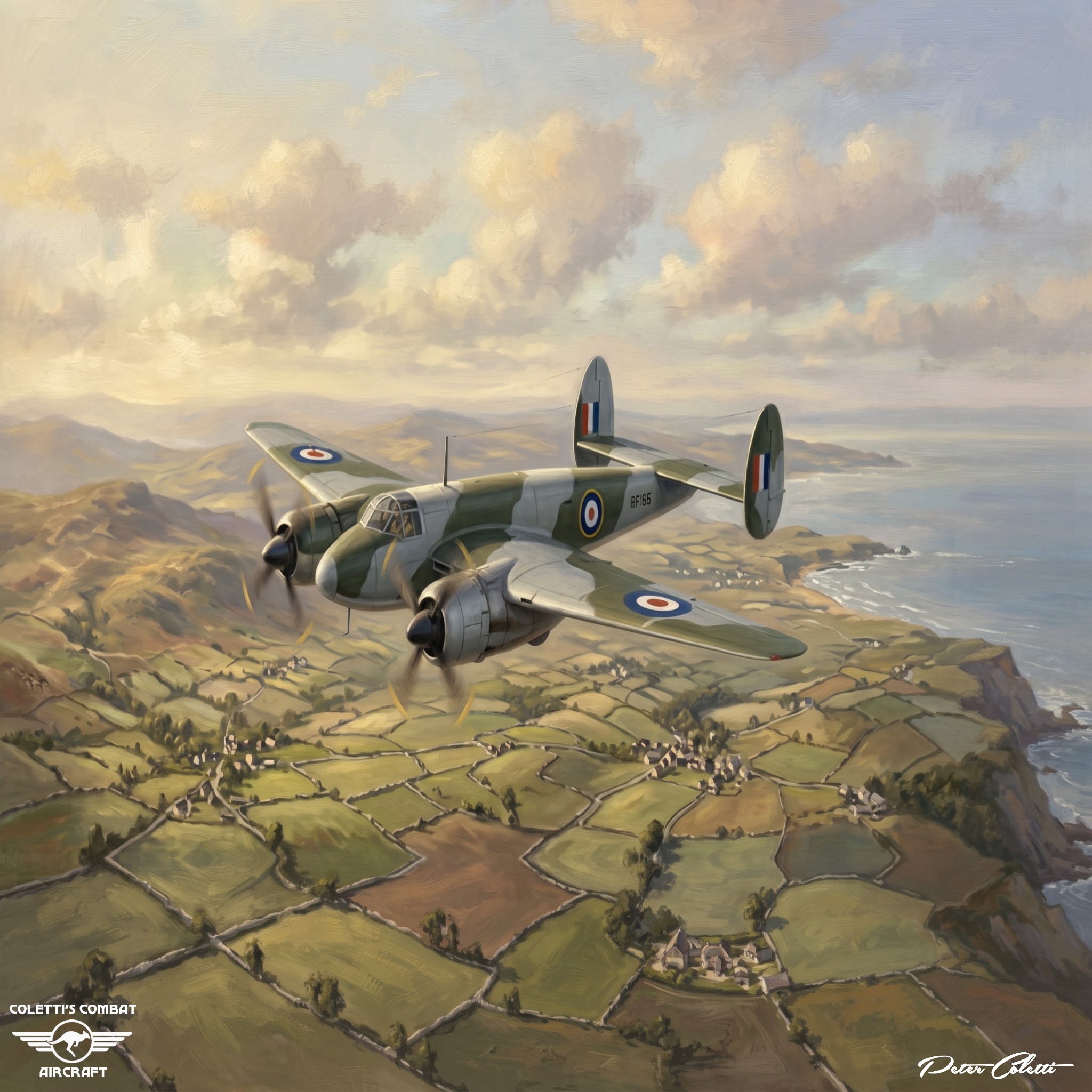
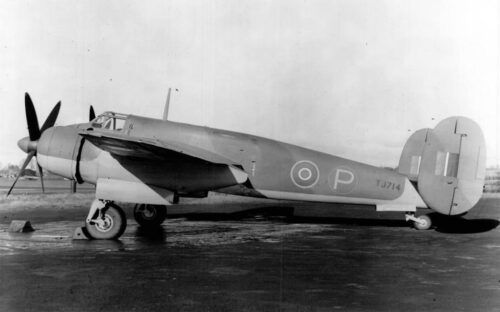
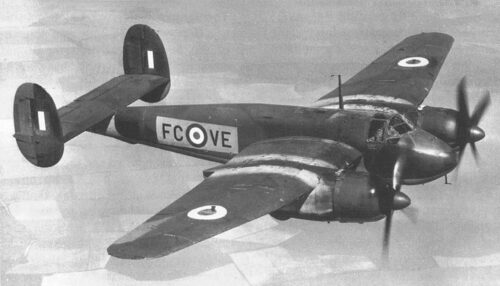
Bristol Buckmaster (Central Flying School)
Rather than discard the airframes and tooling, the Air Ministry issued a new specification for an advanced trainer.
Bristol adapted the Buckingham’s structure, creating a dedicated training aircraft that retained the bomber’s power and speed but incorporated dual controls, revised crew accommodations, and systems suited to instruction rather than combat.
The first Buckmaster prototype flew in late 1944, and production followed quickly.
Although conceived during WWII, it entered service too late to participate in combat.
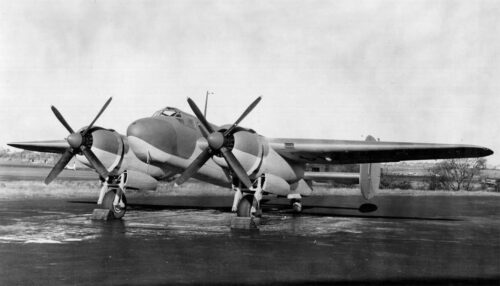
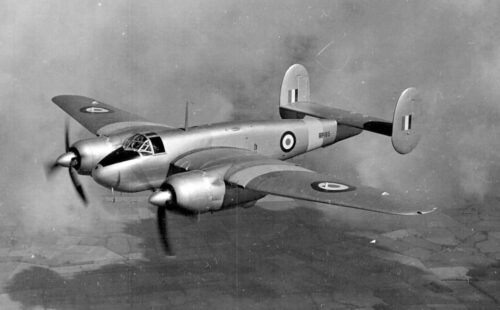
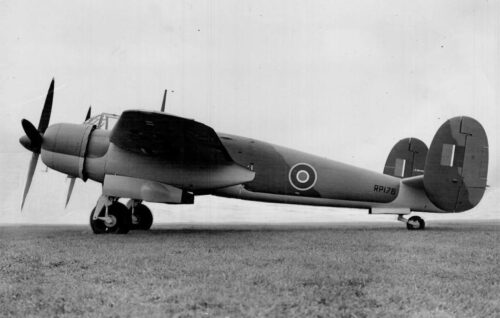
Bristol Buckmaster Prototype
Design Characteristics
The Buckmaster was a twin‑engine, mid‑wing monoplane with a conventional tail and retractable landing gear.
Its design emphasised stability, durability, and performance—qualities essential for training crews transitioning to high‑performance aircraft.
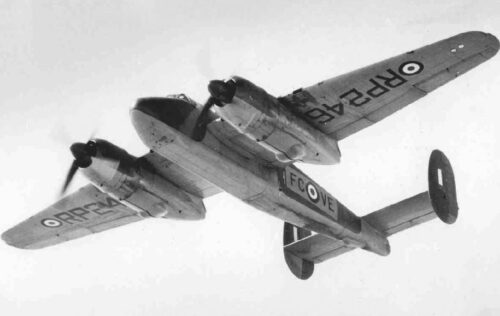
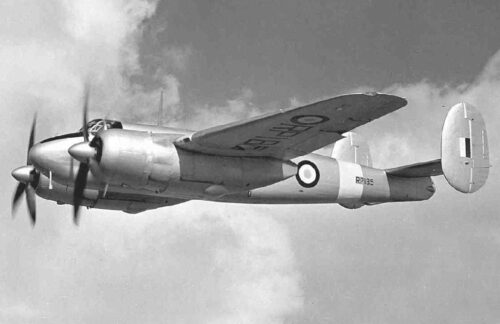
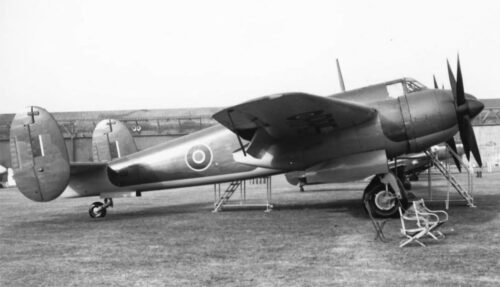
Bristol Buckmaster (OCU)
Key structural features included:
A deep fuselage accommodating instructor and trainee side‑by‑side
Reinforced airframe for repeated training cycles
Large wing area for predictable handling
Dual flight controls and full instrument panels
Space for a third crew member (typically a radio operator)
Bristol Buckmaster (OCU)
Powerplant and Performance
The aircraft was powered by two Bristol Centaurus radial engines, among the most powerful British piston engines of the era.
This gave the Buckmaster performance levels comparable to frontline aircraft, allowing realistic training for pilots destined for types such as the Mosquito, Beaufighter, and Brigand.
Bristol Buckmaster Prototype
Typical performance figures:
Maximum speed: around 560 km/h
Cruising speed: roughly 530 km/h
Range: approximately 3,200 km
Service ceiling: about 9,000 m
Take-off weight: over 15,000 kg
These numbers made the Buckmaster one of the fastest and most capable trainers ever fielded by the RAF.
Bristol Buckmaster (Central Flying School)
Systems and Training Role
The Buckmaster’s purpose was to prepare pilots for demanding operational aircraft.
To support this, it included:
Dual controls for instructor and trainee
Full blind‑flying instrumentation
Radio and navigation equipment equivalent to combat aircraft
High‑performance engines for realistic twin‑engine handling
Robust structure for intensive training schedules
Its speed and power allowed instructors to simulate operational flight regimes, including asymmetric thrust, high‑speed approaches, and instrument‑only navigation.
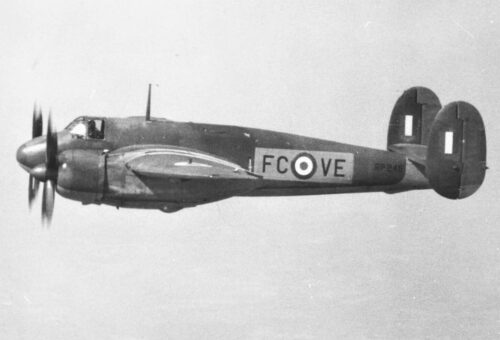
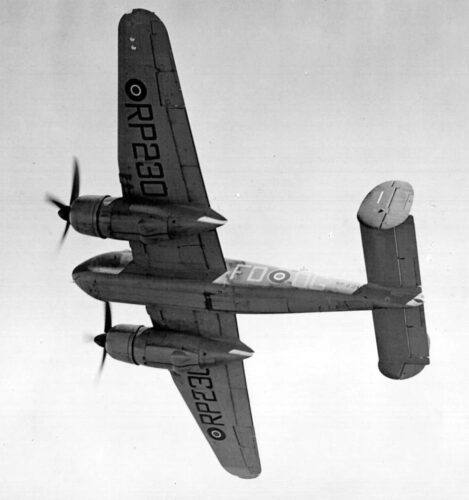
Bristol Buckmaster
Variants
The Buckmaster programme was straightforward, with essentially one main variant:
Bristol Buckmaster (Central Flying School)
Buckmaster T Mk I
Standard production trainer
Dual controls
Three‑person crew
No armament
Used for advanced and instrument training
No bomber or transport variants were developed; the Buckingham had already filled those roles before being superseded.
Bristol Buckmaster
Production and Service
Production began in 1945 and continued into 1946.
The aircraft served primarily with RAF training units, including the Central Flying School and advanced flying detachments.
Although it arrived too late for wartime operations, it played a significant role in the postwar RAF, helping maintain proficiency during demobilisation and preparing crews for the evolving fleet of late‑war and early Cold War aircraft.
The Buckmaster remained in service until the mid‑1950s, after which it was retired as jet‑powered trainers and more modern piston aircraft took over its role.
Bristol Buckmaster
WWII Context
The Buckmaster is a classic example of a wartime design whose operational purpose evaporated before it could be used.
The Buckingham bomber was overtaken by doctrinal changes, and the Buckmaster emerged as a practical way to repurpose the airframes and meet a pressing training need.
Although not a combat aircraft, it reflects the RAF’s transition from wartime urgency to postwar restructuring, bridging the gap between WWII piston‑engine combat types and the early jet era.