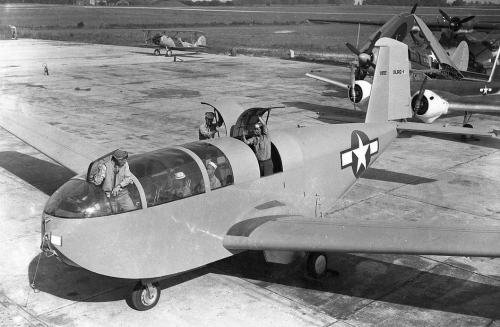
The Bristol XLRQ‑1 emerged from a brief but ambitious U.S. Navy and Marine Corps effort to develop amphibious assault gliders during the Second World War.
The concept was inspired directly by German airborne operations early in the war, prompting the U.S. naval services to explore whether gliders could deliver Marines and equipment onto contested beaches or inland landing zones without the noise and vulnerability of powered aircraft.
The Navy and Marine Corps formally initiated their glider programme in May 1941, envisioning two transport types: a 12‑seat and a 24‑seat glider.
The Naval Aircraft Factory was tasked with preliminary design work, with the expectation that the aircraft would be built largely of wood or composite materials to conserve strategic metals.
The ultimate goal was ambitious: enough gliders to transport an entire Marine battalion—715 men with equipment—into combat zones.
Towing was to be performed by Consolidated PBY Catalina flying boats.
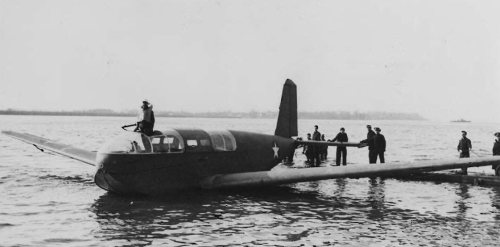
The Marine Corps added demanding operational requirements: the glider had to be capable of landing on both land and water, support static‑line parachute jumping, and even mount external defensive machine guns.
To support the programme, the USMC established Marine Glider Group 71 at Page Field, Parris Island, in 1942, training with Schweizer, Pratt‑Read, and Aeronca gliders and towing them with N3N Canary trainers and J2F Duck amphibians.
Development of the XLRQ
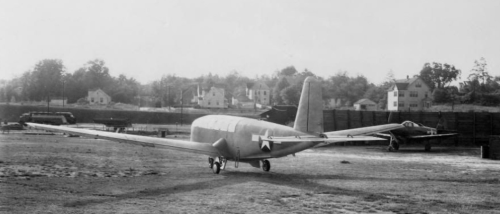
For the 12‑seat amphibious assault glider requirement, the Navy ordered prototypes from two companies: the Allied Aviation XLRA‑1 and the Bristol Aeronautical Corporation XLRQ‑1.
Both designs were judged technically successful, and the Navy initially ordered 100 of each type.
A Naval Aircraft Factory licence‑production version, designated LRN‑1, was also envisioned.
Despite an order for four XLRQ‑1 prototypes, only two airframes—Bureau Numbers 11561 and 11562—were ultimately completed.
The programme faltered due to several converging problems: glider assault was judged tactically unsuitable for the small, heavily fortified islands of the Pacific; production of gliders lagged behind expectations; and too many pilots were being diverted into glider training rather than powered aircraft roles.
The Navy and Marine Corps terminated the entire glider programme in 1943.
Design Characteristics
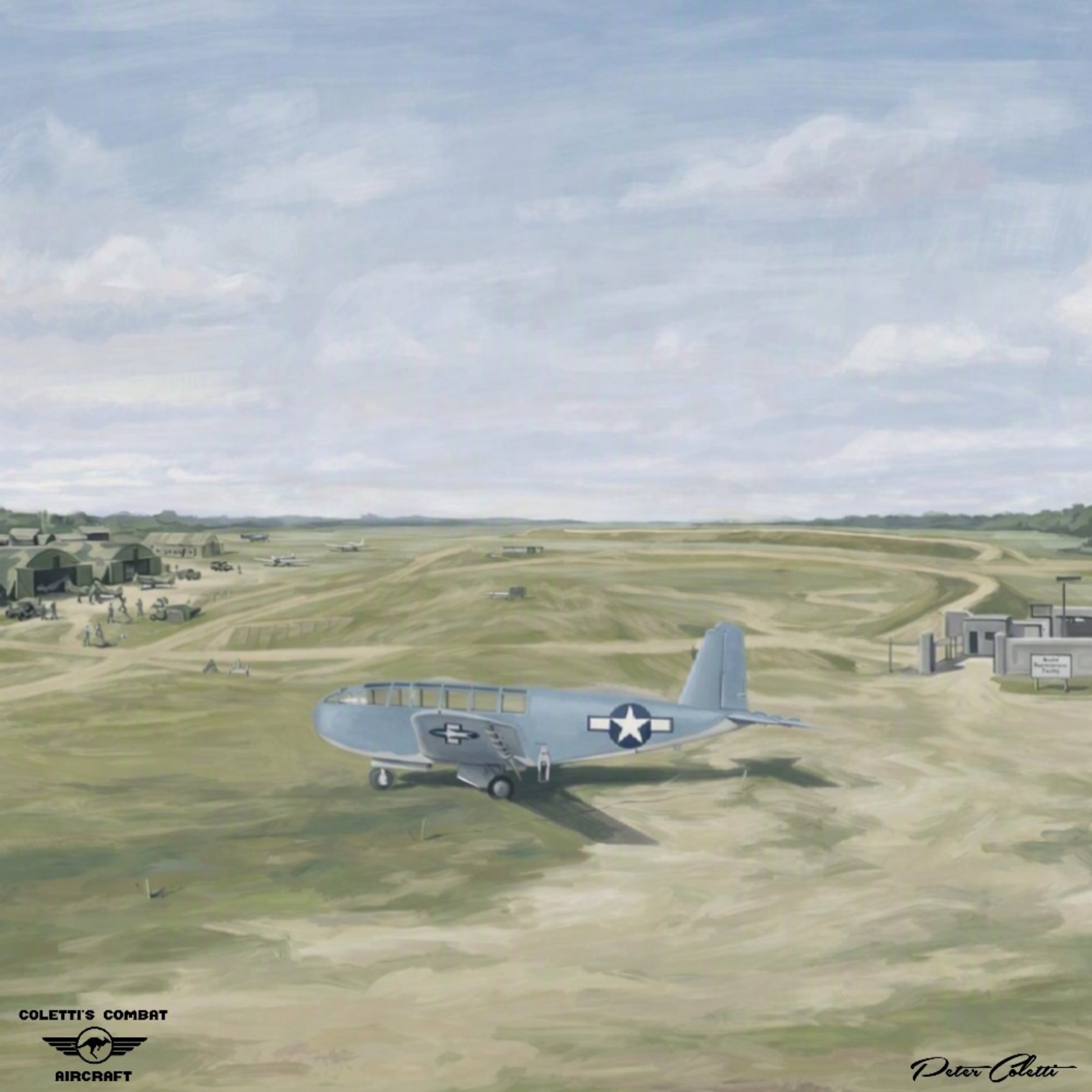
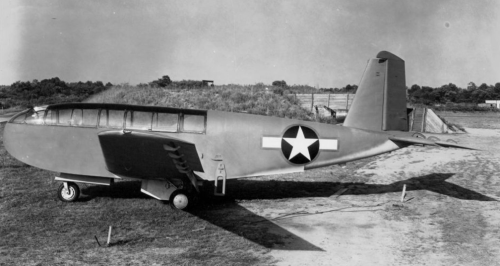
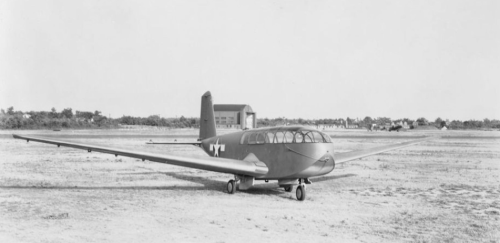
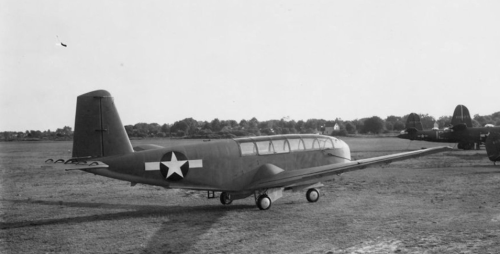
The Bristol XLRQ‑1 was a low‑wing amphibious transport glider designed to carry 10 fully equipped Marines plus a crew of two.
Its most distinctive feature was its ability to operate from both land and water—an unusual capability for a glider.
Key design elements included:
Retractable landing gear, allowing streamlined flight and water operations
Broad wing roots shaped to provide lateral stability on water, functioning almost like sponsons on a flying boat
A hull‑like fuselage optimised for water landings
Wooden/composite construction consistent with wartime material priorities
A large, high‑aspect‑ratio wing to maximise lift during tow and glide phases
A rear compartment sized for a Marine rifle squad with equipment
Although unpowered, the XLRQ was intended to be towed by PBYs at altitude, released near the target, and then glide silently to a landing zone—either a beach or lagoon—where Marines could disembark directly into combat.
Technical Specifications (XLRQ‑1)
Crew: 2
Capacity: 10 equipped Marines
Length: 43 ft 6 in (13.26 m)
Wingspan: 71 ft (22 m)
Height: 16 ft (4.9 m)
Wing area: 500 sq ft (46 m²)
Performance figures were never fully developed or published due to the programme’s cancellation before flight‑test data could be gathered beyond basic handling.
Operational Assessment and Cancellation
The XLRQ‑1 never progressed beyond prototype testing.
Several strategic realities doomed the concept:
Pacific island warfare demanded heavily armed, powered landing craft rather than silent gliders.
The risk of towing gliders over long ocean distances was judged unacceptable.
Production bottlenecks prevented glider units from reaching operational strength.
The Navy and Marine Corps needed pilots for powered aircraft, not gliders.
By late 1943, the amphibious glider concept was abandoned, and the two completed XLRQ prototypes were never used operationally.
Variants
Only one variant existed:
XLRQ‑1 – The initial and only prototype model; two were built.
A planned Naval Aircraft Factory version, LRN‑1, never advanced beyond the conceptual stage.
Place in WWII Aviation History Although obscure, the Bristol XLRQ represents a fascinating moment in U.S. naval aviation history—a period when the Navy and Marine Corps briefly explored unconventional airborne assault methods.
The programme reflected early‑war anxieties and the desire to match German airborne innovation.
Ultimately, the Pacific theatre’s unique tactical demands rendered glider assaults impractical, and the XLRQ became a historical footnote: a technically sound aircraft whose mission evaporated before it could be tested in combat.