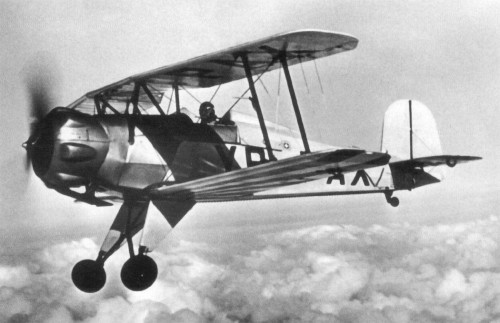
The Bücker Bü 133 Jungmeister emerged in mid‑1930s Germany as a direct response to the growing need for an advanced aerobatic and fighter‑training aircraft.
Its designer, Carl Bücker, had already achieved success with the Bü 131 Jungmann, a nimble basic trainer widely adopted by the Luftwaffe.
The Jungmann’s popularity created a natural demand for a more powerful, more agile aircraft capable of preparing pilots for the increasingly demanding performance envelopes of modern fighters.
Work on the Bü 133 began around 1934, with the goal of producing a compact, lightweight biplane optimised for aerobatics and advanced military instruction.
The design team retained the Jungmann’s structural philosophy—wood and steel tube construction with fabric covering—but refined the aerodynamics, reduced the wingspan, and installed a more powerful radial engine.
The prototype flew in 1935, immediately demonstrating exceptional agility and control harmony.
Its performance in aerobatic competitions quickly established the Jungmeister as one of the finest aerobatic aircraft of its era.
The Luftwaffe adopted the Bü 133 as its standard advanced aerobatic trainer, and foreign interest followed.
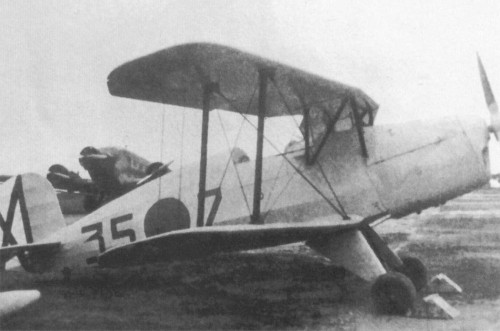
Production occurred not only in Germany but also under licence in Switzerland, Spain, and Romania, ensuring the aircraft’s longevity well beyond the Second World War.
Design Characteristics
Airframe and Structure
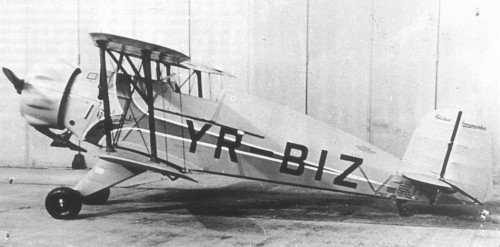
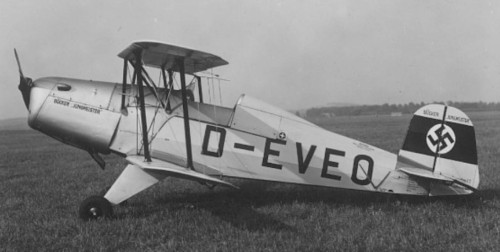
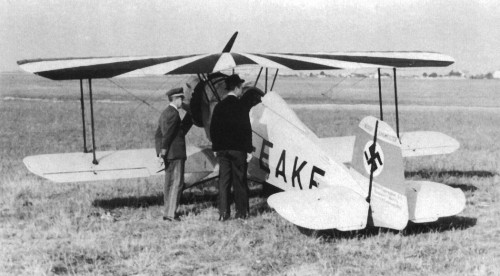
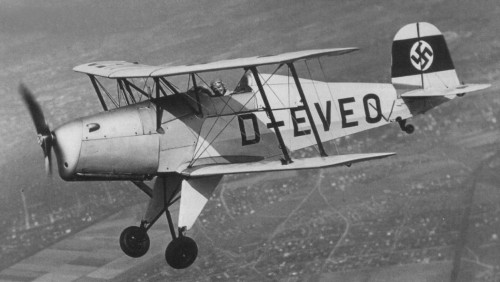
The Bü 133 was a single‑seat biplane, compact and purpose‑built for aerobatics.
Its construction combined the following:
Welded steel‑tube fuselage, faired with wooden formers and covered in fabric.
Wooden wings, braced conventionally with interplane struts and wires.
Staggered biplane layout, with reduced wingspan compared to the Bü 131 to increase roll rate and responsiveness.
The aircraft’s small size—only about 6 metres long—and low wing loading contributed to its extraordinary manoeuvrability.
Control surfaces were large and finely balanced, allowing precise handling even at low speeds or high angles of attack.
Cockpit and Controls
The cockpit was open, with a simple but robust layout typical of 1930s trainers.
The pilot sat close to the aircraft’s centre of gravity, improving control feel.
The Bü 133 featured:
Conventional stick‑and‑rudder controls
Basic instrumentation suitable for aerobatics and training
A fixed, tailskid undercarriage (later versions used a tailwheel)
The aircraft’s responsiveness made it ideal for teaching advanced manoeuvres, including spins, snap rolls, inverted flight, and complex aerobatic sequences.
Powerplant and Performance
The Jungmeister’s defining feature was its Siemens‑Halske Sh 14A radial engine, delivering around 160 hp.
This compact, reliable engine provided an excellent power‑to‑weight ratio, enabling the following:
Rapid climb rates
High roll rates
Sustained aerobatic performance without overheating
Typical performance figures:
Maximum speed: ~255 km/h
Cruise speed: ~200 km/h
Range: ~500 km
Service ceiling: ~4,000–5,000 m
While not fast compared to contemporary fighters, the Bü 133 was never intended for combat.
Its strengths lay in agility, responsiveness, and structural resilience under high G‑loads.
Operational Use and WWII Context
Role in the Luftwaffe
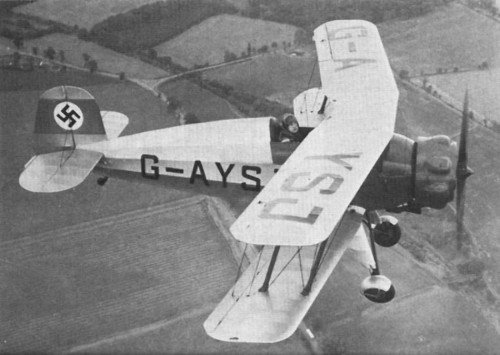
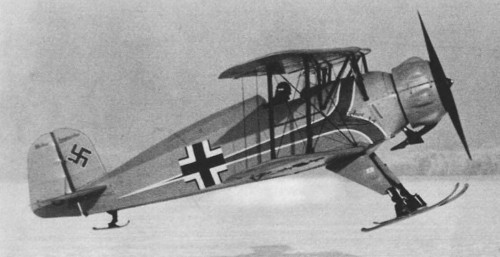
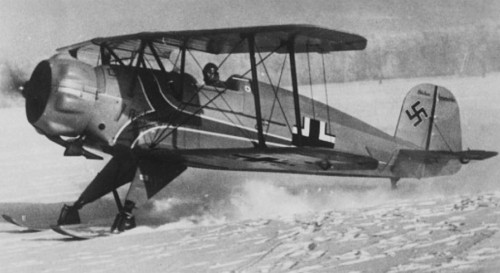
The Bü 133 entered Luftwaffe service in the late 1930s as the primary advanced aerobatic and fighter‑training aircraft.
It was used in:
Fighter pilot schools (Jagdfliegerschulen)
Aerobatic demonstration units
Training programmes preparing pilots for aircraft such as the Bf 109
Its ability to replicate the feel of high‑performance aircraft—without the cost or risk of using frontline fighters—made it invaluable.
Luftwaffe instructors praised its precision and forgiving nature, which allowed students to push boundaries safely.
International Service
The Jungmeister’s reputation spread quickly.
Several nations adopted it:
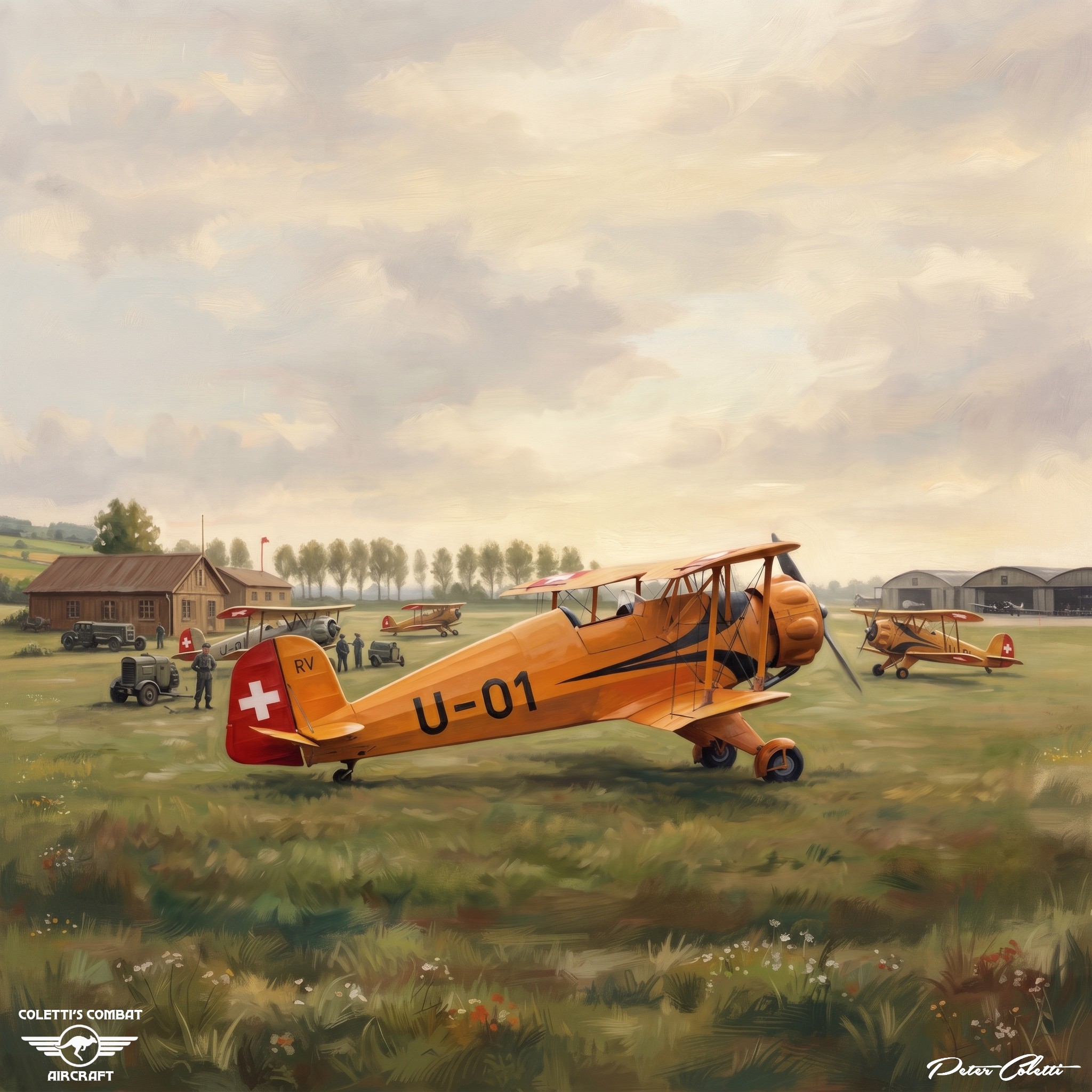
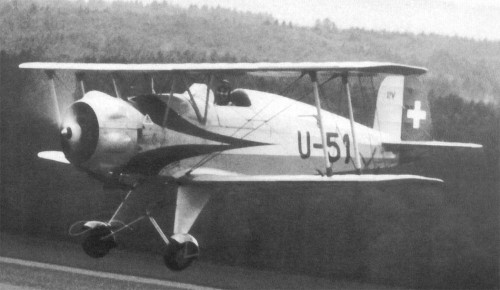
Switzerland built and operated the aircraft extensively, using it for military training and aerobatic teams.
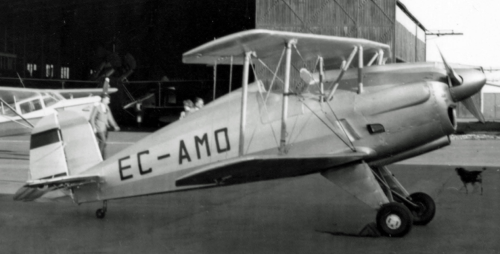
Spain produced the type under licence at CASA, continuing to operate it into the postwar era.
Romania also manufactured and used the aircraft.
The Bü 133 became a fixture in European aerobatic competitions, where it dominated pre‑war events and continued to win championships well into the 1950s.
Its longevity in civilian aerobatics is a testament to its exceptional design.
Survival and Legacy
Although produced in relatively small numbers compared to the Bü 131, the Jungmeister achieved legendary status among aerobatic pilots.
Postwar, surviving aircraft were prized by civilian flyers, and many remained active for decades.
The Bü 133’s influence can be seen in later aerobatic aircraft that adopted similar design philosophies—lightweight, responsive, and structurally robust.
Variants
Bü 133A
Initial prototype version
Powered by the Siemens Sh 14A radial engine
Served as the basis for later refinements
Bü 133B
Improved production model
Minor structural and aerodynamic refinements
Widely used by the Luftwaffe
Bü 133C
The most common and definitive version
Featured further structural strengthening
Adopted by foreign operators and licence-built abroad
Swiss and Spanish Variants
Locally produced versions with small modifications
Swiss aircraft often featured upgraded equipment and meticulous craftsmanship.
Spanish CASA‑built aircraft remained in service the longest.
The Bücker Bü 133 Jungmeister stands as one of the most iconic aerobatic aircraft ever built.
In the context of the Second World War, it played a crucial but understated role: shaping the skills of Luftwaffe fighter pilots and serving as a testbed for advanced manoeuvring techniques.
Its postwar legacy in aerobatic competition cemented its reputation as a masterpiece of pre‑war German aeronautical engineering.
Compact, elegant, and astonishingly capable, the Jungmeister remains a symbol of precision flying and a favourite among aviation historians and aerobatic enthusiasts.