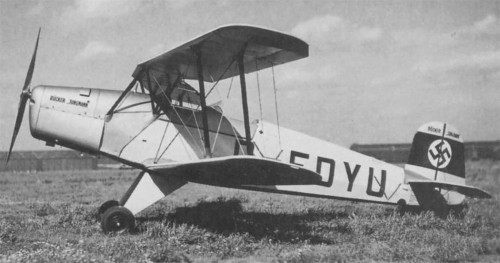
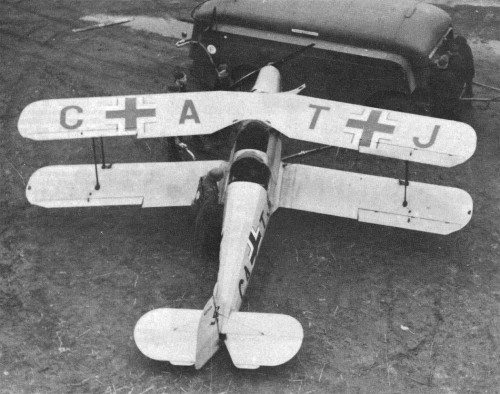
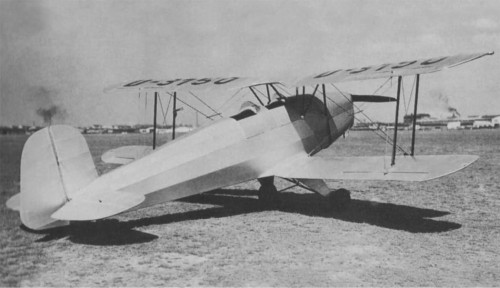
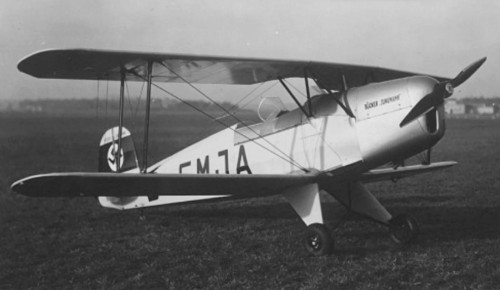
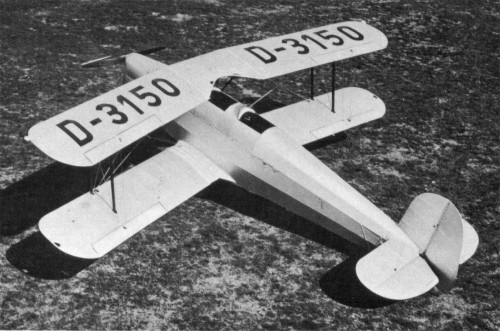
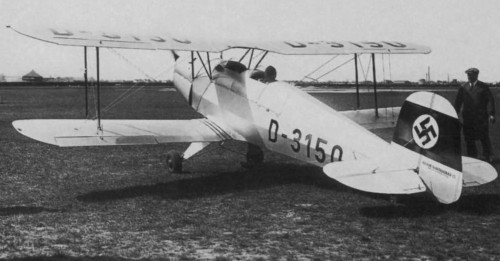
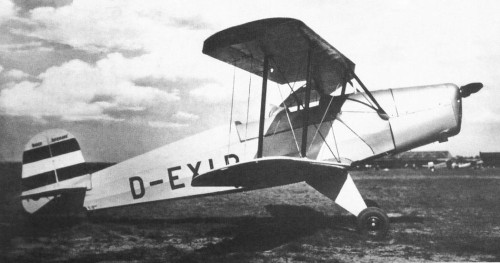
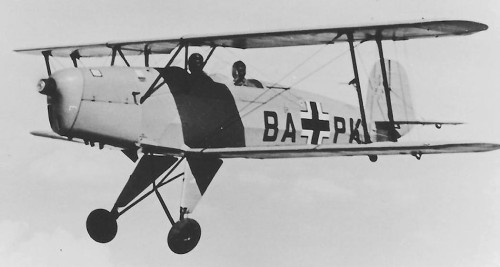
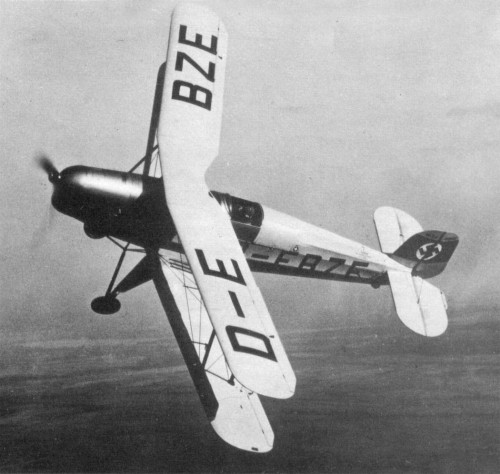
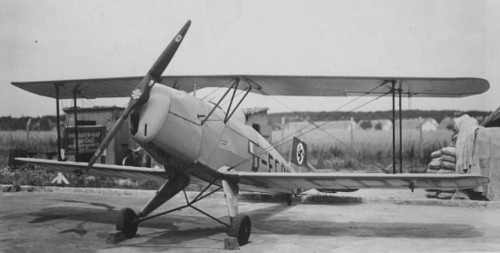
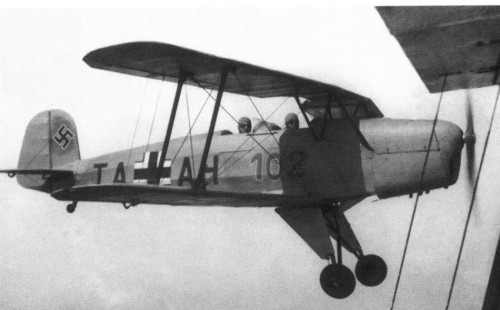
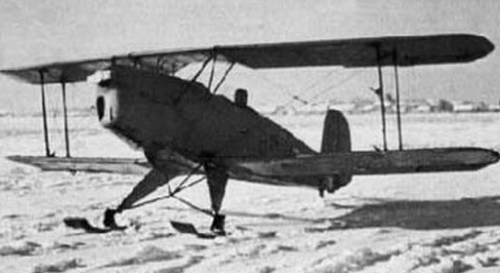
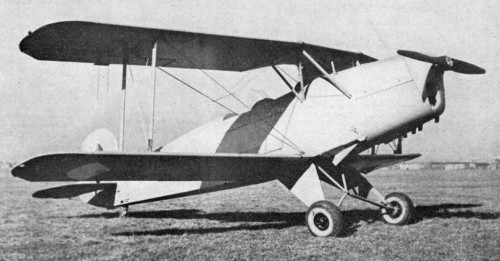
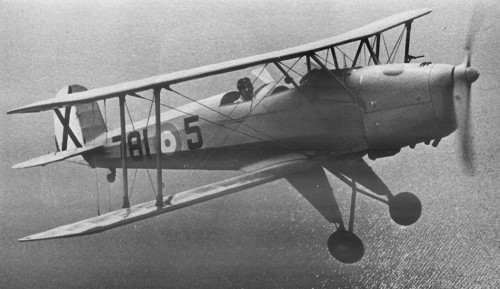
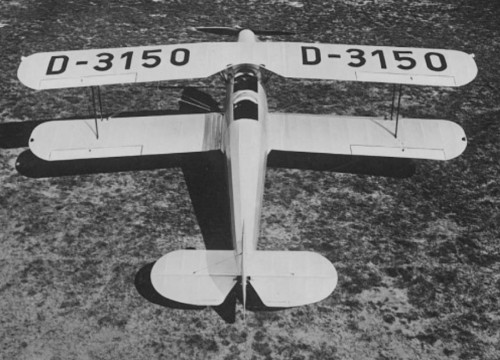
The Bücker Bü 131 Jungmann was one of the most influential training biplanes of the 20th century.
Designed in Germany in the early 1930s, it became the Luftwaffe’s standard elementary trainer and was produced under licence in multiple countries.
Its combination of simplicity, structural strength, and superb handling made it a global benchmark for ab‑initio pilot training.
Origins and Development
The Bü 131 was designed by Anders J. Anderson, a Swedish engineer working for Bücker Flugzeugbau, which had been founded by Carl Clemens Bücker in 1932.
Germany’s aviation expansion demanded a modern primary trainer that was inexpensive, durable, and capable of aerobatic instruction.
The Bü 131 first flew in April 1934, immediately demonstrating exceptional control harmony and forgiving stall characteristics.
Its success stemmed from:
Low operating cost
Simple maintenance
Excellent feedback to student pilots
Aerobatic capability without structural fragility
The Luftwaffe quickly adopted it as the standard basic trainer, and foreign interest followed.
Design and Construction
Airframe
The Bü 131 was a two‑seat tandem biplane with equal‑span wings and a conventional tailwheel layout.
Its construction blended the following:
Welded steel‑tube fuselage, fabric‑covered
Wooden wings (spruce spars, plywood ribs)
Wire‑braced N‑struts
Open cockpits with minimal instrumentation
This hybrid structure was light yet strong, ideal for repeated training abuse and aerobatic loads.
Powerplant
Early versions used the Hirth HM 60R, a 60‑hp air‑cooled inline engine.
Later Luftwaffe trainers used the Hirth HM 504, producing around 105 hp.
These engines were:
Reliable
Easy to maintain
Adequate for aerobatics
Simple enough for novice mechanics
Licence‑built versions often used local engines, sometimes more powerful than the German originals.
Systems
The Jungmann was intentionally simple.
Direct cable controls
Gravity‑fed fuel tank in the upper wing
Fixed‑pitch wooden propeller
Minimal electrical system
This simplicity made it ideal for austere wartime training environments.
Flight Performance and Handling
The Bü 131 was renowned for its superb handling, often described as “precise yet forgiving”.
It could perform all basic aerobatic manoeuvres and was stable enough for inexperienced pilots.
Typical performance:
Max speed: ~180 km/h
Cruise: ~150 km/h
Range: ~500 km
Ceiling: ~4,000 m
Climb: ~3 m/s
Its low wing loading and responsive controls made it one of the most beloved trainers of its era.
Operational Use and WWII Context
Luftwaffe Service
The Bü 131 became the Luftwaffe’s primary elementary trainer, used in the following:
Basic flight schools
Aerobatic training
Glider‑pilot transition
Liaison and courier duties
Although not intended for combat, some were used in anti‑partisan roles with improvised light armament.
International Use
The Jungmann’s reputation led to widespread export and licensed production.
It served in:
Spain
Japan
Switzerland
Czechoslovakia
Hungary
Romania
Yugoslavia
Many postwar flying clubs continued using it for decades.
Variants and International Derivatives
German Variants
Bü 131A
Initial production model with the Hirth HM 60R. Used for early Luftwaffe training.
Bü 131B
The main production version with the more powerful Hirth HM 504 became the Luftwaffe standard.
Bü 131D
Refined structure and systems, widely exported and used as the basis for foreign licence production.
International License‑Built Versions
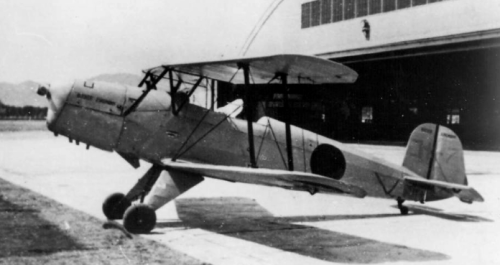
Kyūshū K9W1 Momiji
Japan produced the Bü 131D under licence as the Kyūshū K9W1 Momiji, built by Kyūshū Hikoki K.K. for the Imperial Japanese Navy.
Kokusai Ki‑86
The Kokusai Ki‑86 was built by Kokusai K.K. for the Imperial Japanese Army production model.
Design Differences
Japanese‑manufactured components
Local instrumentation
Slight structural reinforcements for tropical climates
Operational use
These aircraft were used as trainers.
Production
Around 1,376 were built in total, with Kyushu producing 339 K9W1s for the IJN and Nippon Kokusai Koku manufacturing 1,037 Ki-86s for the JAAF.
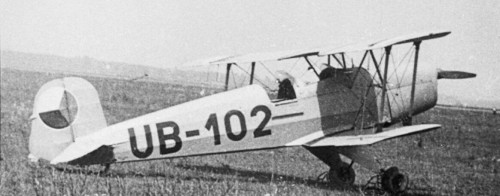
Aero C‑4 and C‑104 (Czechoslovakia)
Czechoslovakia produced the Bü 131 under licence before and after WWII.
Aero C‑4
The Aero C‑4 was the prewar Czech‑built Jungmann, essentially identical to the Bü 131D.
It served in:
Czech military flight schools
Civilian flying clubs
Aero C‑104
Postwar production resumed as the Aero C‑104, often considered one of the finest Jungmann variants due to high manufacturing quality and improved materials.
Characteristics
Built to high peacetime standards
Used for aerobatics and sport flying
Many remain airworthy today.
The Czech-built Jungmanns contributed significantly to the aircraft’s long postwar legacy.
Spanish CASA 1131
Spain produced the Jungmann as the CASA 1131, powered by the ENMA Tigre engine (often 125–150 hp).
These were among the best‑performing Jungmanns ever built and remained in service for decades.
Legacy
The Bücker Bü 131 Jungmann is remembered as one of the greatest training biplanes ever designed.
Its influence spanned continents, and its licence-built derivatives—including the Kyūshū K9W1 Momiji and Aero C‑4/C‑104 — ensured its presence in global aviation history.
Today, restored Jungmanns remain popular in aerobatic circles, prized for their responsiveness, structural strength, and timeless flying qualities.