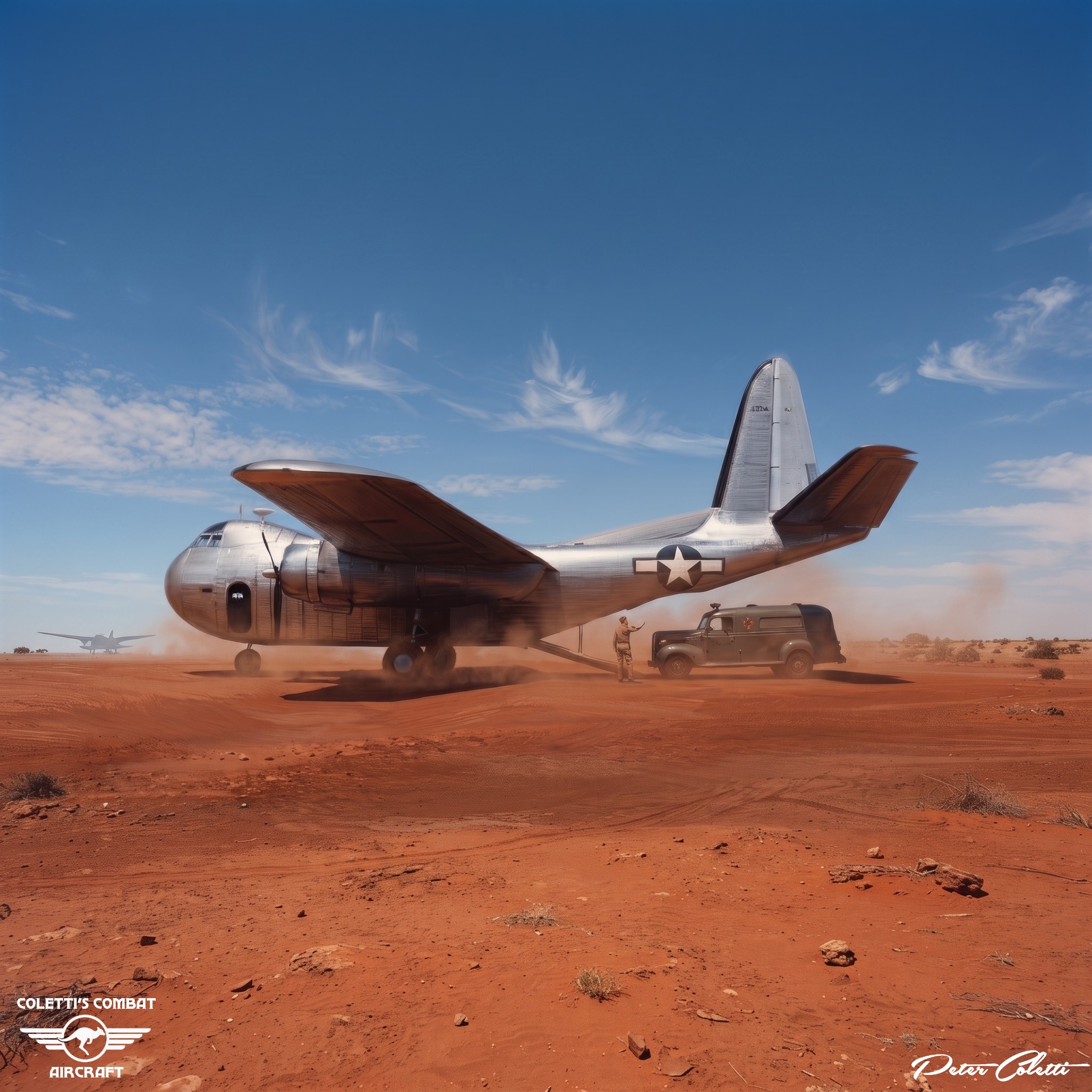
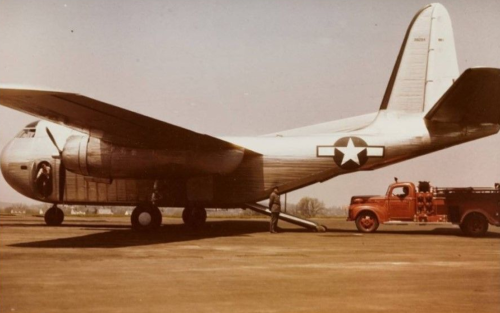
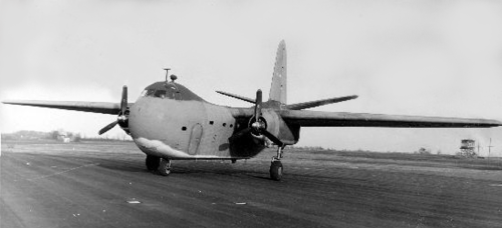
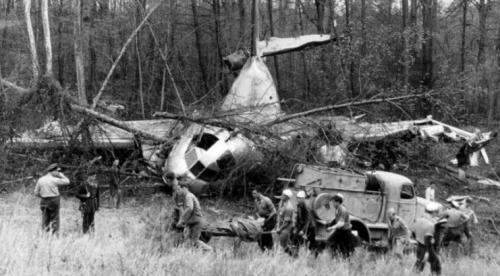
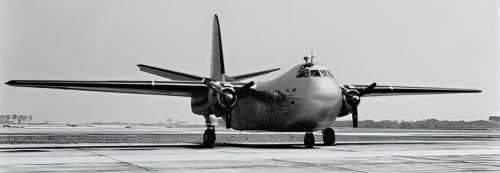
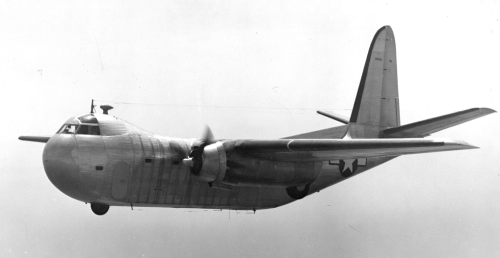
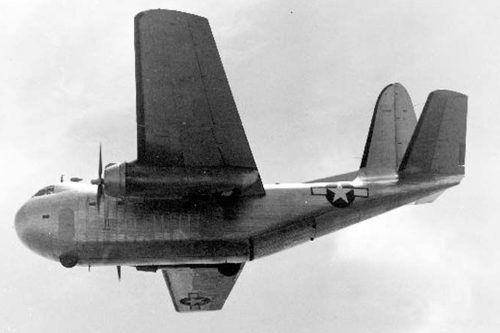
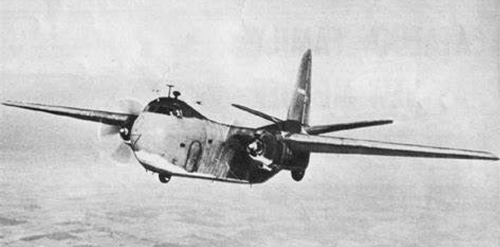
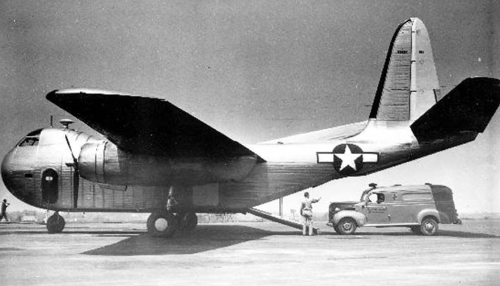
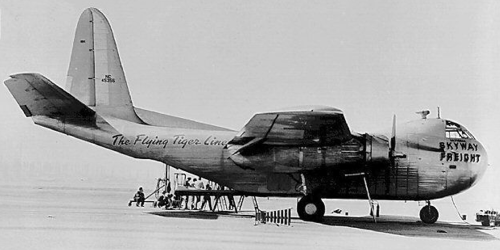
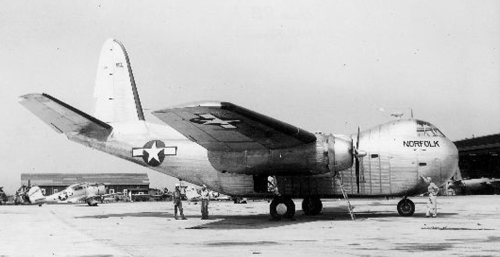
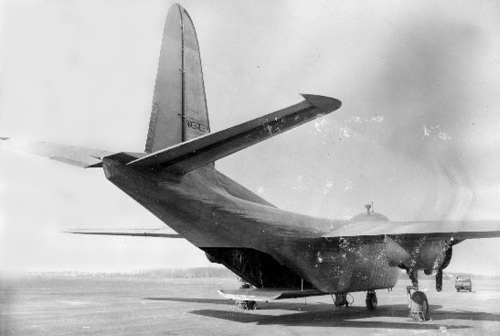
The Budd RB Conestoga emerged from a very specific moment in American industrial and military history.
In 1942, the United States was expanding its airlift capacity at a pace never seen before.
The U.S. Navy, which had previously relied heavily on flying boats for logistics, recognised that the global nature of the war demanded a new generation of land‑based cargo aircraft.
At the same time, the War Production Board feared a looming shortage of aluminium, the strategic metal that underpinned nearly every major aircraft programme.
The Edward G. Budd Manufacturing Company—best known for stainless‑steel railway cars—saw an opportunity.
Budd had pioneered shot‑welded stainless‑steel fabrication, a technique that promised strong, corrosion‑resistant structures without rivets.
The Navy believed that if Budd could build a cargo aircraft using steel instead of aluminium, it would relieve pressure on the aviation industry while expanding transport capacity.
Thus, in early 1942, the Navy ordered a new steel‑constructed cargo aircraft from Budd, designated RB‑1 Conestoga.
The name evoked the rugged Conestoga wagons that had carried settlers across North America—a symbolic nod to the aircraft’s intended role as a dependable hauler of wartime material.
Development and Production Challenges
Although Budd was an engineering powerhouse in railcar construction, it had no experience building aircraft.
The company had to establish new production lines, hire and train aviation‑skilled workers, and adapt its steel‑forming expertise to the far more weight‑sensitive world of aeronautics.
The Navy’s initial order called for 200 aircraft, with the U.S. Army Air Forces later adding its own order under the designation C‑93.
But the programme quickly ran into difficulties:
Weight problems:Stainless steel was strong but heavy.
Even with Budd’s advanced welding techniques, the RB‑1 ended up significantly heavier than comparable aluminium transports.
Production delays:Budd struggled to meet aviation tolerances and schedules.
By the time the first aircraft flew in October 1943, the feared aluminium shortage had not materialised.
Competition:The Douglas C‑47 and Curtiss C‑46 were already in mass production, proven, and available in large numbers.
As a result, the Navy cut its order drastically, and the Army cancelled its own before any C‑93s were delivered.
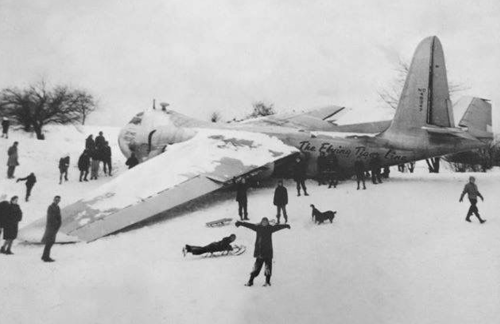
Only 17 RB‑1 Conestoga’s were ultimately built.
Design Philosophy and Structural Features
The RB Conestoga was designed as a practical, utilitarian cargo aircraft with several forward‑thinking features that would later become standard in postwar transports.
Skin:Corrugated stainless-steel panels in some areas, smooth in others.
Weight implications:The steel construction made the aircraft robust but significantly heavier than aluminium competitors.
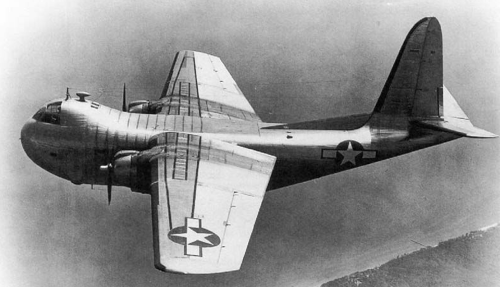
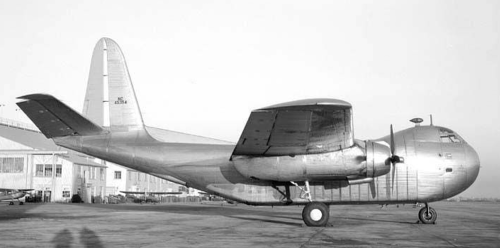
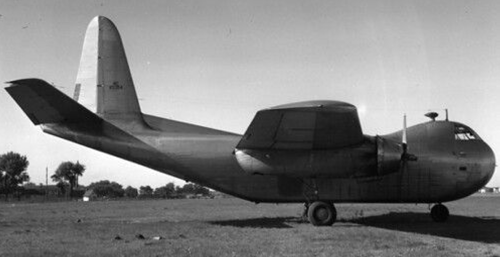
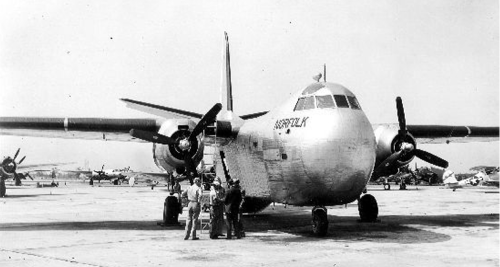
Fuselage Layout The Conestoga featured a high-wing, boxy fuselage optimised for cargo volume.
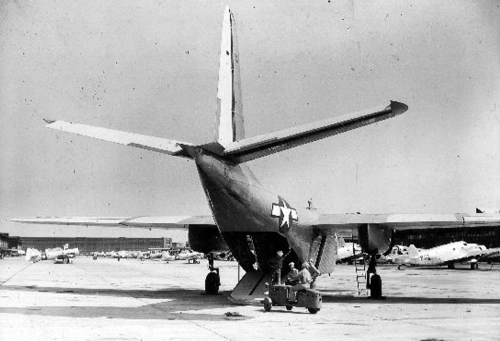
Its most innovative feature was the rear loading ramp, one of the earliest on an American transport aircraft.
This allowed:
Drive‑on loading of jeeps and small vehicles
Rapid loading of palletised cargo
Straight‑through cargo handling without side‑door limitations
The ramp design foreshadowed the postwar C‑82 Packet and C‑119 Flying Boxcar.
Cockpit and Crew Arrangement
The cockpit sat high above the cargo deck, with large windows for visibility.
The standard crew consisted of:
Pilot
Co-pilot
Crew chief/loadmaster
The elevated cockpit allowed unobstructed cargo space below.
Landing Gear
Tricycle configuration, still relatively new for transports at the time
Allowed level loading and improved ground handling
Reinforced to handle rough forward‑area airstrips
Wing and Tail
High‑mounted wing for ground clearance
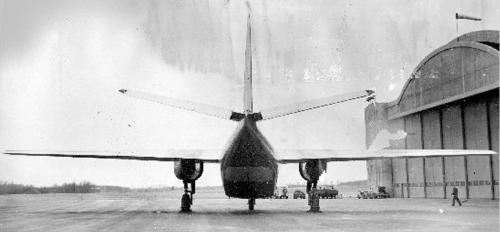
Twin‑fin tail for stability and to keep the tailplane clear of the cargo ramp
The wing structure is also made from welded steel components
Powerplant and Performance
The RB‑1 was powered by the following:
Two Pratt & Whitney R‑1830 Twin Wasp radial engines, each producing around 1,200 hp
These were the same engines used on the C‑47, but the Conestoga’s heavier structure meant performance lagged behind its aluminium counterpart.
Performance Characteristics
Maximum speed:Approximately 200 mph (322 km/h)
Cruise speed:Around 160 mph (257 km/h)
Range:Roughly 700–800 miles depending on load
Service ceiling: About 20,000 ft
Cargo Capacity
Payload:Around 7,500–8,000 lb
Cargo deck:Large, unobstructed, with tie‑down points and a flat floor
Vehicle compatibility:Could carry a Jeep or similar light vehicle via the rear ramp
While innovative in layout, the payload was modest compared to the C‑46 and even the C‑47.
Operational History
U.S. Navy Service
The Navy accepted the small number of completed aircraft and assigned them to transport and utility roles within the continental United States.
They were never deployed in significant numbers overseas.
Operational issues included:
Maintenance difficulties due to unfamiliar steel construction
Weight‑related performance limitations
Limited spare parts availability
By mid‑1944, the Navy began retiring the type, replacing it with more capable transports.
Civilian Use
After the war, several RB‑1s were sold as surplus.
Some found use with small cargo operators, including:
Transcontinental & Western Air (TWA) for cargo trials
Flying Tiger Line, which operated a few Conestoga’s in the late 1940s
However, the aircraft’s maintenance complexity and limited performance curtailed its civilian career.
Variants
RB‑1 Conestoga
U.S. Navy designation
Only the production version
17 built
C‑93
U.S. Army Air Forces designation for the planned variant
Order cancelled before delivery
No aircraft is officially accepted as a C‑93.
There were no major subvariants or experimental versions beyond minor production refinements.
Assessment and Legacy
The Budd RB Conestoga is remembered today as a bold but, ultimately, unsuccessful experiment.
Its significance lies not in its operational record but in its innovations and the industrial context that produced it.
Key Contributions
Early adoption of a rear cargo ramp, a feature that would define postwar military transports
Demonstration of alternative materials and manufacturing techniques
A case study in the challenges of converting non‑aviation industries to wartime aircraft production
Reasons for Failure
Overly heavy structure due to steel construction
Production delays that made the aircraft obsolete before it entered service
Competition from proven, mass‑produced transports
Lack of aviation manufacturing experience at Budd
Historical Importance
Although only a handful were built, the Conestoga occupies an interesting niche in WWII aviation history.
It reflects the urgency, improvisation, and industrial experimentation of the early war years, when the United States was willing to explore unconventional solutions to meet unprecedented logistical demands.