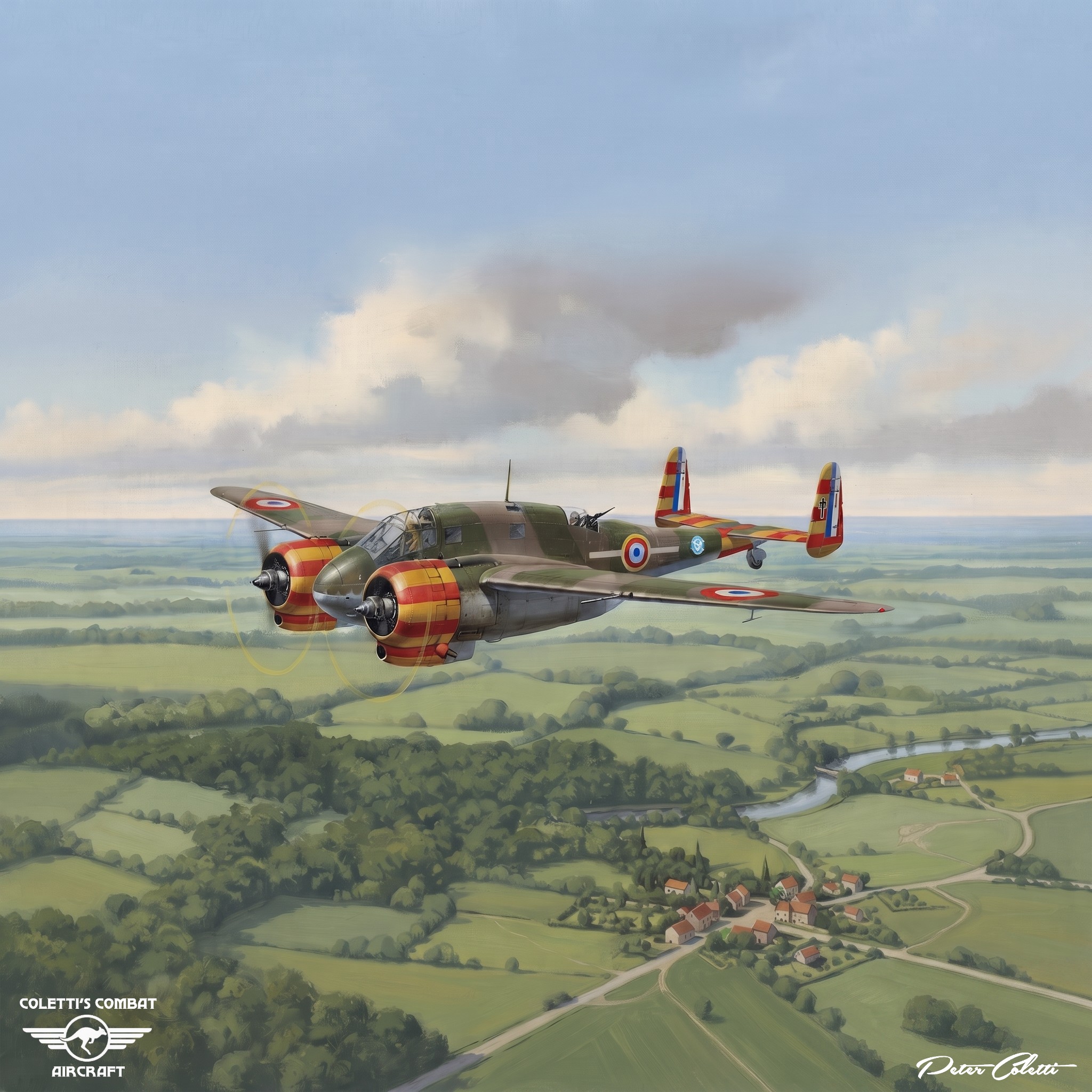
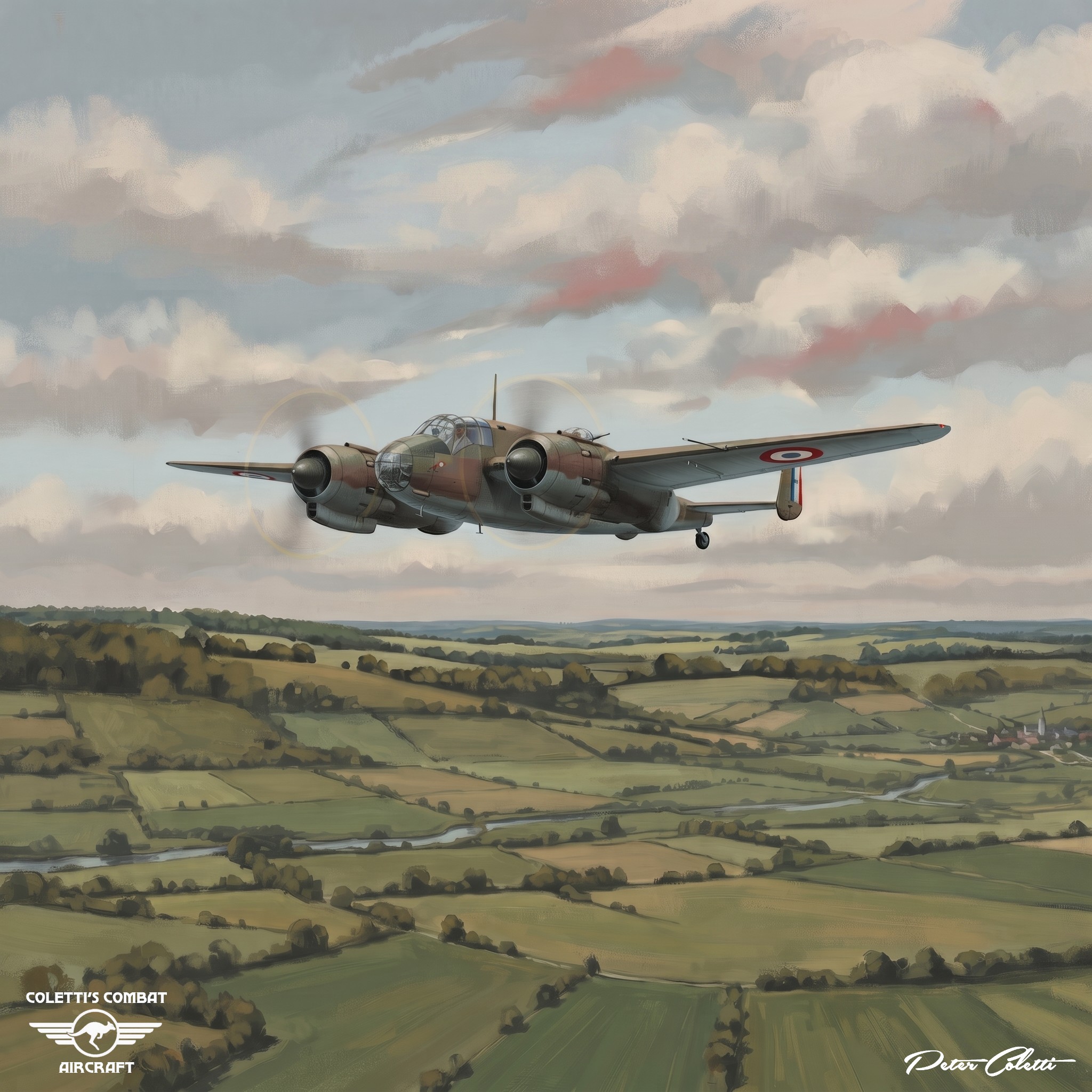
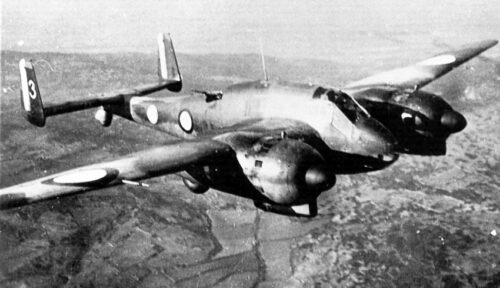
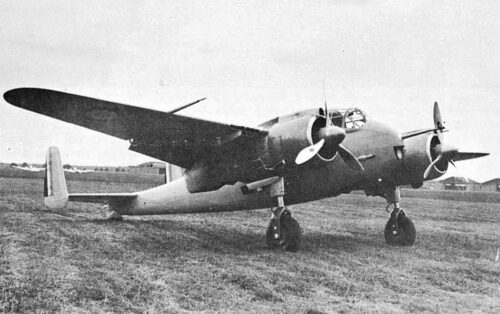
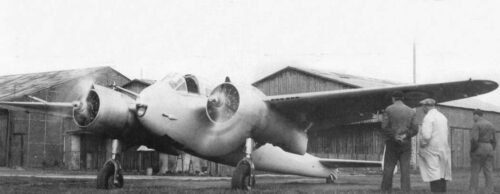
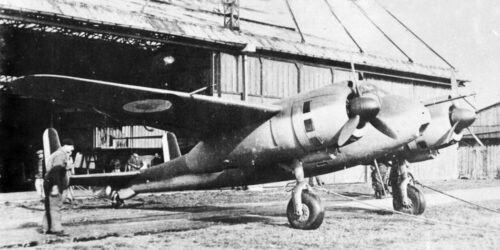
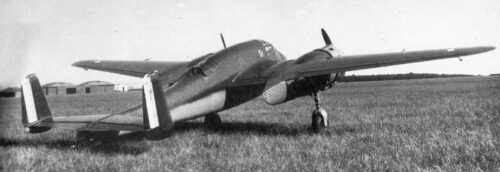
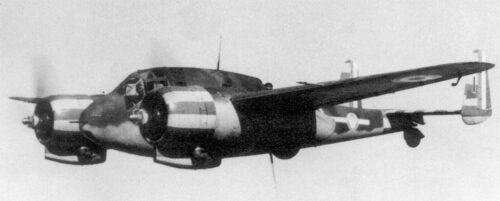
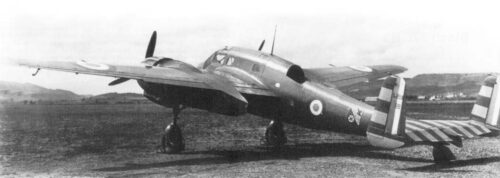
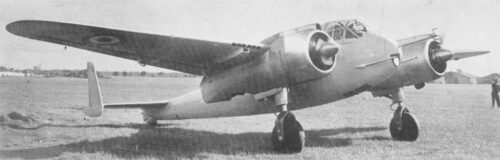
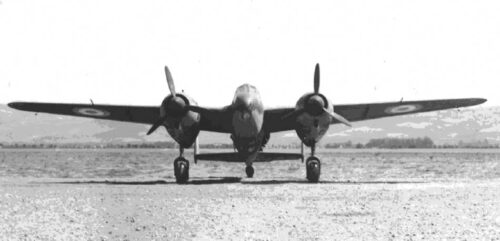
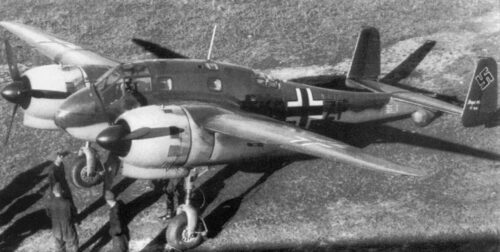
The Bréguet 690 family emerged from a mid‑1930s European revival of interest in twin‑engine, multi‑seat fighters—aircraft intended to combine long range, heavy armament, and multi‑role flexibility.
France, Germany, and the Netherlands all pursued this concept nearly simultaneously, producing the Messerschmitt Bf 110 in Germany, the Fokker G.I in the Netherlands, and, in France, a set of competing designs under the Chasse Triple (C3) requirement for a three-seat heavy fighter issued in October 1934.
Eight French firms responded, but the most forward-looking design was the Bréguet Br.690, created under the leadership of Georges Ricard.
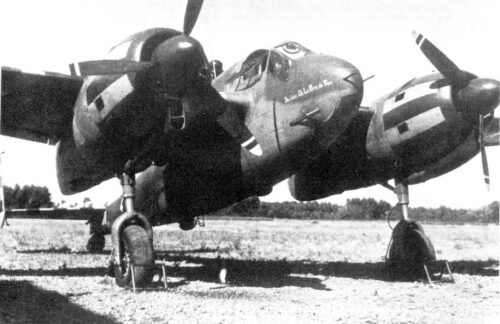
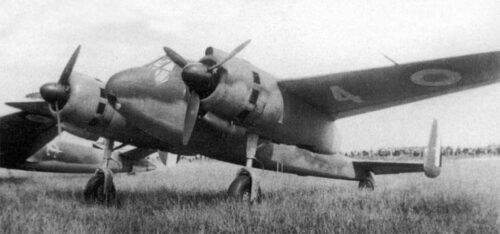
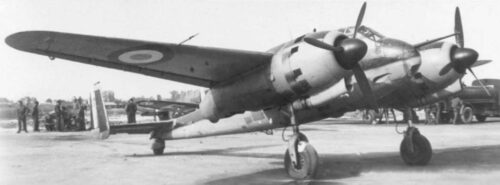
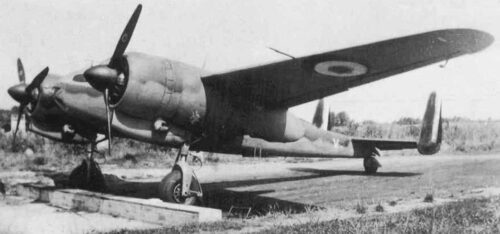
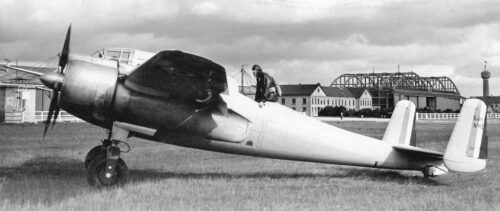
It was praised even in prototype form as a clean, modern, and robust twin‑engine monoplane, later regarded as a conceptual predecessor to the British Bristol Beaufighter. Although originally conceived as a three‑seat long‑range fighter, the aircraft’s structural strength, compact layout, and concentrated forward armament made it a natural candidate for the assault and close‑support role—a mission profile the French Air Force was only beginning to define in the late 1930s.
Ricard had anticipated this shift and ensured the design could be adapted without major redesigns.
Prototype Development: Bréguet 690
Construction and Delays
Construction of the prototype Br.690‑01 began in 1935, but an official order did not arrive until March 1937, by which time the airframe was nearly complete.
Engine shortages delayed progress: priority for the Hispano‑Suiza 14AB radial engines went to the competing Potez 630 programme, forcing the Br.690 to wait ten months for its powerplants.
The aircraft finally flew on 23 March 1938, piloted by Maurice Claisse.
Performance and Evaluation
Testing at CEMA (the French military test centre) confirmed that the Br.690 outperformed the Potez 630 in speed, manoeuvrability, and handling.
The only significant flaw was the weakness of the oleo struts, which required redesign.
Even before official trials concluded, the aircraft’s promise led to a June 1938 order for 100 aircraft, but now in a two‑seat attack‑bomber configuration, designated the Br.691 AB2.
Design and Technical Characteristics
Airframe
The Bréguet 690 series shared a common structural foundation:
All‑metal monocoque fuselage, compact and aerodynamically clean
Mid‑mounted cantilever wing, two‑piece construction bolted to the fuselage bulkheads
Metal‑framed, fabric‑covered control surfaces on both wing and tail
Long‑stroke landing gear retracting rearwards into the engine nacelles, giving the aircraft a distinctive nose‑high stance on the ground
Engines
The early Br.690 and Br.691 used Hispano‑Suiza 14AB radials (650–725 hp, depending on the model).
These engines were compact and aerodynamically efficient but plagued by poor reliability, short service life, and persistent mechanical issues that were never fully resolved before France’s defeat in 1940.
This problem drove the transition to the Gnome-Rhône 14M engine family for the Br.693, which—though not more powerful—proved more reliable and better suited to mass production.
Armament
Depending on the variant, the Bréguet 690 series carried the following:
Forward‑firing weapons
1× 20 mm Hispano‑Suiza HS.404 cannon (Br.691/693)
2 × 7.5 mm MAC 1934 machine guns (Br.691/693)
Some variants allowed 15° downward deflection for strafing attacks.
Defensive armament
1× 7.5 mm MAC 1934 on a flexible mount in the rear cockpit
1× oblique downward‑firing 7.5 mm gun for rear‑hemisphere defence
Later Br.693s added rear‑firing nacelle guns.
Bomb load
Up to 400 kg, typically 8× 50 kg bombs in a vertical cassette arrangement (Br.691/693)
Major Variants
Br.691 AB2
The first production assault version, featuring the following:
Removal of the navigator’s cabin to create a bomb bay
Revised nose with single HS.404 cannon
Strengthened landing gear and relocated oil coolers
Increased fuel capacity to 986 litres
However, the unreliable Hispano‑Suiza 14AB engines severely limited its operational value.
Br.693 AB2
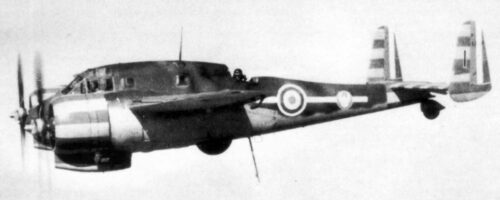
The definitive and most numerous versions, replacing the 14AB with Gnome‑Rhône 14M6/7 engines (700 hp).
Flight performance remained similar to the Br.691, but reliability improved enough to justify halting Br.691 production at aircraft no. 78 and converting all subsequent builds to the Br.693 standard.
Br.694
A three‑seat tactical reconnaissance derivative with a restored observer’s cabin and reduced forward armament.
Initially requested by Sweden, later considered by Belgium, but only prototypes were completed before the German invasion.
Br.695
A version powered by Pratt & Whitney SB4‑G Twin Wasp Junior engines (825 hp) for contingency planning in case French engine factories were lost to bombing.
The larger-diameter engines required major nacelle redesigns, reduced speed by ~6%, and worsened handling and visibility, making the type less popular than the Br.693 despite successful trials.
Experimental and Projected Variants
Br.692: Proposed high‑power version with Gnome‑Rhône 14N engines (980 hp), cancelled due to excessive redesign requirements.
Br.696: Enlarged bomb bay for heavier ordnance; prototype flown November 1939.
Br.697: High‑performance testbed with 14N48/49 engines; achieved 570 km/h in trials and formed the basis of the projected Br.700C2 heavy fighter.
Br.698: Proposed dive bomber with Junkers‑style airbrake ailerons.
Br.810: Navalised attack aircraft with folding wings and arrester gear, designed under the 1939 AB2 carrier programme.
Operational History in the Battle of France
Introduction to Service
The first Br.691s reached frontline units in late 1939, forming the core of the newly organised 6th Assault Bombardment Brigade and later the 18th and 19th Groupments.
Pilots admired the aircraft’s handling and ruggedness, but ground crews struggled with the unreliable Hispano‑Suiza engines and troublesome landing gear.
Combat Debut
The Br.693 entered combat on 12 May 1940, attacking German columns near Tongeren.
The mission was disastrous:
11 aircraft attacked.
7 were shot down by intense ground fire.
Only 2 returned to base, one too damaged to repair.
Subsequent missions refined tactics, with 45° diving attacks from ~900 m proving the most survivable approach.
Sustained Operations
Despite heavy losses, the Br.693 units flew relentlessly:
By 25 May 1940, the 18th and 19th Groupments had flown ~500 sorties.
They lost 47 aircraft in action.
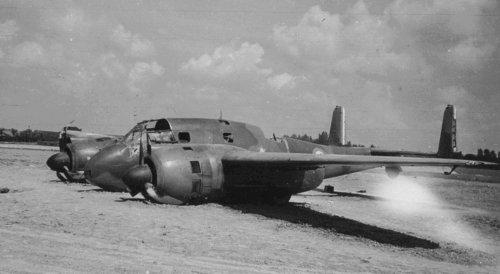
The aircraft’s robust construction allowed many severely damaged machines to return to base, and its modular design enabled engine changes in just 1 hour 20 minutes, a critical advantage during constant retreat and relocation.
Production and Fate
Production ceased as German forces approached the Bréguet factories at Villacoublay and Bourges:
224 Br.693s and 50 Br.695s were completed at Villacoublay.
Only 106 Br.693s and 33 Br.695s reached operational units due to equipment shortages and the rapid collapse of France.
Under the Vichy regime, a small number of Br.693/695 aircraft were retained, but all were seized by Germany in November 1942.
Some were transferred to Italy and used as training aircraft.
Assessment and Legacy
The Bréguet 690 series was one of the most advanced and aerodynamically refined French combat aircraft of its era.
Its strengths included the following:
Excellent handling and manoeuvrability
Strong, damage‑resistant airframe
Flexible design adaptable to many roles
Concentrated forward armament effective for ground attack
However, its operational impact was limited by:
Chronic engine reliability issues (Br.691)
Late introduction and small production numbers
Inadequate doctrine and tactics for low‑level assault missions
Overwhelming German air superiority and anti‑aircraft fire
Despite these constraints, the Br.693 in particular demonstrated remarkable resilience and effectiveness when used with appropriate tactics.
The family’s numerous experimental derivatives show how much potential the basic design possessed—potential cut short by the rapid defeat of France in 1940.