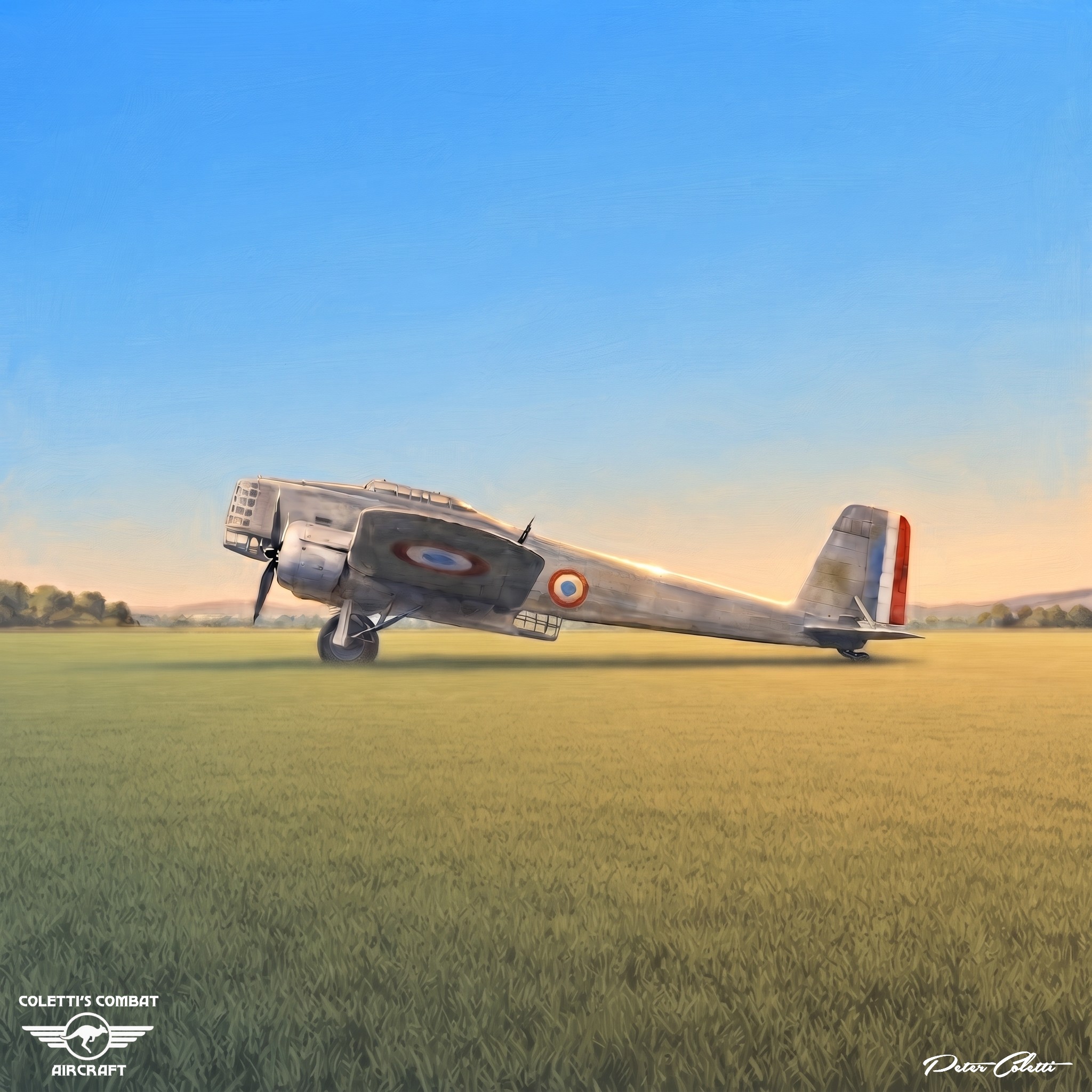
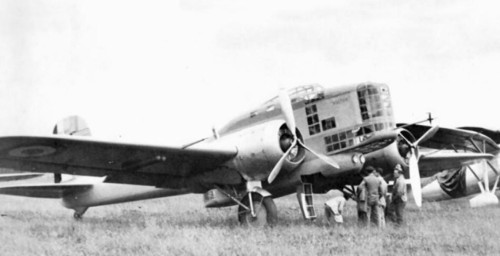
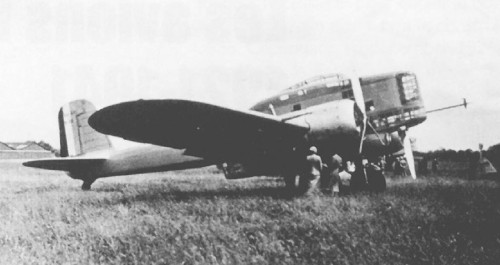
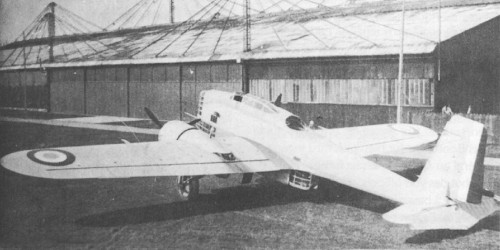
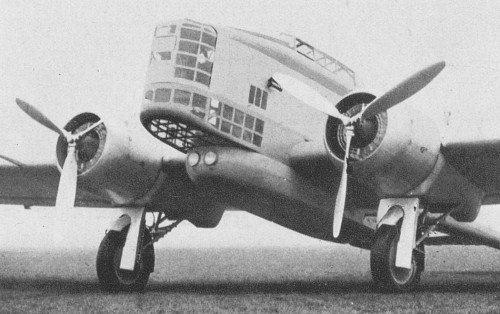
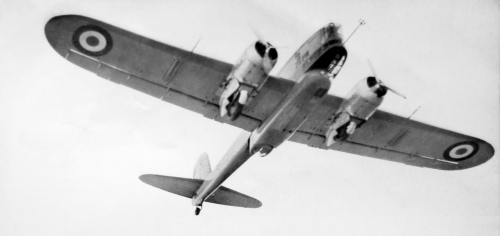
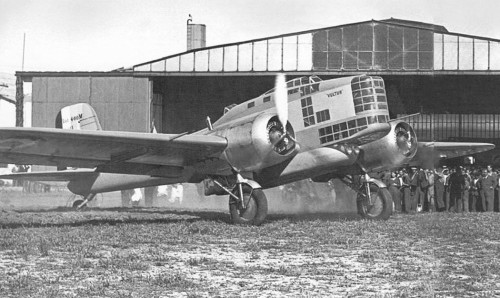
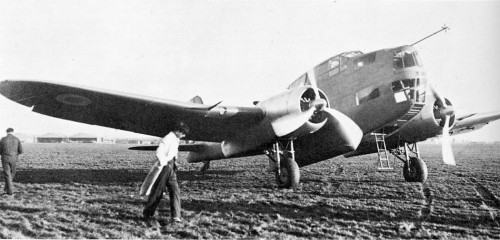
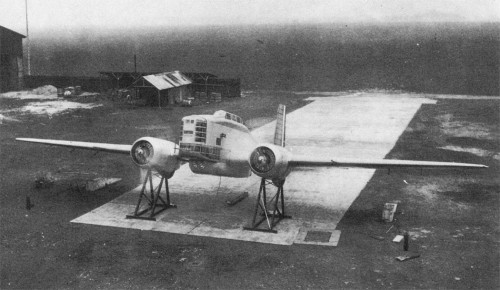
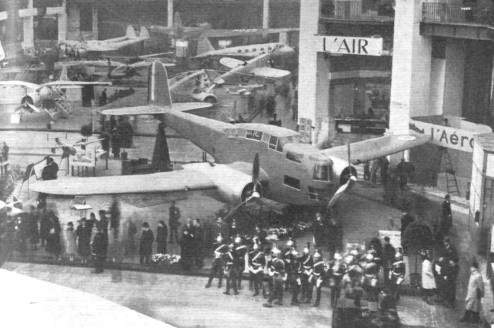
The Breguet 460 Vultur emerged in early‑1930s France as part of the evolving Multiplace de Combat concept—an official French category for multi-role combat aircraft.
It was developed from the earlier Breguet 410 and Breguet 413, retaining some structural lineage while attempting to meet new high‑speed bomber requirements.
In 1934, the prototype underwent significant redesign.
Although intended to be a modern monoplane bomber, it retained the tail assembly of the older Breguet 413, a compromise that reflected both design continuity and industrial constraints.
The aircraft was powered by two Gnome‑Rhône 14Kjrs radial engines, giving it a more streamlined appearance than its predecessors.
The French Air Ministry required a 400 km/h (250 mph) top speed for the new generation of fast bombers.
The Breguet 460 failed to meet this threshold during testing, leading to official disinterest and a shift towards competing designs such as the Amiot 340 and LeO 45, which themselves would not be ready for several more years.
The aircraft’s first flight occurred in 1935, but technical delays and performance shortfalls prevented mass production. Only five aircraft were built.
Technical Description and Performance
Airframe and Layout
The Breguet 460 was a twin‑engine, low‑wing monoplane bomber with a mixed construction typical of early‑1930s French aircraft.
Its aerodynamic improvements over the Breguet 413 included a cleaner fuselage and improved engine nacelles, though the retention of the older tail design limited its modernisation.
Powerplant
Two Gnome‑Rhône 14Kjrs radial engines
These engines were powerful for their time but insufficient to push the aircraft to the required high‑speed bomber performance envelope.
Performance
Top speed: Approximately 400 km/h (250 mph) in prototype form—below the French requirement.
Bombload: Around 1,076 kg (inferred from variant data; explicitly stated for the Br.462).
The aircraft’s inability to reach the mandated speed was the decisive factor in its rejection for French service.
Operational History
Spanish Civil War Deployment
The outbreak of the Spanish Civil War (1936–1939) provided France an opportunity to dispose of obsolete or experimental aircraft.
At least one Breguet 460 was transferred to the Spanish Republican Air Force, where it served in limited and poorly documented roles.
Photographic evidence shows a Breguet 460 in Spain equipped with a modernised tail, similar to that later used on the Breguet 470 Fulgur airliner.
One aircraft served with Night Flight Group No. 11, alongside Bloch MB.210 bombers.
Its fate is known: it was hit by gunfire from the Nationalist cruiser Canarias and crashed into the sea near L’Escala, killing the entire crew.
French Service
The Breguet 460 never entered operational service with the French Air Force due to its performance shortcomings and the shift towards more advanced bomber projects.
Variants
Breguet 460 Vultur (Prototype Series)
Original version
Powered by Gnome‑Rhône 14Kjrs engines
Failed to meet high‑speed bomber requirements
Only five units built
Breguet 462 Vultur (Improved Variant)
A refined development of the 460, the Breguet 462 featured the following:
A redesigned, more aerodynamic forward fuselage
Two Gnome‑Rhône 14N‑0/N‑1 engines
Improved top speed of 402 km/h (250 mph)
First test flights in late 1936
Although improved, the Br.462 still did not achieve widespread adoption.
460
Strategic and WWII Context
The Breguet 460’s development occurred during a transitional period in French bomber doctrine.
France sought fast, modern bombers capable of outrunning fighters—a concept that would later be embodied in aircraft like the LeO 45.
The 460 was an early attempt at this doctrine but ultimately fell short.
By the time of World War II, the Breguet 460 was already obsolete.
Its limited production, lack of French service adoption, and experimental nature meant it had no operational role in WWII.
Its only combat use was in the Spanish Civil War, where it served briefly and without significant impact.
The aircraft’s failure highlighted the challenges faced by French industry in the early 1930s: slow development cycles, conservative design choices, and difficulty meeting rapidly advancing performance requirements.
462
Summary Assessment
The Breguet 460 Vultur represents an important transitional aircraft in French aviation history.
Although unsuccessful, it illustrates:
The shift towards high‑speed monoplane bombers
The limitations of French interwar aircraft development
The experimental nature of many designs tested during the Spanish Civil War
Its improved successor, the Breguet 462, demonstrated that the concept had potential, but by then France had moved on to more advanced bomber projects.