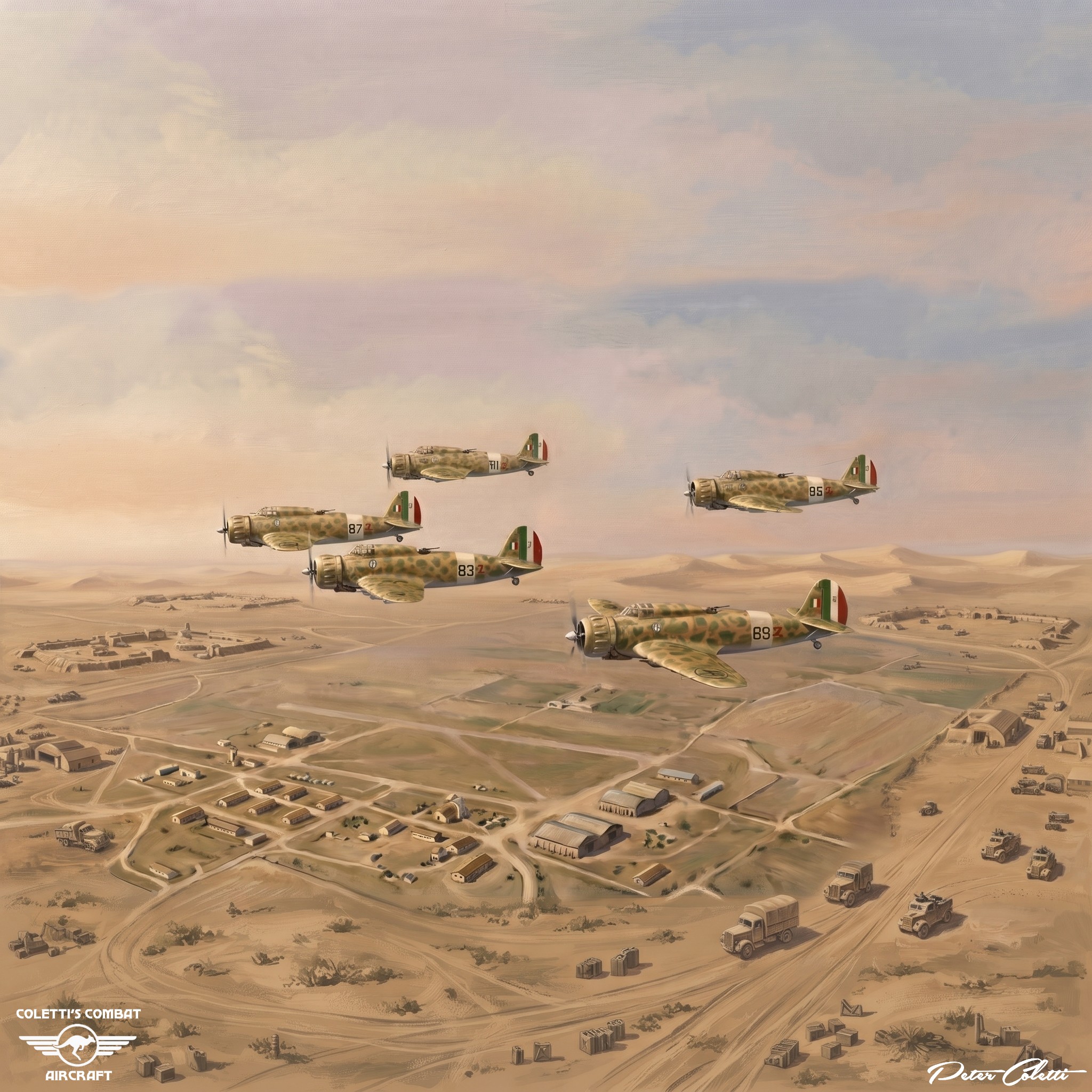
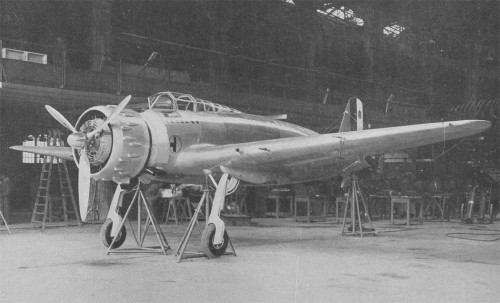
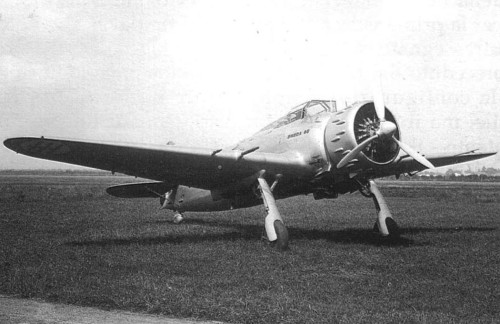
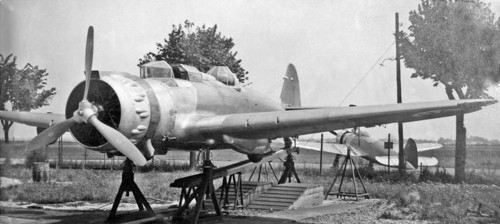
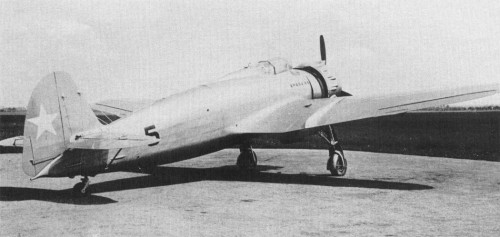
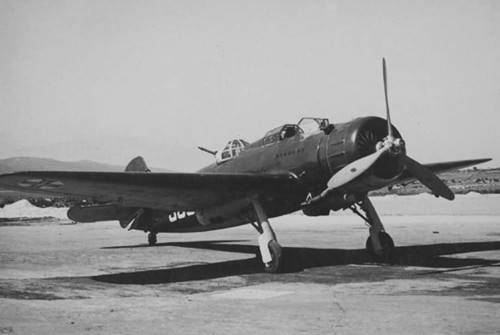
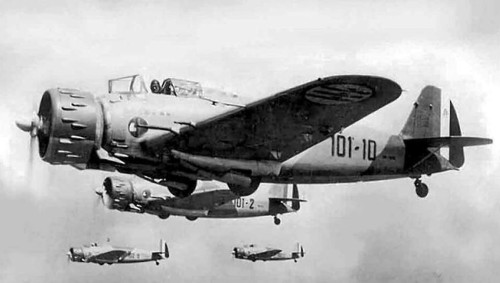
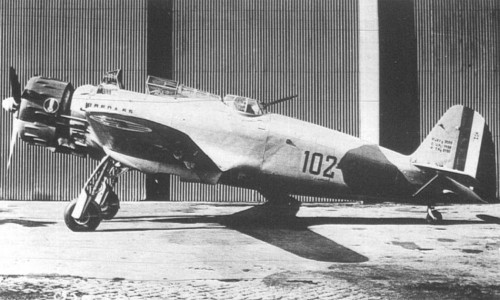
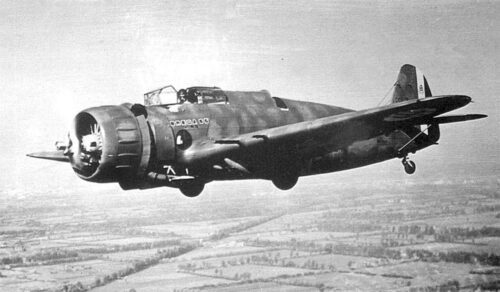
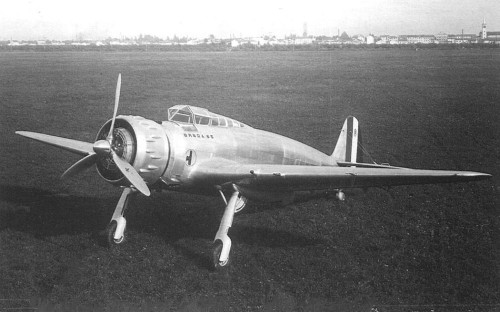
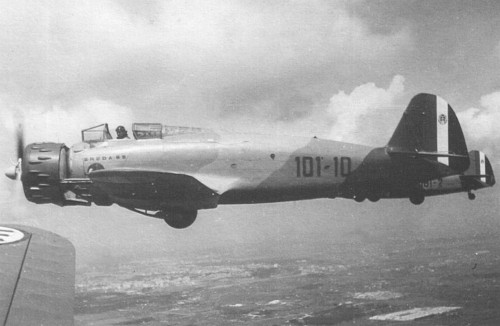
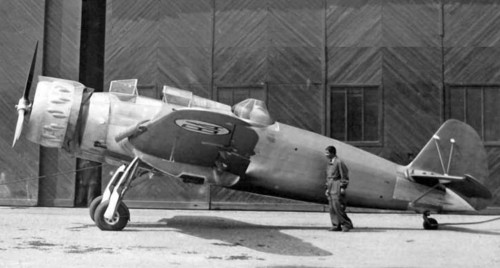
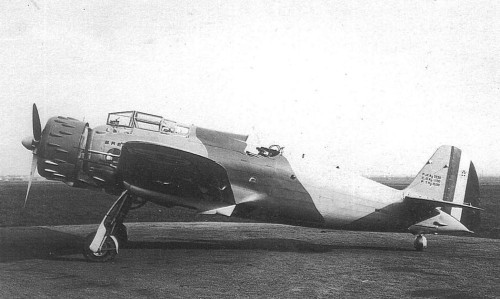
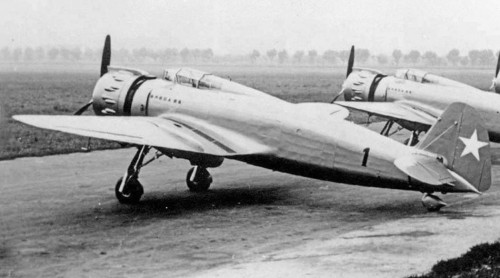
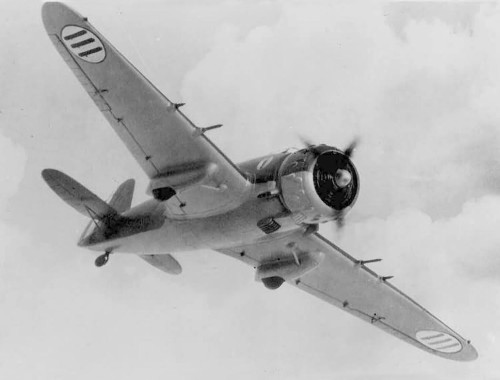
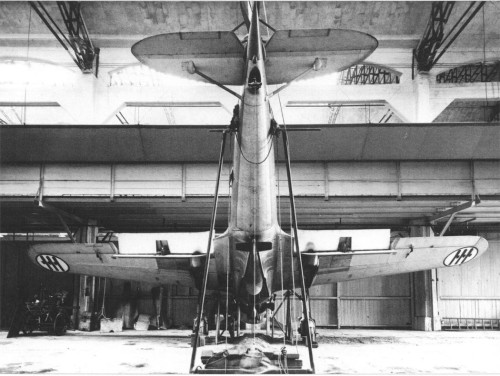
The Breda Ba.65 emerged from Italy’s interwar ambition to field a modern aeroplano da combattimento—a multi-role combat aircraft capable of fighting, reconnaissance, and ground attack.
Designed by Antonio Parano and Giuseppe Panzeri, it evolved directly from the earlier Breda Ba.64, retaining the same general mission concept but adopting a more robust structure, heavier armament, and improved performance.
The prototype flew in September 1935, powered by a licence‑built Gnôme‑Rhône K‑14 radial engine.
Early evaluations suggested the aircraft had potential as a dedicated attack platform, particularly at low altitude, where its rugged construction and concentrated forward‑firing armament could be exploited.
Production began soon afterwards, with Breda and Caproni jointly manufacturing the type.
A total of 218 aircraft were completed between 1935 and 1939.
Airframe and Structural Design
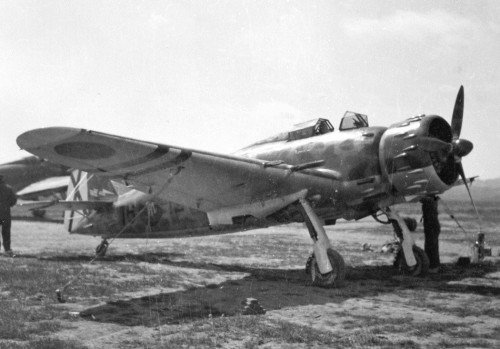
The Ba.65 was a single‑engine, low‑wing, all‑metal monoplane with a retractable tailwheel undercarriage.
Its structure was conventional but sturdy, reflecting its intended role as a ground‑attack aircraft expected to absorb small‑arms fire.
Key design features included:
Cantilever low wing with moderate taper and metal skinning
Aft‑retracting main landing gear, leaving the wheels partially exposed when retracted
Single-seat or two-seat cockpit, depending on variant
Internal bomb bay capable of carrying up to 400 kg of ordnance
Four wing‑mounted machine guns (two 12.7 mm and two 7.7 mm Breda‑SAFAT)
The aircraft’s layout emphasised forward visibility and stable handling at low altitude, though it was never particularly agile.
Its weight and wing loading made it unsuitable for air‑to‑air combat, despite initial hopes that it could serve as a fighter‑bomber.
Powerplants and Performance
Engines
The Ba.65 was produced with several different engines:
Isotta‑Fraschini‑built Gnôme‑Rhône K‑14 14‑cylinder radial ~700 hp
Used on early production aircraft
Fiat A.80 RC.41 18‑cylinder twin‑row radial 1,000 hp
Adopted from the 82nd aircraft onward
Provided improved speed and climb
Piaggio P.XI C.40 (Chilean export aircraft)
Another 14K derivative
Required modified cowling and landing‑gear housing
Pratt & Whitney R‑1830 Twin Wasp (Chinese licence‑production proposal)
Never built due to cancellation of the Sino‑Italian programme
Performance Characteristics
(Representative single‑seat A.80‑powered version)
Maximum speed: ~430 km/h
Range: ~550 km
Service ceiling: ~7,450 m
Armament: 4 wing guns + 400 kg bombs
These figures placed the Ba.65 was roughly on par with early dive bombers of the mid‑1930s, but by 1940 it was clearly outclassed by newer Allied and Axis types.
Operational History
Spanish Civil War (1937–1939)
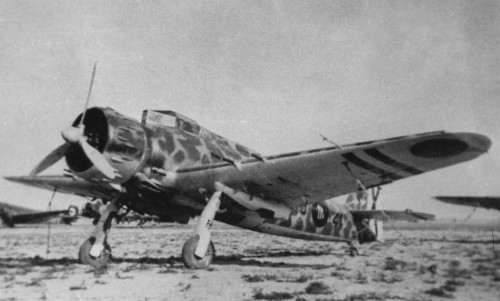
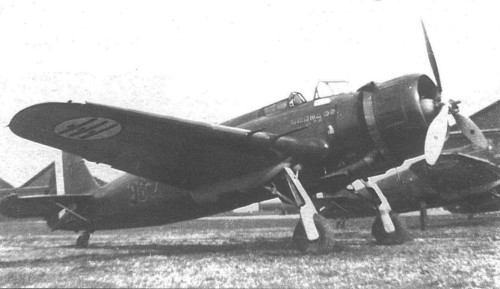
The Ba.65 saw its combat debut with the Aviazione Legionaria, Italy’s expeditionary air contingent supporting the Nationalists.
13 early K‑14‑powered aircraft formed the initial deployment.
They flew 1,921 sorties, including ground‑strafing and dive‑bombing missions.
Losses were heavy: 12 of 23 aircraft sent to Spain were destroyed.
Despite mixed results, the aircraft proved effective in low‑level attack when flown by experienced pilots.
When the Italian contingent withdrew in 1939, surviving Ba.65s were handed over to the Spanish Air Force, where they saw little further use due to spare‑parts shortages.
Iraq (1941)
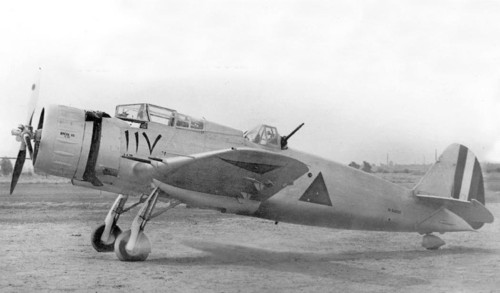
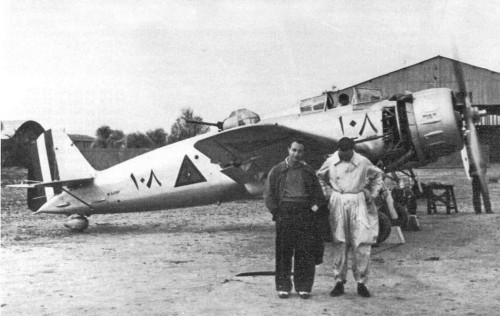
Iraq purchased 15 Ba.65s (mostly two‑seat turreted versions) in 1938.
They were thrown into combat during the Anglo‑Iraqi War of May 1941, flying against British and Commonwealth forces.
The aircraft were outmatched by modern RAF fighters and suffered rapid attrition, but they represented Iraq’s primary ground‑attack capability during the brief conflict.
Chile (1938–1943)
Chile ordered 20 Ba.65s, including three dual‑control trainers.
These aircraft differed significantly from Italian models:
Powered by Piaggio P.XI engines
Armed with Madsen machine guns
Modified landing‑gear fairings
Chilean experience was poor.
Early accidents, limited range, and inadequate manoeuvrability led to the type being grounded in 1939.
After further evaluation, the Ba.65 was relegated to unarmed training and finally scrapped in 1944.
Portugal (1939–1941)
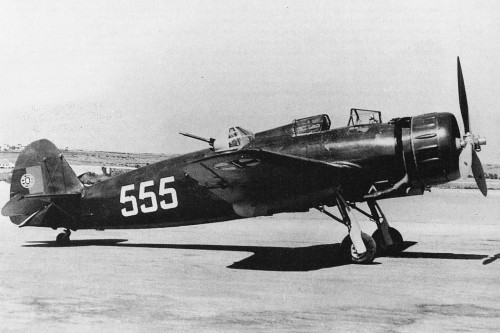
Portugal acquired 10 Ba.65s with Fiat engines and Breda M turrets.
A storm in February 1941 severely damaged the aircraft inside a hangar at Sintra Air Base.
Repairs proved impractical, and the entire fleet was scrapped shortly afterwards.
Italy in World War II (1940–1942)
When Italy entered WWII in June 1940, roughly 150 Ba.65s remained in service.
They were deployed primarily in North Africa, where they flew low‑level attack missions against British armoured and motorised forces.
Strengths in this theatre:
Accurate low‑altitude bombing
Heavy forward‑firing armament
Rugged construction
Weaknesses:
Vulnerability to modern fighters
Limited range
Poor high‑altitude performance
Maintenance difficulties in desert conditions
Despite these limitations, Italian pilots—especially veterans of Spain—achieved notable successes in the early desert campaigns, including actions at Sidi Barrani and Sidi Rezegh.
By early 1942, attrition and obsolescence forced the Ba.65 from frontline service.
It was replaced by German Ju 87 Stukas and modified Italian fighters.
Variants
K‑14‑powered series
Ba.65 K.14 — Single‑seat attack version
Ba.65 K.14 M— Two-seat with 12.7 mm Breda M turret
Ba.65 K.14 L — Two-seat with 7.7 mm Breda L turret
Ba.65 K.14 d.c. — Dual‑control trainer
A.80‑powered series
Ba.65 A.80 — Improved single‑seat version
Ba.65 A.80 L / M — Two‑seat turreted export versions (Iraq, Portugal)
Export and special variants
Ba.65 P.XI — Chilean version with Piaggio engine
Ba.65 P&W R‑1830 — Proposed Chinese version
Ba.65M — Dive‑bombing trainer conversion with dive brakes and reduced armament
Assessment and Legacy
The Breda Ba.65 occupies an unusual place in aviation history.
It was:
Italy’s only true operational ground‑attack aircraft of the era
Effective in the mid‑1930s, especially in Spain
Increasingly obsolete by 1940, outclassed by faster fighters and more capable dive bombers
Its shortcomings—limited agility, short range, and mechanical fragility—were magnified in the harsh conditions of North Africa.
Yet in the hands of skilled pilots, it could deliver accurate and damaging low‑level attacks.
The Ba.65’s mixed combat record reflects both the ambitions and the industrial limitations of the Italian aviation industry in the late 1930s.
Though overshadowed by contemporaries like the Ju 87 or the SBD Dauntless, it remains a significant example of early dedicated ground‑attack design.