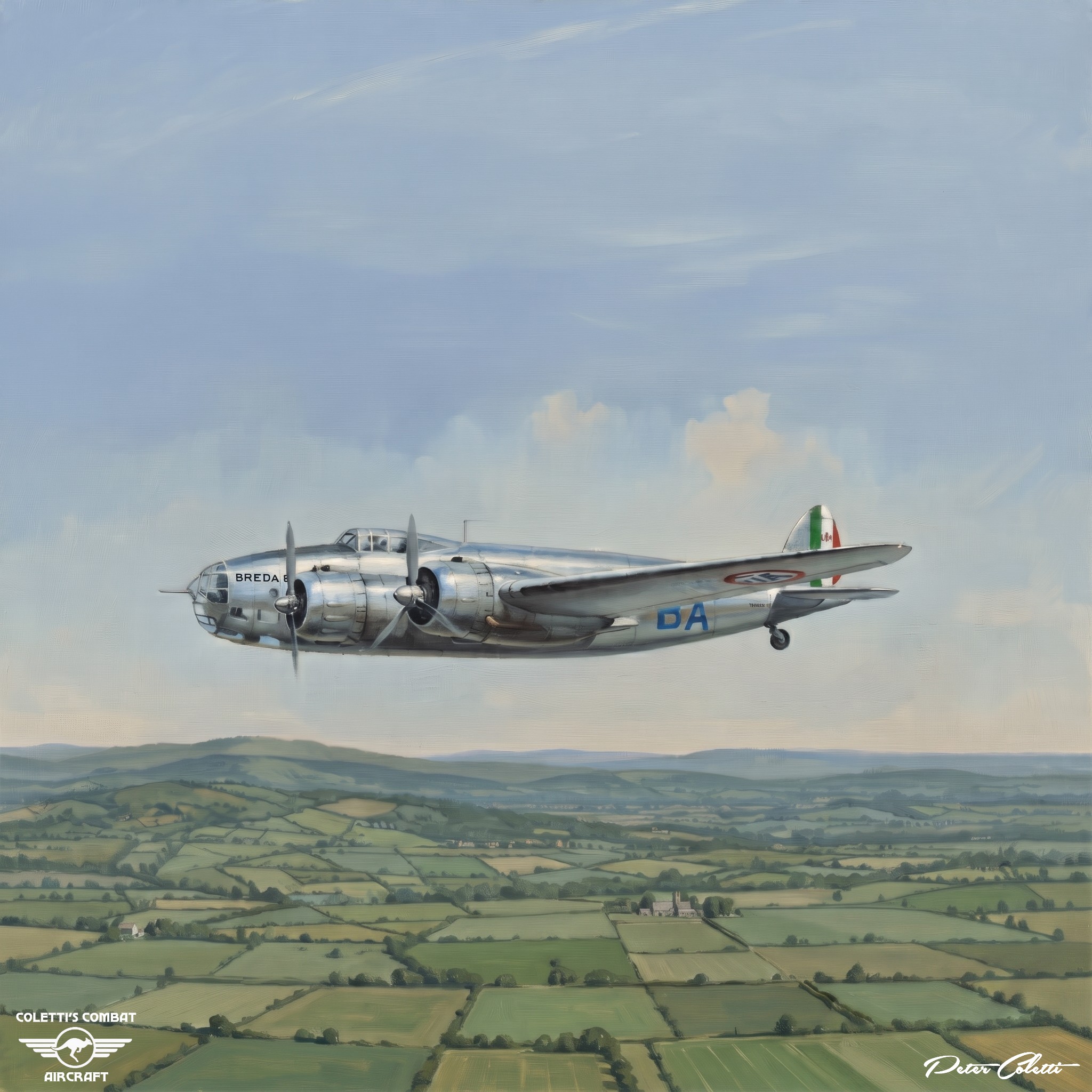
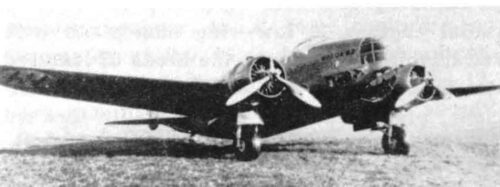
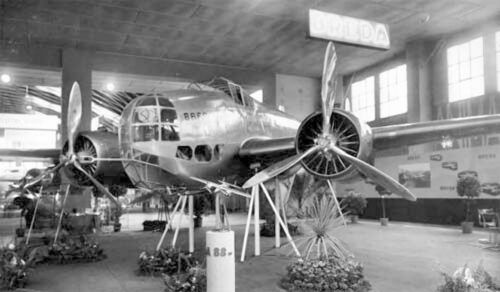
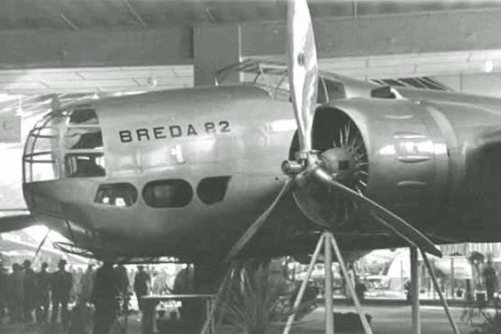
The Breda Ba.82 was an Italian high‑speed medium bomber prototype developed in the late 1930s by the Breda company.
Conceived during a period of rapid doctrinal and technological change within the Regia Aeronautica, it represented an attempt to modernise Italy’s bomber force with a twin‑engine design at a time when the Air Ministry was increasingly shifting towards trimotor configurations for medium bombers.
Only one prototype was ever built, and the aircraft never entered production.
Development History
Origins (1934–1937)
The Ba.82 emerged from Italian Air Ministry interest in fast terrestrial bombers.
Breda began formal design work in 1937, aiming to produce a compact, all‑metal, high‑speed medium bomber.
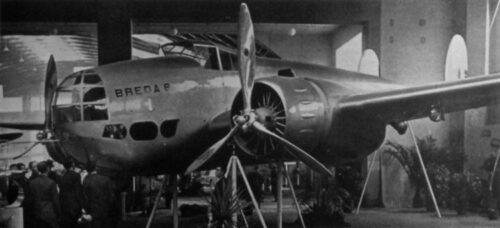
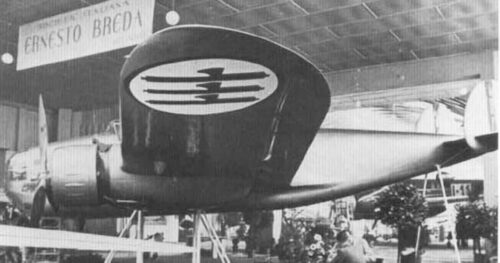
The prototype was publicly displayed at the Aeronautica di Milano air show in 1937, signalling Breda’s intention to compete in the evolving bomber landscape.
Early Ministry Concerns
Even before its first flight, the Italian Air Ministry judged the Ba.82’s design as outdated, though it left open the possibility of a small production order if performance could be improved sufficiently during trials.
This early scepticism foreshadowed the aircraft’s eventual fate.
Testing Difficulties (1937–1939)
Company test flights revealed frequent engine problems, forcing Breda to make numerous modifications.
These issues delayed official trials until 1939, by which time the aircraft’s performance no longer met Regia Aeronautica requirements for speed, range, or bombload.
Doctrinal Shift and Cancellation
By 1939, the Air Ministry had standardised on trimotor bombers for the medium-bomber role, making the Ba.82’s twin-engine layout undesirable.
With performance shortfalls and a doctrinal mismatch, no production order was placed, and the sole prototype was scrapped shortly thereafter.
Design and Technical Characteristics
Airframe and Layout
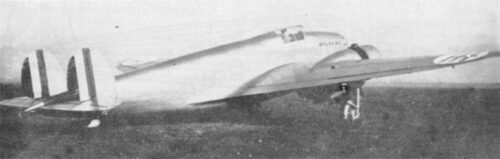
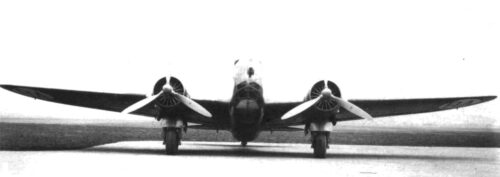
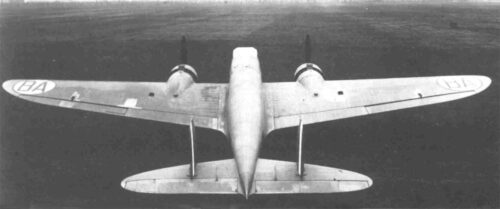
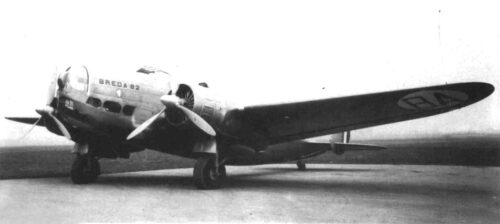
The Ba.82 was a four‑seat, mid‑wing, twin‑engine monoplane with retractable landing gear.
Its all‑metal construction reflected contemporary trends towards more robust and aerodynamic bomber designs.
Powerplant
It was powered by two Fiat A.80 RC 41 air‑cooled radial engines, each producing 750 kW (1,000 hp).
These engines were intended to give the aircraft competitive speed, but persistent reliability issues undermined the design’s viability.
Armament
The Ba.82 carried three 7.7 mm Breda‑SAFAT machine guns, typical of Italian bombers of the era but increasingly inadequate compared to foreign contemporaries that were adopting heavier defensive armaments.
Crew Arrangement
The aircraft accommodated a crew of four, likely including pilot, co‑pilot/navigator, bombardier, and gunner, consistent with Italian medium‑bomber crew structures of the period (inferred from typical Regia Aeronautica practice).
Performance
Flight Characteristics
Despite its intended role as a high‑speed bomber, the Ba.82’s performance was ultimately insufficient:
Maximum speed: 425 km/h (264 mph)
Cruise speed: 368 km/h (229 mph)
Service ceiling: 9,800 m (32,200 ft)
These figures were respectable but not competitive enough by 1939 standards, especially given the Air Ministry’s evolving expectations.
Weight and Dimensions
Length: 14 m
Wingspan: 21 m
Height: 4.5 m
Wing area: 66 m²
Empty weight: 6,840 kg
Gross weight: 10,400 kg
Operational and Historical Context
Italy’s Pre‑War Bomber Doctrine
During the mid‑to‑late 1930s, Italy’s bomber doctrine emphasised trimotor aircraft such as the Savoia‑Marchetti SM.79 and SM.81.
These designs were favoured for their perceived reliability, range, and payload flexibility.
The Ba.82’s twin‑engine configuration placed it at odds with this doctrinal preference.
Comparison to Contemporaries
Aircraft of similar roles and eras included the Bristol Blenheim and Tupolev SB, both of which achieved operational service and demonstrated the viability of fast twin‑engine bombers.
The Ba.82, however, lagged behind in performance and suffered from developmental delays.
WWII Relevance
Because the Ba.82 never entered production and was scrapped before Italy’s major WWII operations, it had no direct wartime impact.
Its failure, however, illustrates the broader challenges of Italian aircraft development in the late 1930s—industrial limitations, shifting doctrine, and engine reliability issues.
Variants
There were no variants of the Ba.82.
Only one prototype was ever constructed, and no derivative designs were pursued after its cancellation.
Summary Assessment
The Breda Ba.82 stands as a case study in misaligned design philosophy, technical difficulties, and doctrinal shifts.
Although conceived as a modern medium bomber, it was overtaken by both technological shortcomings and the Regia Aeronautica’s commitment to trimotor bombers.
Its short life cycle—from 1937 unveiling to 1939 cancellation—reflects the rapid pace of aviation development on the eve of WWII.