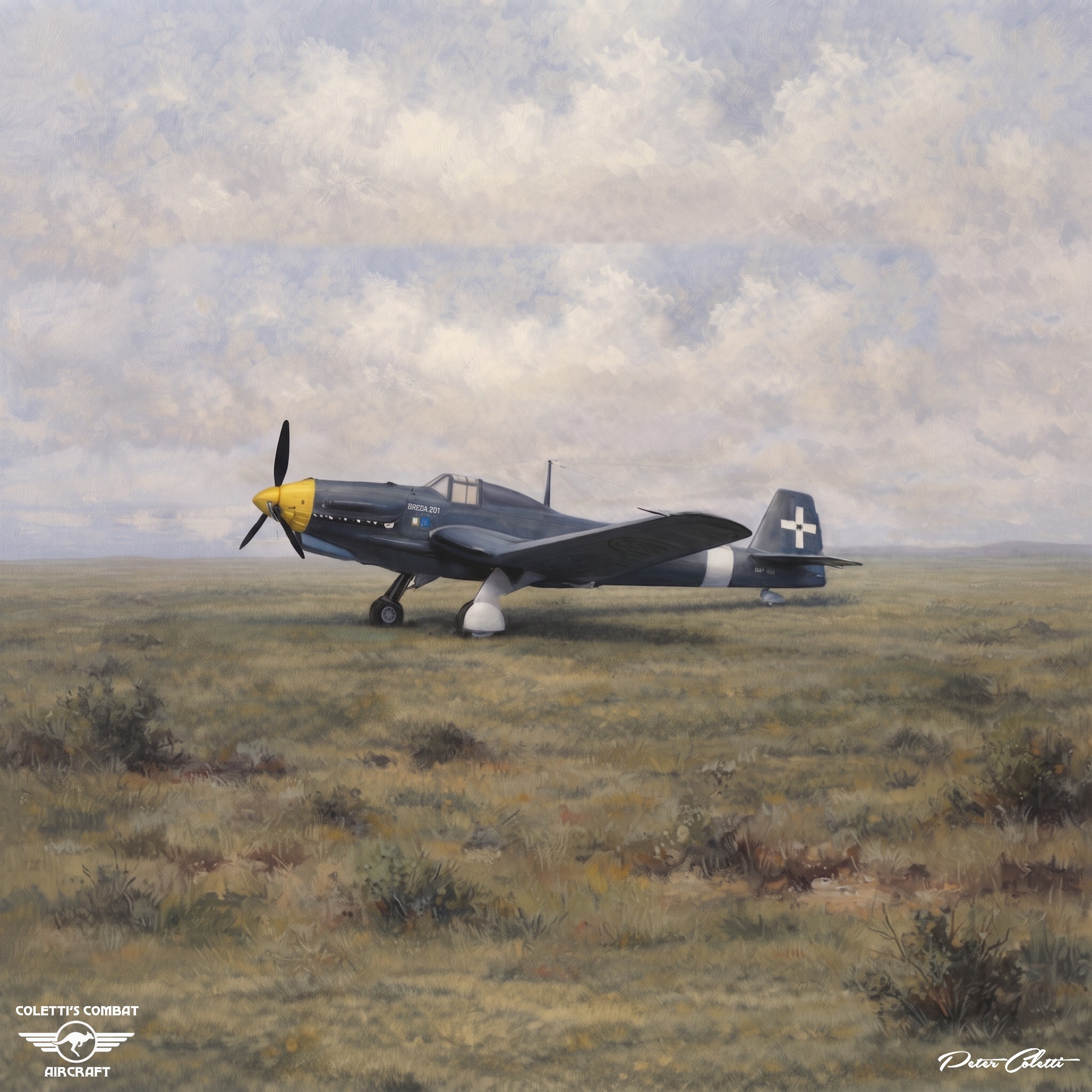
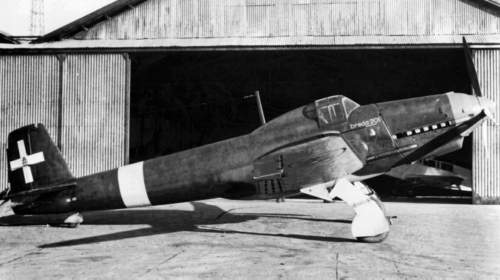
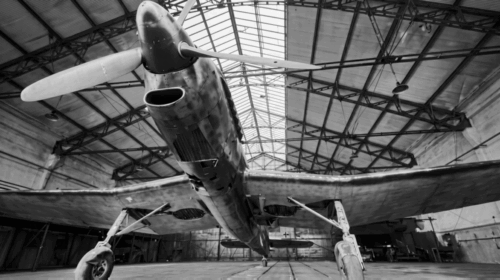
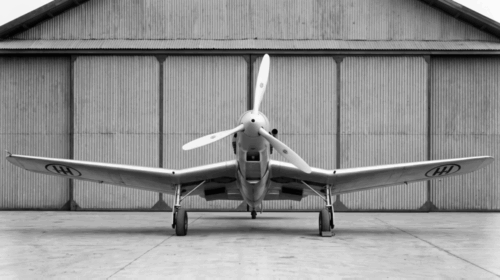
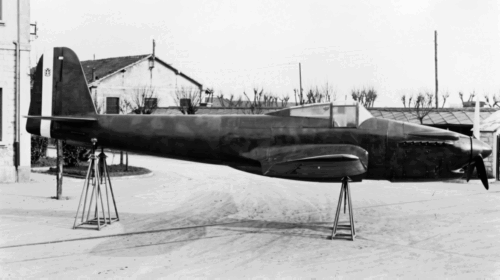
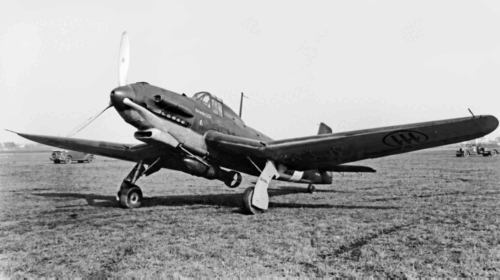
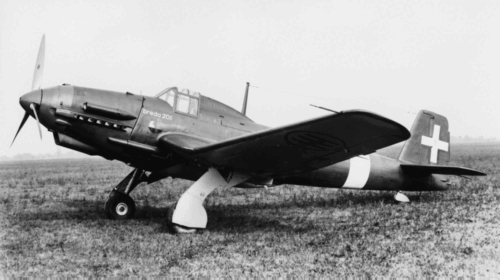
The Breda Ba.201 was Italy’s late attempt to field a dedicated single‑engine dive bomber during the Second World War.
Conceived to replace unsatisfactory domestic types and reduce dependence on German Junkers Ju 87s, it embodied many modern features—clean aerodynamics, all‑metal construction, and a powerful Daimler‑Benz inline engine—but it arrived too late, with performance that fell short of expectations.
Only two prototypes were completed, and the type never entered series production.
Strategic and operational background
By the late 1930s the Regia Aeronautica faced a serious gap in effective ground-attack and dive-bombing capability.
Pre‑war prestige, bolstered by operations in the Spanish Civil War and the Second Italo‑Abyssinian War, had masked structural weaknesses in doctrine, equipment, and industrial capacity.
Once Italy entered the wider conflict in 1940, these weaknesses became starkly visible, particularly in the Mediterranean theatre.
Several Italian designs intended for attack and dive‑bombing roles had proven disappointing.
The Breda Ba.88, initially promising on paper, suffered catastrophic performance degradation in operational trim.
The Caproni Ca.310 series was so ineffective that it was supplanted by the older Fiat CR.32 biplanes in the fighter‑bomber role.
The Savoia‑Marchetti SM.85, a purpose‑built dive bomber, was withdrawn and replaced by imported Ju 87 Stukas even before its successor, the SM.86, could be fully evaluated.
This context drove the Italian Air Ministry to seek a new, modern dive bomber that could match or surpass the Ju 87 while being domestically produced.
The Ba.201 emerged from this requirement as Breda’s answer to a formal competition.
Development history
The 1939 dive‑bomber competition
In 1939 the Regia Aeronautica issued a specification for a new dive bomber.
The requirement called for:
A single‑engine aircraft is preferred; a twin‑engine is acceptable but with a lower speed requirement.
Performance:
Single‑engine: maximum speed around 500km/h (about 310mph).
Twin‑engine: the maximum speed is around 450 km/h (about 280 mph).
Payload: Ability to carry a 500 kg bomb.
Range: Approximately 1,200 km for single‑engine designs, 2,400 km for twin‑engine designs.
Only one twin‑engine proposal, the Piaggio P.122, was submitted.
Despite its all-metal construction, dorsal-wing airbrakes, and two Piaggio P.XI engines giving roughly 2,000 hp combined, it was judged unsuitable and never built.
Two single‑engine contenders emerged: the Caproni Ca.355, a single‑seat derivative of the Ca.335 light bomber, and the Breda Ba.201.
Caproni’s design flew first, in early 1941, but Breda’s project was the one that progressed furthest towards an operational prototype.
Engine selection and design refinement
Breda explored several powerplant options during the design phase, including the Fiat A.38, the Isotta‑Fraschini IF L.121, and the advanced Isotta‑Fraschini Zeta.
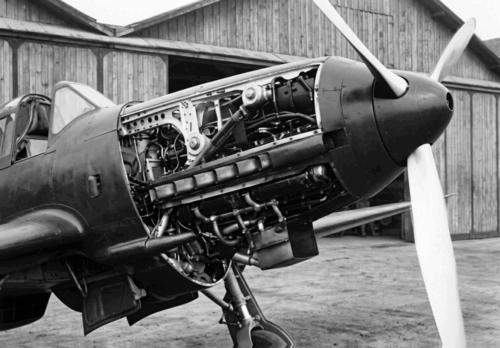
Ultimately, the German Daimler‑Benz DB 601A was chosen.
Its compact, inverted V‑12 layout and direct fuel injection were attractive for a dive bomber: the engine could maintain power in steep dives without fuel starvation, and its slim frontal area reduced drag.
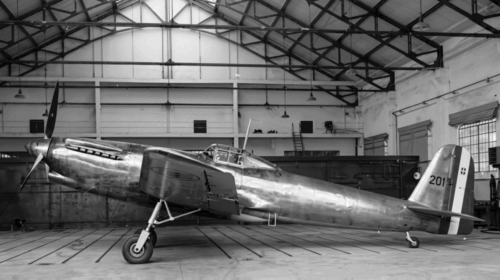
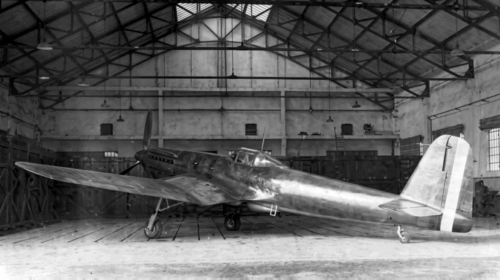
The Ba.201 was laid out as a single‑seat, single‑engine dive bomber with a strong emphasis on pilot visibility and clean aerodynamics.
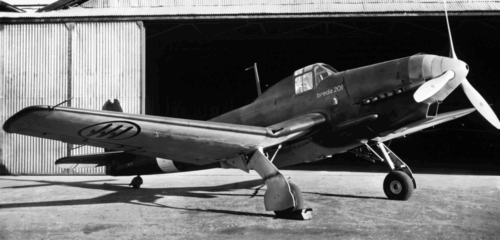
The design incorporated inverted gull wings with integrated dive‑brake flaps, a long, slender fuselage, and a fully retractable tailwheel undercarriage.
Prototypes and flight testing
The first prototype flew on 3 July 1941. Initial test flying, conducted at Breda’s facilities, comprised 34 flights totalling about 13.5 hours between July and September 1941.
On 26 September 1941 the aircraft was demonstrated before General Mario Bernasconi and then transferred to the Regia Aeronautica’s test centre at Guidonia for official evaluation.
Feedback from these early trials led to modifications, and the aircraft returned to testing in March 1942.
Across both test phases, the Ba.201 accumulated roughly 40 hours of flight time.
The first prototype was lost in April 1942 in a landing accident attributed to pilot error.
A second prototype, MM.452, flew on 28 March 1942 and continued the test programme.
Despite some positive impressions—particularly regarding handling and dive characteristics—the aircraft’s maximum speed fell short of the 500 km/h requirement, and its single‑seat layout left it vulnerable to fighter attack from the rear.
These shortcomings, combined with Italy’s worsening war situation and engine shortages, ultimately doomed the project.
Airframe design and construction
General configuration
The Ba.201 was a low‑wing, single‑engine cantilever monoplane of all‑metal construction.
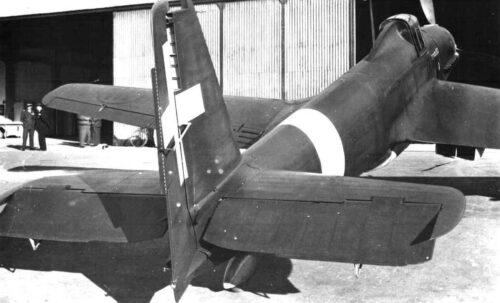
The fuselage was long and relatively narrow, with a low‑mounted tailplane and a conventional fin and rudder.
The cockpit was placed far forward, just behind the engine, to give the pilot an excellent downward and forward view—critical for accurate dive bombing.
The undercarriage was a fully retractable tailwheel type.
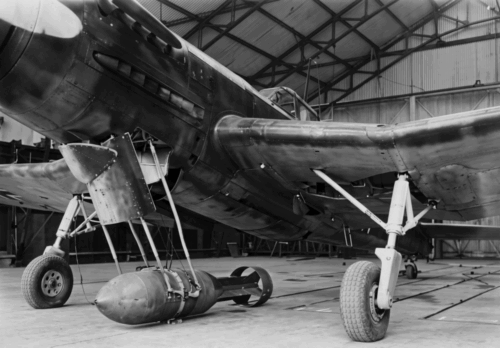
The main wheels retracted inward into the wing or wing‑root area, reducing drag and giving the aircraft a clean silhouette in flight.
The tailwheel was also retractable, further improving aerodynamics compared to many contemporary Italian designs that retained fixed or semi‑retractable tailwheels.
Inverted gull wing
One of the Ba.201’s most distinctive feature was its inverted gull wing.
The wing roots angled downward from the fuselage before turning upward towards the tips.
This geometry offered several advantages:
Landing gear geometry: It allowed shorter, sturdier main landing gear legs while maintaining adequate propeller clearance.
Aerodynamic cleanliness: The wing‑fuselage junction could be faired more smoothly, reducing interference drag.
Dive‑brake integration: The wing’s structure accommodated large split flaps that doubled as dive brakes.
The wing had a span of about 13 m and an area of roughly 24.8 m², giving a relatively high wing loading once fully loaded with fuel and a 500 kg bomb.
Dive-brake and flap system
The Ba.201’s split flaps were designed to serve as both high‑lift devices for take‑off and landing and as dive brakes.
In the dive-brake position, they opened into the airflow, generating substantial drag and allowing the aircraft to maintain a controlled, relatively low dive speed for accurate bombing.
Test reports indicated that the dive brakes were highly effective—perhaps too effective—since they could slow the aircraft to the point where it risked becoming an easy target for ground fire or intercepting fighters.
Powerplant, systems, and armament
Engine and fuel system
The Ba.201 was powered by a single Daimler-Benz DB 601A (licence-built in Italy as the Alfa Romeo RC.41‑I Monsone), an inverted V‑12 liquid‑cooled engine producing around 1,150–1,175 hp.
Key characteristics of this power plant for the dive-bomber role included:
Direct fuel injection: Allowed reliable operation in steep dives and negative‑G manoeuvres, avoiding fuel starvation common in carburetted engines.
Compact frontal area: Reduced drag and improved forward visibility over radial‑engined designs.
Commonality: The DB 601 family was also used in Italian fighters such as the Macchi C.202, which later created competition for limited engine supplies.
The fuel system was arranged to provide the specified endurance of roughly 1,200 km at cruising speed, adequate for Mediterranean operations but not exceptional compared to some twin‑engine bombers.
Bomb load and release arrangement
The Ba.201 was designed around a single central bomb of 500 kg carried under the fuselage.
This configuration concentrated the load along the aircraft’s centreline, minimising asymmetry during release and simplifying the dive-bombing solution.
The bomb was likely mounted on a crutch or swinging rack to ensure safe clearance from the propeller disc during steep dives, a common feature on dedicated dive bombers.
While this single‑bomb arrangement limited total payload compared to multi‑engined aircraft, it was consistent with the precision‑strike philosophy of dive bombing.
Fixed armament
For self-defence and limited strafing capability, the Ba.201 carried two 12.7 mm Breda‑SAFAT machine guns mounted in the wings.
These heavy machine guns were standard Italian aircraft armament of the period, firing through the propeller arc or from the wings depending on installation.
However, the aircraft lacked any rear‑firing defensive armament.
Unlike the two‑seat Ju 87, which carried a rear gunner with one or more flexible machine guns, the Ba.201’s single‑seat layout left the pilot entirely responsible for situational awareness and defence, a serious drawback in contested airspace.
Performance and handling
Performance figures are available data for the Ba.201 prototypes indicate:
Maximum speed: About 460km/h (around 285–290mph) At roughly 4,000 m—short of the 500 km/h requirement.
Cruising speed: Around 400–405 km/h.
Range: Approximately 1,200km.
Service ceiling: Sufficient for typical dive‑bombing profiles, though not exceptional for a fighter‑like aircraft.
Weights:
Empty weight is around 2,280–2,380 kg.
Loaded weight is around 3,650–3,900 kg.
In pure numbers, the Ba.201 was faster than the Ju 87D but not by a decisive margin, and it did not reach the ambitious specification target.
The shortfall in maximum speed, combined with the lack of a rear gunner, undermined its survivability expectations.
Handling and dive characteristics
Test reports suggested that the Ba.201 had good agility once freed of its bomb load, with handling qualities that allowed it to hold its own against contemporary Italian fighters in some regimes.
Its dive behaviour was considered satisfactory, with the integrated dive brakes providing strong deceleration and stable dive paths.
However, the very effectiveness of the dive brakes could be a liability.
Excessive drag risked reducing speed too much in the dive, making the aircraft vulnerable to ground fire and interception during the pull‑out phase.
Balancing dive angle, brake deployment, and airspeed would have required careful pilot technique.
Testing, evaluation, and abandonment
Official trials and limited-service evaluation
After factory trials, the Ba.201 prototypes were evaluated at the Guidonia test centre.
The second prototype, after replacing the first lost in 1942, reportedly flew to Trapani‑Chinisia in June 1943 for limited-service trials with the 97° Gruppo Bombardamento a Tuffo (97th Dive‑Bomber Group).
Around two dozen or so flights were conducted in this quasi‑operational context.
These trials confirmed both the strengths and weaknesses of the design:
Strengths:
Good pilot visibility in the dive.
Effective dive-brake system and accurate bombing potential.
Acceptable manoeuvrability once lightened of its bomb.
Weaknesses:
Maximum speed below specification.
Single‑seat layout with no rear defence.
Limited bomb load (one 500 kg bomb).
Industrial and strategic constraints
By 1942–1943, Italy’s industrial situation had deteriorated.
The DB 601 and its license‑built derivatives were in high demand for frontline fighters such as the Macchi C.202 and Reggiane Re.2001.
Allocating these engines to a new dive bomber with only marginal performance advantages over the Ju 87 was difficult to justify.
At the same time, the strategic situation in the Mediterranean was turning against Italy.
Losses in North Africa, increasing Allied air superiority, and the growing vulnerability of Italian industry to bombing raids reduced the appetite for new, unproven types.
In this environment, the Ba.201 project was quietly abandoned in 1943.
The second prototype’s ultimate fate is uncertain, but it was likely destroyed or scuttled to prevent capture after the Italian armistice in September 1943.
Variants and related projects
Only two Ba.201 prototypes were built, and no formal variants reached the hardware stage.
Nonetheless, several lines of potential development can be inferred:
Production Ba.201: A putative standard production model would likely have retained the DB 601A (or an improved derivative) and the basic airframe, with incremental refinements to systems and equipment based on test feedback.
Alternative engines: Early consideration of Fiat and Isotta‑Fraschini engines suggests that, had the DB 601 supply become untenable, Breda might have explored re‑engining, though this would have required significant redesign and further testing.
Two‑seat version: While no concrete evidence points to a two‑seat Ba.201 variant, the operational criticism regarding lack of rear defence makes it plausible that a future development might have added a rear gunner at the cost of performance.
Because the programme was terminated at the prototype stage, none of these possibilities progressed beyond paper studies, if that.
Comparison and WWII context
Against the Ju 87 and other contemporaries
The Ba.201 was conceived in part to replace the German Ju 87 in Italian service.
Compared to the Ju 87D:
Speed: The Ba.201 was somewhat faster, but not enough to transform survivability in heavily defended airspace.
Defensive armament: The Ju 87’s rear gunner provided a measure of protection against fighters; the Ba.201 had none.
Payload: The Ju 87 could carry a similar or greater bomb load and had a well‑proven dive‑bombing system.
Maturity: The Ju 87 was a fully developed, combat‑tested system; the Ba.201 was still in prototype refinement.
In the broader context of 1942–1943, the dive‑bomber concept itself was under pressure.
Increasing fighter opposition and improved anti‑aircraft defences made slow, steep‑diving aircraft increasingly vulnerable.
Nations like Germany and the United States were already shifting emphasis towards faster fighter-bombers and multi-role aircraft.
The Ba.201, even if perfected, would have entered service just as its basic concept was becoming obsolete.
Within the Regia Aeronautica
For the Regia Aeronautica, the Ba.201 represented an attempt to correct earlier missteps in bomber and attack aircraft development.
It showed that Italian industry could design a modern, purpose‑built dive bomber with advanced features and respectable performance.
Yet the combination of late timing, industrial constraints, and strategic collapse meant that the aircraft never had the chance to influence Italian air doctrine or operations.
Technical summary
Role: Single‑seat dive bomber
Manufacturer: Società Italiana Ernesto Breda
Number built: 2 prototypes
First flight: 3 July 1941
Dimensions
Wingspan: ~13.0 m
Length: ~11.1 m
Height: ~3.1 m
Wing area: ~24.8 m²
Weights
Empty weight: ~2,280–2,380 kg
Loaded weight: ~3,650–3,900 kg
Powerplant
Engine: 1 × Daimler‑Benz DB 601A (Alfa Romeo RC.41‑I Monsone) inverted V‑12, ~1,150–1,175 hp
Performance
Maximum speed: ~460 km/h at ~4,000 m
Cruising speed: ~400–405 km/h
Range: ~1,200 km
Service ceiling: adequate for dive‑bombing operations (exact figure varies by source)
Armament
Fixed guns: 2 × 12.7 mm Breda‑SAFAT machine guns in the wings
Bomb load: 1 × 500 kg bomb on a centreline fuselage rack
Assessment and legacy
The Breda Ba.201 stands as a technically interesting but strategically marginal aircraft.
It encapsulates the Regia Aeronautica’s struggle to field effective, modern strike aircraft under the pressures of war and industrial limitation.
Aerodynamically clean, well‑equipped for the dive‑bombing role, and powered by a first‑rate engine, it nonetheless failed to meet its performance targets and offered no decisive advantage over the already‑available Ju 87.