The Boulton Paul P.92 emerged from a turbulent moment in British air-defence thinking.
By the mid‑1930s, the Air Ministry had become increasingly concerned that new all‑metal bombers—faster, stronger, and capable of absorbing rifle‑calibre fire—would outclass the RAF’s existing fighters.
The Defiant turret fighter, designed under Specification F.9/35, was still in prototype form, yet the Ministry was already contemplating its successor.
The concept of a turret‑armed heavy fighter was rooted in the belief that a bomber could be attacked from any angle if a power‑operated turret carried sufficient firepower.
Early specifications called for four rifle‑calibre guns, but by 1936–37 the RAF judged that only 20 mm cannon would deliver the destructive weight needed against modern bombers.
This led to Specification F.18/36 and, later, the more refined F.11/37, which demanded a twin‑engine, multi‑seat fighter with a four‑cannon turret, high altitude performance, and the ability to operate by day or night.
The requirement was ambitious:
370 mph at 15,000 ft
Service ceiling around 35,000–38,000 ft
Long endurance for night interception
Full 360° turret traverse with high elevation angles
Capability to fire directly forward through the turret arc
Boulton Paul, already Britain’s leading turret‑fighter specialist, feared that the Defiant might be eclipsed by larger competitors.
The company therefore committed heavily to the new requirement, producing a bold and technically complex design: the P.92.
Design Philosophy and Configuration
General Layout
The P.92 was conceived as a large, high‑wing, twin‑engine monoplane with a three‑man crew (pilot, navigator, and gunner).
Its most distinctive feature was the integration of the Type L four‑cannon turret into the thickened centre section of the wing, forming a single aerodynamic unit.
This approach aimed to minimise drag by burying most of the turret structure within the wing.
Turret System
The turret was the heart of the aircraft:
Four 20 mm Hispano cannon mounted in recessed slots.
Guns retracted into the turret when not firing, covered by shutters to reduce drag.
Full 360° traverse and wide elevation range.
Gunner seated between the cannon breeches, with a small perspex blister for visibility.
Drum‑fed ammunition (120 rounds per gun), with rails to slide replacement drums into place.
Electro‑hydraulic power system, similar to Boulton Paul’s other turrets.
The turret’s diameter—about 13 ft—was unusually large, requiring a robust wing structure and careful aerodynamic shaping.
Wind‑tunnel tests later showed that raising the guns to 45° and rotating them 135° increased drag by up to 35%, a major challenge for meeting the speed requirement.
Wing and Aerodynamics
The wing was a reverse‑gull configuration:
Thick centre section housing the turret.
Down‑angled inner panels leading to the engine nacelles.
Up‑angled outer panels with noticeable dihedral.
Split flaps and Frise ailerons.
Leading‑edge slots recommended by the Air Ministry.
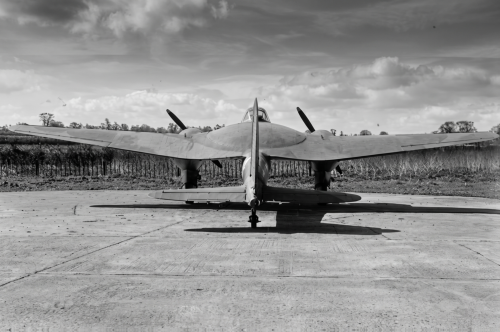
This gave the aircraft a distinctive “humped” appearance when viewed head‑on.
Fuselage and Crew Arrangement
Because the turret occupied the wing centre section, the fuselage could be kept unusually slim:
Pilot in a forward cockpit with excellent forward visibility.
Navigator behind the pilot, with additional soundproofing for long missions.
Gunner in the turret blister.
Emergency escape was a major engineering concern.
The pilot’s seat could tilt back 110°, releasing a hatch in the floor so he could slide out headfirst beneath the aircraft—an awkward but theoretically workable solution.
Powerplants
Three prototypes were ordered:
Two with Rolls‑Royce Vulture II engines (1,760 hp each).
One with Napier Sabre I engines (2,055 hp each).
Both engines were powerful but immature, and both would later prove problematic in other aircraft (e.g., the Avro Manchester and Hawker Typhoon).
Predicted Performance
Boulton Paul estimated the following:
Max speed: 370 mph at altitude
Cruise: ~320 mph
Ceiling: 38,000 ft
Endurance: 1.5 hours at normal load, extendable to ~2,000 miles with extra tanks
Normal take-off weight: ~19,000 lb
These figures placed the P.92 in the same conceptual class as later night fighters such as the Northrop P‑61 Black Widow.
Development Difficulties and the Half‑Scale Prototype (P.92/2)
Wind‑Tunnel Testing
A large 2:7 scale model underwent extensive testing at the Royal Aircraft Establishment in 1939.
Results confirmed:
High drag from turret operations
Significant lift loss when guns elevated
Need for a full flying prototype to validate aerodynamic predictions
Decision to Build a Flying Model
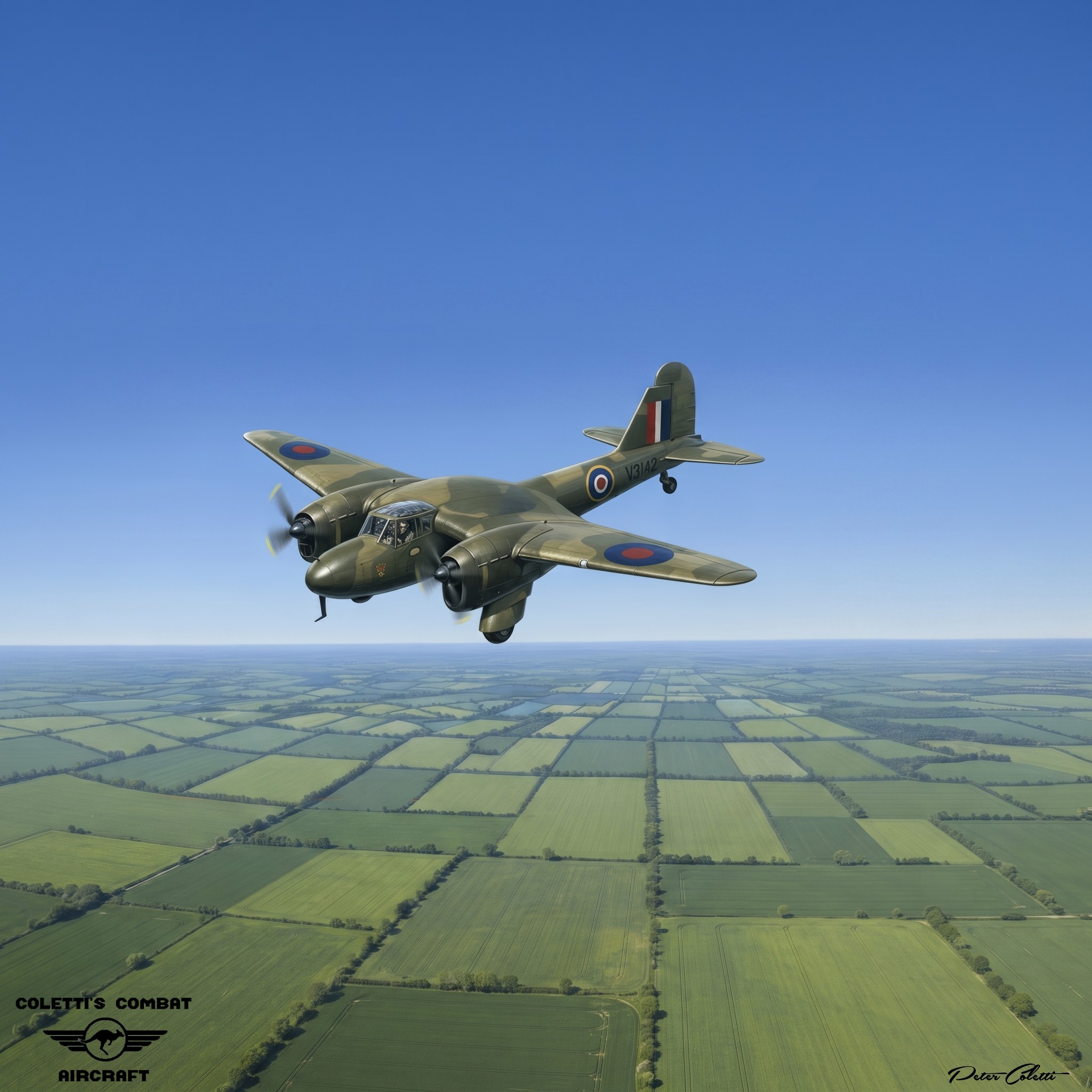
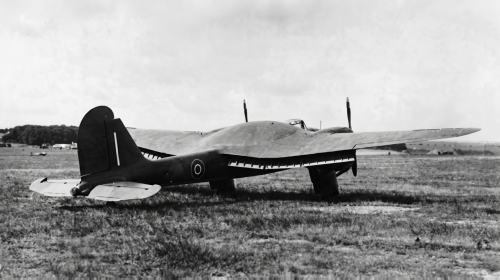
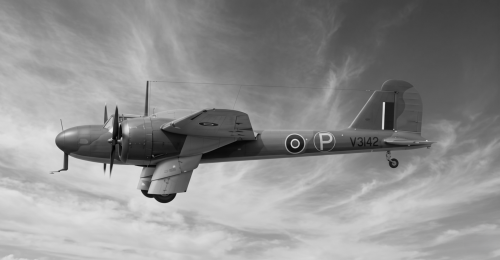
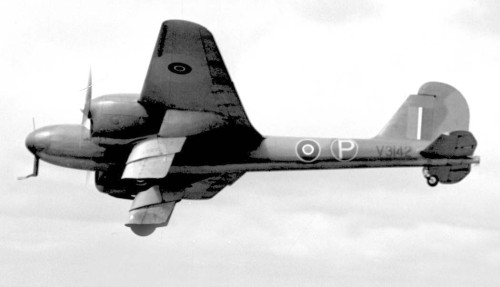
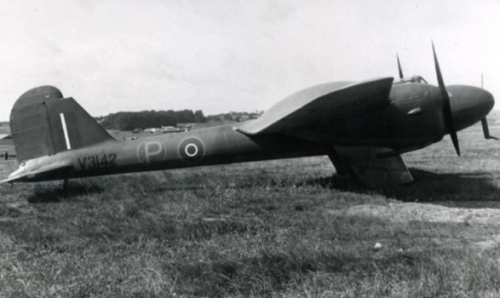
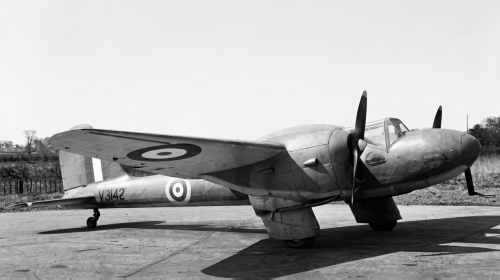
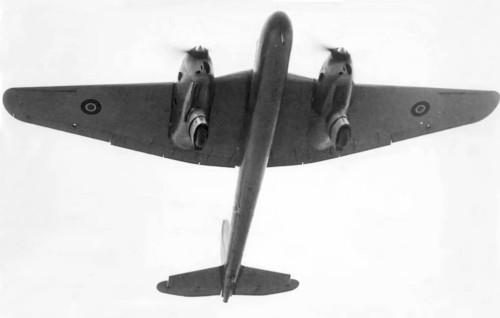
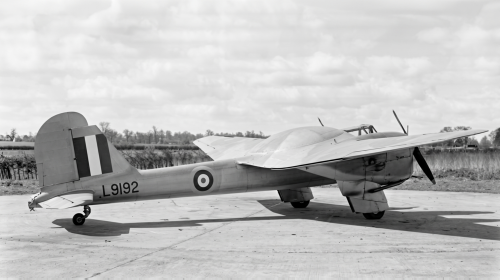
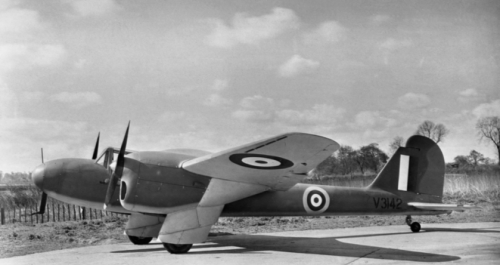
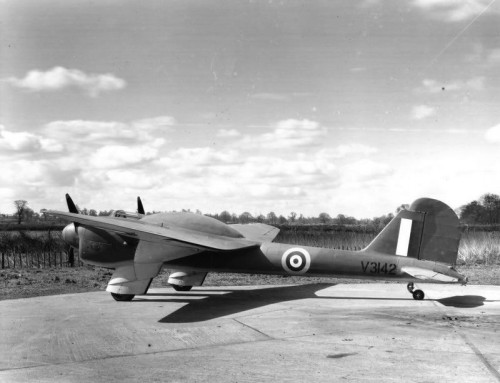
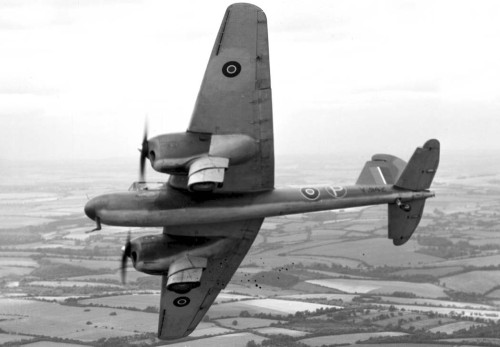
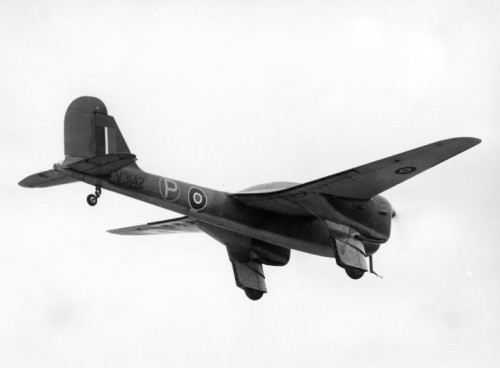
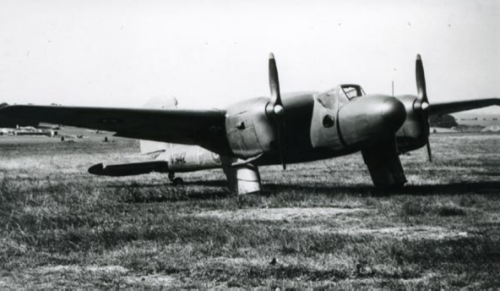
Because Boulton Paul’s facilities were overloaded with Defiant production, the Air Ministry contracted Heston Aircraft Company to build a half‑scale flying testbed, designated P.92/2 (Heston JA.8), serial V3142.
Construction of the P.92/2
The P.92/2 was
All‑wood, with a plywood monocoque fuselage
Powered by two 130 hp Gipsy Major II engines
Fitted with a fixed undercarriage in streamlined “trouser” fairings
Given a slightly enlarged cockpit to fit a normal‑sized pilot
Equipped with a plywood hump representing the turret
Emergency escape was even more difficult than in the full‑scale design, requiring the pilot to crawl sideways through a tiny hatch.
Flight Testing
The P.92/2 first flew in spring 1941, piloted by Boulton Paul’s chief test pilot, Flt Lt Cecil Feather.
It was later transferred to Wolverhampton and then to the A&AEE at Boscombe Down in 1943.
Test pilots found:
Excellent longitudinal and directional stability
Good single‑engine handling
Pleasant general flying qualities
Poor lateral control in demanding conditions
High drag compared to predictions
Very cramped cockpit but acceptable noise levels
The hump was so unusual that A&AEE pilots assumed it was a radar housing rather than a turret fairing.
Cancellation of the Full‑Scale Aircraft (1940)
By May 1940, the strategic situation had changed dramatically.
With the German advance through Europe, the Air Ministry shifted to standardising production on a few proven types.
Complex, unproven heavy fighters were no longer a priority.
The P.92 prototypes—though two had already been prepared—were cancelled when the design was only about 5% complete.
The P.92/2 continued flying for research purposes but was eventually scrapped after 1943.
Variants
P.92 (Full‑Scale Design — Cancelled)
Role: Three‑seat turret‑armed heavy fighter
Engines: Vulture II or Sabre I
Armament: Four 20 mm Hispano cannon in Type L turret
Estimated performance: 370 mph, 38,000 ft ceiling
Status: Three prototypes ordered; none completed
P.92/2 (Half‑Scale Flying Model — Built)
Role: Aerodynamic test aircraft
Construction: Wood, fixed gear
Engines: Two Gipsy Major II (130 hp each)
Performance: ~152 mph max speed
Status: One built (V3142); flown 1941–43; later scrapped
Assessment and Legacy
Although the P.92 never reached full‑scale construction, it represented the culmination of Britain’s turret‑fighter doctrine.
Its cancellation marked the end of Boulton Paul’s role as a major combat aircraft designer; the Defiant would be the last of its fighters to enter production.
In retrospect, the P.92 anticipated several features of later night fighters:
Heavy armament
Multi‑crew layout
High‑altitude performance
Long endurance
Radar integration (which the P.92 was expected eventually to receive)
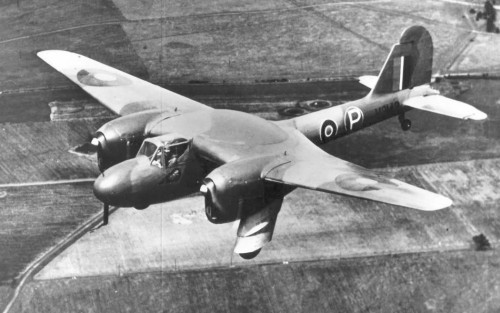
Its closest real‑world analogue became the Northrop P‑61 Black Widow, whose size, speed, and mission profile closely matched the P.92’s projected capabilities, though the American aircraft used a mix of fixed forward‑firing cannon and a remote turret.
The P.92 stands today as a fascinating “what‑if” of British aviation—an ambitious, technically daring design overtaken by wartime urgency and the rapid evolution of air combat doctrine.