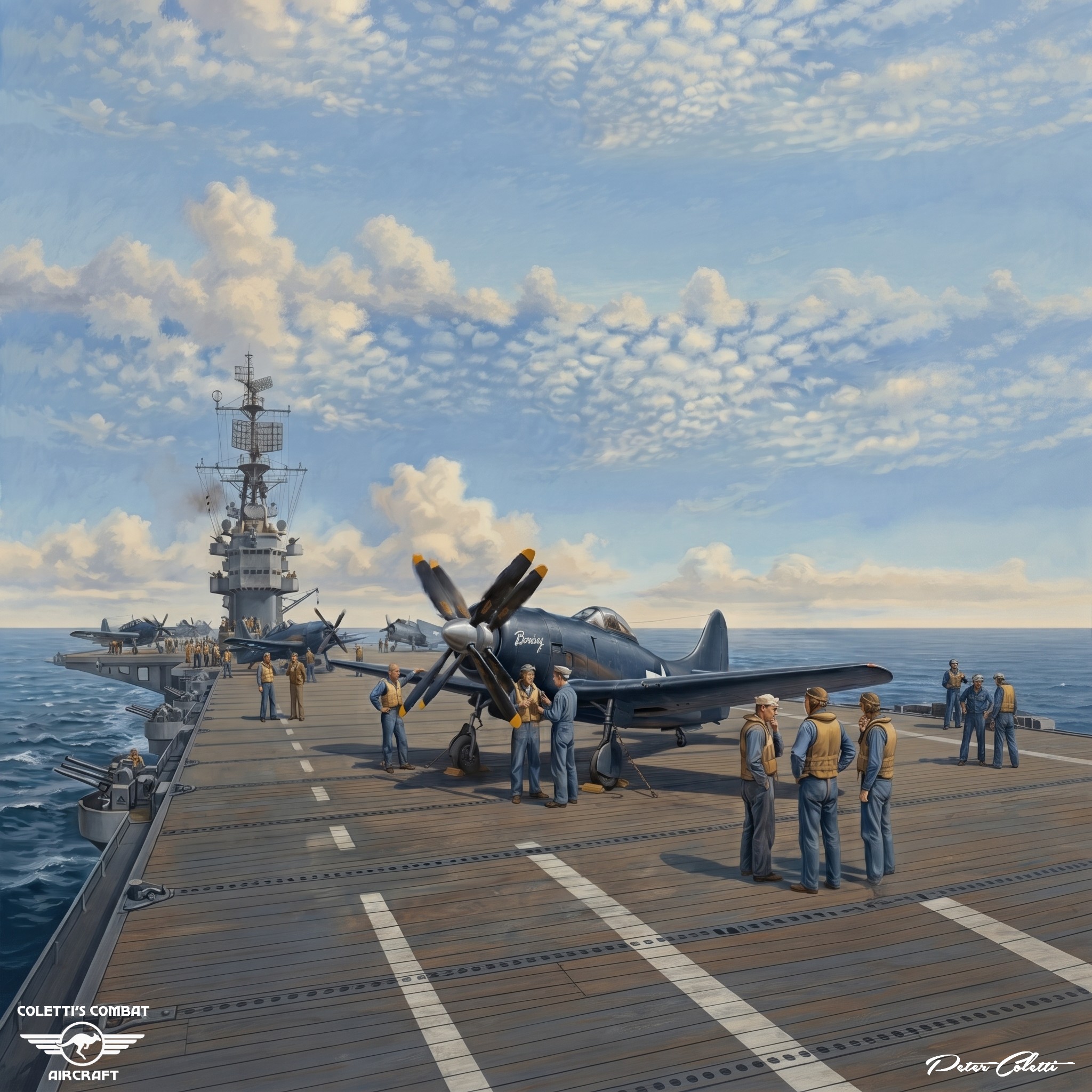
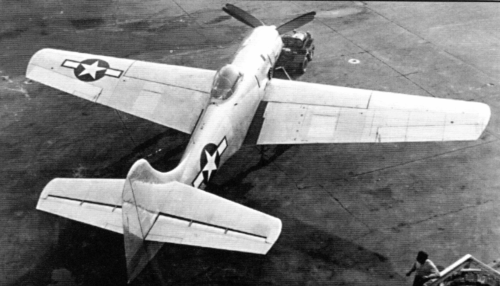
The Boeing XF8B emerged from a late‑war U.S. Navy requirement for a long‑range, carrier‑based fighter‑bomber capable of striking the Japanese home islands without bringing American carriers into range of Japanese land‑based aircraft.
This requirement became urgent in 1943, when the Navy anticipated operations close to Japan’s defensive perimeter.
Boeing, already deeply involved in heavy bomber production, proposed a radical single‑engine “super‑fighter” under the internal designation Model 400.
The Navy found the concept compelling and awarded a contract for three prototypes on 4 May 1943.
The XF8B was conceived as a multi-role strike aircraft—a “five-in-one fighter” capable of functioning as a fighter, interceptor, long-range escort, dive-bomber, torpedo bomber, and level bomber.
Development Timeline
April–May 1943: Contract awarded for three prototypes (BuNos 57984–57986).
October 1943: Full‑scale mock-up reviewed
27 November 1944: First flight of the XF8B‑1 prototype.
1945–1947: Continued testing by both the U.S. Navy and U.S. Army Air Forces; remaining prototypes completed postwar.
Post‑1947: Programme cancelled due to the rapid shift to jet propulsion and Boeing’s strategic pivot towards large bombers and transports.
Although the XF8B demonstrated impressive performance, it arrived too late to influence WWII and was overshadowed by emerging jet fighters.
Design Philosophy and Airframe
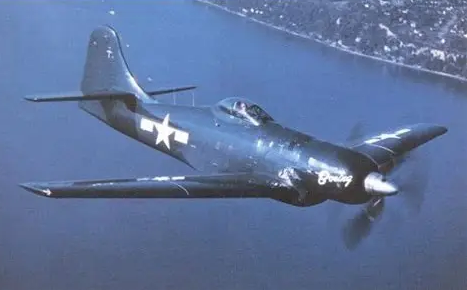
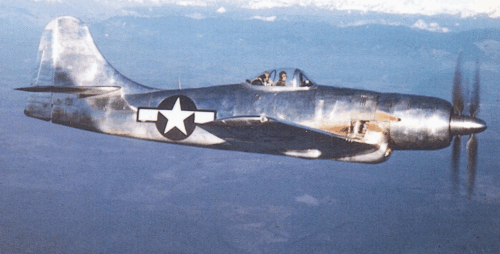
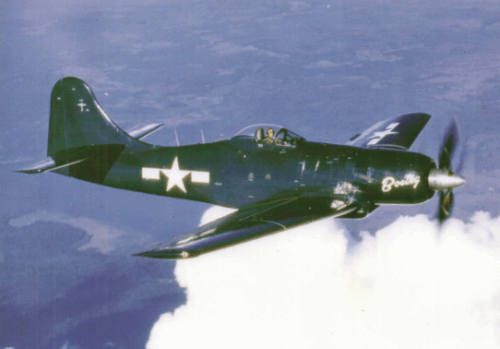
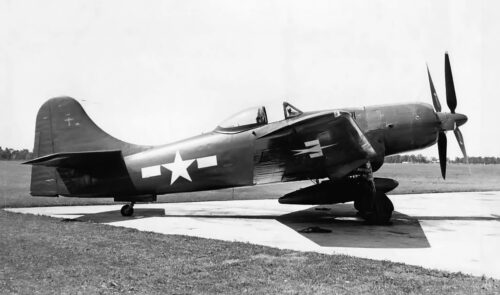
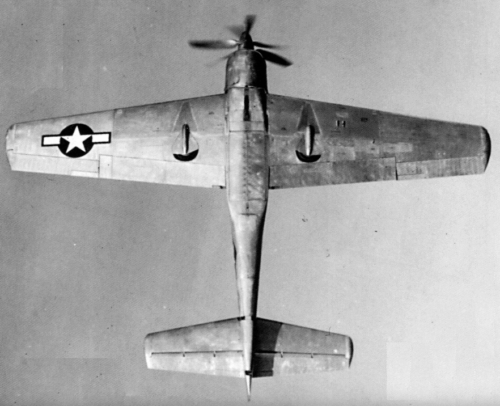
The XF8B was the largest and heaviest single‑seat, single‑engine fighter ever built in the United States up to that time.
Fuselage and Layout
Streamlined fuselage with a long nose housing the massive engine.
A bubble canopy providing excellent all‑round visibility.
Internal bomb bay—unusual for a single‑engine fighter—allowing carriage of heavy ordnance without external drag.
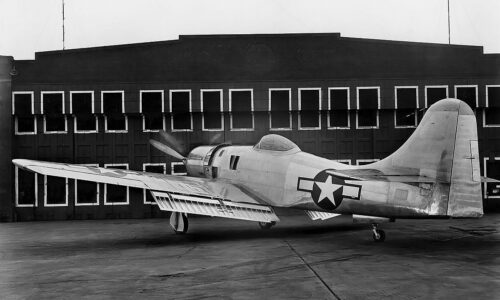
The vertical tail shape is derived from Boeing’s B‑29 lineage.
Wings and Undercarriage
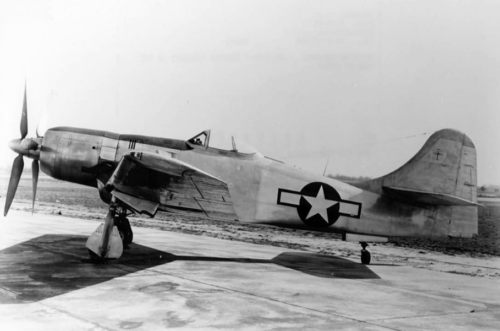
Large, low‑mounted wings with folding outer panels for carrier storage.
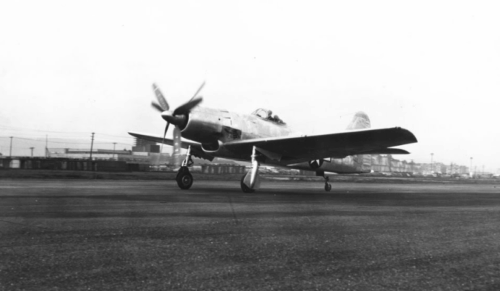
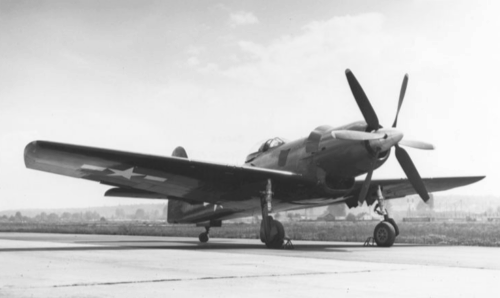
Sturdy landing gear retracting into the wings.
Powerplant
The heart of the XF8B was the Pratt & Whitney XR‑4360‑10, a 28‑cylinder, four‑row radial producing 3,000 hp.
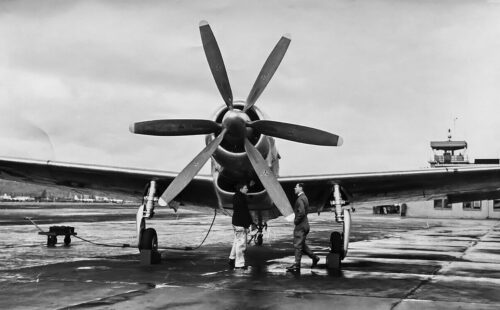
This engine drove contra‑rotating propellers (two three‑bladed units), eliminating torque effects and improving takeoff and climb performance.
This powerplant made the XF8B one of the most powerful single‑engine piston fighters developed by any nation during WWII.
Armament and Mission Flexibility
The XF8B’s design emphasised multi‑role capability:
Guns
Six 0.50‑inch machine guns
or
Six 20 mm cannons, all wing‑mounted.
Bombs and Torpedoes
Internal bomb bay for two 1,600 lb bombs.
Additional 3,200 lb external bomb load.
Capability for two 2,000 lb torpedoes.
Range and Endurance
Large internal fuel tanks and optional external tanks enabled long-range escort and strike missions—central to its intended role in Pacific operations.
Performance
Performance figures from testing and specifications include:
Maximum speed: 432 mph at 26,900 ft
Sea‑level speed: 340 mph
Cruise speed: 190 mph
Rate of climb: 3,660 ft/min
Service ceiling: 37,500 ft
Range: 1,305 miles to 2,796 miles — the discrepancy reflects different loadouts and measurement conventions.
These numbers placed the XF8B among the fastest and highest‑flying piston‑engine naval aircraft of its era.
Operational Testing
The first prototype included a jump seat for a flight engineer to monitor systems during early testing—possible due to the unusually spacious cockpit.
Testing continued into 1946–1947 under both the U.S. Navy and U.S. Army Air Forces (the third prototype was evaluated at Eglin AFB).
Despite promising results, the XF8B faced insurmountable obstacles:
WWII ended before production could begin.
The U.S. military rapidly shifted to jet fighters, making large piston‑engine fighters obsolete.
Boeing redirected resources towards strategic bombers and transports.
Variants
Only three prototypes were ordered, and all were designated XF8B‑1.
No further variants or production models were developed.
Trials of 2 x 3-bladed contra-props and 2 x 4-bladed contra-props were tested.
Legacy and Significance
Although it never entered service, the XF8B represents the following:
The pinnacle of U.S. single‑engine piston fighter design.
A rare example of a carrier‑based aircraft with an internal bomb bay.
Boeing’s final attempt at a fighter aircraft before permanently shifting to bombers and airliners.
A transitional design bridging late‑war piston technology and the dawn of the jet age.
Its combination of size, power, and multi‑role capability remains unmatched among American single‑engine fighters of WWII.