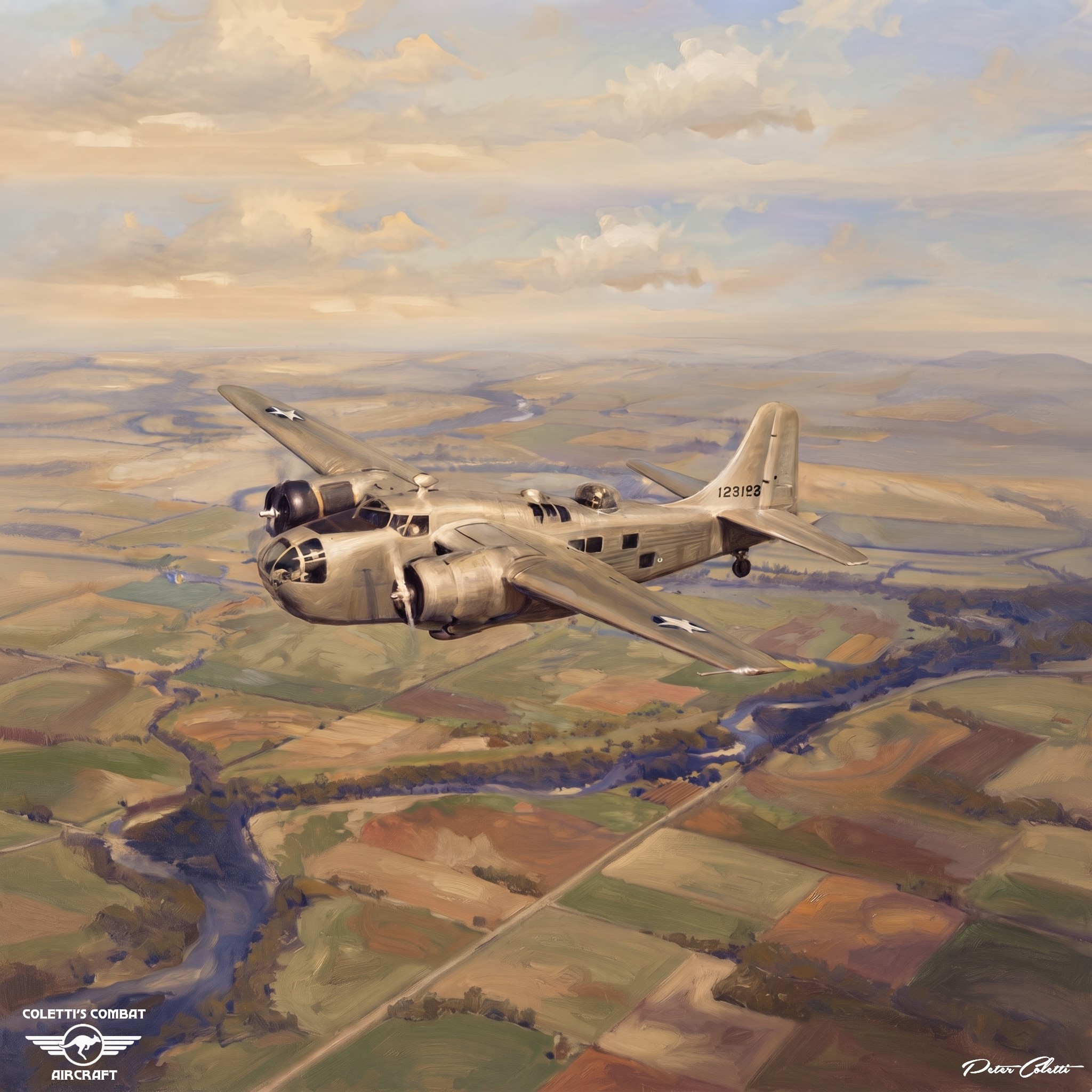
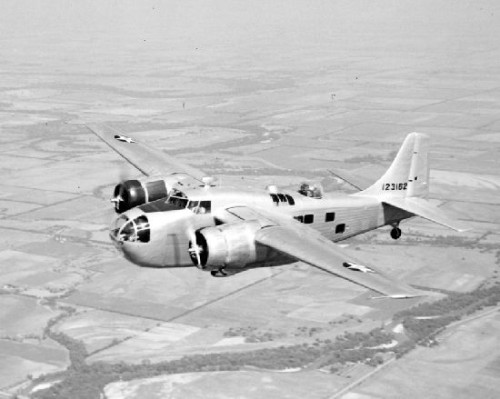
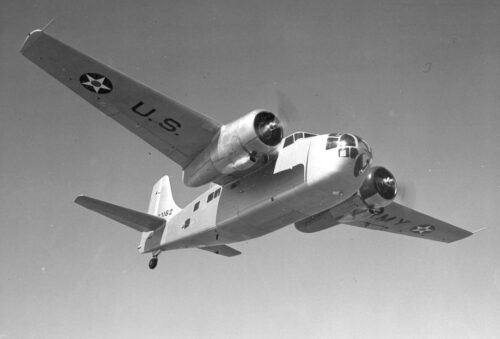
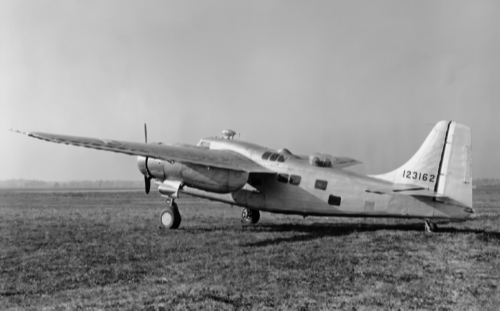
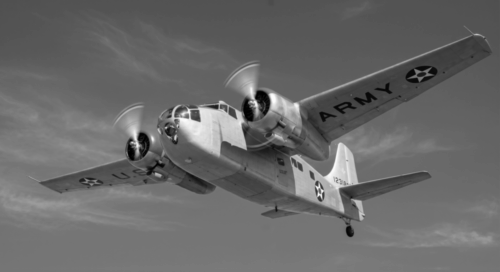
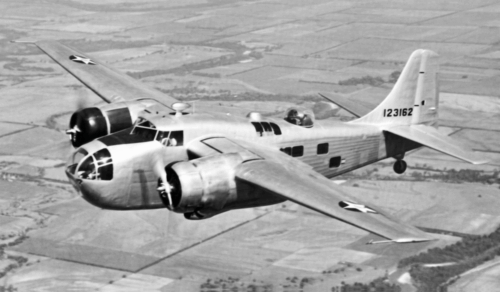
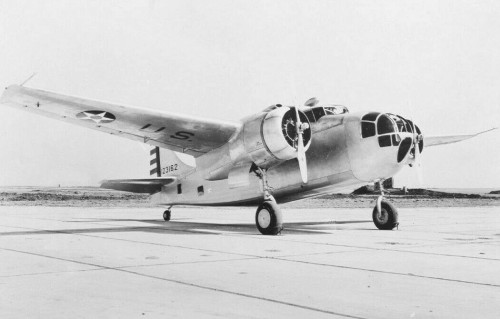
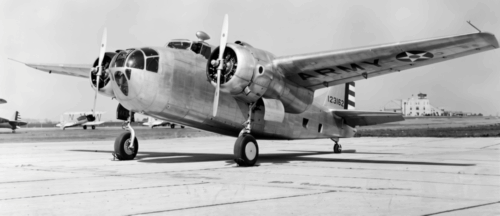
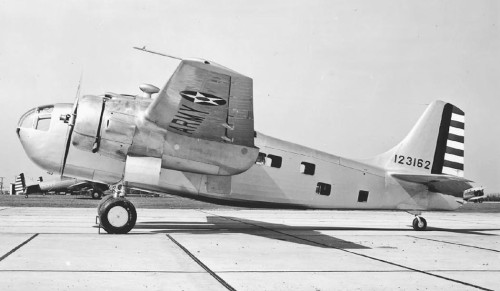
The Boeing–Stearman XAT‑15, later informally known as the Crewmaker, emerged from a moment in U.S. aviation history when the Army Air Corps recognised a looming bottleneck: the rapid expansion of bomber forces required not only pilots but also cohesive, multi-role bomber crews.
As the United States accelerated rearmament in the late 1930s, the former Stearman Aircraft Company—absorbed into Boeing in 1939 as its Wichita Division—was tasked with designing a dedicated multi‑crew trainer to prepare teams of bombardiers, navigators, radio operators, and gunners for the complex coordination required in modern heavy bombers.
This concept was unusual.
Most air forces trained specialists separately, then assembled them into bomber crews later.
The Air Corps briefly explored the opposite: training crews together from the start, using a single aircraft designed specifically for that purpose.
The Wichita Division designated the project X‑120, and the Army ordered two prototypes under the designation XAT‑15.
Development and Program Evolution
Boeing signed the contract for two prototypes on 19 May 1941, and the first aircraft flew on 9 April 1942.
At this point, the United States had already entered World War II, and the training landscape was changing rapidly.
Specialised schools for each bomber crew role—gunnery, navigation, bombardment, and pilot training—were expanding at high speed, reducing the need for a single integrated crew‑training aircraft.
Nevertheless, the XAT‑15 programme initially envisioned over 1,000 production aircraft to support the massive bomber force buildup.
This plan was cancelled shortly after America’s entry into the war, as training doctrine shifted decisively towards specialised instruction rather than integrated crew training.
The two prototypes were delivered to the Army Air Corps in 1942, but the programme was terminated soon afterwards.
Materials allocated for the planned production run were salvaged for other wartime needs.
Design Philosophy and Structural Features
The XAT‑15 was conceived as a high‑wing, twin‑engine monoplane, with an emphasis on internal space, visibility, and multi‑station training capability.
Its design reflected both the training mission and wartime material constraints.
Airframe Construction
Due to shortages of strategic materials early in the war, the aircraft used a hybrid structure:
Fuselage: welded steel‑tube framework covered with plywood
Wings and tail unit: primarily wooden construction
Landing gear: retractable tailwheel configuration, typical of contemporary medium bombers
This combination made the aircraft inexpensive, easy to repair, and suitable for mass production—if mass production had occurred.
Crew Training Layout
The XAT‑15 incorporated a glazed, extended nose section specifically designed for bombardier training, providing excellent downward and forward visibility for simulated bombing runs.
The interior was arranged to support the following:
Bombardier instruction
Navigator training
Radio operator practice
Gunner training (with light defensive armament)
Pilot and co‑pilot instruction
This multi‑station approach was the core of the Crewmaker concept: a single aircraft in which an entire bomber crew could learn to work as a coordinated team.
Powerplant and Systems
The aircraft was powered by two Pratt & Whitney R‑1340‑AN‑1 Wasp radial engines, each producing 600 hp.
The R‑1340 was a proven, reliable engine widely used in trainers and light transports, ensuring predictable handling and simplified maintenance.
Performance Characteristics
The XAT‑15’s performance placed it between advanced trainers and light twin‑engine bombers of the era—appropriate for its intended role.
Maximum speed: 207 mph at 5,000 ft
Cruise speed: 185 mph
Range: 850 miles
Service ceiling: 18,900 ft
Time to 10,000 ft: 11.9 minutes
These figures made the aircraft fast enough to simulate bomber‑escort scenarios and high‑altitude operations while remaining manageable for trainees transitioning from single‑engine trainers.
Armament and Training Equipment
Although not intended for combat, the XAT‑15 carried light armament to support gunnery training:
Four 0.30‑inch (7.62 mm) machine guns
Ten 100‑lb (45 kg) practice bombs
This allowed realistic simulation of bombing runs and defensive firing exercises.
Variants
Only two aircraft were built, both prototypes:
XAT‑15 – the experimental prototypes; no production AT‑15 aircraft were completed.
No further variants or subtypes were developed due to the programme’s cancellation.
Operational Use and Cancellation
The two XAT‑15 prototypes were delivered to the U.S. Army Air Corps in late 1942, with the first arriving in October.
They were evaluated but never entered operational training service.
The decisive factor in the programme’s cancellation was the wartime shift towards specialised training schools, which rendered the integrated crew‑training concept obsolete.
As the Army Air Forces refined its training pipeline, it became clear that bombardiers, navigators, gunners, and pilots could be trained more efficiently in dedicated facilities using specialised aircraft and ground simulators.
Thus, the XAT‑15 became a technological dead‑end—an innovative idea overtaken by the realities of wartime mobilisation.
Historical Significance
Although only two were built, the XAT‑15 represents an important transitional moment in U.S. bomber‑crew training philosophy.
It illustrates:
The early‑war uncertainty about how best to train large bomber crews
The industrial flexibility of Boeing’s Wichita Division
The rapid evolution of training doctrine under wartime pressures
The aircraft also stands as one of the last designs to carry the legacy of the Stearman Aircraft Company before its full integration into Boeing.
Specifications (XAT‑15)
Length: 42 ft 4 in (12.90 m)
Wingspan: 59 ft 8 in (18.19 m)
Height: 13 ft 1 in (3.99 m)
Wing area: 457 sq ft (42.5 m²)
Empty weight: 10,640 lb (4,826 kg)
Gross weight: 14,355 lb (6,511 kg)
Powerplant: 2 × Pratt & Whitney R‑1340‑AN‑1, 600 hp each