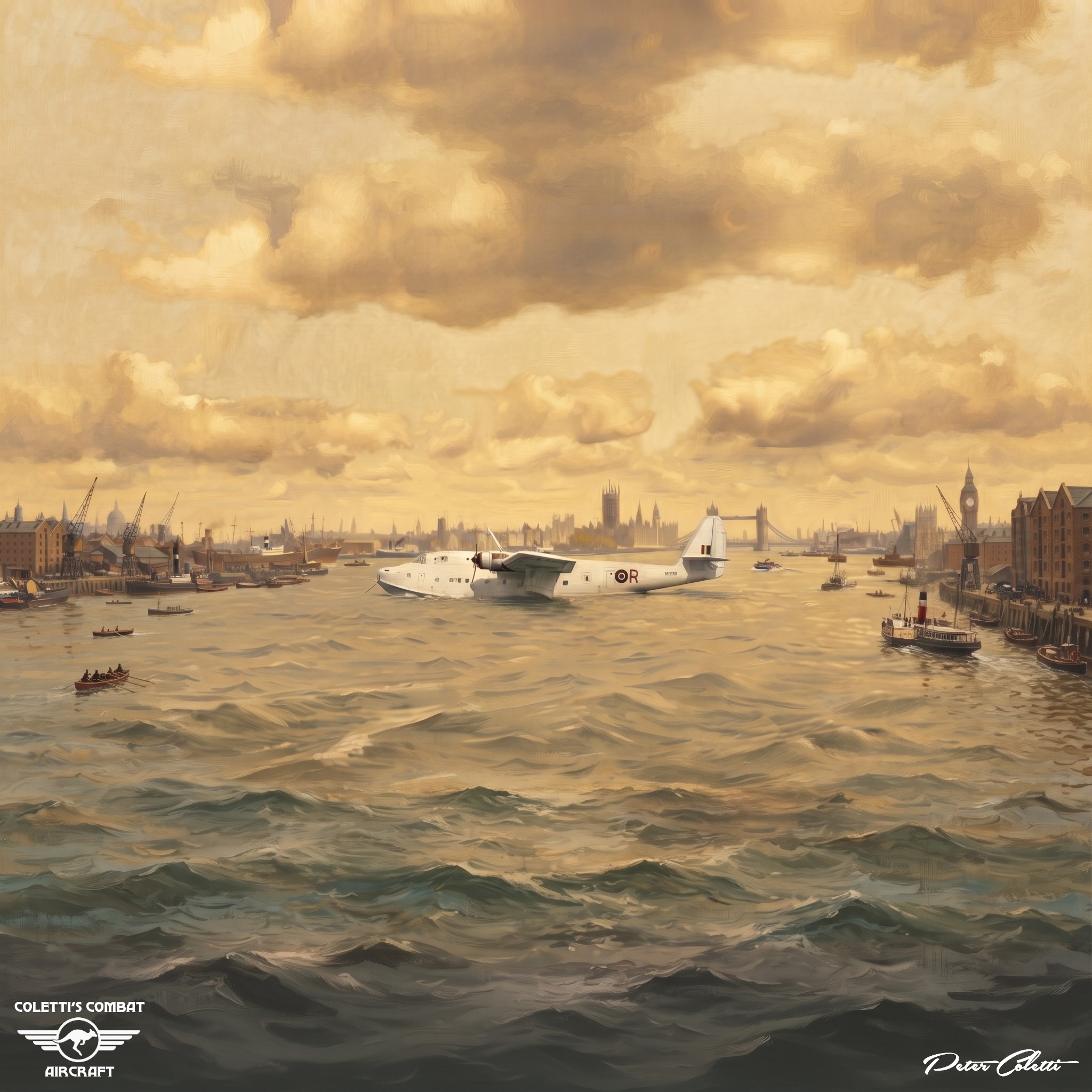
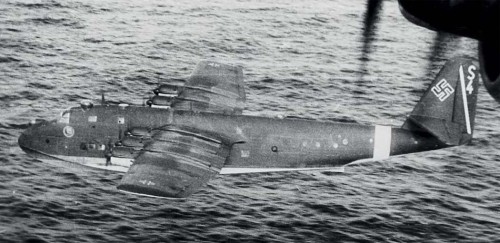
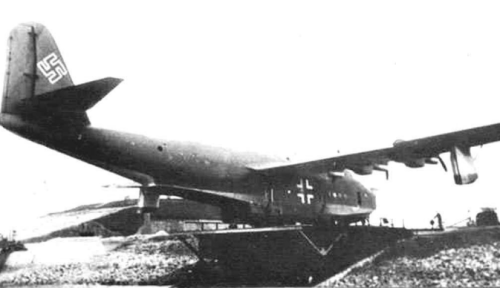
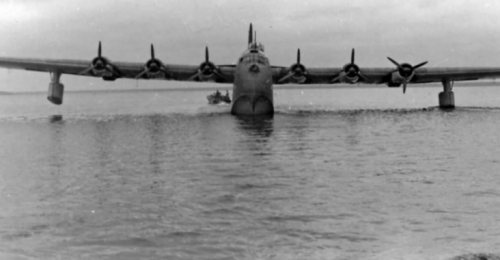
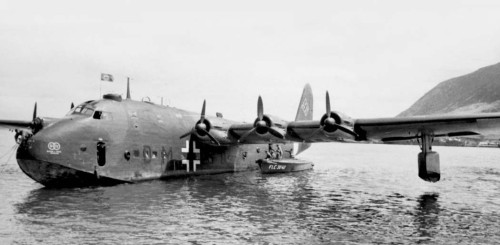
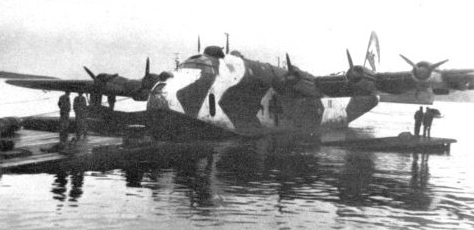
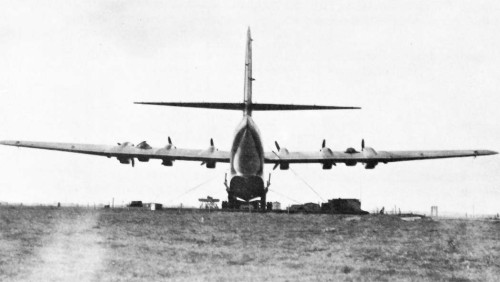
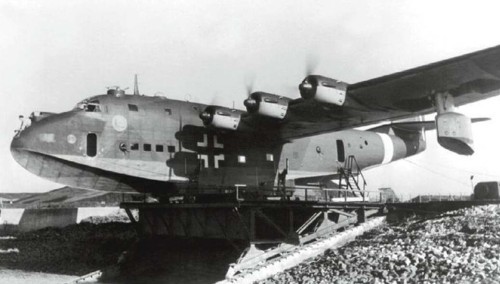
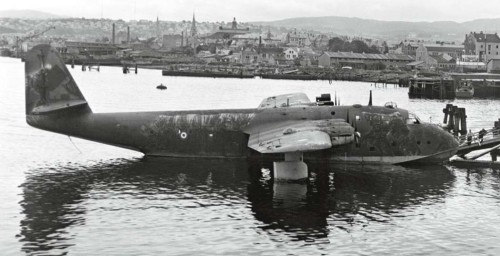
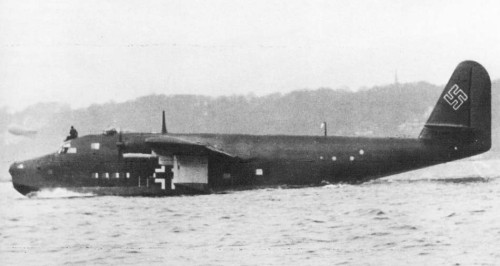
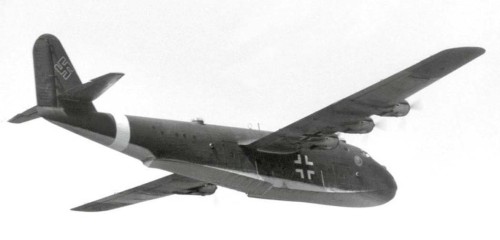
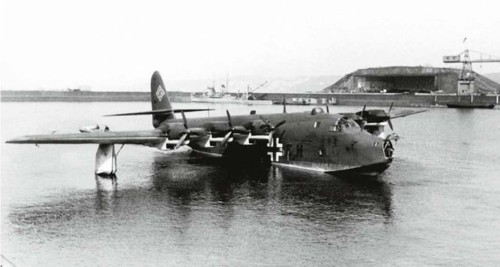
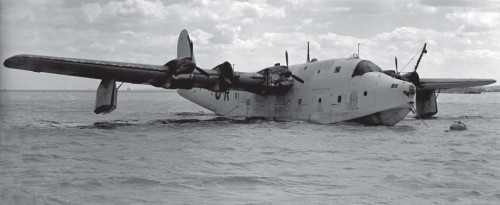
The BV 222 is one of those aircraft that feels almost mythic—huge, rare, and operating on the fringes of the war, where logistics, distance, and improvisation mattered as much as dogfights.
Origins and concept
Lufthansa’s long‑range ambitions
Interwar context: In the 1930s, Deutsche Luft Hansa was heavily invested in long‑range airmail and passenger routes, including transatlantic services.
Flying boats were attractive because they bypassed the need for long runways and could use harbours and sheltered waters.
Requirement (mid‑1930s): Lufthansa wanted a very large flying boat capable of:
Carrying at least around two dozen passengers in comfort, plus mail and cargo.
Operating over oceanic distances with good safety margins.
Hamburger Flugzeugbau, the aircraft arm of shipbuilder Blohm & Voss, responded with a design designated Ha 222—a huge, six‑engined flying boat conceived as a commercial airliner and mail carrier.
From Ha 222 to BV 222
Design leadership: The project was led by Dr Richard Vogt, an innovative designer known for unconventional but highly engineered solutions.
Corporate renaming: Before the aircraft flew, Hamburger Flugzeugbau was rebranded under its parent’s name, and the Ha 222 became the Blohm & Voss BV 222.
Initial order: Lufthansa ordered three aircraft in the late 1930s, with construction of the first prototype (V1) beginning in January 1938.
Civil intent: The original concept was a commercial transport—large cabin, long range, and the ability to carry dozens of passengers or equivalent cargo across the Atlantic.
By the time the first prototype was ready to fly, the world had changed.
Germany had gone to war, and the BV 222’s future would be military, not civilian.
Design and structural layout
General configuration
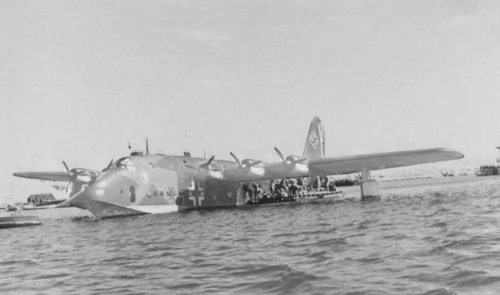
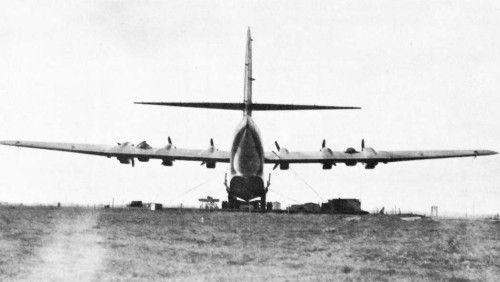
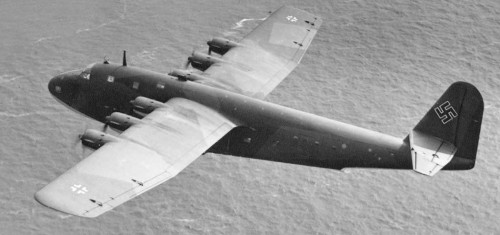
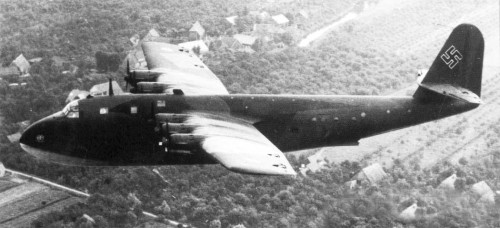
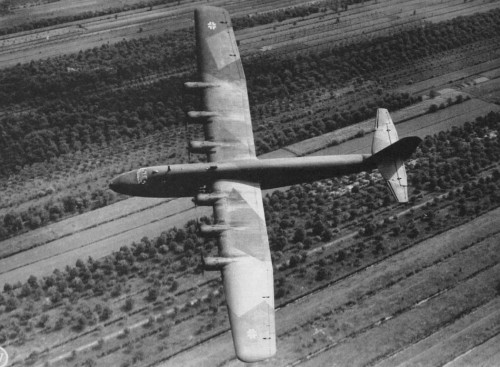
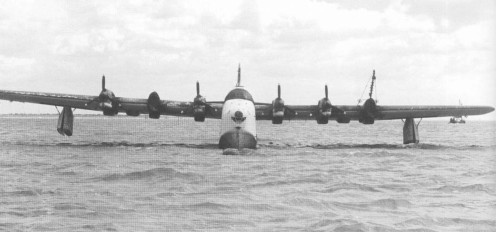
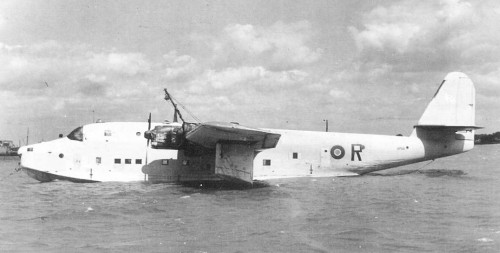
The BV 222 was a large, all‑metal, high‑wing monoplane flying boat with:
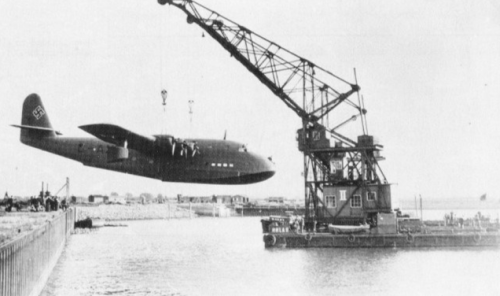
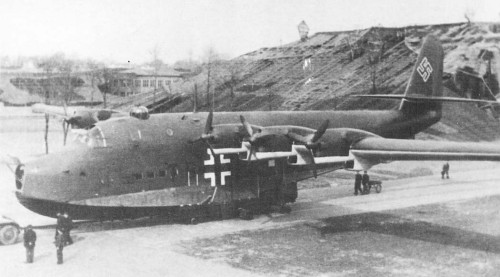
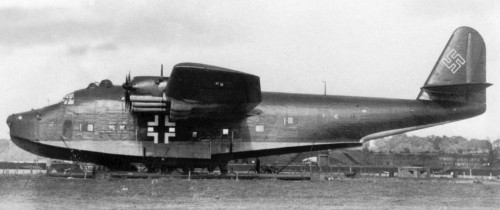
Hull: A deep, boat‑shaped fuselage designed for open‑sea operations.
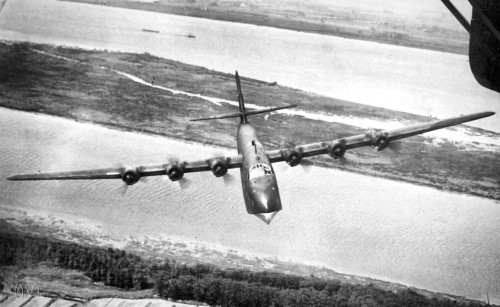
Wing: A high‑mounted, cantilever wing with six engines in nacelles along the leading edge.
Tail: A conventional tail unit with a single vertical fin and tailplane.
Floats: Wingtip floats that could be retracted to reduce drag in flight.
It was, in essence, a shipbuilder’s aeroplane: a robust hull, large internal volume, and a focus on seaworthiness as much as aerodynamics.
Hull and internal arrangement
All‑metal hull: Riveted metal construction with watertight compartments, designed to withstand repeated takeoffs and landings in choppy water.
Two‑deck layout:
Upper deck: Flight deck, navigation and radio positions, crew rest areas, and some passenger or cargo space.
Lower deck: Main cargo/passenger area, with a long, flat floor—unusual and very practical for the time.
Flat floor: The long, level floor running through the hull was a notable feature. It simplified loading and unloading and made the aircraft more flexible as a transport.
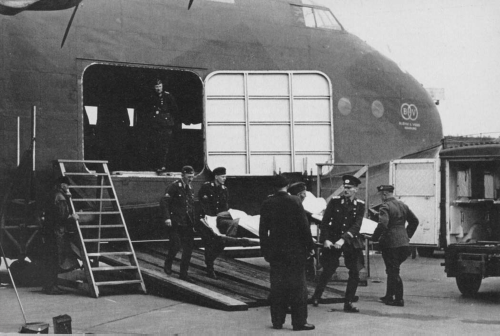
Cargo access: A large, square cargo door on the starboard side aft of the wing allowed loading of bulky freight, stretchers, and equipment.
In its civil configuration, the BV 222 could be fitted with seats for up to around 92 passengers on short‑range flights or fewer passengers with more comfort and range for transatlantic operations.
Wing and hydrodynamics
Wing design: A large, high‑aspect‑ratio wing optimised for long‑range cruise and heavy loads.
The wing housed fuel tanks and supported the six engine nacelles.
Hydrodynamic hull form:
The hull step and lower contours were carefully shaped to the following:
Break water adhesion during takeoff.
Reduce pounding and spray.
Maintain stability during taxiing and low‑speed operations on water.
Wingtip floats: Retractable floats provided lateral stability on the water and were folded up in flight to reduce drag.
The combination of a carefully designed hull and powerful engines allowed the BV 222 to operate from open water, harbours, and sheltered bays, though it still needed reasonably calm conditions for safe operations at high weights.
Powerplant and systems
Engines: from radials to diesels
The BV 222 went through two main engine philosophies:
Early prototypes (V‑series):
Powered by six Bramo 323 “Fafnir” air‑cooled radial engines.
Each engine produced roughly 1,000 hp, giving adequate power but relatively high fuel consumption.
These engines used conventional aviation gasoline.
Later aircraft (C‑series):
Re‑engined or built with Junkers Jumo 207C inline, two‑stroke, opposed‑piston diesel engines, again around 1,000 hp each.
Diesel engines offered:
Better fuel economy.
The ability to use diesel fuel, which could be supplied at sea by U‑boats.
At least one aircraft experimented with Jumo 205 diesel variants.
The diesel concept was strategically important: a BV 222 could, in theory, rendezvous with a U-boat and refuel far from any base, extending its reach dramatically.
Fuel and range
Typical performance figures (for later BV 222C‑series) were approximately the following:
Maximum speed: Around 330–390 km/h (about 210–240 mph), depending on altitude and weight.
Cruise speed: Roughly 300–340 km/h (about 190–210 mph).
Range: Up to 6,000+ km (around 3,800+ miles) in ferry or long‑range cruise configuration.
Endurance: On the order of 24–28 hours on economical cruises.
Service ceiling: Around 7,000–7,300 m (about 23,000–24,000 ft).
These numbers made the BV 222 one of the few aircraft of the era capable of very long overwater flights with a substantial payload.
Crew stations and equipment
Crew complement: Typically a large crew—pilots, flight engineers, navigators, radio operators, gunners, and loadmasters/crewmen—often 10+ people depending on the mission.
Flight deck: Spacious cockpit with good forward visibility, elevated above the hull.
Navigation and radio: Dedicated compartments with long‑range radio equipment and, in later aircraft, FuG 200 “Hohentwiel” maritime search radar.
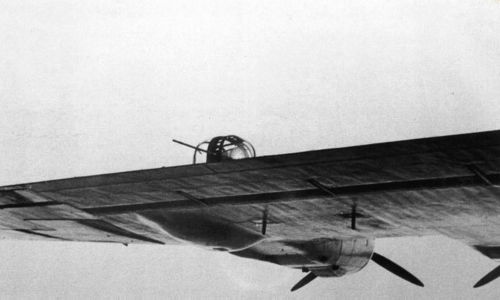
Defensive systems: Gun turrets, waist positions, and sometimes radar warning equipment on later variants.
The BV 222 was not just big; it was a complex, ship‑like system with multiple specialised crew roles.
Armament and defensive layout
Originally, the BV 222 was a civil transport and flew unarmed.
As it transitioned into military service, defensive armament was progressively added.
Early armament (V1 after conversion)
After initial unarmed missions, the first prototype V1 was refitted with:
1 × 7.92 mm MG 81 machine gun in the hull (ventral position).
2 × 13 mm MG 131 heavy machine guns in turrets (typically dorsal positions).
4 × 7.92 mm MG 81 machine guns in waist or beam positions.
This gave the aircraft basic all-round defence, though it remained a large, relatively slow target.
Later armament (C‑series)
Production BV 222C aircraft were more heavily armed, often including:
20 mm MG 151/20 cannons in powered turrets (for example, one in a forward dorsal turret and others in wing‑mounted or dorsal positions).
Additional 13 mm MG 131 and 7.92 mm MG 81 guns in beam and ventral positions.
The exact layout varied between individual aircraft, but the intent was clear: to give the BV 222 enough firepower to deter or at least fight off attacking fighters during long over‑water missions.
Even so, the aircraft’s sheer size and moderate speed meant it was always vulnerable if intercepted by modern Allied fighters.
Development and prototypes
V1: first flights and trials
First flight: 7 September 1940, with civil registration D‑ANTE.
Trials:
Demonstrated:
Good handling for such a large flying boat.
The ability to carry up to around 92 passengers or 72 stretcher patients over shorter distances.
Issues: As with most large prototypes, some refinements were needed in handling, systems, and hydrodynamics, but overall performance was promising.
By December 1940, V1’s trials were sufficiently advanced that the Luftwaffe took it over, repainting it in military colours and re‑registering it with a military code.
V2, V3, and further prototypes
Construction: V2 and V3 followed V1 into construction within weeks of each other.
Roles: These prototypes were used to:
Refine the design.
Test different equipment fits.
Transition from civil to military configurations.
Designation: Early aircraft were designated V1–V8 (Versuchs, or experimental).
These prototypes formed the backbone of early operational use, even before a formal “production” series existed.
Variants and series
BV 222 A‑series
BV 222 A: This designation is often associated with the early prototype series (V‑aircraft) in their initial or lightly modified forms.
Engines: Typically Bramo 323 radial engines.
Role: Long‑range transport and evaluation, initially unarmed, later armed.
BV 222 B (projected)
BV 222 B: A proposed variant that would have used more powerful Junkers Jumo 208 diesel engines (around 1,470 hp).
Status: Remained a paper or projected variant; no known examples were completed.
BV 222 C‑series (production)
BV 222 C: The main production standard.
Engines: Jumo 207C diesel engines (and in at least one case, Jumo 205 variants).
Armament: Heavier and more standardised defensive armament, including 20 mm cannons.
Radar: Some C‑series aircraft were equipped with FuG 200 maritime search radar for reconnaissance and anti‑shipping roles.
Designation: Production aircraft were often numbered C‑09 to C‑13, while earlier V‑aircraft were retrofitted and used alongside them.
In total, only about 13 BV 222s were completed—an extremely small number for such a major design.
Operational history
Early missions: Norway and the Arctic
The first operational use of the BV 222 was as a long‑range transport:
V1’s early missions:
Flew multiple trips between Hamburg and Kirkenes in northern Norway in 1941.
Carried tens of tonnes of supplies and evacuated wounded personnel.
Covered tens of thousands of kilometres over a handful of flights.
These missions demonstrated the aircraft’s ability to sustain long over‑water flights in harsh northern conditions.
Mediterranean and North Africa
As the war in North Africa intensified, the BV 222 found a crucial role:
Base of operations: V1 and other BV 222s operated from Athens and other Mediterranean bases.
Role:
Supply flights to the Afrika Korps, carrying:
Fuel, ammunition, and equipment to North African ports.
Wounded personnel and key staff on return legs.
Escort: Early on, unarmed BV 222s were escorted by fighters such as Messerschmitt Bf 110s due to their vulnerability.
These flights were high‑value missions: a single BV 222 could carry loads that would otherwise require multiple smaller aircraft.
Increasing armament and losses
As Allied air superiority grew, the BV 222’s vulnerability became more apparent:
Armament upgrades: Defensive guns and turrets were added; the aircraft remained large and relatively slow.
It was difficult to protect against coordinated fighter attacks.
Losses:
Some BV 222s were shot down by Allied aircraft (e.g., RAF Beaufighters and Mosquitos).
Others were lost in accidents, including collisions with submerged obstacles during water landings.
Despite its size and armament, the BV 222 could not reliably survive in heavily contested airspace.
Reconnaissance and special missions
With the introduction of radar and better defensive armament, some BV 222s were used for the following:
Maritime reconnaissance: Long‑range patrols over the Atlantic and Mediterranean, searching for convoys and naval targets.
Special transport: High‑priority cargo and personnel, including missions to remote bases and Arctic locations.
Support to stranded units: There are accounts of BV 222s delivering spare parts and supplies to isolated aircraft and units, sometimes by parachute.
The aircraft’s long range and large payload made it ideal for unusual, high‑value missions that smaller aircraft could not perform.
KG 200 and late‑war use
By 1944, after the Allied invasion of Normandy and the shrinking of German-controlled territory:
Surviving BV 222s were transferred to KG 200, the Luftwaffe’s special operations wing.
Possible roles included the following:
Covert transport.
Long‑range special missions.
Evacuation and high‑priority logistics.
The exact details of some KG 200 operations remain fragmentary, but the BV 222’s presence there underlines its status as a strategic asset.
Japan route concept
At one point, German planners considered using the BV 222 for a Germany–Japan air route:
Proposed route: From Kirkenes in Norway to Japan via Sakhalin Island, roughly 6,400 km (4,000 miles).
Concept: Use diesel engines and U-boat refuelling to sustain the long legs.
Reality: The route remained largely conceptual; the combination of Allied air and naval dominance, plus the small number of aircraft, made such operations extremely risky.
Still, the fact that this was seriously considered shows how the BV 222 was seen as a strategic long‑range platform.
Post‑war fate
At the end of the war:
Capture: Several BV 222s were captured by the Allies, particularly in Norway.
Evaluation: The United States Navy and Royal Air Force examined and test‑flew some of them to study the following:
Large flying boat design.
Diesel engine operation.
Long‑range maritime capabilities.
Disposal: Ultimately, all known BV 222s were scrapped.
None survived into preservation.
For such a large and distinctive aircraft, its complete disappearance is striking—no museum example, no partial hull, nothing.
Technical summary (BV 222C‑type, representative)
While exact figures vary by source and sub‑variant, a representative BV 222C configuration can be summarised as the following: