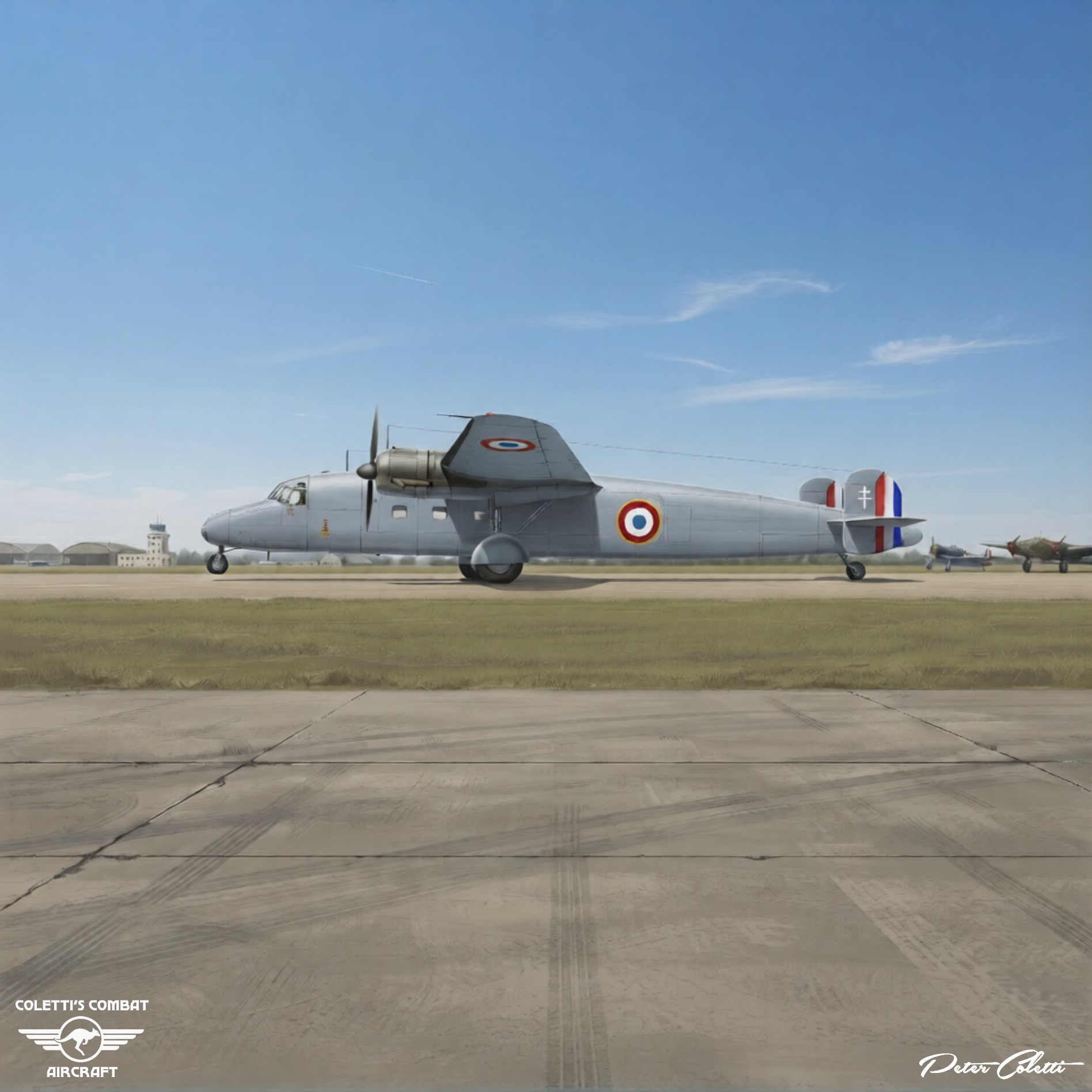
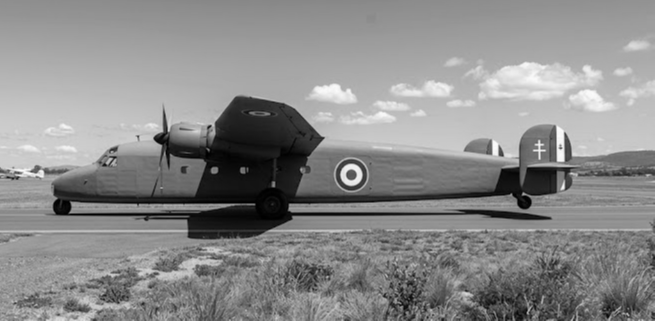
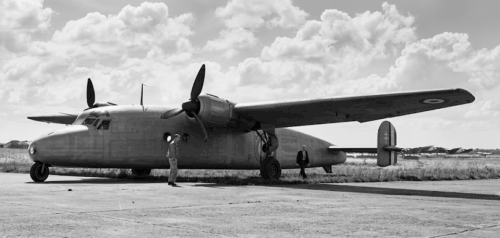
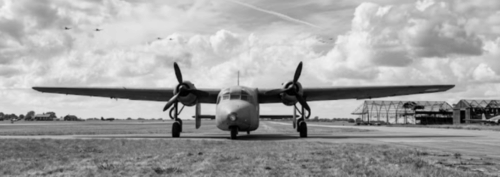
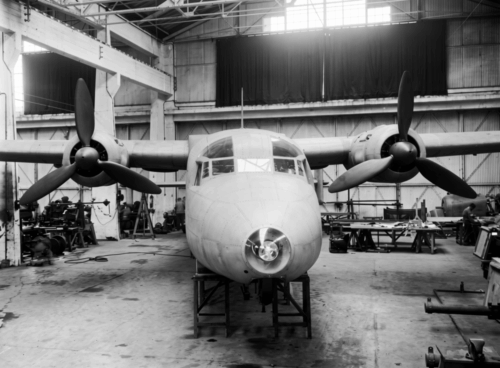
The Blohm & Voss BV 144 was a German twin‑engined, all‑metal airliner prototype conceived during the Second World War but aimed squarely at the post‑war civil market.
Designed to replace the ubiquitous Junkers Ju 52 on short‑ to medium‑haul routes, it combined a fairly orthodox layout with several strikingly advanced features, most notably a variable‑incidence wing and tricycle landing gear.
Only two prototypes were completed, and the type never entered series production, but it remains a fascinating “what‑if” in airliner history.
Development and program history
Origins in Lufthansa’s post‑war planning
Airline requirement: Around 1940, with German arms still advancing in Europe, Deutsche Luft Hansa began planning for a rapid resumption and expansion of commercial services once the war was presumed to be won.
A key part of this vision was a modern successor to the rugged but outdated Junkers Ju 52/3m.
Specification: Lufthansa wanted a twin‑engined airliner capable of carrying roughly 18–23 passengers over ranges of about 1,000–1,500 km at speeds in the region of 430–450 km/h, with improved comfort, safety, and ease of ground handling compared with tailwheel transports.
Blohm & Voss, already known for unconventional but technically sophisticated designs, responded with a high‑wing monoplane concept that became the BV 144.
The design was finalised in early 1941 and accepted by Lufthansa, which ordered prototypes.
Outsourcing construction to occupied France
Blohm & Voss’s Hamburg facilities were heavily committed to military work and lacked spare capacity for a civil project.
Ernst Udet of the Reichsluftfahrtministerium proposed that the aircraft be built by the French firm Louis Breguet, whose factories had been left underutilised after the fall of France.
Design cooperation: Breguet engineers worked with Blohm & Voss in Germany to complete detailed design, and then production tooling and assembly were set up at Breguet’s plant in Anglet, near Bayonne.
Prototypes: Two aircraft were ordered (V1 and V2).
Construction began in 1941 but progressed slowly—partly due to wartime disruptions, partly due to low enthusiasm and deliberate go‑slow tactics by French workers under occupation.
The first prototype (BV 144 V1) was completed only in mid‑1944 and made its maiden flight in August 1944, by which time the strategic situation had completely reversed and Germany was retreating from France.
Fate of the project
As Allied forces advanced, German personnel abandoned the BV 144 prototypes at French airfields.
After liberation, French authorities took possession of the completed V1 and the unfinished V2, moved them to Toulouse, and continued limited testing under French registration.
There are persistent but unconfirmed reports that one aircraft briefly served as a transport for the French Air Force and may have been used by Charles de Gaulle as a personal aircraft.
In any case, the type saw no sustained operational use, and both prototypes were scrapped in the late 1940s.
Airframe and structural design
General configuration
The BV 144 was an all‑metal, cantilever monoplane of broadly conventional layout, but with a distinctive high wing and twin vertical tail fins.
Crew and cabin: It was designed for a crew of three (pilot, co‑pilot, and radio operator) in a forward cockpit, with a passenger cabin for 18–23 people in a single‑class layout.
Structure: The fuselage was of semi‑monocoque construction, relatively deep to provide a spacious cabin and to sit low to the ground when on its nosewheel gear.
The wing was a single‑spar, stressed‑skin structure with integral fuel tanks.
The twin‑fin tailplane improved directional stability and provided good control with the high wing and relatively short fuselage while also easing hangar height requirements compared with a single tall fin.
Variable‑incidence wing
The BV 144’s most unusual feature was its variable‑incidence wing.
An electromechanical mechanism allowed the entire wing to pivot around its main spar by up to 9°, changing the angle of incidence relative to the fuselage.
Purpose: By increasing wing incidence for takeoff and landing, the aircraft could generate high lift while keeping the fuselage nearly level, improving passenger comfort and visibility and avoiding the steep nose‑up attitude typical of tailwheel transports.
Precedent: Blohm & Voss had already tested a similar mechanism on the Ha 140 floatplane, giving the company confidence to apply it to a civil airliner.
In cruise, the wing incidence could be reduced to optimise aerodynamic efficiency and reduce drag, while the fuselage remained in a comfortable, nearly level attitude.
Landing gear and ground handling
The BV 144 used tricycle landing gear at a time when most European transports still had tailwheels.
Configuration: A single nosewheel retracted rearwards into the forward fuselage; the main gear units retracted into the wing or wing‑root fairings.
Advantages: Tricycle gear made boarding easier by keeping the cabin floor low and level, improved forward visibility during taxiing, and reduced the risk of nose‑over accidents.
Combined with the variable‑incidence wing, it gave the BV 144 a very modern stance on the ground.
Aerodynamic features and de‑icing
The wing incorporated leading-edge de-icing equipment, reflecting Lufthansa’s desire for reliable all-weather operations.
Control surfaces were conventional: ailerons on the outer wing panels, flaps inboard, and standard elevators and rudders on the tailplane.
The high wing provided good ground clearance for the engines and propellers and allowed a clean fuselage underside.
Propulsion and performance
Powerplant
The BV 144 was powered by two wing‑mounted BMW 801 radial engines, among the most powerful German piston engines of the war.
Type: BMW 801 A/MA, 14-cylinder, two-row, air-cooled radial piston engines.
Power: Around 1,500–1,600 hp per engine for takeoff, driving three‑bladed, variable‑pitch propellers.
Using a front‑line fighter/medium‑bomber engine in a civil airliner gave the BV 144 ample power for high cruise speeds and good climb performance but also tied the project to a powerplant heavily demanded by combat aircraft.
Dimensions and weights
For the BV 144 V1 prototype, typical figures were:
Wingspan: 27m
Length: 21.8m
Height: 4.75m
Wing area: 88 m²
Empty weight: about 7,900 kg
Maximum takeoff weight: about 13,000–14,100 kg (sources vary slightly).
Performance
With its powerful engines and clean aerodynamics, the BV 144 offered performance competitive with or superior to many contemporary twin‑engined transports:
Maximum speed: about 470 km/h at 4,000 m
Cruise speed: somewhat lower, typically in the 400–430 km/h range (not always explicitly stated, but inferred from max speed and role).
Range: around 1,550 km with full payload.
Service ceiling: about 9,100 m.
These figures would have made the BV 144 a fast, capable short‑ to medium‑haul airliner, well suited to European trunk routes.
Cabin layout and passenger experience
The BV 144’s cabin was designed with passenger comfort as a central goal, reflecting Lufthansa’s desire to move beyond the utilitarian feel of pre‑war transports.
Seating: 18–23 passengers in a single aisle, with relatively generous seat pitch for the era.
Access: A low cabin floor and tricycle gear made boarding via steps straightforward, without the steep climb into a nose‑high fuselage.
Ride quality: The variable‑incidence wing was intended to minimise pitch changes during takeoff and landing, keeping the cabin level and reducing the sense of “nose‑up” or “nose‑down” attitudes that could be uncomfortable or disorienting.
Although detailed interior photos are scarce, contemporary descriptions emphasise the BV 144 as a modern, comfortable airliner rather than a militarised transport.
Variants and prototypes
BV 144 V1
Role: First flying prototype, built by Breguet in France.
First flight: August 1944, in occupied France.
Configuration: Standard BV 144 layout with BMW 801 engines, variable‑incidence wing, and full passenger cabin.
V1 conducted initial test flights under German control, but the rapid Allied advance forced its abandonment.
It was later captured and flown under French markings for further evaluation.
BV 144 V2
Role: Second prototype, initially incomplete at the time of German withdrawal.
Completion: Finished post‑war by French engineers; sources differ on whether it ever flew.
Both prototypes were eventually scrapped once French interest waned and more conventional post‑war airliners became available.
Operational and WWII context
A civil airliner in a total war
The BV 144 was conceived at a moment when German planners believed victory was near and that civil aviation would quickly resume.
In that context, investing in an advanced airliner seemed rational.
However, several factors undermined the project:
Shifting priorities: As the war dragged on and turned against Germany, resources were increasingly diverted to combat aircraft and emergency programmes, leaving little room for a civil prototype.
Industrial constraints: Blohm & Voss’s reliance on occupied French industry introduced political, logistical, and morale complications.
French workers had little incentive to accelerate a German project, and sabotage or slowdowns were reported.
Engine competition: The BMW 801 was in high demand for fighters and bombers, making it difficult to justify allocating engines to an airliner.
Post‑war French interest
After liberation, the French Air Force and industry briefly explored whether the BV 144 could be useful as a transport or testbed:
Testing: The prototypes were given French registrations and flown for evaluation, mainly to study the variable‑incidence wing and overall performance.
Possible VIP use: Some accounts suggest one aircraft was used as a transport for high‑ranking officials, possibly including Charles de Gaulle, though documentation is sparse and the story remains partly anecdotal.
Ultimately, the aircraft’s German origin, limited numbers, and the rapid emergence of new post-war designs led to the programme’s quiet termination.
Assessment and legacy
The Blohm & Voss BV 144 never entered production and had negligible direct impact on airline fleets, but it stands out in several ways:
Technical innovation: Its variable‑incidence wing and tricycle gear anticipated later concerns with passenger comfort, ground handling, and all‑weather operations.
While variable‑incidence wings did not become common on airliners, the BV 144 showed how such a system could be integrated into a practical transport.
Design philosophy:
The aircraft combined advanced features with a fundamentally conservative layout—high wing, twin engines, and twin fins—illustrating Blohm & Voss’s ability to innovate within a familiar framework.
Historical “what‑if”: Had the war ended differently or earlier, the BV 144 might have become a notable European airliner of the late 1940s, competing with types like the DC‑3 and later twin‑engined transports.
Instead, it remains a footnote, known mainly to enthusiasts and historians.