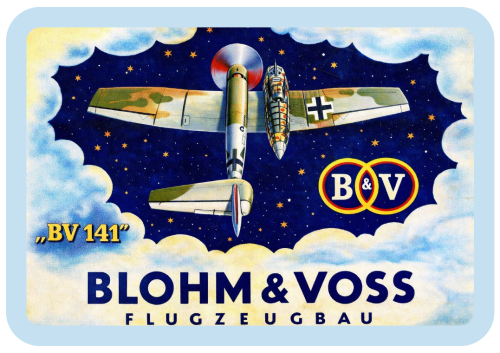
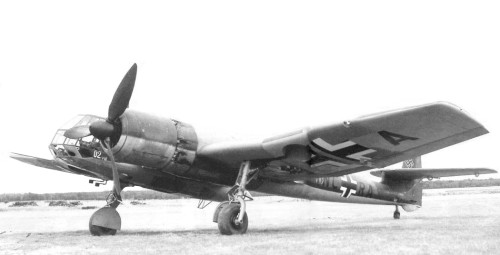
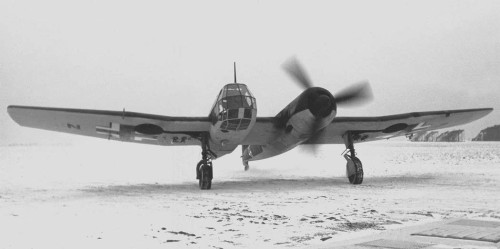
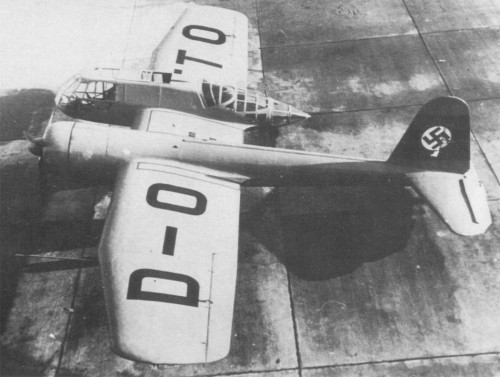
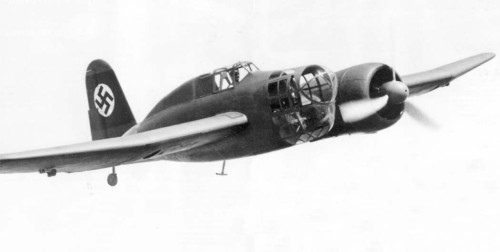
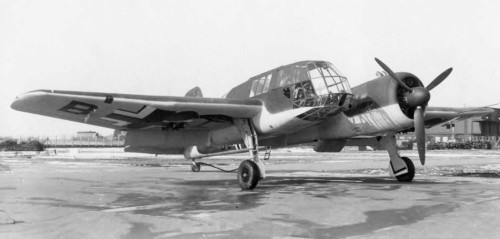
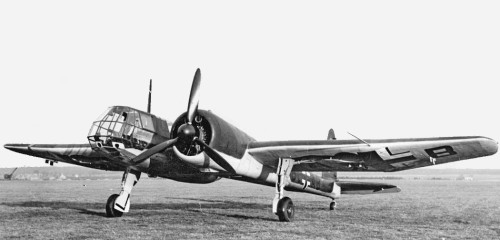
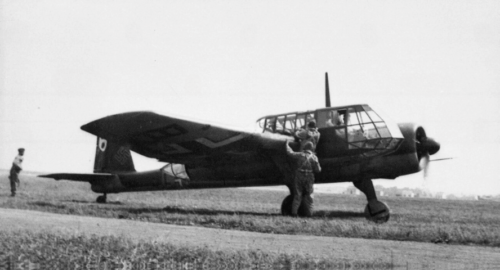
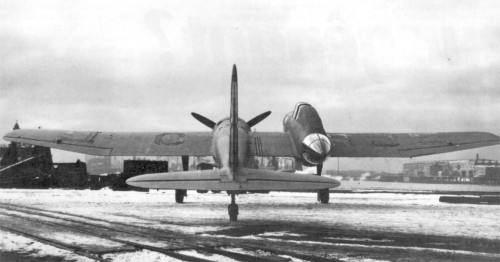
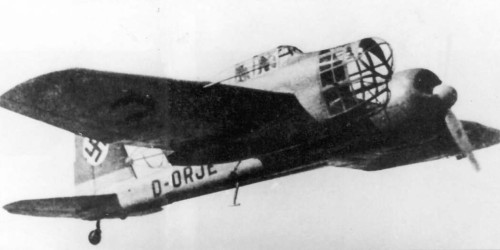
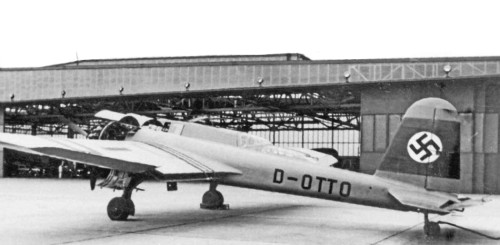
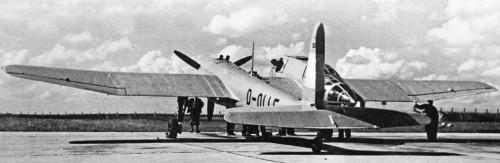
The Blohm & Voss BV 141 is one of those aircraft that looks like a mistake until you understand what it was trying to do.
It was born from a very specific need—maximum visibility for tactical reconnaissance—and pushed that idea so far that it broke the visual symmetry we instinctively expect from aircraft.
Blohm & Voss BV 141b
Origins and development
Luftwaffe’s reconnaissance requirement
Mid‑1930s context: As the Luftwaffe expanded, it needed modern tactical reconnaissance aircraft to replace types like the Henschel Hs 126, which were parasol‑wing designs with limited speed and survivability.
Blohm & Voss BV 141b
RLM specification (1937):
The Reichsluftfahrtministerium (RLM) issued a requirement for a single‑engine, three‑seat reconnaissance aircraft with:
Excellent all‑round visibility
Short‑field performance suitable for frontline operations
Simple maintenance (hence the single engine)
Arado responded with the Ar 198, and Focke‑Wulf with what became the Fw 189. Blohm & Voss—better known for ships and flying boats—was not initially invited but chose to enter the competition as a private venture.
Richard Vogt’s asymmetric concept
Designer: Dr Richard Vogt, chief designer at Blohm & Voss, had long been interested in unconventional layouts and had worked on asymmetrical concepts while in Japan.
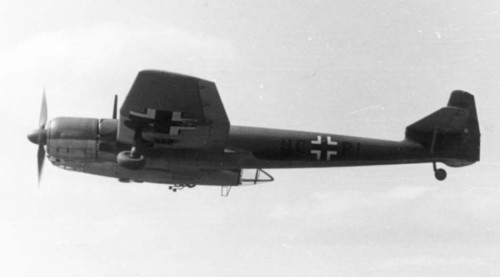
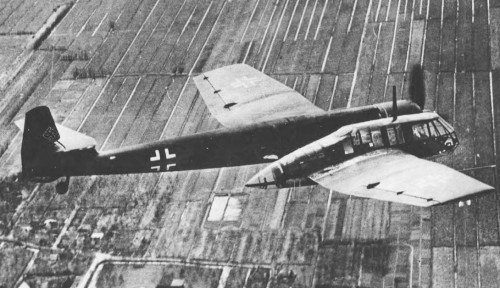
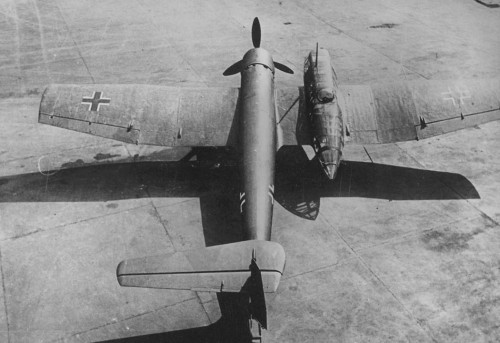
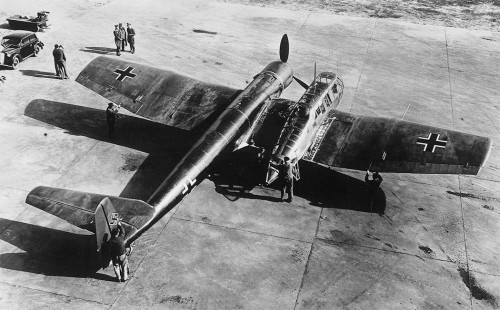
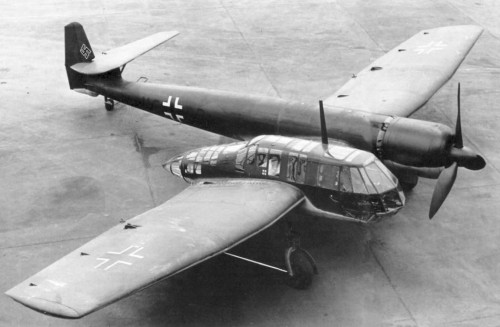
Core idea: To give the crew unobstructed downward and lateral views, Vogt separated the crew cabin from the engine and tail:
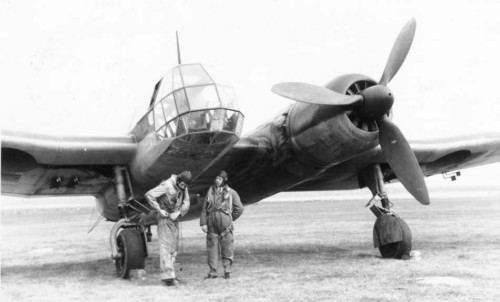
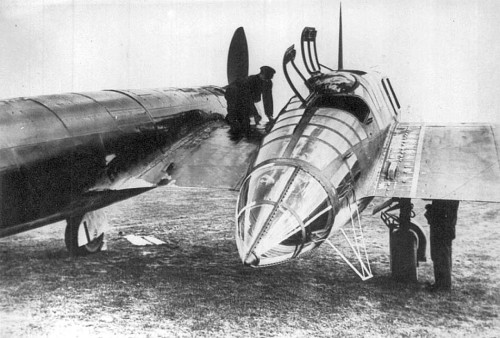
A fully glazed crew gondola on the starboard side
A fuselage boom on the port side carrying the engine and tailplane
This configuration became the Ha 141 (later redesignated BV 141 when Blohm & Voss’s aircraft division was fully integrated).
Blohm & Voss BV 141b
Prototypes and early testing
First prototype (V1):
Maiden flight: 25 February 1938 at Hamburg.
Initial powerplant: a Bramo 323 radial, later replaced by a BMW 132.
Layout: three‑seat crew in the starboard gondola, engine and tail on the port boom, with a largely symmetrical tailplane.
Flight tests surprised many sceptics: despite its appearance, the BV 141 flew well, with stable handling and good visibility—exactly what the specification demanded.
Blohm & Voss BV 141b
Further prototypes (V2, V3):
Slightly enlarged and refined versions followed, with improved glazing, systems, and armament provisions.
RLM reaction and private funding
The RLM was cautious.
It had already leant towards more conventional solutions and was wary of the BV 141’s unconventional layout and modest engine power.
Blohm & Voss funded much of the early work itself, hoping that successful trials would force official acceptance.
Despite positive flight reports, the RLM remained unconvinced, especially as the twin‑engine Focke‑Wulf Fw 189—though technically outside the “single‑engine” requirement—proved highly effective and politically better positioned.
Blohm & Voss BV 141b
Design and technical characteristics
Asymmetric layout and aerodynamics
Crew gondola:
Located on the starboard side, extensively glazed with Plexiglas.
Accommodated three crew: pilot (usually seated to port within the gondola), observer, and rear gunner.
The observer’s seat could slide forward to operate bomb sights and cameras and rearward to man defensive guns.
Engine and fuselage boom:
On the port side, a conventional fuselage carried the radial engine at the nose and the tail unit at the rear.
The wing was designed so that lift distribution balanced the asymmetric mass and drag.
Aerodynamic balance:
At first glance, the aircraft seems destined to roll and yaw uncontrollably. In practice, careful wing design and tail trimming compensated for asymmetry.
At low speeds, propeller effects (P‑factor) helped counter yaw; at normal speeds, trim and control surfaces kept the aircraft stable.
Blohm & Voss BV 141b
Structure and systems
Wing:
Mid‑wing monoplane with moderate taper and dihedral.
Wing area around 53 m² in the later BV 141B form.
Fuselage and gondola construction:
Mixed metal construction with stressed skin.
The gondola’s extensive glazing was structurally challenging but central to the reconnaissance mission.
Landing gear:
Conventional tailwheel undercarriage, with main wheels retracting into the wing/fuselage structure.
Crew equipment:
Cameras for vertical and oblique photography.
A bombsight for light bombing or artillery spotting.
Radio equipment for battlefield communication.
Blohm & Voss BV 141b
Armament and payload
Defensive guns (typical BV 141B fit):
2 × 7.92 mm MG 17 fixed forward‑firing guns in the nose.
2 × 7.92 mm MG 15 flexible guns in the rear of the gondola.
Bomb load:
Provision for four 50 kg SC50 bombs under the wings, giving the aircraft a light bomber capability in addition to reconnaissance.
Performance
Performance varied between the early A‑series and the later B‑series, mainly due to engine changes.
Blohm & Voss BV 141b
BV 141A (early prototypes and initial series)
Engines: Bramo 323 or BMW 132 radial engines, around 1,000 hp.
General performance:
Maximum speed is roughly in the 300–350 km/h range, depending on altitude and configuration.
Range around 1,000–1,200 km.
Service ceiling around 8,000–10,000 m.
These figures were adequate but not outstanding, and the RLM judged the aircraft underpowered for its size and mission.
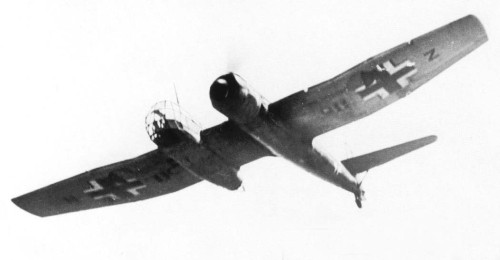
Blohm & Voss BV 141 V3
BV 141B (refined, more powerful version)
Engine: BMW 801A, a 14‑cylinder two‑row radial, around 1,500–1,650 hp.
Dimensions:
Wingspan: 17.45–17.46 m
Length: 13.95 m
Wing area: about 53 m²
Weights:
Empty: ~4,700 kg
Loaded: ~5,700 kg
Max takeoff: ~6,100 kg
Blohm & Voss BV 141b
Performance:
Max speed:
~368 km/h at sea level
Up to 438 km/h at 5,000 m
Range: up to 1,900 km in maximum‑fuel configuration
Service ceiling: about 10,000 m
With the BMW 801, the BV 141B finally had the power it needed, and performance was competitive with other tactical reconnaissance types.
But by then, other problems were closing in.
Blohm & Voss BV 141b
Variants and evolution
Ha 141 / BV 141 V‑series prototypes
Ha 141‑0 / BV 141 V1:
First flying prototype, initially with Bramo 323, later BMW 132.
Smaller dimensions than later aircraft, used mainly for concept proof and handling trials.
BV 141 V2 and V3:
Slightly enlarged, refined prototypes.
V3 is often considered the “production prototype”, incorporating lessons from earlier flights and preparing for series production.
BV 141A series
Role: Initial pre‑series aircraft intended to meet the original RLM requirement.
Characteristics:
Symmetrical tailplane.
Less powerful engines (BMW 132 class).
Limited production—only a handful built.
The RLM cancelled further BV 141A production around April 1940, citing insufficient power and preferring other designs.
BV 141B series
Major changes:
Adoption of the BMW 801A high‑power radial.
Enlarged airframe with greater wingspan and length.
Asymmetrical tailplane: the starboard tailplane surface was reduced or effectively removed to improve the rear gunner’s field of fire and visibility.
Production and use:
Around 28 aircraft built in total (including prototypes and series machines).
Used mainly for testing, evaluation, and limited operational trials rather than full frontline deployment.
Blohm & Voss BV 141 V3
Operational history and WWII context
Competition with the Focke‑Wulf Fw 189
The BV 141’s biggest enemy wasn’t its own asymmetry—it was the Fw 189 “Uhu”.
Fw 189 advantages:
Twin‑boom, twin‑engine layout offering redundancy and good visibility.
Conventional enough to be easier to produce and maintain.
Strong support within the RLM and from Focke‑Wulf’s established reputation.
Even though the Fw 189 technically violated the “single‑engine” requirement, it proved highly effective and was ordered into large-scale production.
Once the Fw 189 was in service, the BV 141’s niche essentially disappeared.
Engine allocation and industrial priorities
The BMW 801 engine was in high demand for frontline fighters and bombers, notably the Focke‑Wulf Fw 190. Allocating this powerful engine to a relatively small reconnaissance programme was hard to justify.
Result: The BV 141B, though promising, never received the production priority it needed.
The RLM preferred to reserve BMW 801s for more critical combat types.
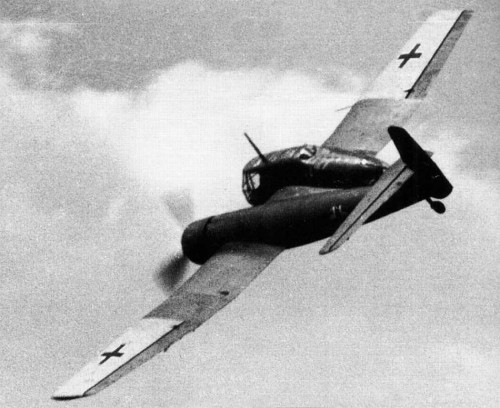
Blohm & Voss BV 141 V2
Limited service and cancellation
Operational trials:
Some BV 141s were reportedly evaluated for reconnaissance roles, including potential deployment on the Eastern Front.
Plans for broader operational use were cancelled around 1942.
End of the programme:
No full‑scale production order was ever placed.
Surviving aircraft were used for test and training purposes or scrapped as the war progressed.
Allied capture and postwar assessment
A few BV 141s were captured by Allied forces and examined after the war.
Findings:
Handling was generally good and not as problematic as the appearance suggested.
The aircraft was seen as an ingenious solution to the visibility problem but ultimately a dead end in terms of mainstream design.
No complete BV 141 survives today; the type lives on mainly in photographs, drawings, and the fascination it inspires.
Blohm & Voss BV 141 V2
Significance and legacy
Engineering experiment more than operational weapon
The BV 141 never became a major combat aircraft, but it occupies an important place in aviation history:
Proof of concept: It demonstrated that a carefully designed asymmetric aircraft could fly safely and effectively.
Visibility-driven design: It showed how far designers were willing to go to meet reconnaissance requirements—literally reshaping the entire airframe around the crew’s field of view.
Blohm & Voss BV 141 V1
Place in WWII aircraft evolution
In the broader WWII context:
Strategic priorities: Germany increasingly prioritised fighters, bombers, and proven reconnaissance platforms over experimental designs as the war intensified.
Industrial constraints: Engine shortages and production pressures killed many promising projects; the BV 141 was one of them.
Blohm & Voss BV 141 V1
Legacy in aircraft design
While no major postwar aircraft copied the BV 141’s exact layout, its existence encouraged thinking beyond symmetry:
Influence: It reinforced the idea that airframes could be tailored around mission sensors and crew visibility, a concept that later reappeared in more subtle ways in specialised reconnaissance and attack aircraft.
Cultural impact: Today, the BV 141 is a staple of aviation literature and model collections—an icon of “weird but workable” engineering.