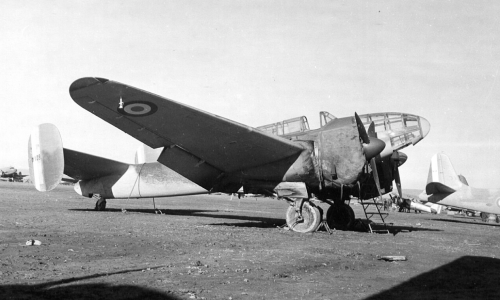
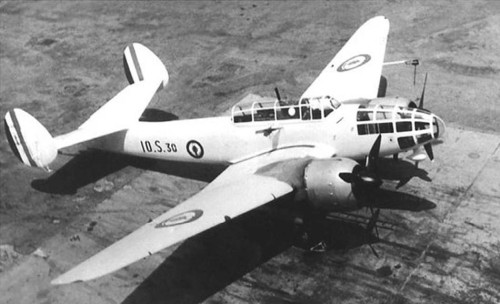
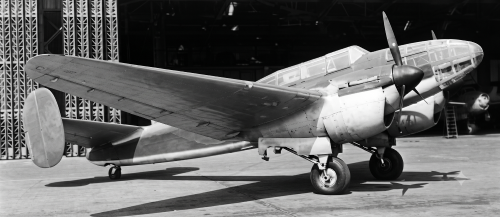
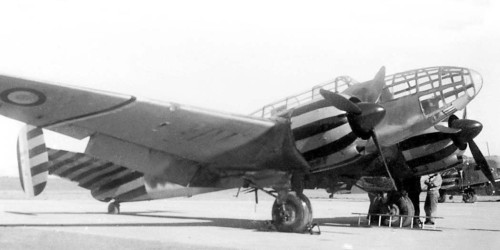
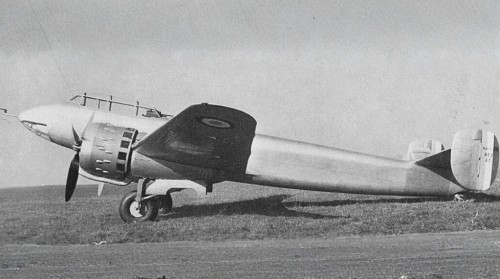
The Bloch MB.170 series emerged from France’s urgent pre‑war effort to modernise its air arm.
Conceived as a fast, multi‑role twin‑engine aircraft capable of reconnaissance, light bombing, and attack missions, the MB.170 family ultimately became one of the most advanced French aircraft to see service in 1940—yet also one of the most tragically late to arrive.
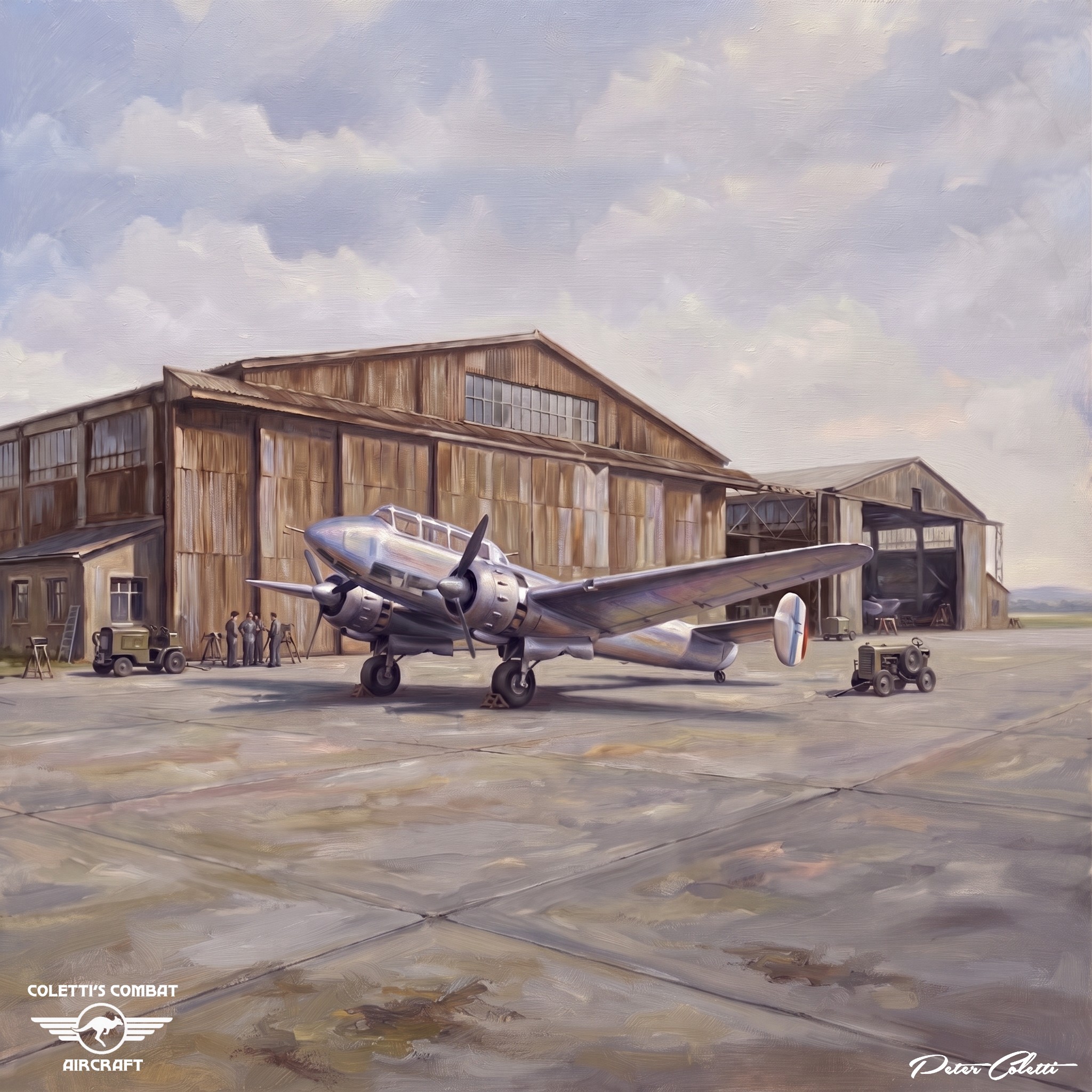
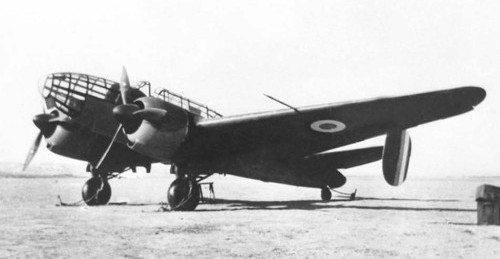
Bloch MB.170
Origins and Development
French Air Ministry Requirements (1936–1937)
In 1936, the French Ministry for the Air launched a modernisation programme calling for a two‑ or three‑seat multirole aircraft capable of reconnaissance, light bombing, or ground attack.
Henri Deplante’s design team at the recently nationalised SNCASO (formerly the Bloch factory at Courbevoie) responded with a sleek, twin‑engine monoplane that would become the MB.170 series.
Prototypes and Early Testing
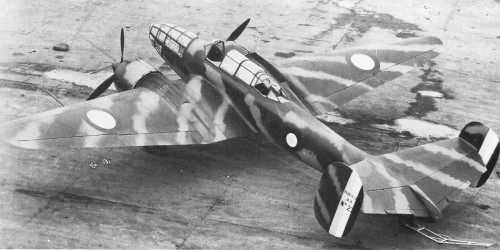
The first prototype, MB.170 AB2‑A3 No.01, flew on 15 February 1938, configured either as a two‑seat attack bomber or a three‑seat reconnaissance aircraft.
It was powered by Gnome‑Rhône 14N radial engines and armed with a 20 mm cannon, wing-mounted machine guns, and defensive rear armaments.
A second prototype, MB.170 B3 No. 02, followed with a revised canopy, larger tail surfaces, and removal of the ventral cupola.
After extensive refinement, this airframe evolved into the definitive MB.174, the first truly mature member of the family.
Transition to Production
The MB.174 prototype flew on 5 January 1939 at Villacoublay, demonstrating excellent speed and handling.
The French Air Ministry quickly ordered 50 MB.174A.3 reconnaissance aircraft on 1 February 1939.
Deliveries began in late 1939, with the first operational aircraft reaching GR II/33 in March 1940.
Design and Technical Characteristics
Airframe and Aerodynamics
The MB.170 series shared a common structural philosophy:
All‑metal, low‑wing monoplane
Retractable tailwheel landing gear
Streamlined fuselage with a long glazed nose for reconnaissance
The design emphasised speed and altitude performance, enabling the aircraft to outrun or outclimb many contemporary fighters.
Powerplant
Most variants used Gnome‑Rhône 14N 14‑cylinder radial engines, producing roughly 1,015–1,035 hp each.
These engines gave the MB.174 and MB.175 maximum speeds of around 530 km/h at 5,200 m.
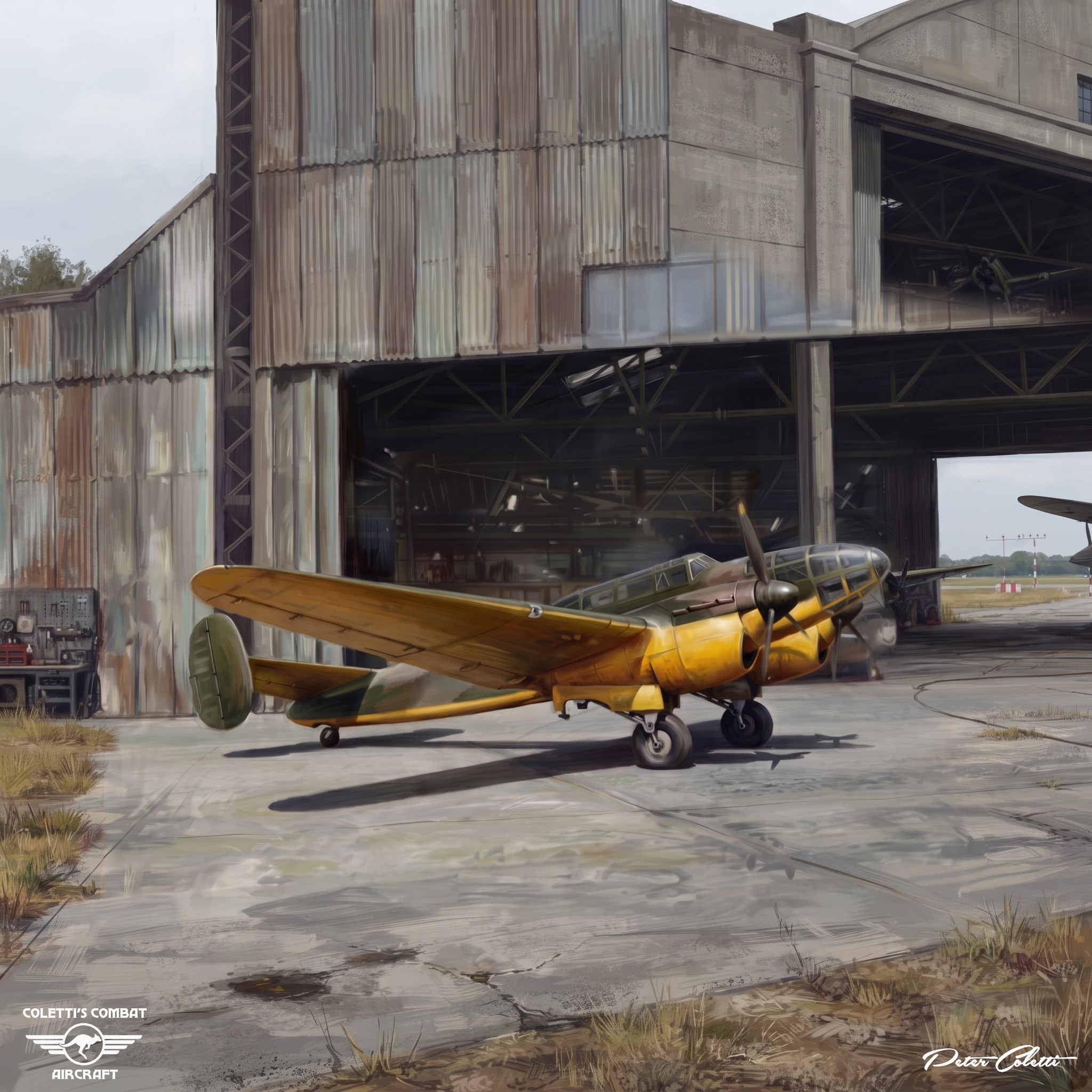
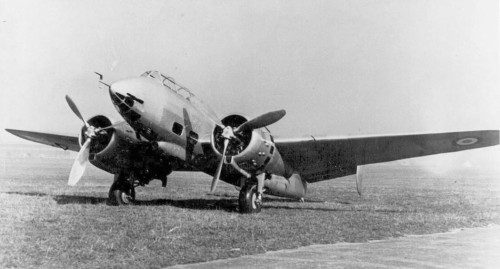
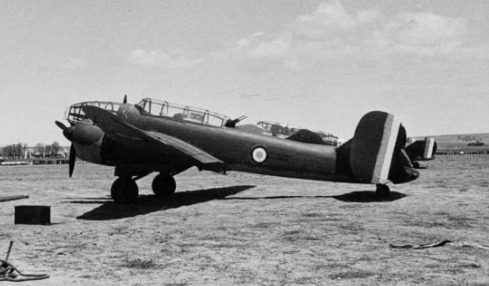
Bloch MB.174
Armament
Typical MB.174/175 armament included the following:
Forward‑firing guns: 2 × 7.5 mm MAC 1934 machine guns in the wings
Defensive guns: dorsal and ventral 7.5 mm MAC 1934s
Bomb load: up to 400 kg internally (MB.174) or larger 100–200 kg bombs in the redesigned bay of the MB.175.
Performance
For the MB.174A.3:
Max speed: 530 km/h at 5,200 m
Cruise speed: 460 km/h
Range: 1,650 km
Service ceiling: 11,000 m
Climb: 8,000 m in 11 minutes
These figures made the MB.174 one of the fastest reconnaissance aircraft in Europe in 1940.
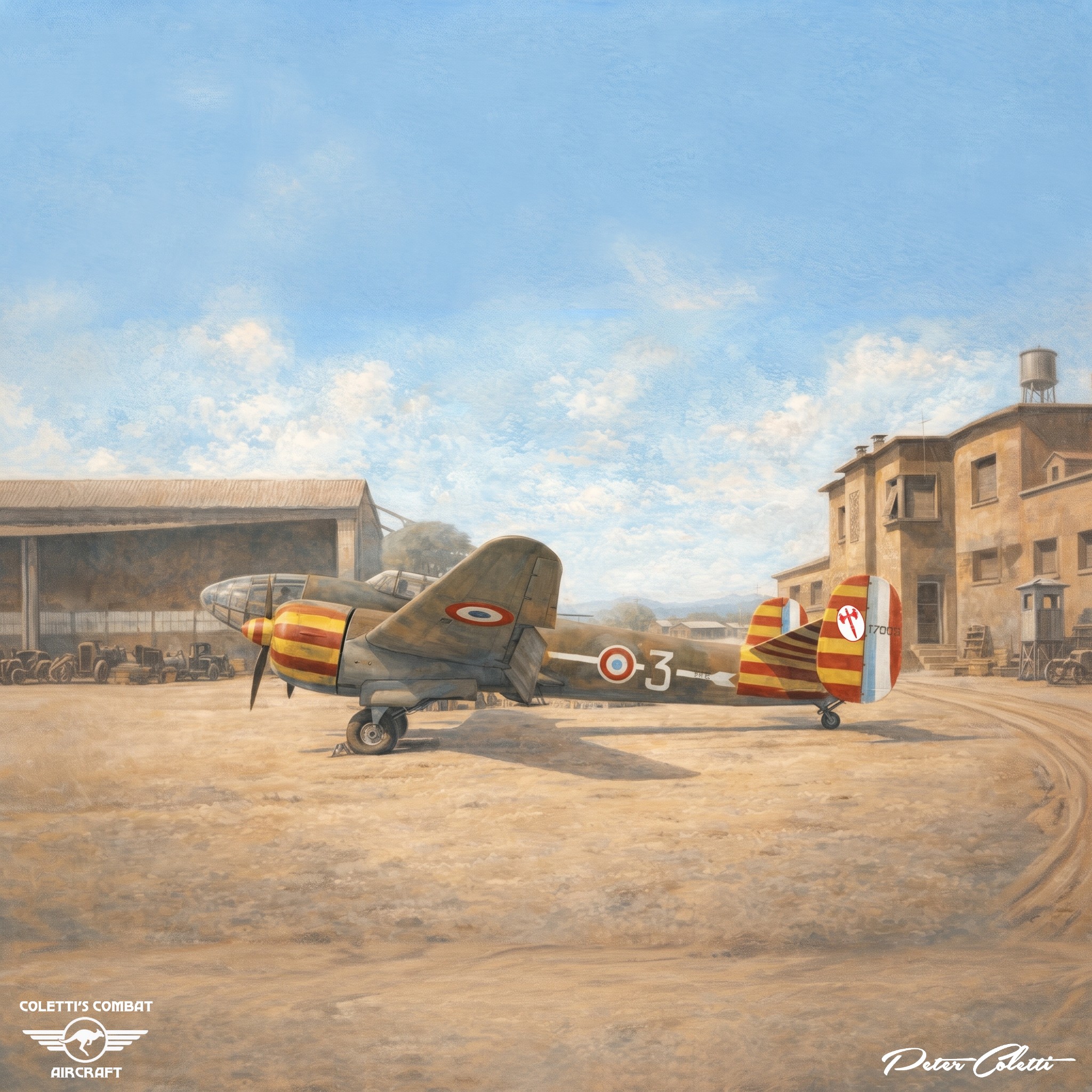
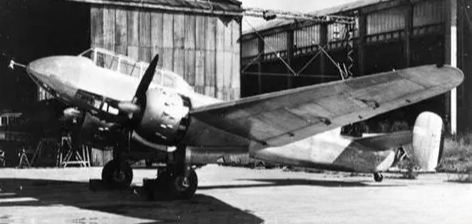
Bloch MB.174
Operational History
Entry into Service (1940)
The MB.174 entered operational service in March 1940, replacing the vulnerable Potez 637 in strategic reconnaissance units.
Its first wartime mission was flown by Antoine de Saint‑Exupéry on 29 March 1940, later immortalised in his memoir Flight to Arras.
Battle of France
During the German invasion:
The MB.174 proved highly survivable, with only three aircraft lost to enemy fighters.
Its speed and altitude performance allowed it to evade most Bf 109 and Bf 110 interceptors.
However, too few were available—a chronic issue in French rearmament.
By the armistice, most surviving MB.174s and MB.175s had been evacuated to North Africa.
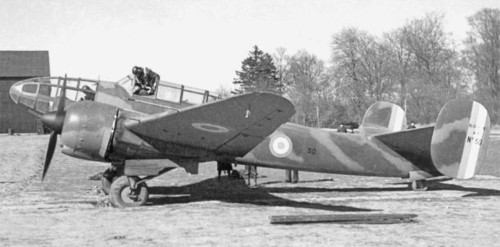
Bloch MB.175
Vichy and Free French Use
Under Vichy control:
MB.174s conducted reconnaissance flights over Gibraltar to monitor British naval movements.
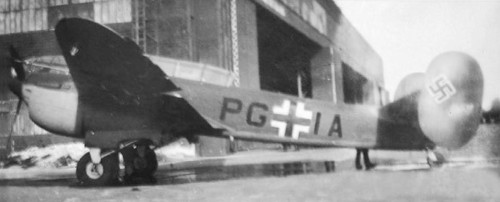
German engineers repurposed engines from captured MB.175s for the Messerschmitt Me 323 transport aircraft.
After Operation Torch, the aircraft served briefly with Allied‑aligned French forces in Tunisia before being replaced by American types such as the P‑38 Lightning.
Post‑War Service
Production resumed after the war as the SNCASO SO.175T, a naval torpedo bomber.
These aircraft served with the Aéronavale until 1960, marking an unusually long career for a pre‑1940 design.
Variants of the MB.170 Series
MB.170 Prototypes
MB.170.01 — First prototype; reconnaissance configuration; Gnome‑Rhône 14N‑06 engines.
MB.170.02 — Second prototype; light bomber configuration.
MB.171 / MB.172 / MB.173
Experimental or transitional developments; none reached production.
MB.174
MB.174.01 — Prototype with 14N‑49 engines.
MB.174A.3 — Main production reconnaissance model; 56 built.
Highly regarded for speed, altitude performance, and handling.
MB.175
Designed alongside the MB.174 but optimised as a light bomber:
MB.175.01 — Prototype with 14N‑48 engines.
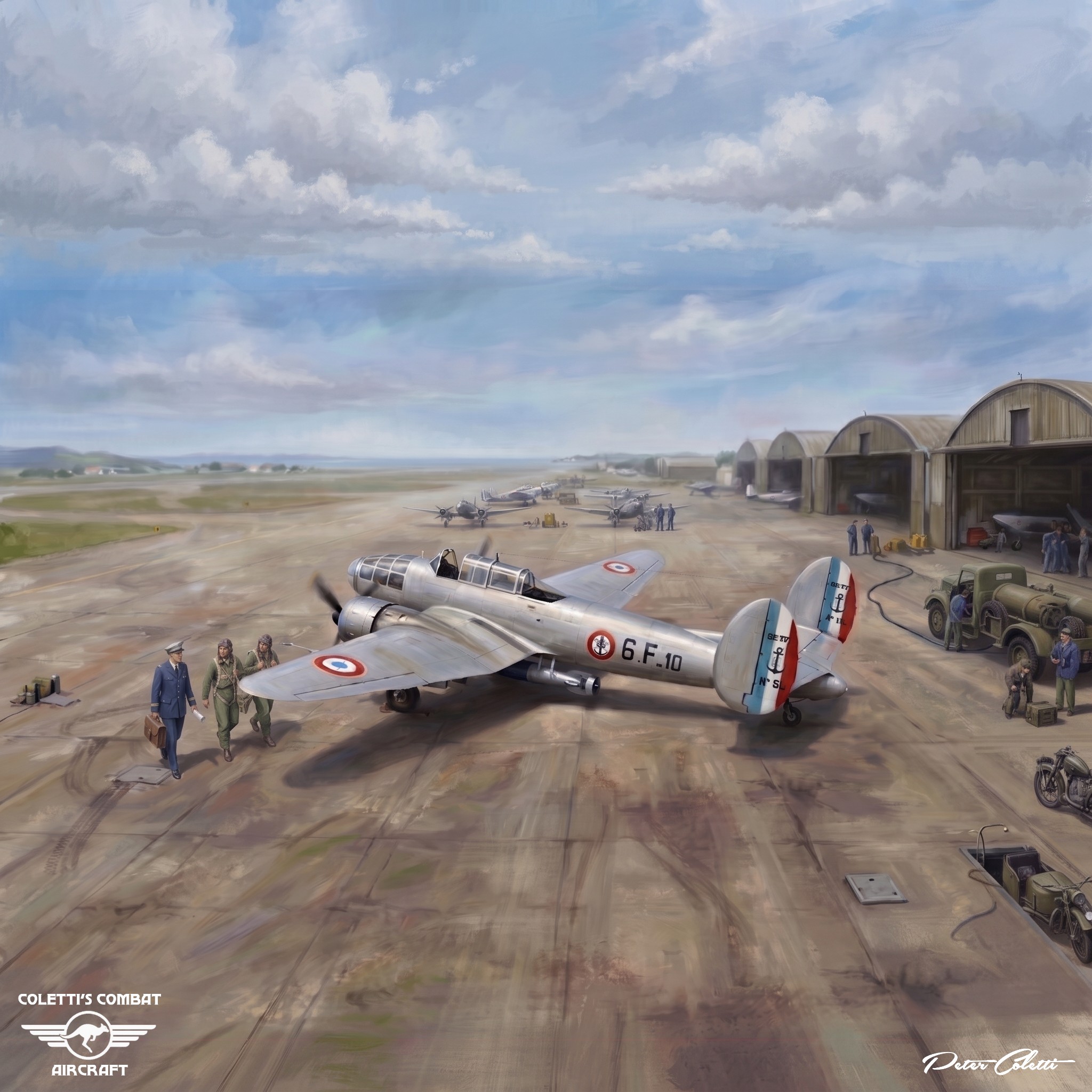
MB.175B.3 — Production bomber; 23 built before the armistice.
Variant powered by Pratt & Whitney R‑1830 Twin Wasp engines.
Performance was inferior to the French-powered versions; only 5 were built.
MB.177
Single prototype with Hispano‑Suiza 12Y‑31 inline engines; underpowered and abandoned.
MB.178
A final development halted by the German invasion; the incomplete airframe was taken to Rechlin for evaluation.
Bloch MB.175
Assessment and Legacy
The Bloch MB.170 series stands as one of the most advanced French aircraft of its era.
Its combination of:
High speed
Excellent altitude performance
Strong structural design
Versatile mission capability
made it a formidable reconnaissance platform—arguably the best France fielded in 1940.
Bloch MB.170
Yet its impact was blunted by the following:
Late production,
Limited numbers,
Industrial bottlenecks,
And the rapid collapse of France in June 1940.
Despite these constraints, the MB.174 in particular earned a reputation for survivability and pilot confidence, and its post‑war naval derivative extended the lineage into the early Cold War.