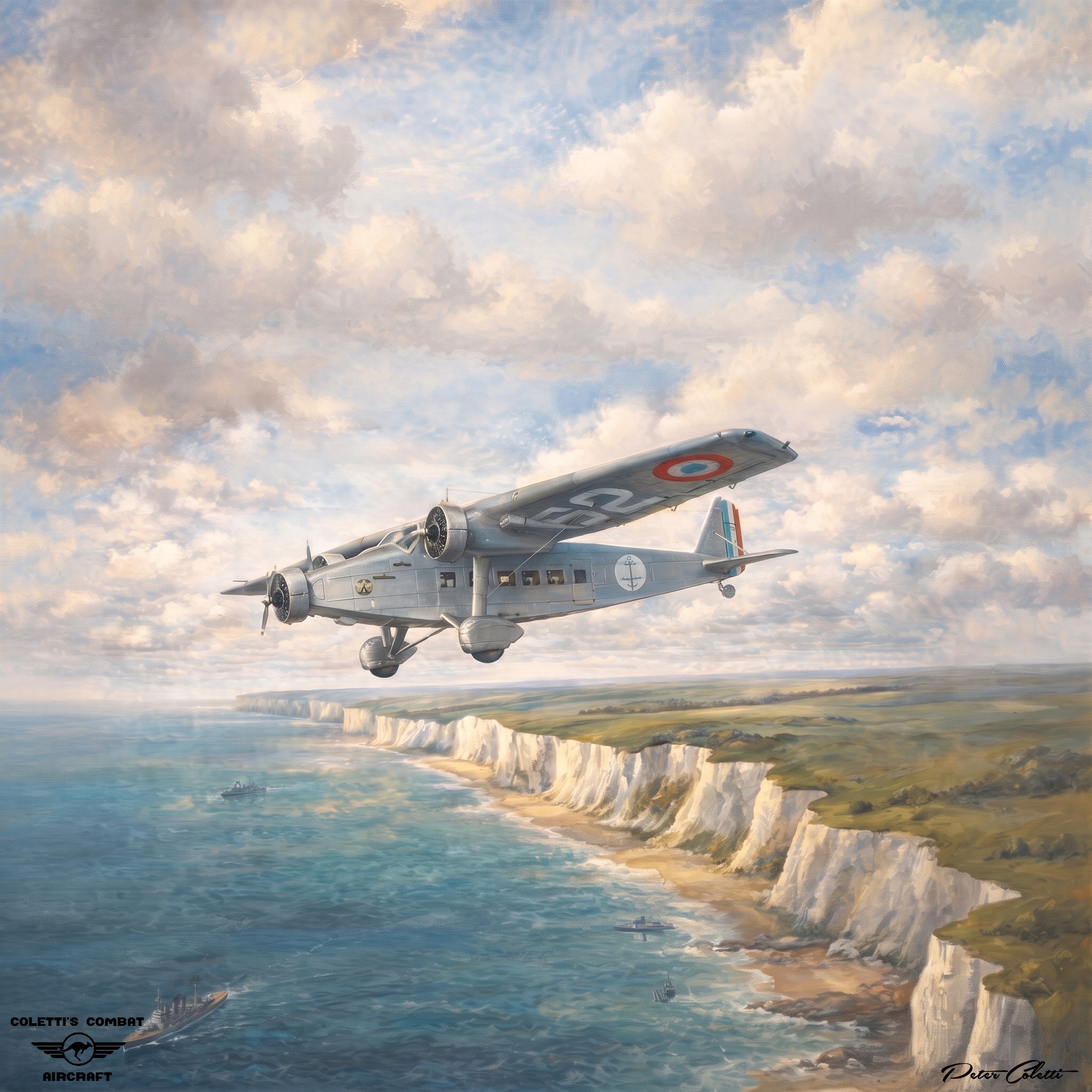
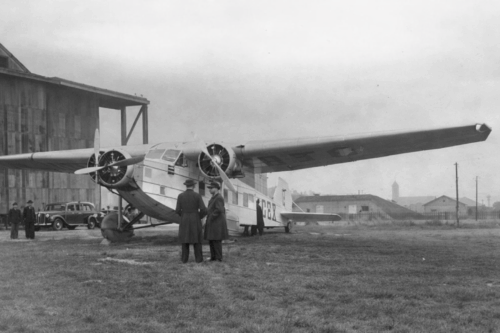
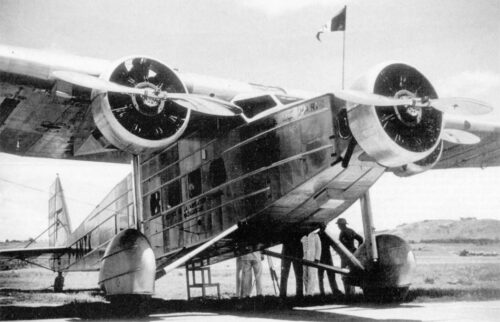
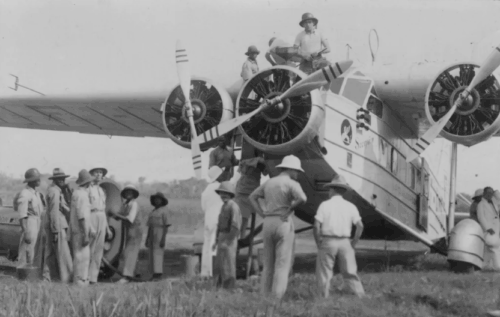
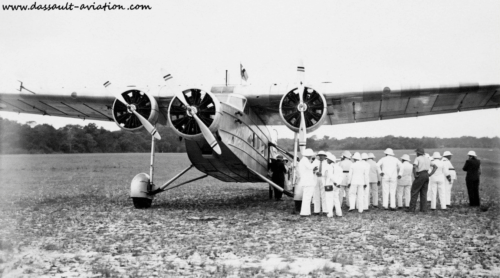
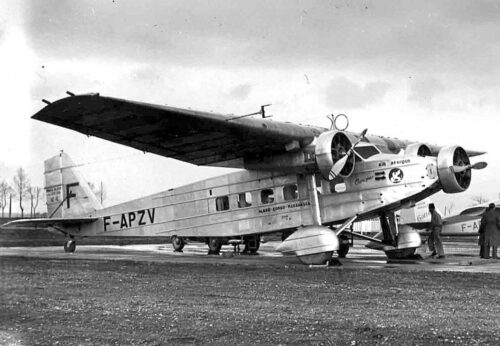
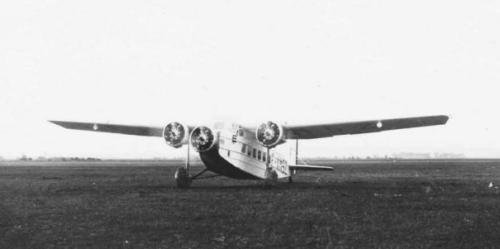
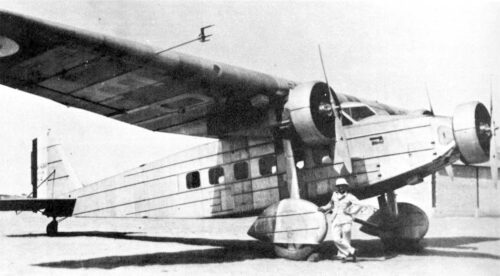
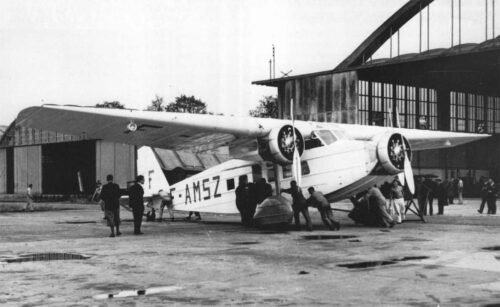
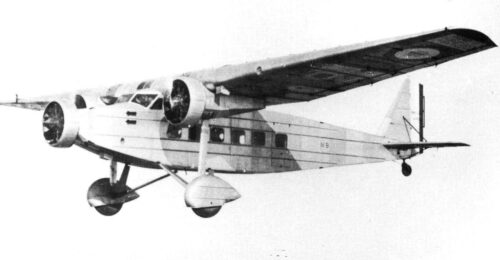
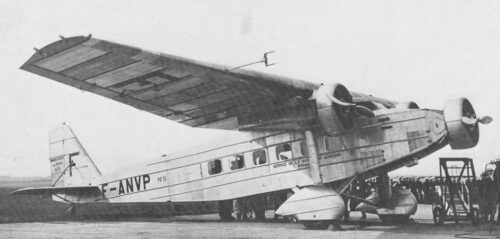
The Bloch MB.120 emerged from France’s early‑1930s effort to modernise its colonial air transport capabilities.
The French government sought a rugged, reliable aircraft capable of carrying passengers, mail, and cargo across the vast distances of its African territories, while also being adaptable to policing and administrative duties.
Several manufacturers submitted designs, but the proposal from Société des Avions Marcel Bloch was ultimately selected as the most promising solution for these demanding environments.
The MB.120 was not a clean‑sheet design. Instead, it evolved from earlier Bloch work, particularly the MB.71, a high‑wing monoplane whose structure and aerodynamic layout provided a solid foundation for a more capable transport aircraft.
The prototype, designated MB.120.01, was essentially a re‑engineered MB.71 adapted for tri‑motor operation and strengthened for heavier loads.
Its first flight took place on 24 October 1934, marking the beginning of a short but meaningful production run.
Following successful trials, the aircraft entered service late in 1934 with Air Afrique, the primary operator of French colonial air routes.
Ten production aircraft followed the prototype: six for civilian use and four for the French Air Force, all intended for operations in Africa.
Design and Construction
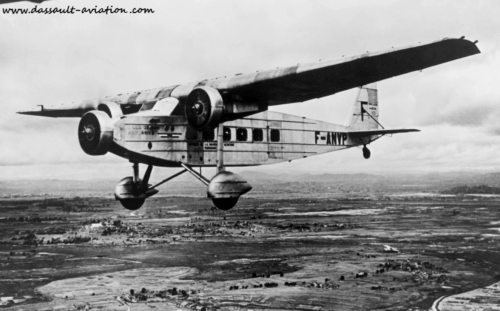
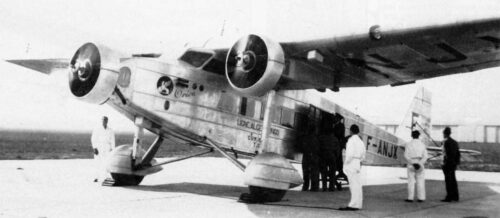
The MB.120 was a high‑wing, all‑metal, cantilever monoplane, reflecting the shift in French aviation towards more modern, stressed‑skin construction.
Its configuration was directly influenced by the Bloch MB.200 bomber, sharing structural philosophy and general layout, though adapted for transport duties.
Airframe
Wing: A broad, high-mounted wing provided excellent stability and low-speed handling—ideal for rough, remote airfields.
Fuselage: A robust, rectangular-section fuselage housed a crew of three and up to ten passengers, though in practice civilian aircraft often carried four passengers plus significant mail cargo, reflecting the economic priorities of colonial air routes.
Landing Gear: Fixed, conventional landing gear with a tailwheel ensured simplicity and durability.
Powerplant
The MB.120 was powered by three Lorraine Algol 9Na radial engines, each producing 300 hp.
This tri-motor arrangement offered the following:
Improved reliability over long, sparsely populated routes
Adequate performance even in hot, high‑altitude African conditions
A safety margin in the event of an engine failure
Crew and Cabin
The aircraft typically carried:
Pilot
Co-pilot
Radio operator / mechanic
The passenger cabin was modest but functional, with large windows and space for mailbags or freight when passenger loads were light.
Performance Characteristics
The MB.120’s performance reflected its role as a colonial utility aircraft rather than a high-speed transport.
Its specifications were as follows:
Wingspan: 20.54 m
Length: 11.30 m
Height: 4.00 m
Wing area: 61 m²
Empty weight: 3,700 kg
Maximum takeoff weight: 6,000 kg
Engines: 3 × Lorraine Algol 9Na (300 hp each)
Maximum speed: 250 km/h
Cruising speed: 200 km/h
Range: 1,000 km
Service ceiling: 6,300 m
Payload: Up to 10 passengers or equivalent cargo
These figures placed the MB.120 squarely within the performance envelope of early‑1930s European tri‑motor transports, comparable in concept—though not in scale—to aircraft like the Fokker F.VII/3m and the Junkers Ju 52.
Operational Use and Service History
Civil Operations
The MB.120’s primary civilian operator was Air Afrique, which used the type on long-distance routes across French West and Equatorial Africa.
The aircraft’s ruggedness and dependable engines made it well-suited to the region’s challenging conditions, including:
High temperatures
Dusty, unimproved airstrips
Long legs between settlements
Civil MB.120s often carried mixed loads, with mail forming a major portion of revenue.
Passenger service was secondary but important for colonial administration.
Military Service
The French Air Force operated four MB.120s, using them for:
Personnel transport
Liaison duties
Light logistical support
All military and civilian aircraft remained in Africa throughout their careers.
At least one MB.120 is reported to have remained operational until 1942, despite the pressures of wartime scarcity and the harsh operating environment.
World War II Context
Although the MB.120 was not a frontline combat aircraft, it existed during a period of rapid geopolitical change.
When World War II began in 1939, France’s African territories became strategically important for both Vichy and Free French forces.
The MB.120’s role during this period was limited but practical:
Continued transport and communication duties
Support for administrative and military movements
Maintenance of air links across vast colonial regions
Its small numbers and modest performance meant it had no direct combat role, but its contribution to maintaining French presence and mobility in Africa was nonetheless valuable.
Variants The MB.120 family was small, consisting essentially of the following:
MB.120.01 — Prototype, converted from the MB.71
MB.120(production) — Ten aircraft built, with minor differences between civil and military fittings
No major structural variants or re‑engined versions were produced, reflecting the aircraft’s niche role and limited production run.
Legacy
The Bloch MB.120 represents an important transitional step in French transport aviation.
It demonstrated:
The viability of all‑metal construction for colonial service
The usefulness of tri‑motor reliability in remote regions
The growing competence of Marcel Bloch’s design bureau, which would later evolve into Dassault Aviation
While overshadowed by later, more capable transports, the MB.120 played a meaningful role in connecting and supporting France’s African territories during a critical period in interwar and early‑WWII aviation history.