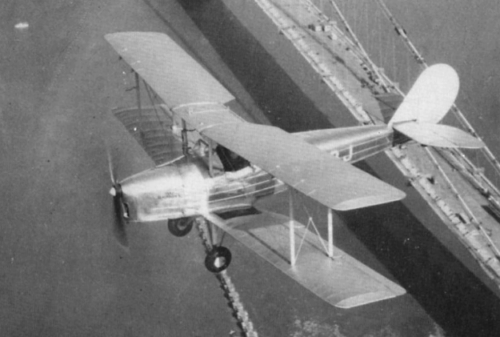
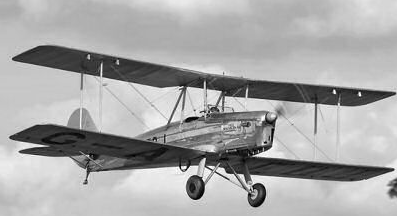
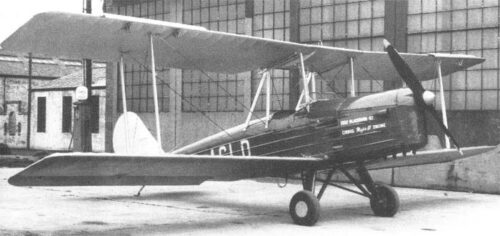
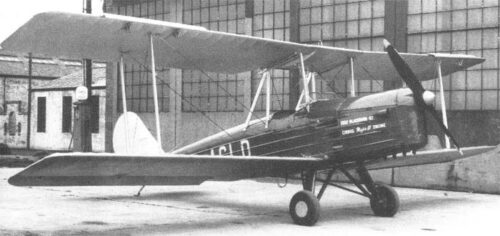
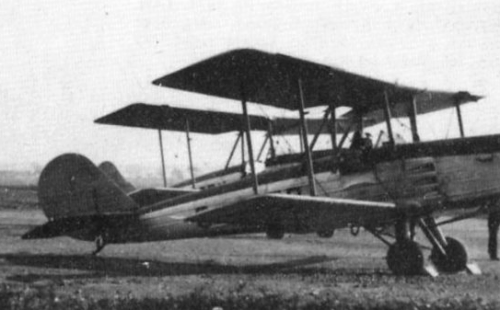
The Blackburn B‑2 emerged in the early 1930s as Blackburn Aircraft’s attempt to modernise its successful Bluebird IV trainer.
The company sought to retain the Bluebird’s strengths—particularly its side‑by‑side seating and forgiving handling—while addressing the structural limitations of its mixed‑construction fuselage.
The result was a new aircraft that shared the Bluebird’s general configuration but introduced a far more robust and modern airframe design.
The most significant innovation was the adoption of a semi‑monocoque all‑metal fuselage, a major departure from the Bluebird’s metal‑and‑fabric structure.
Blackburn applied structural principles previously used in its Segrave touring aircraft, producing a fuselage noted for its strength and durability—qualities especially valuable in a training aircraft frequently subjected to rough landings by novice pilots.
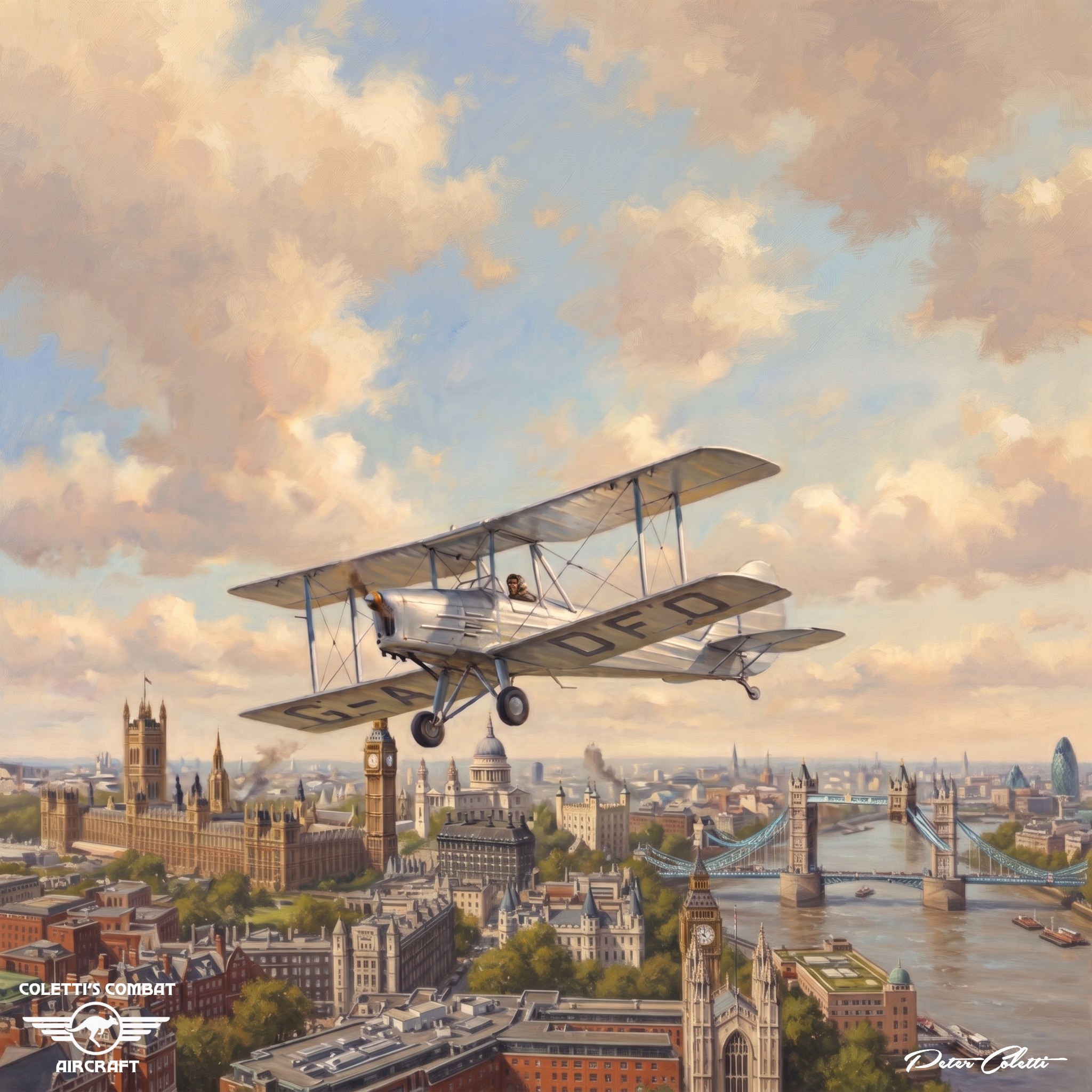
The prototype B‑2, registered G‑ABUW, made its maiden flight on 10 December 1931 at Brough.
Test pilots praised its manoeuvrability, responsive controls, and forgiving nature, characteristics that would become hallmarks of the type.
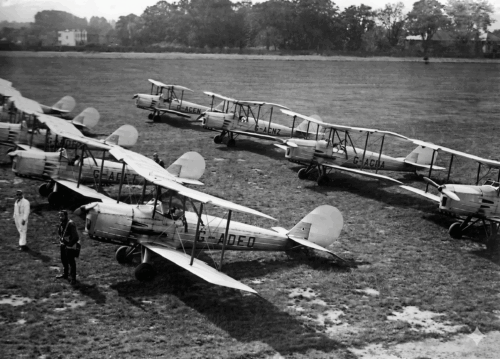
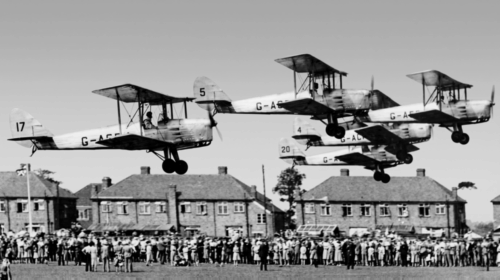
By early 1932, the first production aircraft had flown, and Blackburn began promoting the B‑2 through air races and public demonstrations to attract both military and civilian customers.
Although Blackburn hoped for international military sales, the only air arm to adopt the B‑2 was the Royal Air Force, which incorporated the type into its expanding pre‑war training system.
Civilian flying schools across Britain also purchased the aircraft, many of them operated directly by Blackburn itself.
Technical Description
Airframe and Structure
The B‑2 was a single‑bay biplane with folding wings, designed for ease of storage and maintenance.
Its fuselage consisted of hollow frames reinforced with light stringers and diagonal steel tubes, all covered in Alclad skin stiffened by longitudinal swaging.
Notably, the structure used no welding or wire bracing, reflecting Blackburn’s emphasis on clean, modern engineering.
The wings, similar in construction to those of the Bluebird IV, incorporated steel and duralumin components.
The upper wing carried leading‑edge slots to improve low‑speed handling, while ailerons were fitted only to the lower wings.
The outer panels folded around the rear spar hinges, a practical feature for flying schools with limited hangar space.
A gravity‑fed fuel system drew from a 22‑gallon aerofoil‑shaped tank mounted above the fuselage on six struts, a typical arrangement for light biplanes of the era.
The tail unit, also metal‑framed, had an increased span compared to the Bluebird IV and featured a horn‑balanced rudder.
The elevator incorporated a spring‑loaded trim system controlled from the cockpit, improving handling during long training flights.
Undercarriage and Controls
The B‑2 used a fixed, wide‑track undercarriage with telescopic legs employing steel springs and oil dampers, providing stability during student landings.
A sprung tail skid supported the rear fuselage on the ground.
Pilots consistently praised the aircraft’s control harmony.
It remained responsive even near the stall, could be sideslipped easily for landing approaches, and handled strong crosswinds with relative ease—qualities that made it particularly suitable for ab initio training.
Powerplant
The prototype flew with a de Havilland Gipsy III engine, while production aircraft were fitted with either the 130 hp Gipsy Major or the 120 hp Cirrus Hermes IV.
Engines were mounted on tubular steel bearers attached to a fireproof bulkhead, with cooling air entering through the nose and exiting via fluting aft of the engine bay.
Performance
The B‑2’s performance placed it squarely within the typical range for 1930s primary trainers.
With the Gipsy III engine, it achieved the following:
Maximum speed: 112 mph
Cruise speed: 95 mph
Range: 320 miles
Rate of climb: 700 ft/min
Wing loading: 7.52 lb/sq ft
These figures made it competitive with contemporaries such as the de Havilland Tiger Moth and Miles Magister, though its side‑by‑side seating and metal fuselage gave it a distinct niche in the training market.
Operational History
Pre‑War Use
Blackburn marketed the B‑2 aggressively as a military trainer, even sending the prototype to Portugal for evaluation in 1932.
Although the aircraft performed well, Portugal preferred a tandem‑seat layout and selected the Tiger Moth instead.
Despite limited export success, the B‑2 found a solid domestic role.
Civilian flying schools—many owned by Blackburn—used the type extensively to train pilots destined for the RAF under the service’s expansion scheme.
A total of 42 aircraft were built between 1931 and 1937, including the prototype.
The B‑2 also appeared in air races, where it demonstrated respectable speed for a trainer.
In the 1933 Grimsby News Race, a B‑2 placed second at an average of 93 mph, and in the 1934 King’s Cup Air Race, another example finished second at 112.75 mph.
Second World War Service
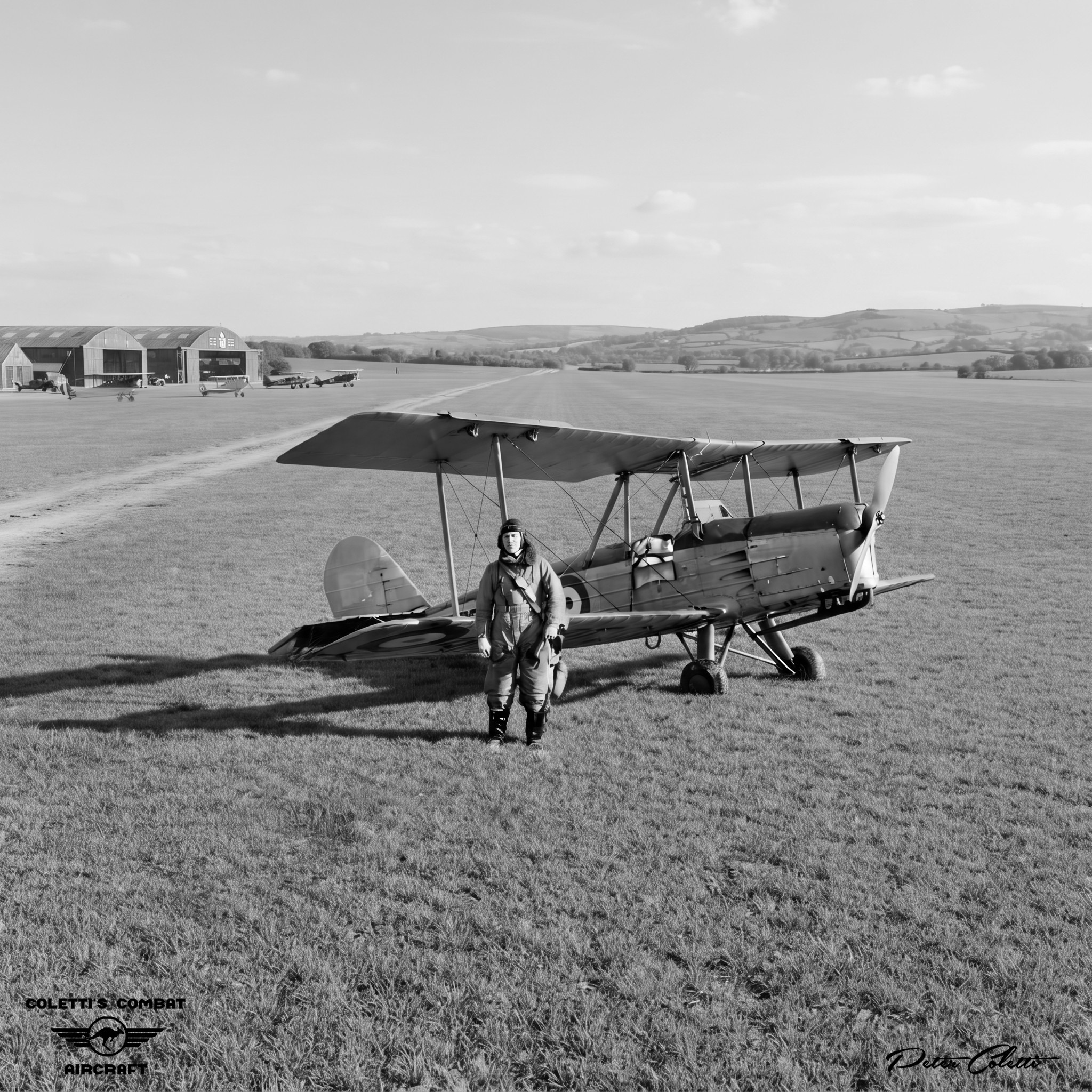
At the outbreak of the Second World War, B‑2s based at Hanworth were transferred to Brough, where Blackburn’s two flying schools merged into No. 4 Elementary Flying Training School.
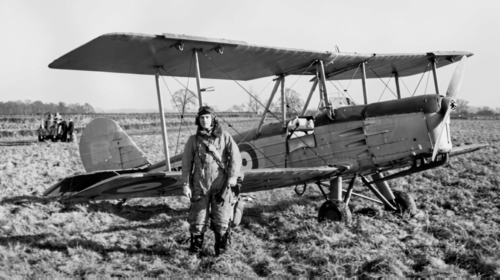
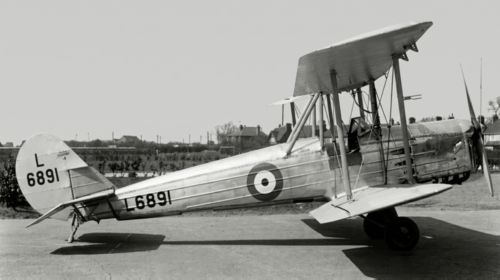
Although the aircraft retained civilian registrations, they were repainted in wartime training colours—yellow fuselages, camouflaged wings, and R.A.F. roundels.
By February 1942, the remaining B‑2s were formally taken over by the RAF and assigned to the Air Training Corps.
However, the ATC generally used them as instructional airframes rather than flying aircraft, and some continued in this ground‑training role for more than two decades after the war.
Variants
The B‑2 did not spawn major variants.
Differences between aircraft were limited primarily to engine fit:
Prototype: de Havilland Gipsy III
Production aircraft: Gipsy Major or Cirrus Hermes IV
Minor equipment differences—such as the metal Fairey‑Reed propeller fitted to the first production aircraft—were incremental rather than constituting formal variants.
Conclusion The Blackburn B‑2 occupies a distinctive place in British aviation history.
Though overshadowed by the Tiger Moth in military service, it represented a forward‑looking approach to trainer design, combining metal construction, side‑by‑side seating, and excellent handling.
Its modest production run belies its importance as a bridge between interwar civil training and the RAF’s wartime pilot‑training infrastructure.