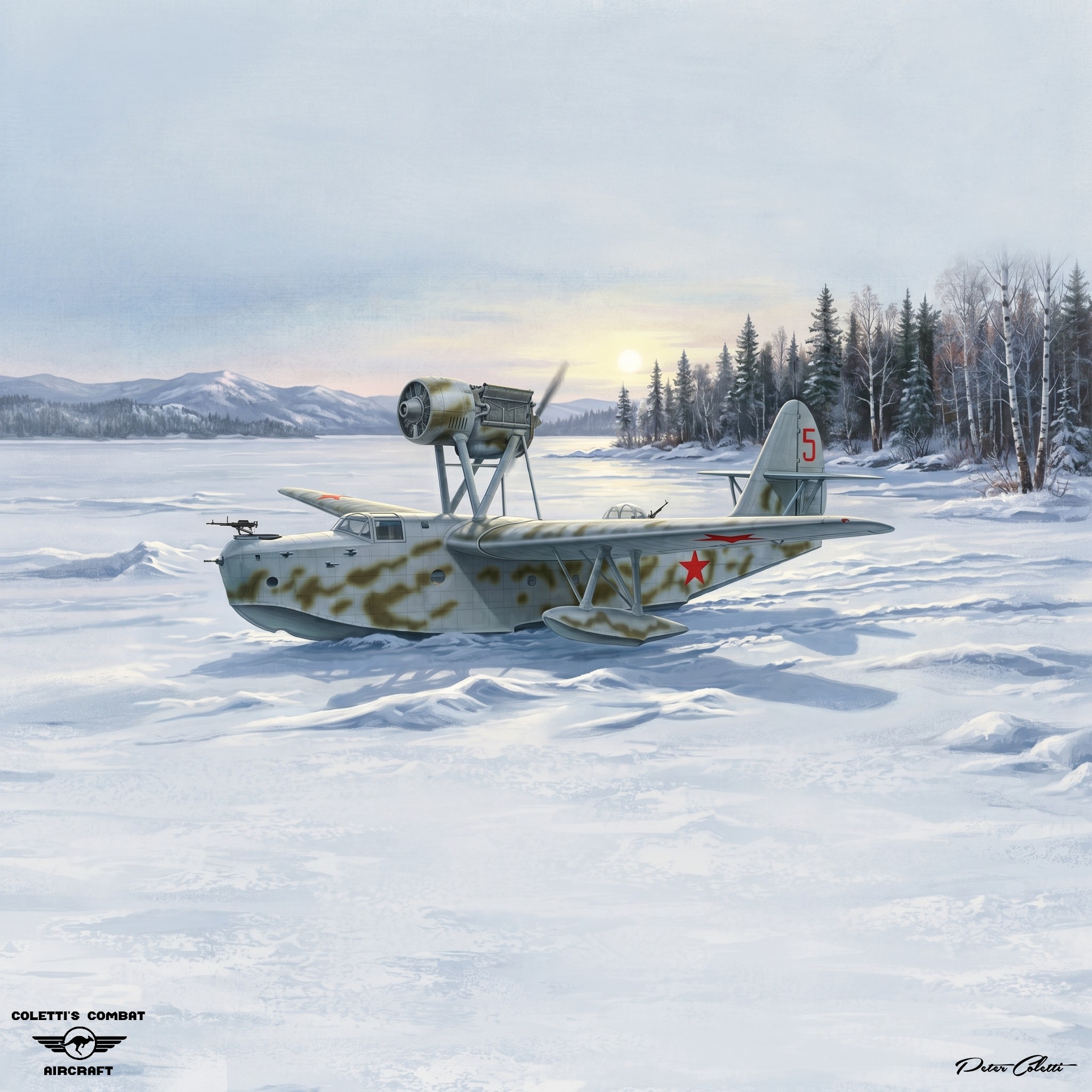
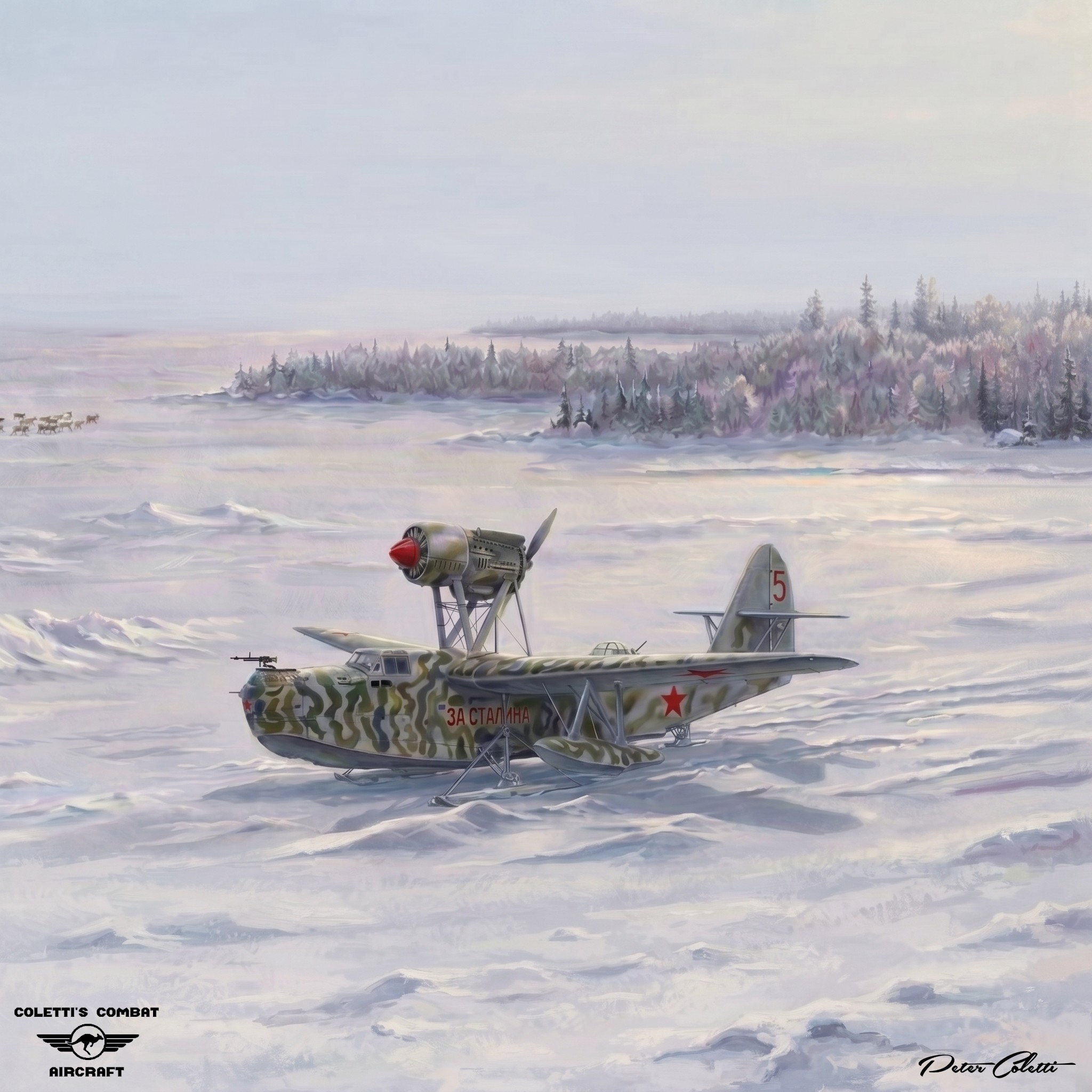
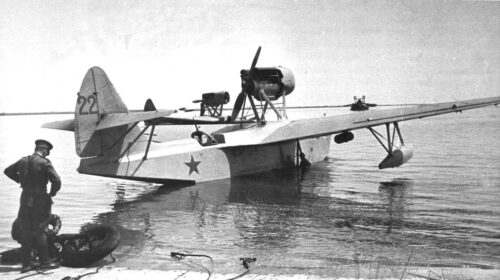
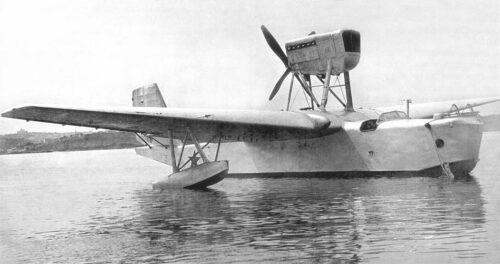
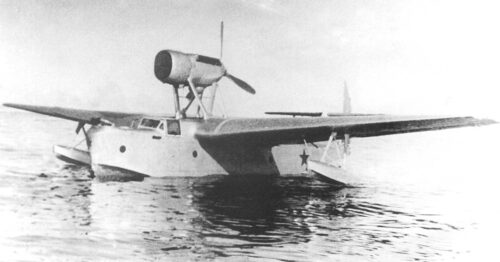
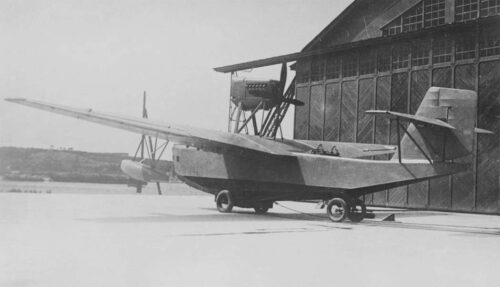
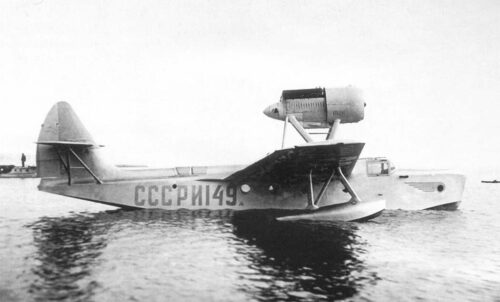
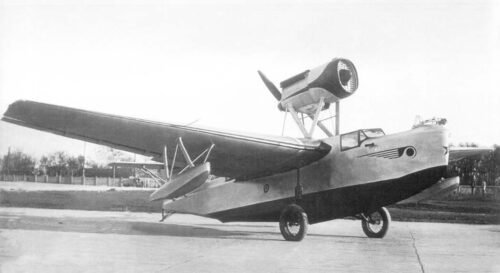
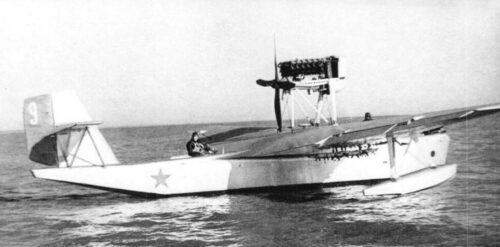
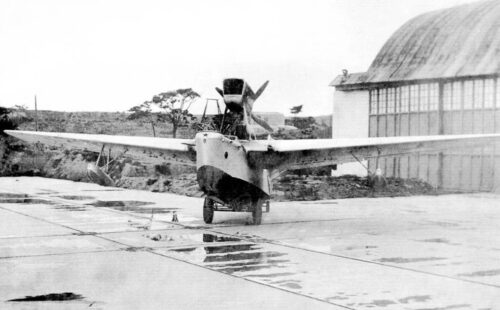
The Beriev MBR‑2 emerged from the formative years of Soviet naval aviation, a period marked by institutional reshuffling, scarce resources, and competing design philosophies.
In the 1920s, the Soviet Union relied heavily on the legacy of designer Dmitry Grigorovich, whose M‑5 and M‑9 flying boats had served the Imperial Navy with distinction.
But by the end of the decade, Grigorovich’s design bureau faltered, and the state dissolved his organisation, transferring its personnel and unfinished work to a new experimental group under French engineer Paul Richard.
It was within this environment that a young Georgy Mikhailovich Beriev began his career, first as a structural engineer and later as a hands‑on production specialist.
When Richard’s bureau was itself dissolved in 1931, its staff—including Beriev—was absorbed into the Central Design Bureau (TsKB) at Factory No. 39.
There, Beriev joined the naval aviation brigade led by Igor Chetverikov. Although the brigade was already engaged in several projects, Beriev independently began sketching a concept for a short‑range maritime reconnaissance flying boat, designated MBR‑2 (Morskoi Blizhniy Razvedchik).
His design proposed a simple, rugged, single‑engine high‑wing monoplane flying boat with a two‑step hull and generous beam for seaworthiness.
The aircraft was intended to operate in rough coastal waters and to be producible in large numbers with minimal industrial strain.
Originally conceived as a metal aircraft, the MBR‑2 was redesigned in wood after naval aviation representatives insisted on a wooden structure—both for cost and because the USSR’s aluminium production was still limited.
Extensive hydrodynamic and aerodynamic testing at TsAGI validated the hull form and wing configuration.
The prototype, designated TsKB‑25, was completed in late 1931, though engine supply problems nearly halted the project.
When the intended M‑27 engine was cancelled, Beriev secured authorisation to install the licence‑built BMW VI derivative, the Mikulin M‑17, despite bureaucratic resistance.
The prototype flew successfully in May 1932 after an embarrassing false start in which the hull stuck to its launch trolley.
Once airborne, the aircraft demonstrated excellent water handling, stable flight characteristics, and reliable takeoff performance.
State trials were completed in only 20 days—remarkably fast for the era—and the MBR‑2 was recommended for service.
Political and industrial complications delayed production, including opposition from Andrei Tupolev, who advocated for his own all‑metal MDR‑2.
Ultimately, high‑level intervention reinstated the MBR‑2, and in 1933 the government formally adopted it for naval aviation.
Production was assigned to Factory No. 31 in Taganrog, which would later become the home of Beriev’s own design bureau.
Design Characteristics
Airframe and Hull
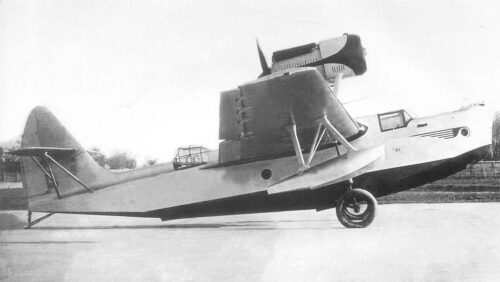
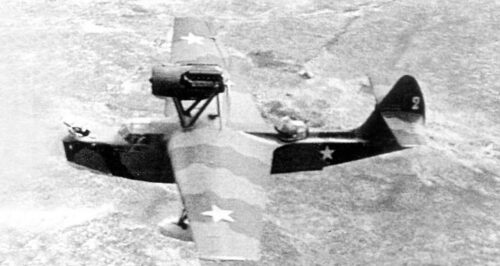
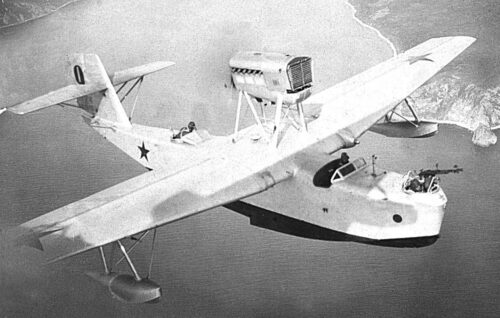
The MBR‑2 was a high‑wing, single‑engine pusher flying boat with a wooden hull and fabric‑covered control surfaces.
The hull featured a two‑step planing bottom with pronounced chines, giving it good seaworthiness and allowing operations in waves up to approximately 0.7 m.
The cockpit and forward gun position were integrated into the bow, with the pilot seated ahead of the wing’s leading edge.
The wing was a braced monoplane structure with moderate taper and a thick root airfoil (MOS‑27), providing lift at low speeds and stability during water operations.
The tail unit was conventional, though later variants enlarged the vertical fin to improve directional stability.
Powerplant and Propulsion
Early production aircraft used the Mikulin M‑17, a 680‑hp liquid‑cooled V‑12 engine mounted above the wing in a pusher configuration.
This arrangement kept the propeller clear of spray and simplified hull design.
The later MBR‑2bis introduced the more powerful AM‑34N engine, raising performance and enabling additional equipment.
Crew and Equipment
A typical crew consisted of four to five: pilot, navigator/bombardier, radio operator, and one or two gunners.
The aircraft carried basic naval reconnaissance equipment, including radios (initially primitive, later upgraded), simple bombsights, and provisions for light bombs or depth charges under the wings.
Armament
Armament varied by variant but generally included the following:
A 7.62 mm PV‑1 machine gun in the bow
A 7.62 mm ShKAS in a dorsal turret on later models
Up to 300 kg of bombs, mines, or depth charges on underwing racks
Landing Gear Options
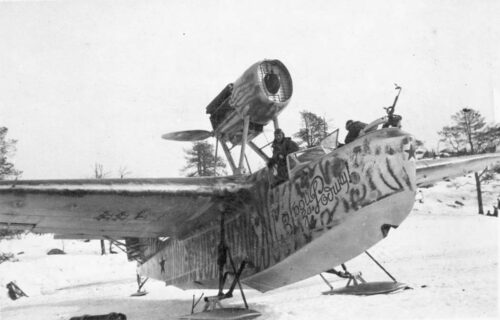
Although primarily a flying boat, the MBR‑2 could be fitted with fixed wheeled or ski undercarriages for land operations, increasing its versatility in remote northern regions.
Performance
Performance figures for the MBR‑2bis (AM‑34 engine) illustrate the aircraft’s capabilities:
Maximum speed: ~275 km/h at altitude
Cruise speed: ~190 km/h
Range: ~1,600 km
Service ceiling: ~6,000 m
Gross weight: ~4,245 kg
These numbers were modest even by mid‑1930s standards, but the aircraft’s strengths lay in reliability, seaworthiness, and ease of production.
Variants
MBR‑2M‑17
The original production model with the M‑17 engine.
Built in large numbers from 1934 to 1936, it formed the backbone of Soviet coastal reconnaissance aviation before the introduction of the bis model.
MBR‑2AM‑34 / MBR‑2bis
The major improved variant, featuring:
AM‑34N engine
Enclosed cockpit
Enlarged vertical tail
Dorsal turret
Structural strengthening
Aerodynamic refinements, including fillets and improved hull contours
This version remained in production until 1941 and became the definitive wartime model.
MBR‑2M‑103
A one‑off experimental aircraft fitted with the M‑103 engine.
MP‑1 / MP‑1bis
Civil transport versions derived from the M‑17 and AM‑34 models, respectively.
They carried up to six passengers and were used by Aeroflot on coastal and riverine routes.
MP‑1T
A cargo transport conversion.
Operational Service and WWII Context
Pre‑war Use
By the late 1930s, the MBR‑2 equipped numerous Soviet naval aviation units across the Baltic, Black Sea, Arctic, and Far Eastern fleets. Its roles included:
Coastal reconnaissance
Anti‑submarine patrol
Light bombing
Liaison and transport
Ice reconnaissance in northern waters
Its ruggedness and ability to operate from primitive bases made it invaluable in remote regions.
The Great Patriotic War (1941–1945)
When Germany invaded the USSR in June 1941, the MBR‑2 was already obsolescent, yet it remained the most numerous Soviet naval flying boat.
Its slow speed and light armament made it vulnerable, but its crews used it effectively in several roles:
Night harassment bombing, where low speed was less of a liability
Maritime patrol, especially in the Arctic, where Axis air presence was limited
Search and rescue, retrieving downed airmen and sailors
Transport, moving personnel and supplies between isolated bases
In the Northern Fleet, MBR‑2s operated from fjords and sheltered bays, conducting reconnaissance over the Barents Sea and shadowing German convoys.
Their ability to land on water allowed them to operate where no airfields existed.
Foreign Operators
A small number were captured or exported:
Finland operated five captured aircraft from 1941.
North Korea later used surviving examples post‑war.
Production and Legacy
Between 1934 and 1941, 1,365 MBR‑2s were built, making it one of the most numerous flying boats of its era.
The aircraft’s significance lies not in cutting‑edge performance but in its practicality.
It was:
Simple to build
Easy to maintain
Adaptable to harsh climates
Capable of operating from almost any stretch of water
The MBR‑2 also marked the beginning of Beriev’s long and distinguished career in maritime aviation.
The Taganrog design bureau he later led would go on to produce some of the world’s most advanced amphibious aircraft.