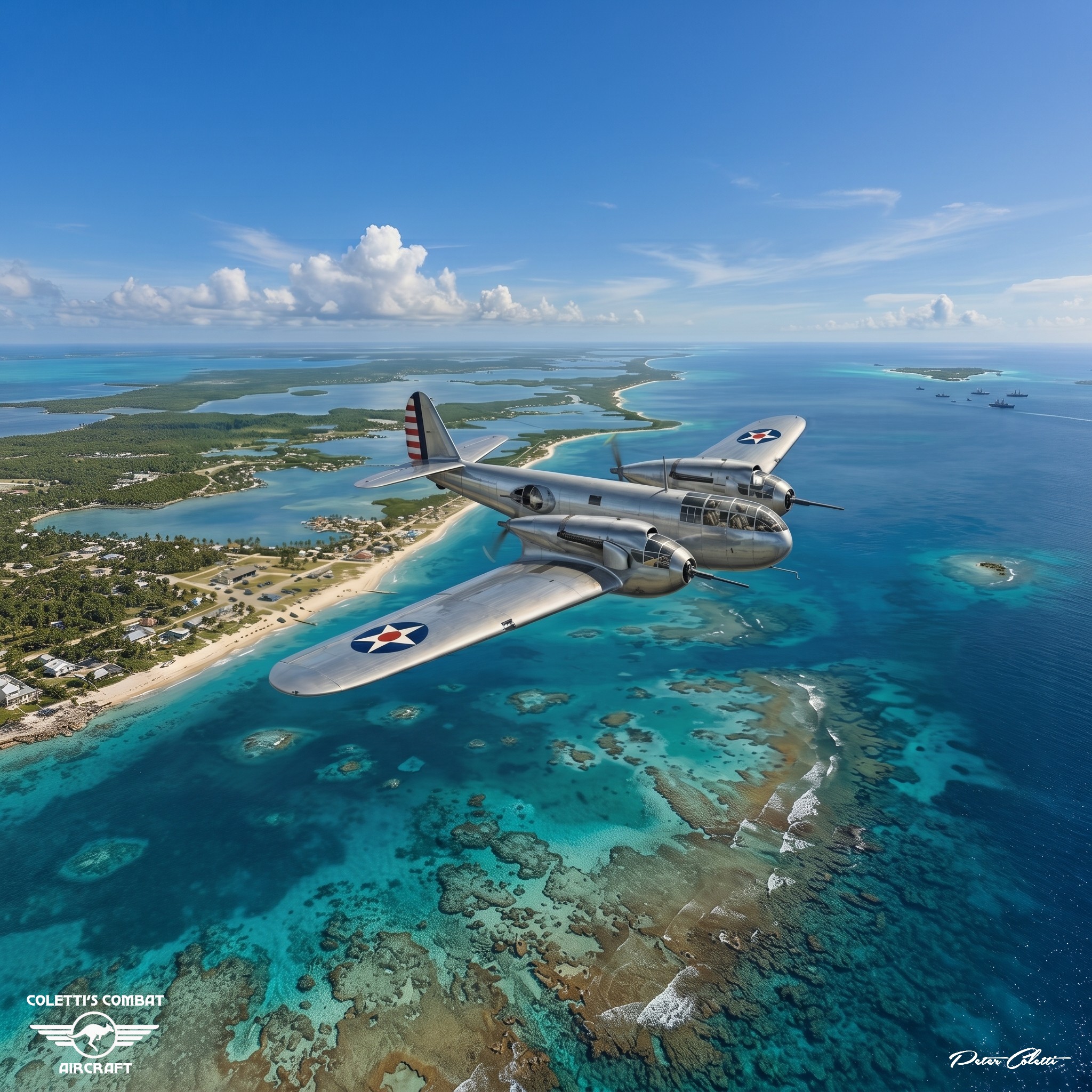
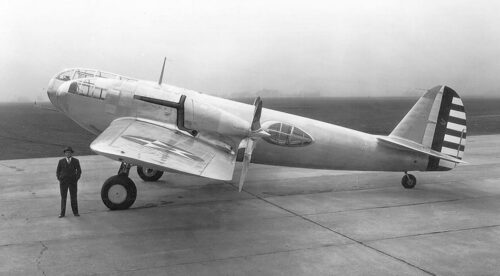
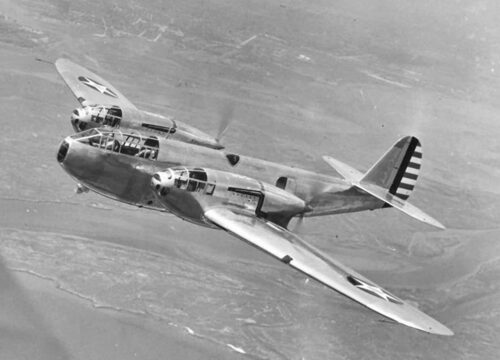
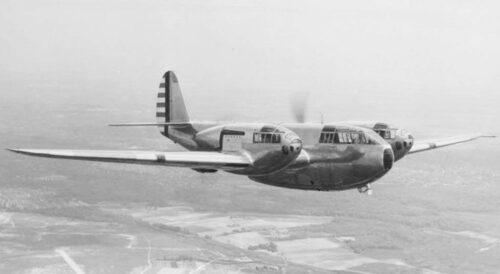
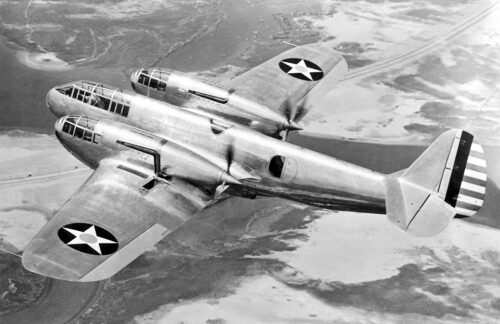
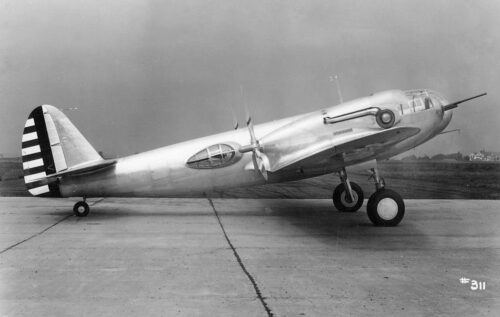
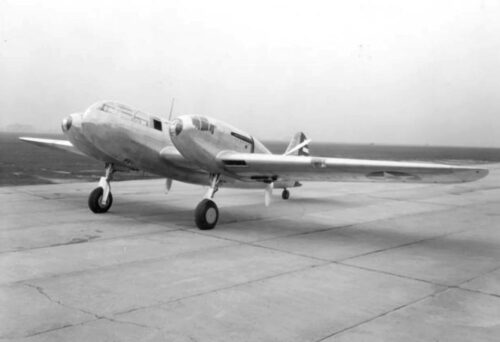
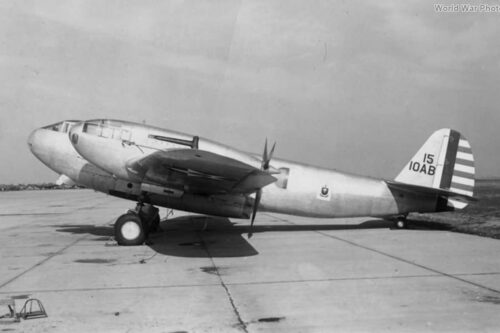
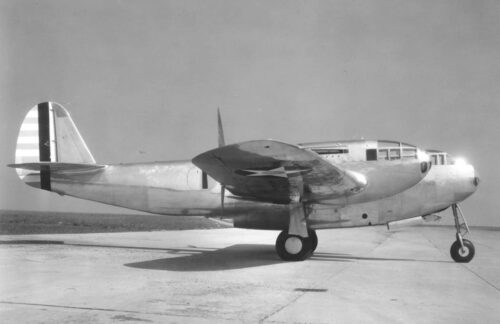
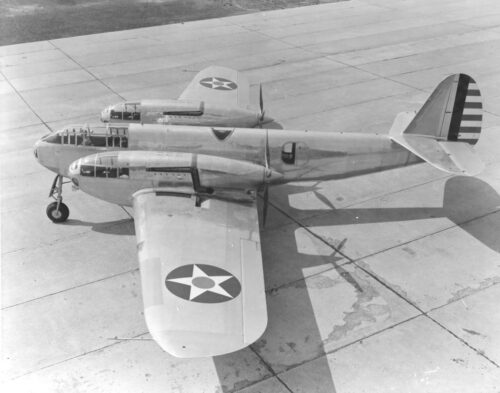
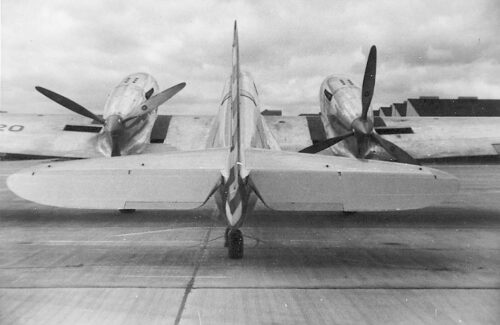
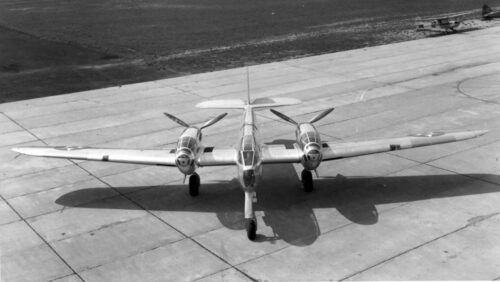
The Bell YFM‑1 Airacuda was one of the most unusual and ambitious American military aircraft of the interwar period—a bold attempt to create a long‑range, multi‑crew “bomber destroyer” that blended the firepower of an anti‑aircraft battery with the range and endurance of a twin‑engine escort fighter.
Conceived in the mid‑1930s and first flown in 1937, it became the first military aircraft produced by the newly formed Bell Aircraft Corporation.
Although visually striking and technologically daring, the Airacuda ultimately proved too complex, too slow, and too unreliable to serve in wartime.
Only 13 aircraft were built before the programme was abandoned in 1942.
Origins and Development
The Airacuda’s story begins with the founding of Bell Aircraft. In 1935, several senior figures from Consolidated Aircraft—including Lawrence Bell—refused to relocate when the company moved from Buffalo to San Diego.
They instead formed a new company, Bell Aircraft, which initially survived as a subcontractor before seeking a signature project to establish its reputation.
Chief engineer Robert Woods proposed a radical concept: a heavy, multi‑seat fighter designed to intercept enemy bombers at long range, beyond the reach of single‑engine fighters.
The U.S. Army Air Corps, intrigued by the idea of a “mobile anti‑aircraft platform”, ordered a prototype in late 1936.
The aircraft received the designation XFM‑1, later YFM‑1, for service‑test machines.
The prototype was completed in July 1937 and made its first flight on 1 September 1937.
Early tests revealed both promise and serious flaws, but the Air Corps—eager for innovation—continued limited procurement.
Design Philosophy and Technical Features
A Futuristic Heavy Fighter
The Airacuda was conceived as a convoy fighter/bomber destroyer, intended to fly ahead of bomber formations and engage enemy bombers with heavy cannon fire.
Its design incorporated numerous features never before seen on a US military aircraft—and several never seen again.
Airframe and Layout
The aircraft featured:
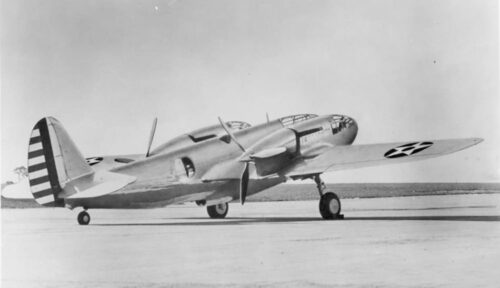
A sleek, streamlined fuselage with a heavily glazed nose for the pilot and navigator/fire‑control officer.
A high-mounted wing spanning nearly 70 ft.
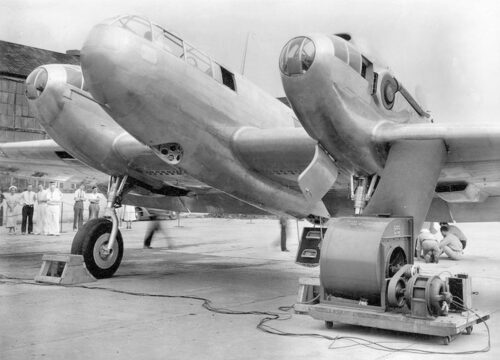
Two large engine nacelles mounted forward on the wing, each containing a gunner and a 37 mm M4 cannon.
Pusher-type propellers mounted behind the nacelles, driven by long extension shafts.
The crew of five consisted of:
Pilot
Copilot/navigator/fire‑control officer
Two cannon loaders/gunners in the nacelles
Radio operator/waist gunner
Armament Concept
The Airacuda’s signature feature was its forward‑firing 37 mm cannons, one in each nacelle.
Each gunner sat directly behind the cannon, responsible primarily for loading the 110‑round ammunition supply.
Additional armament included:
Two .30‑cal machine guns in the nacelle fronts
Two .50‑cal machine guns in fuselage blisters for rear defence
Capacity for small fragmentation bombs
A Sperry “Thermionic” fire‑control system—derived from anti‑aircraft artillery—allowed the navigator to coordinate cannon fire using gyrostabilised optics.
Powerplant and Systems
The Airacuda used Allison V‑1710 liquid‑cooled V‑12 engines, initially with turbo‑superchargers.
The engines were mounted ahead of the wing but drove rear‑mounted pusher propellers via long shafts.
A unique and problematic feature was the aircraft’s auxiliary power unit (APU), which powered the electrical and fuel systems.
If the APU failed, the aircraft effectively lost fuel pressure, hydraulics, and engine control simultaneously—an unacceptable vulnerability.
Performance and Handling
Despite its futuristic appearance, the Airacuda’s performance fell far short of expectations.
Speed and Manoeuvrability
The aircraft was slower than contemporary bombers, with a top speed of about 277 mph—insufficient for a bomber destroyer.
Handling problems included:
Severe instability in pitch under power
Dangerous single-engine behaviour—test pilot Ben Kelsey reported the aircraft would enter an uncontrollable spin if one engine failed.
Heavy control forces and sluggish manoeuvrability
Operational Hazards
The Airacuda suffered from:
Chronic engine overheating, especially on the ground due to lack of propwash
Turbo‑supercharger malfunctions, including backfires and explosions
Smoke filling the nacelles when the 37 mm cannons were fired
Bailout hazards for nacelle gunners, requiring explosive bolts to jettison propellers
These issues earned the aircraft a reputation as a maintenance nightmare and a “hangar queen”.
Accidents and Losses
Only two Airacudas were destroyed in accidents, but both incidents highlighted the aircraft’s inherent flaws.
In June 1940, aircraft 38‑492 entered an unrecoverable spin during testing.
The copilot broke his legs bailing out; the pilot crash-landed the aircraft, which was written off.
In January 1942, a YFM‑1A caught fire due to a broken connecting rod; the pilot was killed when his parachute failed.
An investigation concluded the type suffered from “inherent defects” and recommended grounding.
Operational History
A single operational squadron was formed between 1938 and 1940, but the aircraft saw no combat service.
The Airacuda was used mainly for the following:
Public demonstrations
Photo flights
Pilot familiarisation
Occasional long‑range escort exercises
Pilots generally avoided flying it unless required, due to its reputation for mechanical unpredictability.
By early 1942, with the U.S. now fully engaged in WWII and urgently needing reliable aircraft, the Airacuda was declared obsolete.
All surviving examples were sent to Chanute Field for ground crew training and scrapped by March 1942.
Variants
XFM‑1 (Model 1)
Prototype
Tailwheel landing gear
Rounded canopy
Two 1,150 hp V‑1710‑13 engines
One built
YFM‑1 (Model 7)
Initial service‑test version
Eight built
Improved V‑1710‑23 engines
Two later converted to YFM‑1B
YFM‑1A (Model 8)
Three built
Added turbo‑superchargers and external radiators
Introduced tricycle landing gear
YFM‑1B
Two YFM‑1 airframes re‑engined with V‑1710‑41 engines
Simplified systems, no turbo‑superchargers
YFM‑1C (Model 17)
Proposed but never built
The Airacuda in WWII Context
The Airacuda was conceived in an era when U.S. air doctrine feared massed enemy bomber raids and sought specialised interceptors with heavy cannon armament.
By the time the U.S. entered WWII, this concept had been overtaken by reality:
Modern fighters like the P‑38 and P‑47 offered far better speed, climb, and reliability.
Heavy fighters proved vulnerable without high performance.
The Airacuda’s complex systems were unsuited to mass production or frontline service.
Thus, the Airacuda became a technological dead end—an imaginative but impractical experiment from a company that would later produce far more successful designs, including the P‑39 Airacobra and the P‑63 Kingcobra.
Conclusion
The Bell Airacuda remains one of the most fascinating “what‑ifs” of pre‑WWII aviation.
Its dramatic appearance, innovative armament, and ambitious systems reflected a period of rapid experimentation in military aviation.
Yet its shortcomings—poor performance, dangerous handling, unreliable systems, and impractical crew arrangements—ensured that it never progressed beyond limited testing.
Today, the Airacuda stands as a symbol of bold innovation and the growing pains of a young aircraft manufacturer striving to make its mark on aviation history.