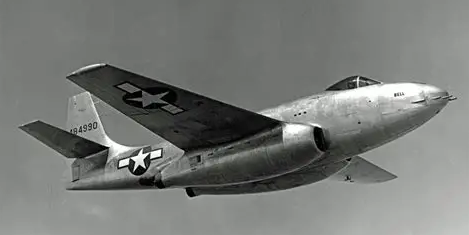
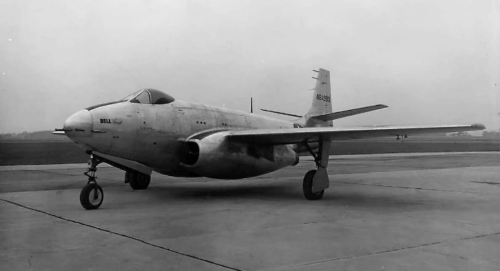
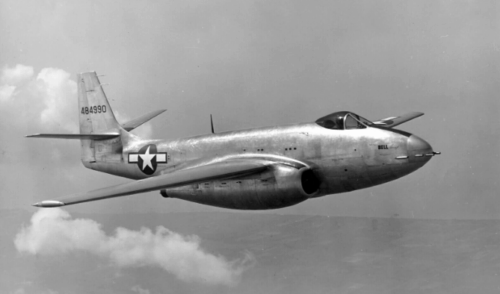
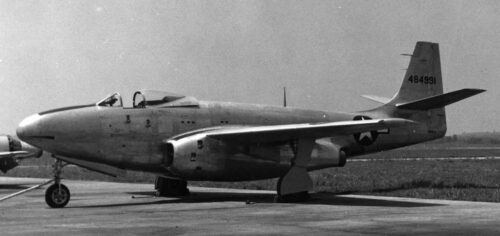
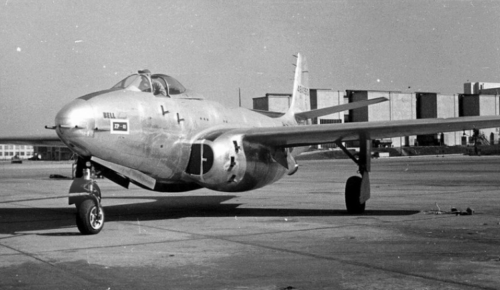
The Bell XP‑83 emerged from a transitional moment in aviation history—one in which the United States Army Air Forces (USAAF) urgently sought to understand how jet propulsion would reshape air combat.
By early 1944, the first American jet fighter, Bell’s own P‑59 Airacomet, had proven the concept of jet flight but lacked the performance needed for combat.
Its short range was especially problematic.
Early turbojets consumed fuel at a rate far exceeding piston engines, making long-range escort missions—vital for strategic bombing—impossible for first-generation jets.
In March 1944, the USAAF issued a requirement for a long‑range jet escort fighter, and Bell Aircraft was tasked with producing a design capable of accompanying heavy bombers deep into enemy territory.
A formal contract for two prototypes followed on 31 July 1944.
Bell had already been working on an internal jet interceptor concept, the Model 40, since 1943.
This design became the foundation for what would be designated the XP‑83, later redesignated XF‑83.
The aircraft was conceived as a direct evolutionary step beyond the P‑59, retaining some of its layout but re‑engineered for endurance, stability, and heavier armament.
Although the XP‑83 was conceived during World War II, its first flight would not occur until after the war in Europe had ended.
By then, jet technology was advancing so rapidly that the XP‑83 was already becoming obsolete.
Design Philosophy and Airframe Architecture
General Configuration
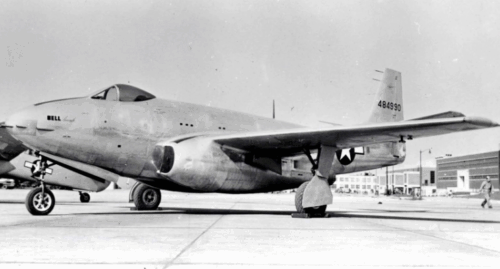
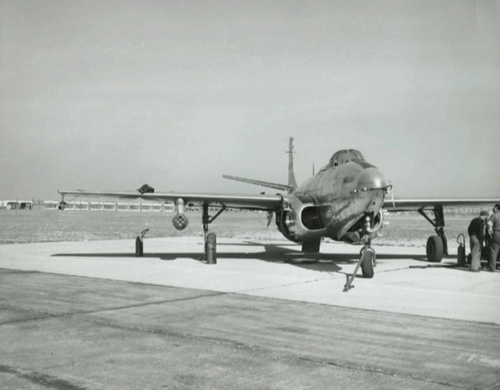
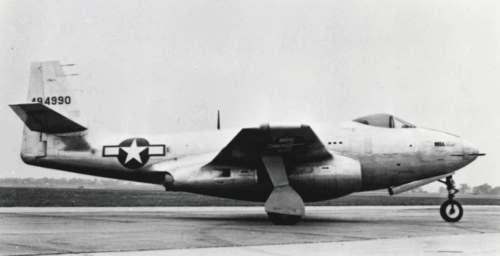
The XP‑83 was a twin‑engine, mid‑wing jet fighter with a large, streamlined fuselage designed primarily to house fuel. Its configuration reflected the USAAF’s priority: endurance above all else.
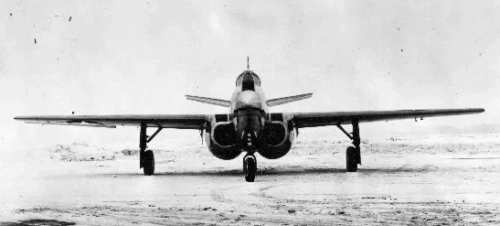
The aircraft’s most distinctive design choice was the placement of its two General Electric J33‑GE‑5 turbojets in the wing roots, freeing the fuselage for fuel storage and armament.
Fuselage and Fuel Capacity
The fuselage was an all‑metal semimonocoque structure capable of carrying 1,150 gallons (4,350 L) of internal fuel—an enormous amount for a fighter of its era.
To extend the range even further, the XP‑83 could carry two 250‑gallon (950 L) drop tanks, giving it a ferry range of over 2,000 miles.
This fuel‑centric design made the XP‑83 one of the earliest American attempts at a true long‑range jet escort fighter.
Cockpit and Crew Provisions The cockpit was pressurised, reflecting the aircraft’s intended high‑altitude mission profile.
It used a small, low‑profile bubble canopy, which provided adequate but not exceptional visibility.
The first prototype was later modified to include an engineer’s station behind the pilot when the aircraft was repurposed as a ramjet testbed in 1946.
Armament
The XP‑83’s nose was designed to accommodate a variety of armament configurations, including the following:
Six .50‑calibre (12.7 mm) M2 machine guns,
or
Six .60‑calibre (15.2 mm) T17E3 machine guns,
or
Four 20 mm Hispano cannons,
or
A single 37 mm cannon
Additionally, the aircraft could carry two 1,000‑lb bombs, giving it a secondary ground‑attack capability.
Aerodynamic Characteristics
Wind‑tunnel testing revealed directional instability, a common issue in early jet designs.
A larger vertical tail was proposed, but the first prototype flew before this modification was ready.
As predicted, the aircraft exhibited instability in yaw, and spins were avoided until the second prototype—with its enlarged tail—was completed.
Another defining characteristic was its extremely high landing speed.
This resulted from:
The absence of airbrakes
High minimum thrust settings required to prevent flameouts
Clean aerodynamic lines
These factors forced pilots to fly very long, shallow approaches, a demanding procedure even for experienced test pilots.
Powerplant and Performance
Engines
The XP‑83 was powered by two General Electric XJ33‑GE‑5 centrifugal‑flow turbojets, each producing 4,000 lbf (18 kN) of thrust.
These engines were reliable but underpowered for an aircraft of the XP‑83’s size and mission profile.
Performance Metrics
Maximum speed: 522 mph (840 km/h) at 15,660 ft
Range: 1,730 miles on internal fuel
Ferry range: 2,050 miles with drop tanks
Service ceiling: 45,000 ft
Rate of climb: 5,650 ft/min
Time to 30,000 ft: 11 minutes 30 seconds
These numbers were respectable for early 1945, but by 1946 they were overshadowed by the performance of the Lockheed P‑80 Shooting Star, which was faster, more agile, and more reliable.
Flight Testing and Operational Evaluation
First Flights
The XP‑83’s maiden flight occurred on 25 February 1945, piloted by Bell’s chief test pilot Jack Woolams.
He reported that the aircraft handled satisfactorily but was clearly underpowered, confirming the limitations of the J33 engines in this configuration.
Prototype Modifications
Prototype 1: Flew with the original tail; later converted into a ramjet testbed.
Prototype 2: Incorporated the enlarged tail and an aileron boost system, improving handling and stability.
Ramjet Testbed Incident In 1946, the first prototype was modified to test ramjet engines.
On 14 September 1946, one of the ramjets caught fire in flight, forcing pilot “Slick” Goodlin and engineer Charles Fay to bail out.
The aircraft was destroyed, though both men survived.
Programme Termination
The second prototype continued flying until late 1946 but was scrapped in 1947.
The XP‑83 programme was officially cancelled the same year.
The USAAF concluded that the aircraft offered no meaningful advantage over the P‑80, except in range, and even that benefit was insufficient to justify production.
Variants
XP‑83 (Prototype 1): 44-84990
Original configuration
Later modified as a ramjet testbed
Lost in 1946 due to in-flight fire
XP‑83 (Prototype 2): 44-84991
Featured enlarged vertical tail
Included an aileron boost system
Scrapped in 1947
XF‑83
Redesignation applied during the programme’s later phase
No production aircraft built
Assessment and Legacy
The Bell XP‑83 occupies a unique place in American jet history.
It was one of the earliest attempts to create a long‑range jet escort fighter, a concept that would not fully mature until the advent of aircraft like the F‑101 Voodoo and F‑4 Phantom II.
Its shortcomings—chiefly insufficient power, directional instability, and difficult landing characteristics—were typical of first‑generation jets.
But the XP‑83 also demonstrated forward‑thinking design elements:
Large internal fuel capacity
Pressurised cockpit
Modular armament options
Twin‑engine reliability
Ultimately, the XP‑83 was overtaken by the rapid pace of jet development.
The P‑80 Shooting Star, and soon after the F‑86 Sabre, rendered it obsolete before it could enter production.
Yet as a stepping stone between the P‑59 and the more advanced fighters of the late 1940s, the XP‑83 contributed valuable data to the evolution of American jet aircraft design.