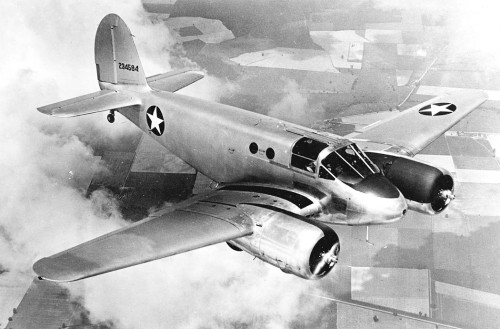
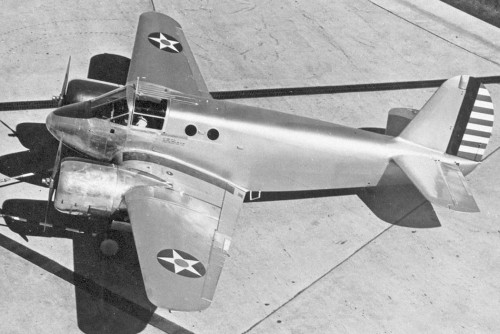
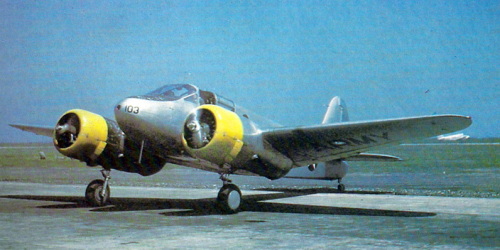
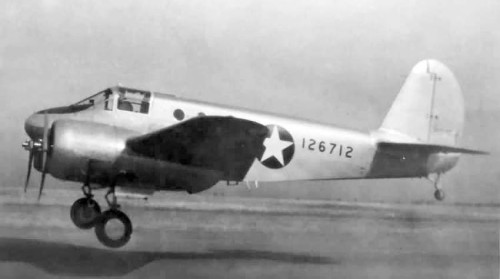
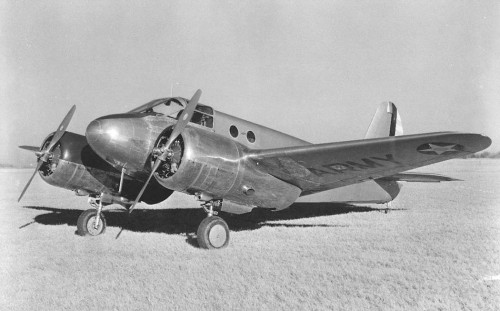
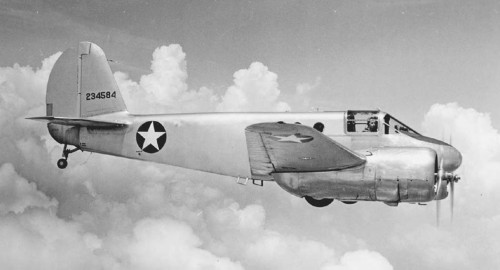
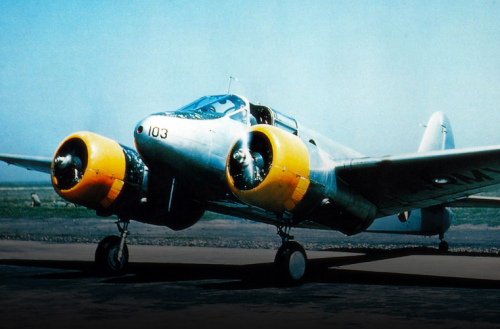
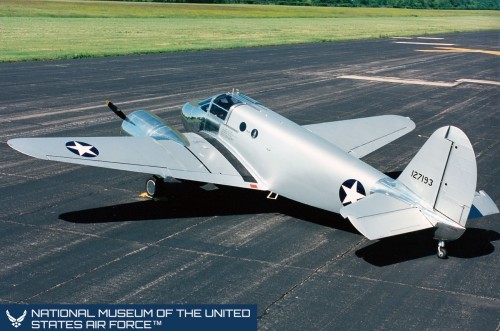
The Beechcraft AT‑10 Wichita emerged from one of the most urgent training bottlenecks of the Second World War: the United States Army Air Corps’ sudden need for a modern, twin‑engine advanced trainer that could prepare pilots for the rapidly expanding fleets of multi‑engine bombers and transports.
By early 1940, the Air Corps recognised that its existing trainers—many of them outdated or single‑engine types—were inadequate for the scale and complexity of wartime pilot production.
The requirement called for a compact, reliable twin‑engine aircraft with retractable landing gear and handling characteristics similar to frontline combat aircraft.
A second, equally important constraint shaped the design: the looming shortage of strategic metals.
Aluminium and magnesium were being consumed at unprecedented rates for combat aircraft production, and the Air Corps insisted that the new trainer be built primarily from non‑strategic materials, especially wood.
Beechcraft responded with the Model 25, a wooden twin‑engine prototype that first flew in 1941 but was lost in a crash during evaluation.
Undeterred, Beech immediately began work on an improved successor, the Model 26, which flew on 19 July 1941 and was quickly accepted for production as the AT‑10 Wichita.
Design Philosophy and Construction
The AT‑10 was one of the most significant American wooden aircraft of the war.
Beechcraft’s engineers, led by T. A. Wells, developed a structure that used wood for nearly all major components, including the wings, fuselage, and tail surfaces.
Only a few areas—such as the engine nacelles, cowling, and cockpit skin—were metal, minimising the use of strategic alloys.
Wooden Innovation
One of the most unusual features was the use of wooden fuel tanks lined internally with synthetic rubber, a creative solution to the metal shortage that nonetheless proved reliable in service.
Layout and Systems
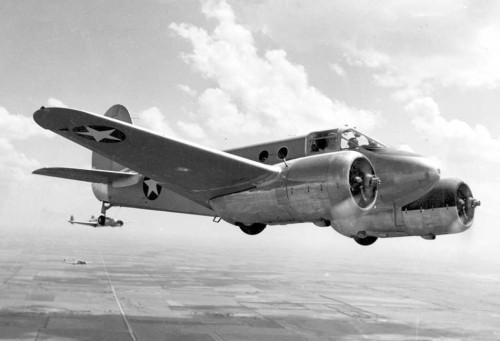
The AT‑10 was a low‑wing monoplane with the following:
Two Lycoming R‑680‑9 radial engines, each producing 295 hp
Retractable conventional landing gear, giving trainees experience with systems similar to operational bombers
Dual controls for instructor and student
An autopilot, unusual for a trainer of its size and era, but valuable for bomber-pilot preparation
The aircraft’s compact dimensions—a 44 ft wingspan and 34 ft length—made it manageable for students while still providing the feel of a multi-engine aircraft.
Flight Characteristics and Training Role
The AT‑10 was designed to replicate the handling qualities of larger aircraft without overwhelming novice pilots.
Its wooden structure kept weight low, while the twin radials provided enough power for realistic multi‑engine training.
Performance figures included:
Maximum speed: ~198 mph (319 km/h)
Cruise speed: ~168 mph (270 km/h)
Range: ~770 miles (1,240 km)
Service ceiling: ~16,900 ft (5,200 m)
These numbers placed it squarely between primary trainers and heavy bomber types, making it ideal for the “intermediate” stage of multi‑engine instruction.
Students learnt:
Engine‑out procedures
Multi‑engine coordination
Retractable-gear operation
Instrument flying
Autopilot use
Crew coordination fundamentals
The AT‑10 became a backbone of the USAAF’s advanced training pipeline, particularly for pilots destined for B‑25, B‑26, B‑17, and B‑24 units.
Production and Industrial Context
The urgency of wartime training meant that AT‑10 production ramped up rapidly.
Deliveries began in February 1942, at a moment when American fortunes were at their lowest ebb in the Pacific and Europe, and the need for trained aircrews was acute.
Beechcraft Production
Beechcraft built 1,771 AT‑10s before ending production in 1943 to focus on other wartime commitments.
Globe Aircraft Corporation
To meet demand, Beech transferred the design and tooling to Globe Aircraft Corporation of Dallas, which produced an additional 600 aircraft, bringing total production to 2,371 units.
This distributed production model mirrored the broader American wartime industrial strategy: decentralise manufacturing, conserve strategic materials, and maximise output.
Variants
Although the AT‑10 programme was relatively short‑lived, it produced a few notable variants:
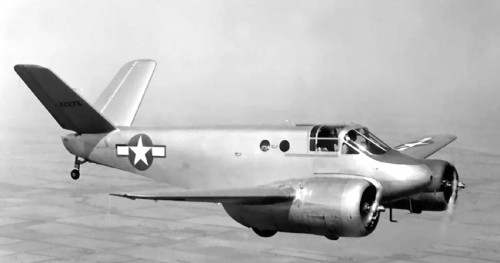
XAT‑10
Prototype and testbed configurations, including at least one aircraft fitted with a V‑shaped tail, are used for aerodynamic experimentation.
AT‑10 (Production Model)
Standard twin‑engine wooden trainer
Equipped with Lycoming R‑680‑9 engines
Used universally across USAAF training commands
No major subvariants were produced beyond these, as the aircraft’s role was tightly defined and its service life relatively brief.
Operational Use in WWII
The AT‑10 served exclusively within the United States Army Air Forces, never seeing combat but playing a crucial role in preparing the crews who would.
By the end of 1942, 748 aircraft were already in service, supporting the massive expansion of bomber and transport units across the USAAF.
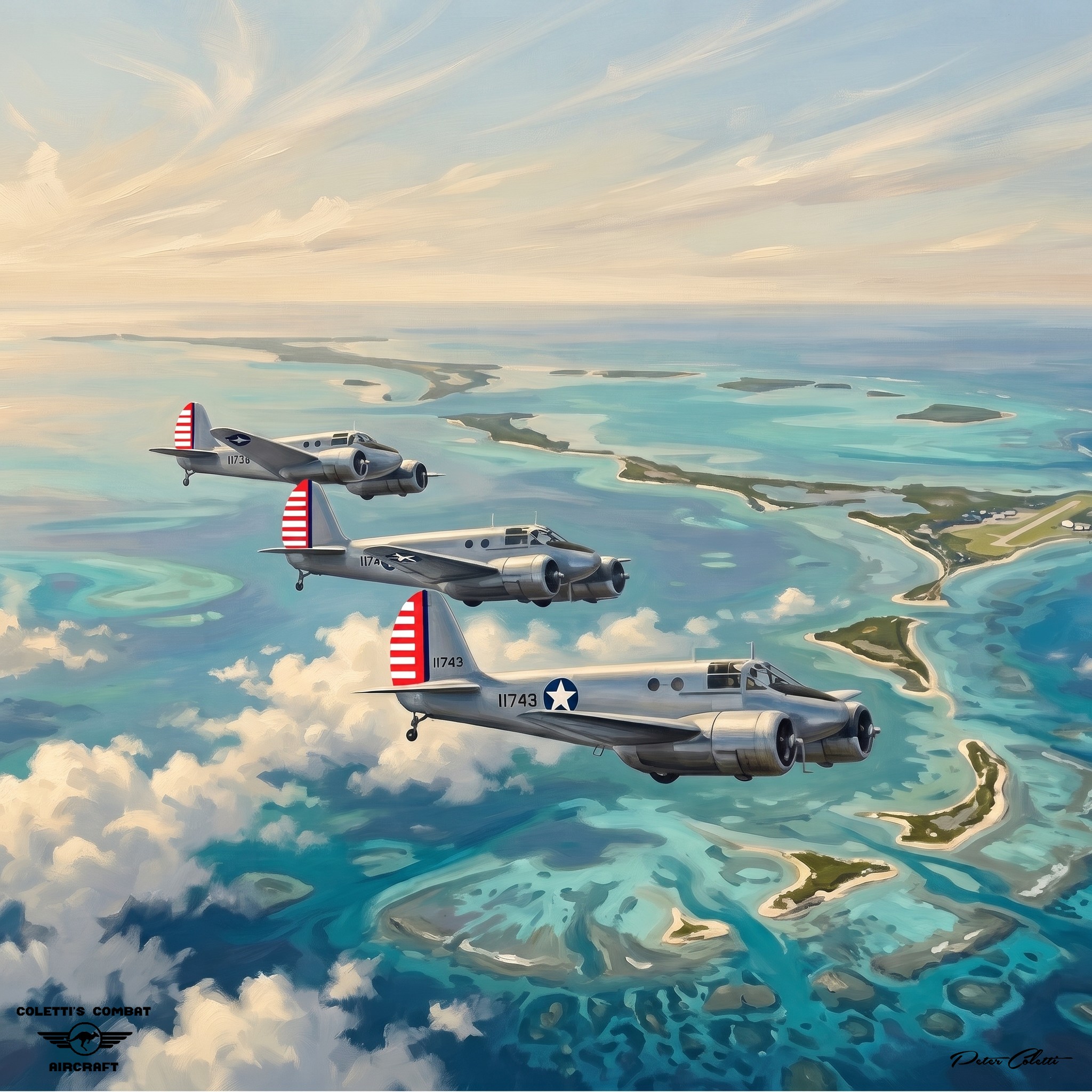
Training bases such as George Field, Illinois, operated large fleets of AT‑10s, often seen in formation flights during advanced training cycles.
The aircraft’s reliability and forgiving handling made it a favourite among instructors, while its systems complexity ensured that pilots transitioned smoothly to operational types.
Postwar Fate and Survivors
With the end of the war and the rapid demobilisation of training infrastructure, the wooden AT‑10 had little long‑term utility.
Wood‑constructed aircraft were not well suited to long‑term storage, and most were scrapped.
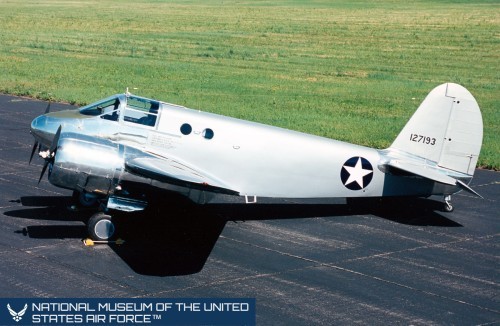
A small number survive today, including the following:
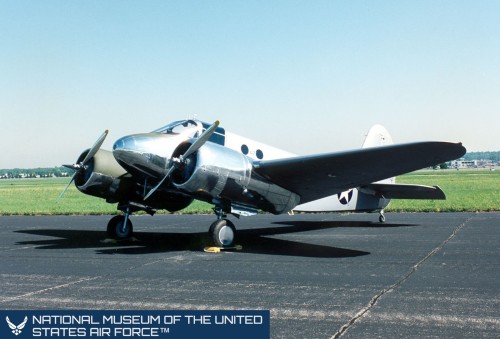
AT‑10 42‑35143, on display at the National Museum of the United States Air Force in Dayton, Ohio
AT‑10 41‑27322, under restoration by AirCorps Aviation for the Cadet Air Corps Museum
These rare survivors highlight the aircraft’s historical importance despite its ephemeral wartime service.
Assessment and Legacy
The Beechcraft AT‑10 Wichita was never glamorous, never armed, and never deployed overseas, but its impact on the USAAF’s wartime capability was profound.
It represented:
A triumph of material‑constrained engineering
A key link in the pilot‑training pipeline
A demonstration of industrial flexibility under wartime pressure
Tens of thousands of American bomber and transport pilots passed through AT‑10 cockpits on their way to operational units.
In this sense, the Wichita was one of the unsung enablers of Allied air power.