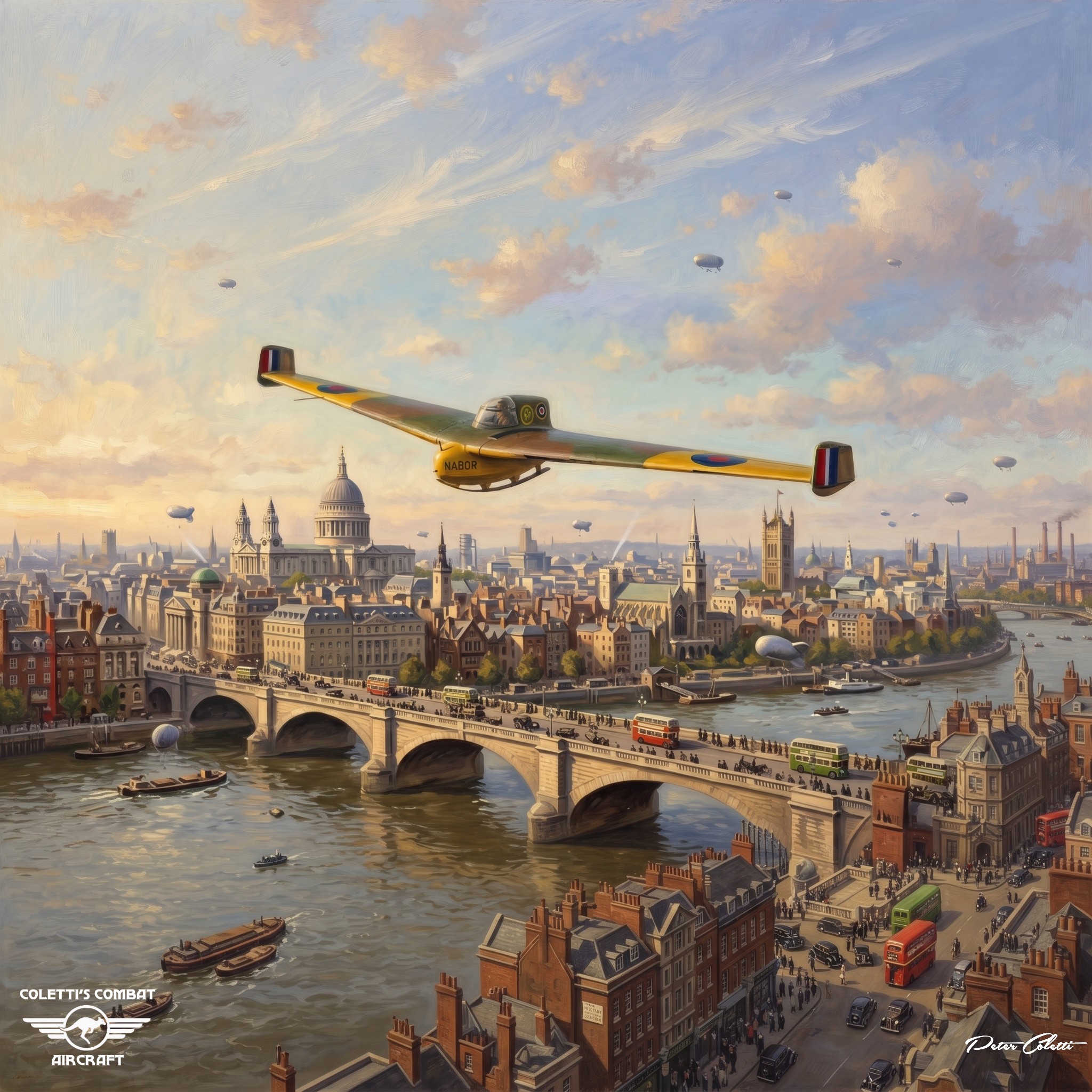
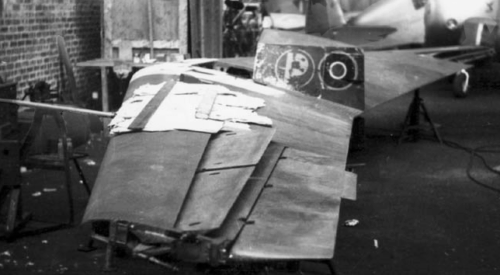
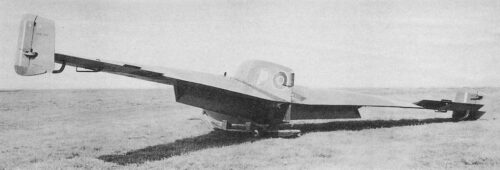
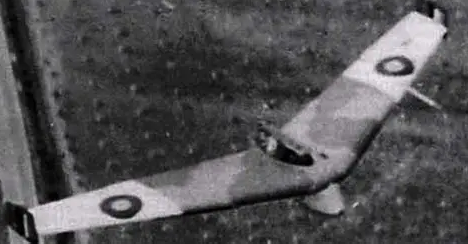
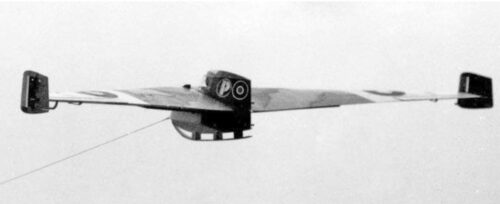
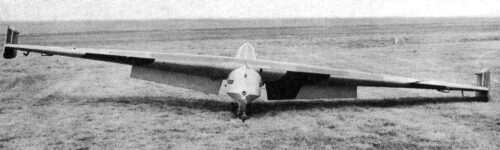
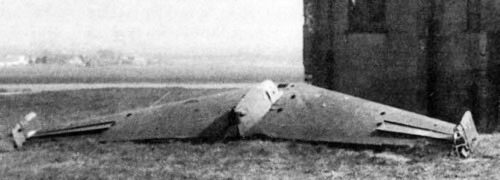
The Baynes Bat emerged from one of the most unusual and ambitious British airborne concepts of the Second World War: the idea of a flying tank.
During the early war years, the English Channel served as Britain’s shield against invasion, but it also became a barrier to British offensive operations on the continent.
As the British Army prepared for future landings in Europe, it faced a critical limitation: existing assault gliders could not carry armoured vehicles, leaving airborne troops without the support of tanks in the first hours of an operation.
By 1941, the need for a method to deliver light armour by air was urgent.
Although the large General Aircraft Hamilcar glider would eventually solve this problem, it did not fly until 1942 and was not yet available in numbers.
This gap encouraged a wave of experimental proposals, including the bold idea put forward by aircraft designer L. E. Baynes: a detachable wing that could turn an existing light tank into a glider capable of being towed into battle.
Baynes called his concept the Carrier Wing Glider, but the name that stuck—thanks to the prototype—was the Baynes Bat.
Concept and Design Philosophy Baynes’ idea was radical even by wartime standards.
Instead of building a large, complex glider with a cargo bay, he proposed attaching a giant, swept flying wing directly to a light tank, such as the Mk VII Tetrarch.
The tank would be towed aloft by a powered aircraft, glide to its landing zone, jettison the wing, and immediately enter combat as a normal armoured vehicle.
Key Design Principles
Flying Wing Configuration
Baynes rejected the conventional glider layout—long straight wings and a fuselage—and instead adopted a tailless flying wing with swept leading and trailing edges.
This promised better aerodynamic efficiency and reduced structural weight.
Minimal Airframe Complexity
The wing would be a bolt‑on kit for the tank, not a standalone aircraft.
This eliminated the need for a fuselage, cargo bay, or landing gear.
Detachable Combat Conversion
Upon landing, the tank crew would release the wing and drive off.
The glider was not intended to be recovered.
High Payload Requirement
The full‑scale wing was designed for a span of about 100 ft (≈30 m) and a payload of 8–8.5 tonnes, matching the weight of a Tetrarch light tank.
Because the concept was so unconventional, the Air Ministry approved only a one‑third‑scale piloted research glider to test the aerodynamics before any full‑scale tank‑carrying version could be considered.
Construction of the Baynes Bat Prototype
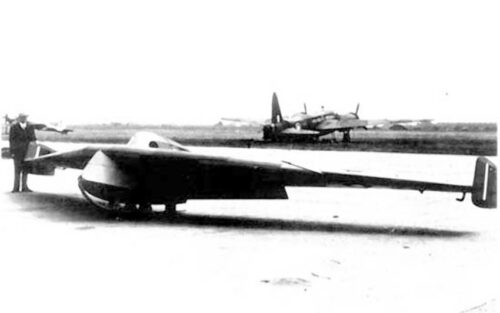
The prototype was built in early 1943 by Slingsby Sailplanes, a company experienced in wooden glider construction.
It was a pure flying wing, with no fuselage and only a small cockpit blister for the pilot.
Structural Features
Materials: Primarily wood with fabric covering, minimising weight and complexity.
Wing Structure:
Two main spars forming the leading edge
Ribs extending aft to a secondary spar at the trailing edge
Control Surfaces:
Large elevons near the wingtips for pitch and roll
Additional flaps on the lower surface near the cockpit
Vertical Stabilisation:
Two large wingtip fins provided yaw stability in the absence of a tailplane.
Landing Gear:
A central skid for landing
A jettisonable two‑wheel dolly for takeoff
Dimensions and Performance (Prototype)
Wingspan: 10.16 m
Length: 2.46 m
Wing Area: 14.86 m²
Empty Weight: 346 kg
Maximum Weight: 437–490 kg
Tow Speed Limit: 145 km/h
Maximum Glide Speed: 193 km/h
Crew: 1 pilot
Flight Testing
The Baynes Bat first flew in July 1943, piloted by the experienced glider and test pilot Robert Kronfeld.
He conducted multiple flights, evaluating stability, control response, and general handling.
The aircraft reportedly carried instrumentation to record aerodynamic data, reflecting its role as a research platform rather than a combat prototype.
Handling Characteristics
General Stability:
Kronfeld found the Bat surprisingly conventional in handling a flying wing.
It responded smoothly to control inputs and was not prone to sudden stalls.
Landing Issues:
Crosswinds posed difficulties; the aircraft could be blown sideways or risk a wingtip strike during touchdown.
Contrasting Opinions:
Test pilot Eric “Winkle” Brown, who also flew the Bat, later described it as unpleasant and difficult to control, highlighting the subjective nature of early flying-wing evaluations.
Despite mixed reviews, the tests proved that Baynes’ aerodynamic ideas were fundamentally sound.
Cancellation of the Carrier Wing Concept
By the time the Baynes Bat completed its trials, the strategic situation had changed:
The Hamilcar glider was now operational, capable of carrying tanks, vehicles, and varied cargo.
Baynes’ concept lacked flexibility—it could carry only a tank, whereas the Hamilcar could carry many types of loads.
The risk of deploying a flying tank was high, and the Army preferred proven, conventional solutions.
The Air Ministry saw no need to fund a full‑scale prototype.
Thus, by late 1943, the Carrier Wing project was formally abandoned, and no tank‑carrying version of the Baynes Bat was ever built.
Post‑War Research Role
Although the military application was dead, the prototype survived thanks to the interest of the Royal Aircraft Establishment (RAE).
The RAE used the Bat as a flying laboratory to study flying-wing stability, control systems, and stall behaviour—topics that would later influence British and international research into tailless aircraft.
The Bat reportedly underwent modifications during this period and may have suffered minor accidents requiring repair.
It remained in use into the mid‑1940s and was last seen stored at Croydon airfield in 1958.
Its ultimate fate is unknown; it was likely scrapped sometime thereafter.
Assessment and Legacy
The Baynes Bat occupies a unique place in aviation history:
It was one of the earliest practical British flying wings.
It represented a creative solution to airborne armour deployment, even if ultimately unnecessary.
Its research contributions helped refine understanding of tailless aircraft behaviour.
It stands as a symbol of wartime innovation—bold, unconventional, and technically daring.
Although it never carried a tank into battle, the Baynes Bat remains one of the most intriguing experimental gliders of the Second World War.