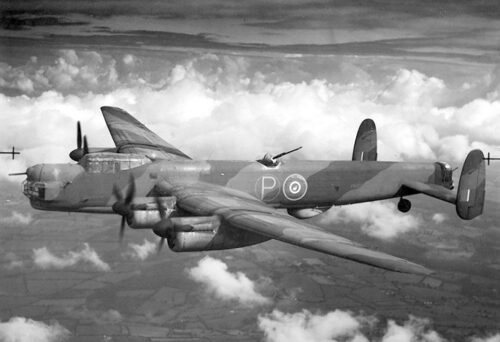
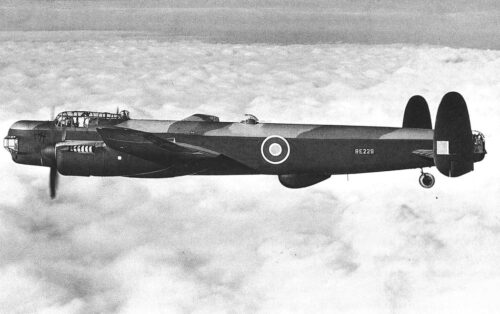
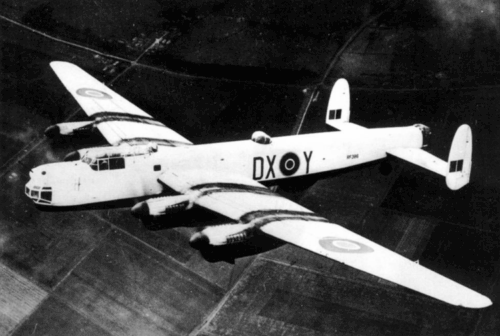
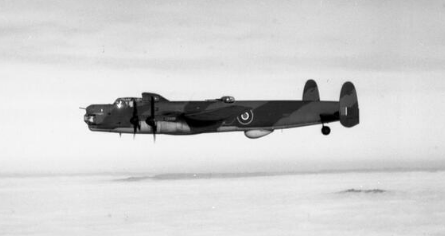
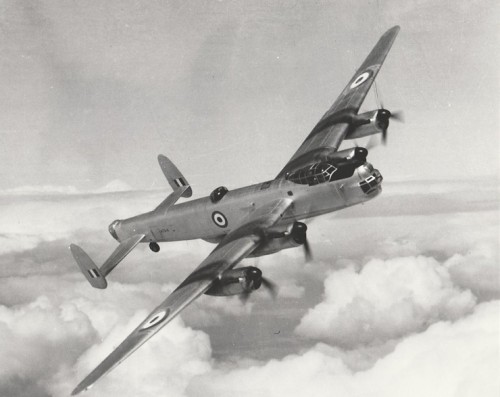
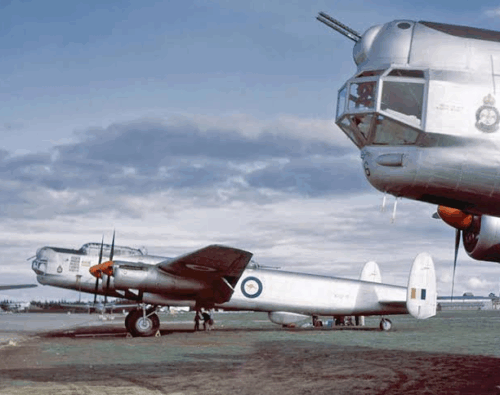
The Avro Lincoln emerged from the final years of the Second World War, when the Royal Air Force recognised that its existing heavy bombers—particularly the Avro Lancaster—lacked the range needed for projected operations in the Pacific theatre.
By 1942, the RAF anticipated a prolonged campaign against Japan, one that would require long‑range, high‑altitude bombing capability beyond what the Lancaster could provide.
This requirement was formalised in Air Ministry Specification B.14/43, calling for an improved heavy bomber with greater range, payload, and altitude performance.
Avro’s chief designer Roy Chadwick responded with a significantly enlarged and refined development of the Lancaster, initially designated Lancaster IV and V.
These prototypes incorporated a longer fuselage, new high‑aspect‑ratio wings, and two‑stage supercharged Merlin engines.
As the design diverged further from the Lancaster, the Air Ministry reclassified it as a new aircraft type: the Avro Type 694 Lincoln.
The first prototype flew on 9 June 1944, too late to influence the European war but early enough for the RAF to plan its integration into Tiger Force, the Commonwealth strategic bomber group intended for operations against Japan.
The war ended before Lincoln could see WWII combat, but production continued into the postwar years.
Design and Technical Characteristics
Airframe and Aerodynamics
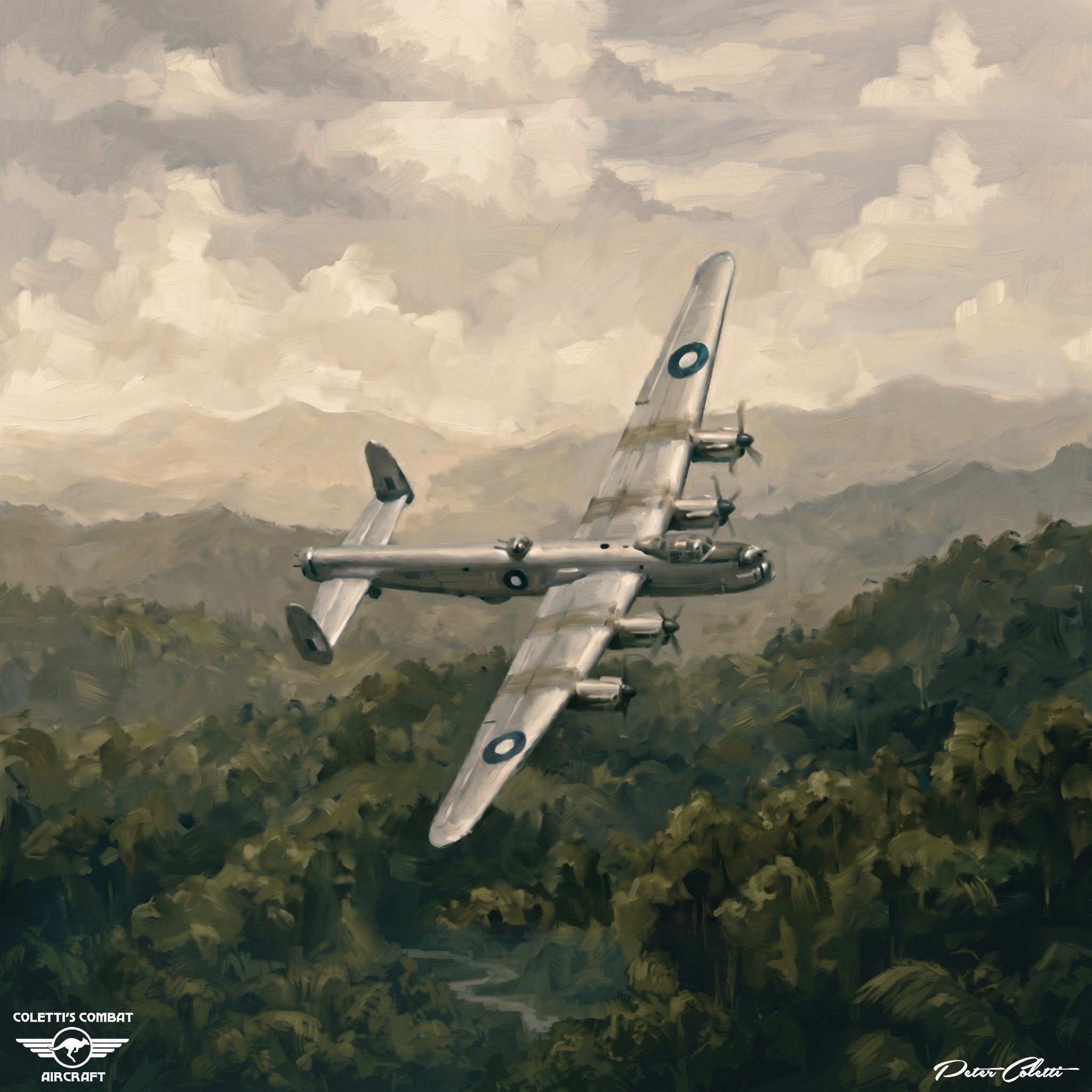
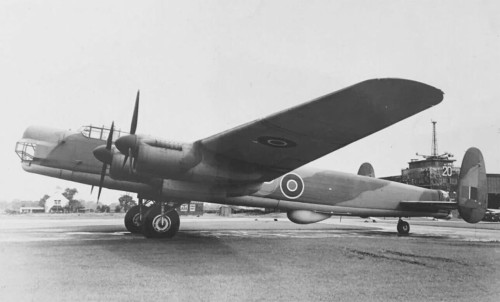
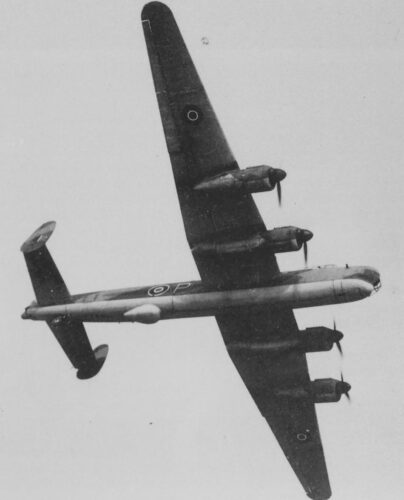
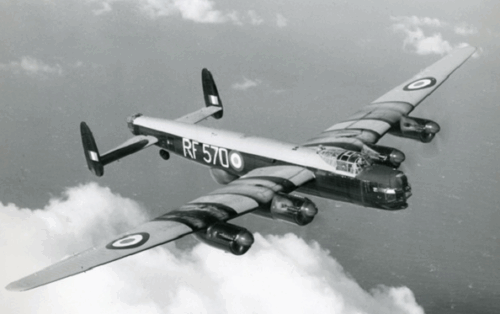
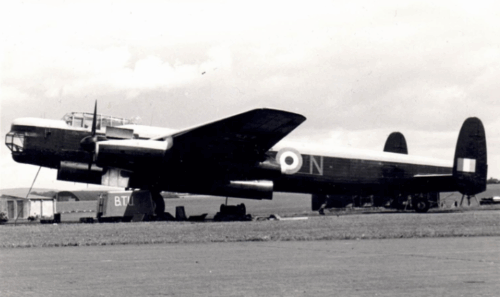
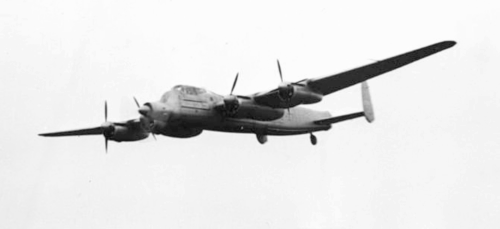
The Lincoln retained the Lancaster’s general configuration but was substantially enlarged and strengthened.
Its fuselage was lengthened by roughly 2 metres, improving internal space, crew accommodation, and longitudinal stability.
The nose section was redesigned into a distinctive two‑level arrangement: a lower glazed compartment for the bomb‑aimer and an upper position for a remotely operated turret.
This configuration improved visibility and aerodynamics.
The wings were completely new, featuring:
A 120‑ft (37 m) span, significantly greater than the Lancaster’s
A higher aspect ratio for improved high-altitude performance
A five‑piece structure with detachable outer panels
Revised ailerons split into two sections per wing
The tail unit was largely inherited from the Lancaster, as the longer fuselage naturally improved trim and stability.
Powerplant
Production Lincolns used various versions of the Rolls‑Royce Merlin:
Merlin 85 (two‑stage supercharged)
Packard‑Merlin 68/68A (U.S.‑built equivalents)
Each engine produced roughly 1,750 hp, driving four‑bladed Rotol or de Havilland Hydromatic propellers.
These engines gave the Lincoln an improved climb rate and slightly higher maximum speed than the Lancaster, though its service ceiling was marginally lower.
Crew and Systems
A typical Lincoln crew numbered seven:
Pilot and co-pilot/flight engineer
Navigator
Bomb aimer/front gunner
Wireless operator
Dorsal and tail gunners
The aircraft carried advanced navigation and bombing aids for its era, including H2S radar, LORAN, Rebecca Mk.II, and Gee Mk. II.
An F.24 camera allowed post‑strike reconnaissance.
Tail turret: 2 × 0.50 in Brownings (some early aircraft used 4 × .303 FN.121 guns)
The bomb load reached 22,000 lb, including large weapons such as the 4,000 lb “Cookie” or even the 22,000 lb Grand Slam on specially prepared aircraft.
Performance (Lincoln I)
Max speed: ~310 mph (500 km/h) at 18,300 ft
Cruise speed: ~215 mph
Range: up to 4,450 miles with reduced bomb load
Service ceiling: ~30,500 ft
Rate of climb: ~800 ft/min
These figures made the Lincoln the RAF’s most capable piston‑engined bomber.
Production and Entry into Service
Production was undertaken by:
Avro (Chadderton and Woodford)
Metropolitan-Vickers
Armstrong Whitworth
A total of 604 Lincolns were built.
The first production aircraft appeared in February 1945, and by late 1945 the type began equipping RAF squadrons, replacing Lancasters in the UK’s postwar bomber force.
Although thousands had been planned for the Pacific War, Japan’s surrender led to mass cancellations.
Nevertheless, the Lincoln became the RAF’s principal heavy bomber until the arrival of the jet‑powered V‑bombers (Valiant, Victor, and Vulcan).
Operational History
RAF Service
The Lincoln never saw WWII combat, but it became central to Britain’s postwar operations:
Malayan Emergency (1948–1960): Lincolns flew over 3,000 sorties, dropping the majority of bombs used by Commonwealth forces against communist insurgents.
Mau Mau Uprising (Kenya): Conducted bombing operations from Eastleigh airfield.
Middle East policing: Flew reconnaissance and border patrols during the Buraimi dispute and early Aden Emergency.
Cold War training: Participated in major exercises such as “Sunray”, “Popcorn”, and “Bulldog”, which revealed the vulnerability of piston bombers to jet interceptors.
A notable incident occurred on 12 March 1953, when Lincoln RF531 was shot down by Soviet MiG‑15s near Lüneburg while flying a reconnaissance mission to Berlin.
The RAF retired its last Lincolns in 1963.
Royal Australian Air Force
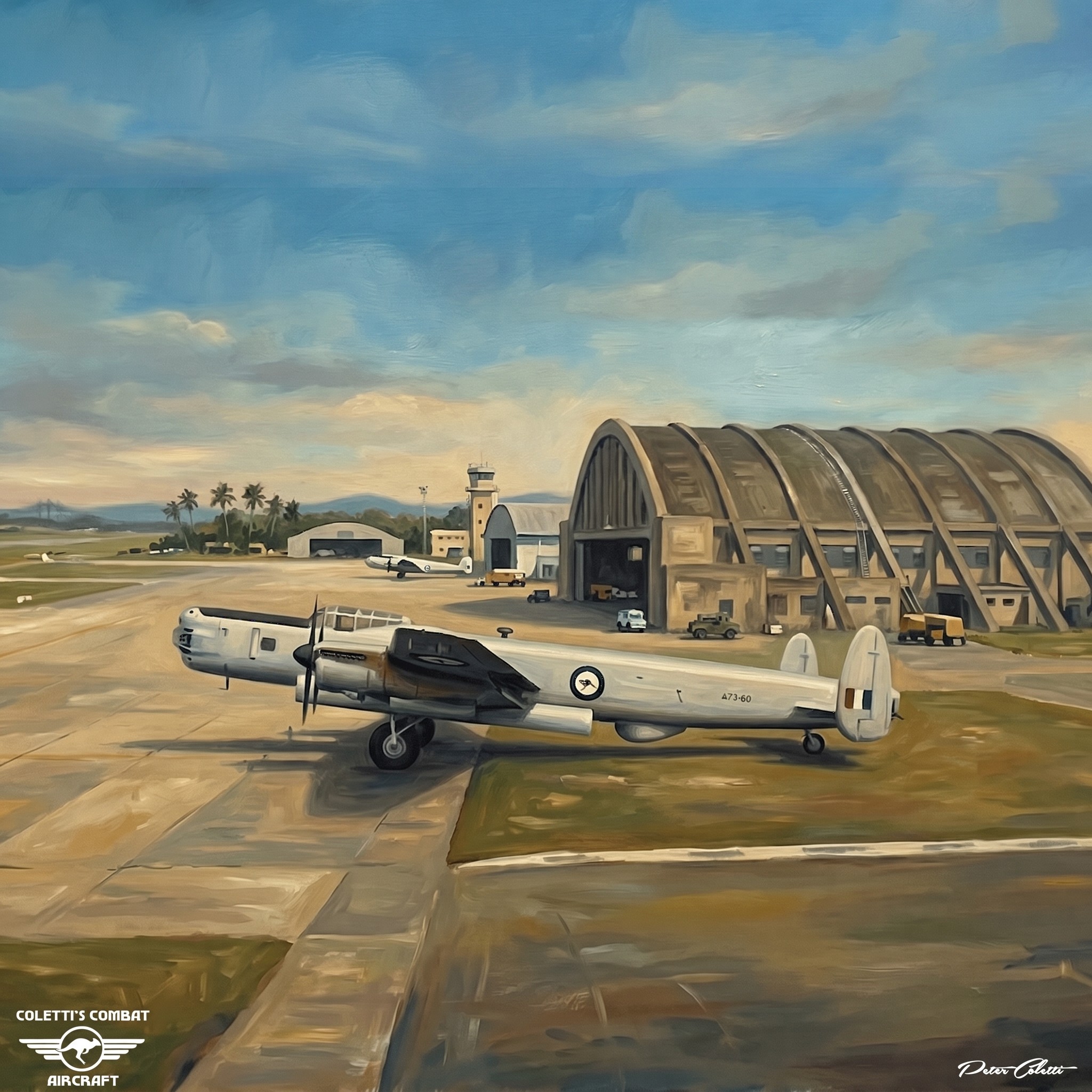
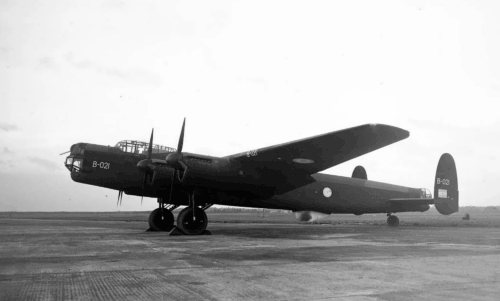
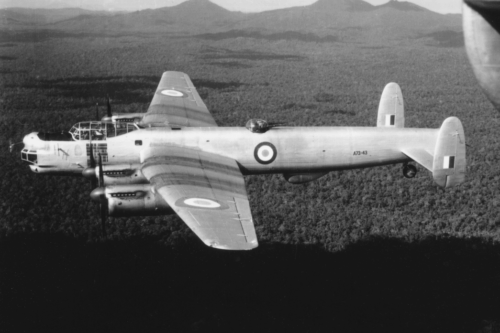
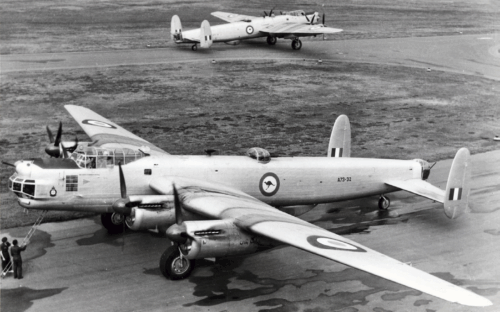
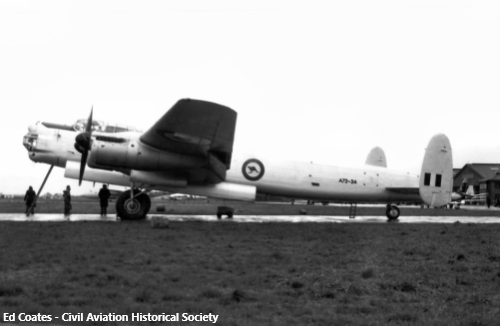
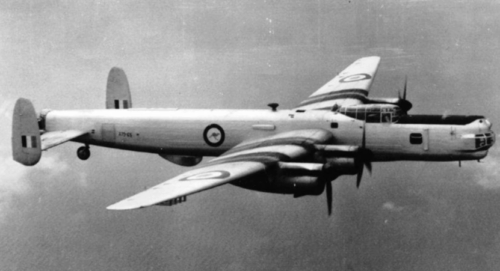
Australia built its own Lincolns (Mk 30, 30A, 31), the largest aircraft ever manufactured in the country at the time.
They served in:
82 Wing (from 1946)
Malayan Emergency (alongside RAF units)
Maritime patrol and ASW (Mk 31 with extended nose and new sensors)
Corrosion issues led to their retirement by 1961.
Argentine Air Force
Argentina operated 30 Lincolns, giving it the most powerful bomber force in South America.
They were used in:
Internal security operations (1951 and 1955 coups)
Antarctic supply missions, including the modified Cruz del Sur Lincolnian transport variant
The last Argentine Lincolns were retired in 1967, the final military operators worldwide.
Variants
RAF Variants
Lincoln I: Initial production model with Merlin 85 engines.
Lincoln II: Main production version with Merlin 66/68/300 engines.
Lincoln III: Proposed ASW variant; evolved into the Avro Shackleton.
Lincoln IV: Lincoln II re‑engined with Merlin 85.
Lincoln U.5: Drone conversion for weapons testing.
Australian Variants
Mk 30: Locally built bomber version.
Mk 30A: Improved model with Merlin 102 engines and longer nose.
Mk 31 / MR 31: Maritime reconnaissance/ASW versions with extended nose and specialised sensors.
Civil and Experimental
Avro 695 Lincolnian: Transport conversion with Lancastrian nose/tail.
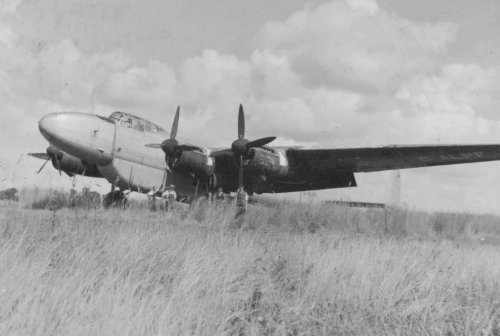
Numerous engine testbeds for Python, Proteus, Theseus, Tyne, Naiad, Nomad, and others—often with experimental nose-mounted powerplants.
Assessment and Legacy
The Avro Lincoln stands as the last piston‑engined heavy bomber to serve with the RAF.
Although conceived for WWII, it became instead a transitional aircraft—bridging the gap between wartime designs and the jet‑powered strategic bombers of the Cold War.
Its significance lies in the following:
Demonstrating the limits of piston‑engined heavy bombers in the jet age
Providing the RAF and Commonwealth forces with a capable long‑range bomber during the turbulent postwar years
Serving as the technological foundation for the Avro Shackleton maritime patrol aircraft
Acting as a versatile testbed for Britain’s emerging jet and turboprop engine programmes
While overshadowed by the Lancaster’s wartime fame and the V‑bombers’ Cold War prominence, the Lincoln played a crucial role in the RAF’s evolution and in several major postwar conflicts.