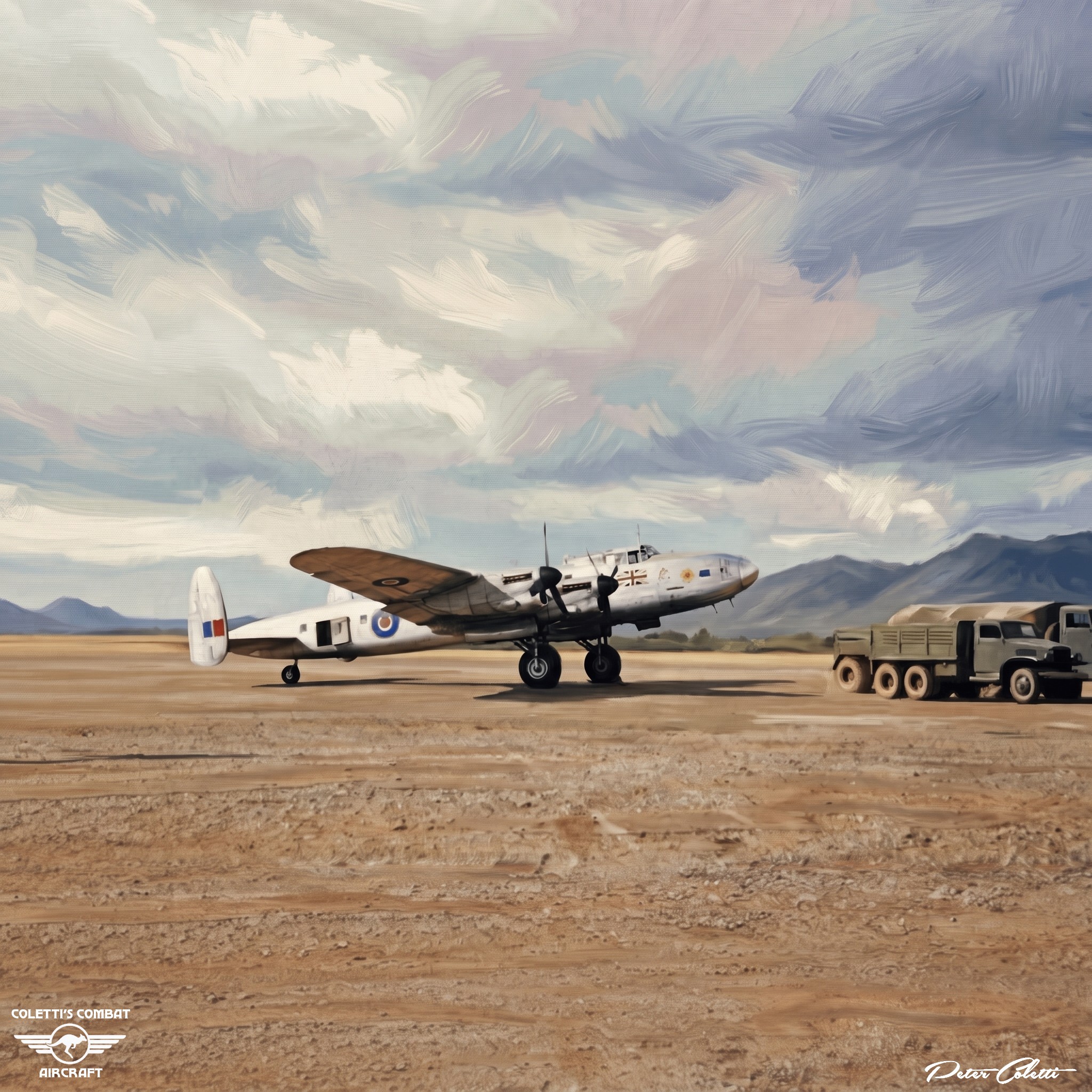
The Avro 691 Lancastrian emerged during the final years of the Second World War as a pragmatic response to a global shortage of long‑range civil transports.
Rather than designing a new airliner from scratch, Avro and its Canadian partner Victory Aircraft adapted the proven Avro Lancaster heavy bomber into a fast, long‑range passenger and mail aircraft.
The Lancaster’s robust structure, high aspect‑ratio wing, and powerful Rolls‑Royce Merlin engines made it an ideal foundation for a stopgap civil transport capable of bridging continents at a time when civilian aviation was only beginning to recover from wartime disruption.
The first step towards the Lancastrian occurred in Canada in 1943, when Victory Aircraft converted a Lancaster Mk. X for Trans‑Canada Airlines (TCA).
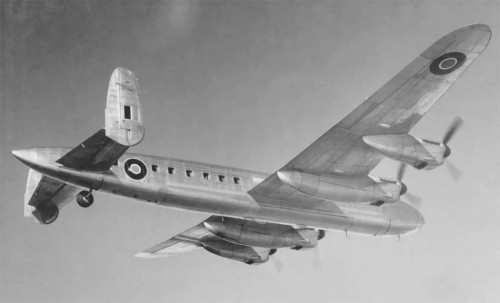
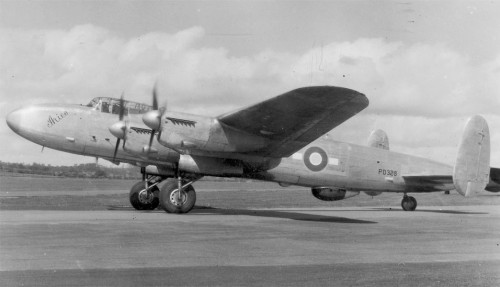
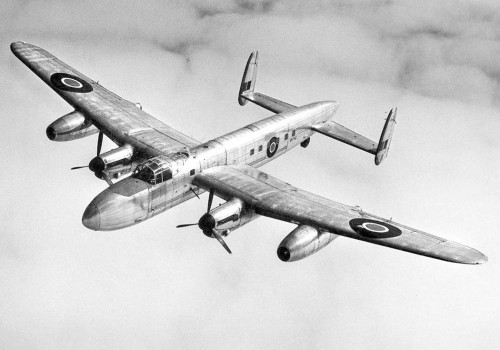
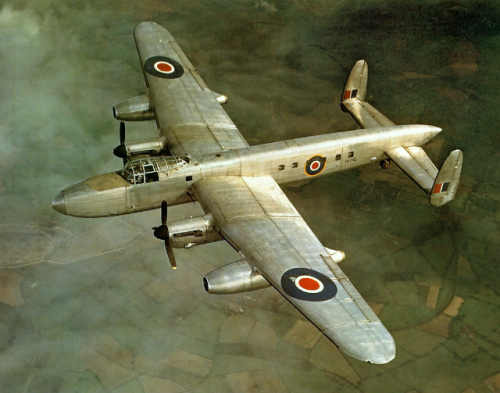
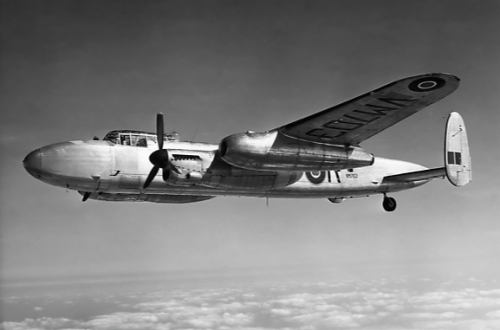
Armour, armament, and all gun turrets were removed, replaced by streamlined fairings and a lengthened, smooth nose and tail cone.
Additional fuel tanks were installed in the bomb bay, dramatically increasing range.
The conversion proved successful enough that TCA ordered further aircraft, and the type inaugurated a Canadian government transatlantic mail service in July 1943, carrying four tonnes of mail across the North Atlantic in a single flight.
The British Air Ministry quickly recognised the value of such a conversion.
With the war ending and demand for rapid intercontinental travel rising, Avro began converting unfinished Lancaster airframes into dedicated transports.
These aircraft were designated Avro Type 691 Lancastrian, and the first British‑built examples entered service in early 1945.
Design Characteristics
Although unmistakably derived from the Lancaster, the Lancastrian differed in several key respects:
Fuselage Modifications
All defensive turrets were removed and faired over with smooth metal caps.
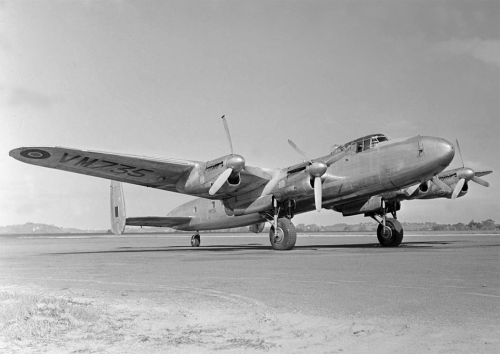
A new, fully streamlined nose replaced the bomber’s stepped cockpit glazing.
The tail turret was replaced by an elongated tail cone.
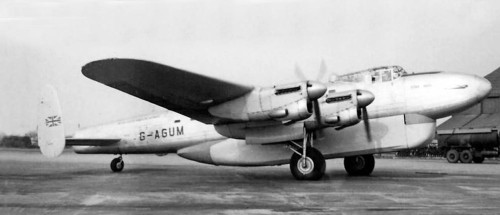
Passenger windows were added along the fuselage sides.
The bomb bay was repurposed to house large auxiliary fuel tanks, significantly extending range.
These changes reduced drag, increased internal volume, and transformed the aircraft’s appearance from a wartime bomber into a sleek, high‑speed transport.
Powerplant and Systems
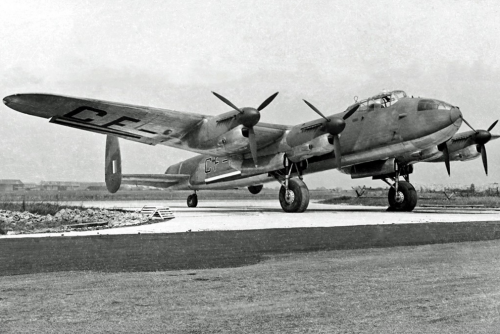
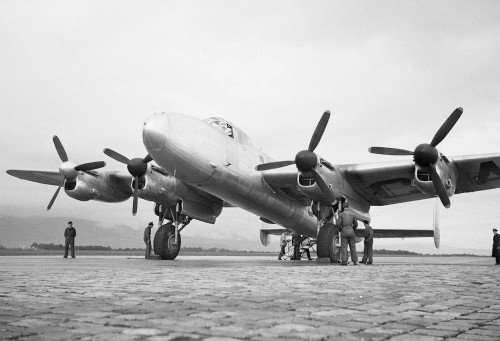
The Lancastrian retained the Lancaster’s four Rolls‑Royce Merlin engines—typically Merlin 24/2 or Packard‑built Merlin 38 variants in Canadian conversions.
These engines provided excellent reliability and high‑altitude performance, enabling the aircraft to cruise at speeds competitive with early postwar airliners.
Cabin Layout
Despite its size, the Lancastrian could carry only a modest number of passengers—typically 9 to 13, depending on the variant.
This limitation stemmed from the Lancaster’s internal architecture, which had been designed around dispersed crew stations rather than a continuous passenger cabin.
The aircraft excelled in carrying mail, freight, and VIP passengers rather than large civilian loads.
Performance
The Lancastrian’s performance was exceptional for its era:
Maximum speed: approx. 315 mph (507 km/h)
Cruise speed: around 290 mph (470 km/h)
Range: up to 4,100 miles (6,600 km), depending on payload
Service ceiling: roughly 24,000 ft
These figures made it one of the fastest long‑range transports of the immediate postwar period.
Operational History
BOAC and Commonwealth Routes
British Overseas Airways Corporation (BOAC) was the primary early operator.
Beginning in 1945, BOAC used the Lancastrian on routes linking the United Kingdom with Australia, New Zealand, and South Africa.
On 23 April 1945, a Lancastrian (G‑AGLF) completed a record‑setting flight from England to Auckland in just over three and a half days, demonstrating the type’s long‑range capability.
Qantas and Trans-Pacific Service
Qantas operated Lancastrians on Commonwealth routes, including the famous “Kangaroo Route”.
Although the aircraft’s economics were marginal, its speed and range made it valuable during the transitional years before purpose‑built airliners such as the Lockheed Constellation became widely available.
British South American Airways (BSAA)
BSAA employed the Lancastrian on South Atlantic routes.
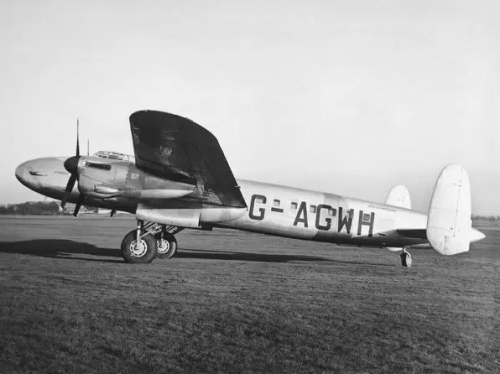
These operations were troubled by several accidents, including the disappearance of G‑AGWH “Star Dust” in the Andes in 1947—a mystery unsolved for decades.
Berlin Airlift
During the 1948–49 Berlin Airlift, 15 Lancastrians flew more than 5,000 sorties, transporting petrol and diesel fuel into the blockaded city.
Their ability to carry over 11,000 litres of fuel per flight made them valuable contributors to the operation.
Military Use
The Royal Air Force operated several variants as transports, designated Lancastrian C.1, C.2, and C.4, serving in communications and long‑range transport roles.
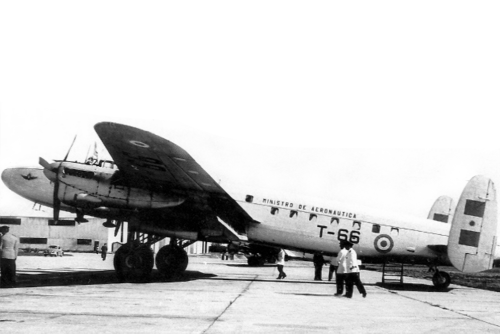
Argentina also operated military Lancastrians into the early 1960s.
Engine Test-Bed Conversions
One of the Lancastrian’s most significant contributions to aviation came through its use as a flying testbed for early jet and turboprop engines.
Its strong airframe and four‑engine layout allowed engineers to install experimental powerplants while retaining safe flight characteristics.
Notable testbed configurations included:
Nene‑Lancastrian: fitted with two Rolls‑Royce Nene turbojets; performed the world’s first international all‑jet passenger flight (London–Paris, November 1946).
Ghost-Lancastrian: used to test de Havilland Ghost engines for the Comet airliner.
Avon‑Lancastrian: tested early Rolls‑Royce Avon turbojets.
Lancastrian 3 Thirteen-seat civil transport for BSAA; 18 built.
Lancastrian C.4 Ten‑ to thirteen‑seat RAF transport; eight built.
Accidents and Incidents
The Lancastrian’s operational history included several notable accidents:
G‑AGLX lost over the Indian Ocean in March 1946.
G‑AGWH “Star Dust” disappeared in the Andes in 1947 and was later found to have crashed due to navigational error influenced by the jet stream.
T‑102 of the Argentine Air Force crashed in 1960, the deadliest Lancastrian accident.
In total, 23 hull‑loss accidents occurred between 1946 and 1964.
Assessment and Legacy
The Avro Lancastrian was never intended as a long‑term solution for civil aviation.
Its limited passenger capacity and high operating costs made it economically uncompetitive once purpose‑built airliners became available.
Yet its significance lies in its timing: it provided the speed, range, and reliability needed to re‑establish global air routes immediately after WWII.
Moreover, its role as a jet engine testbed directly influenced the development of the world’s first jet airliners, including the de Havilland Comet.
In this sense, the Lancastrian served as a bridge between wartime heavy bombers and the dawn of the Jet Age.
Although only 91 were built, the Lancastrian left an outsized legacy—an aircraft born of wartime necessity that helped shape the future of long‑range civil aviation.