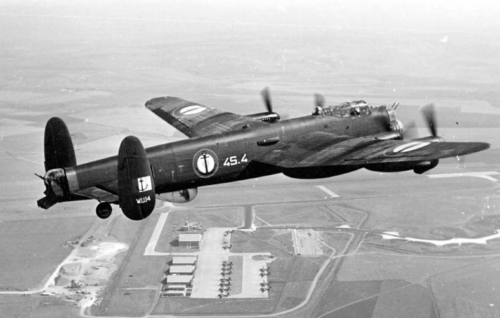
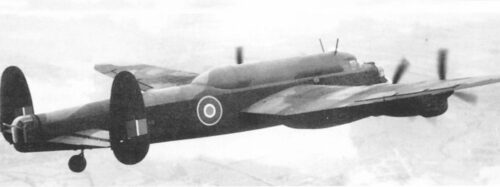
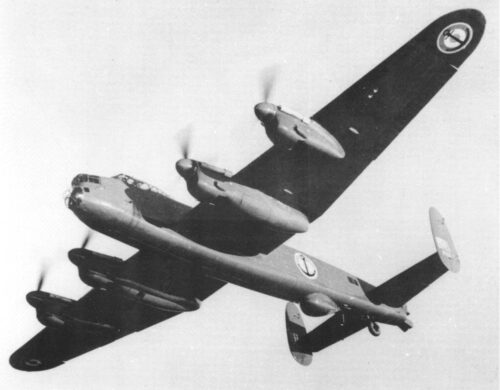
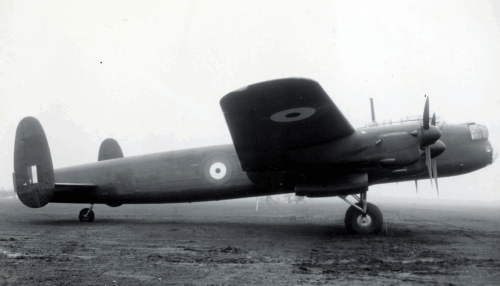
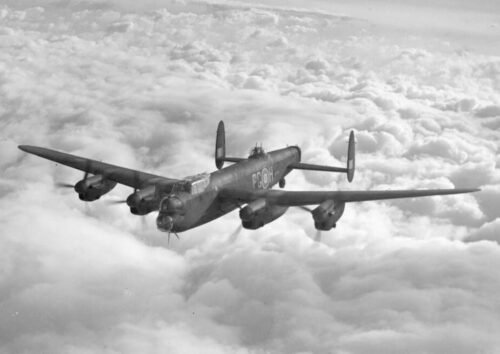
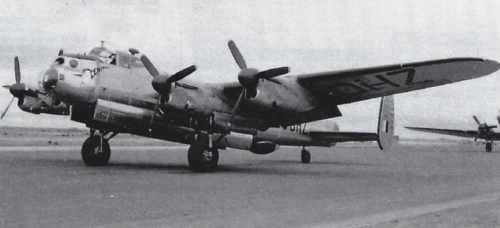
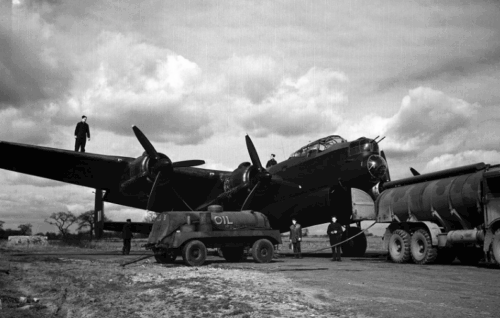
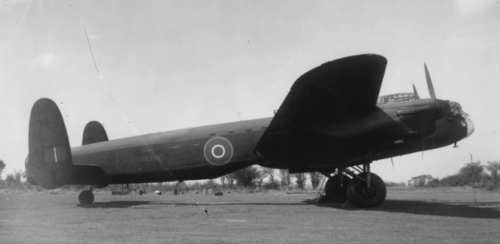
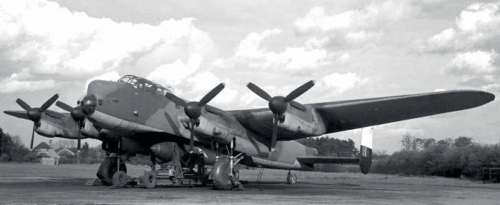
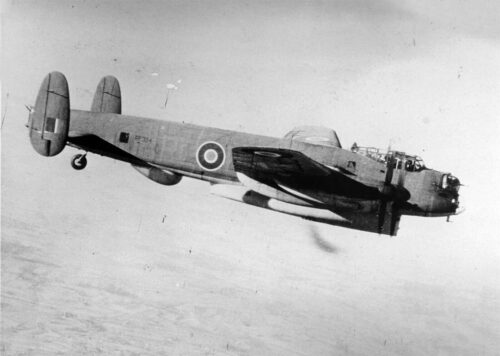
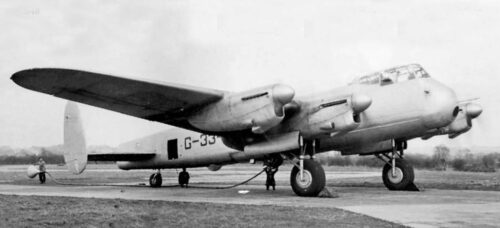
The Avro Lancaster emerged from a period of intense reassessment within the Royal Air Force’s bomber programme.
In 1937–38, the RAF sought a new generation of medium and heavy bombers capable of carrying larger payloads over greater distances than the existing twin‑engine designs.
Avro’s initial response was the Manchester, a twin‑engine bomber powered by Rolls‑Royce Vulture engines.
Although aerodynamically promising, the Manchester was plagued by chronic engine unreliability and insufficient power, resulting in poor service performance and high loss rates.
Recognising that the airframe itself was fundamentally sound, Avro’s chief designer Roy Chadwick proposed a radical re‑engineering: replace the two Vultures with four Rolls‑Royce Merlin engines.
This change transformed the aircraft’s potential.
The new prototype, initially designated Manchester Mk. III, first flew on 9 January 1941.
Its performance was so superior that it was quickly renamed Lancaster and rushed into production.
The Lancaster entered operational service with No. 44 Squadron in early 1942.
Its arrival coincided with the RAF Bomber Command’s shift towards large‑scale night bombing campaigns, and the aircraft rapidly became the backbone of Britain’s strategic bombing force.
Airframe and Structural Design
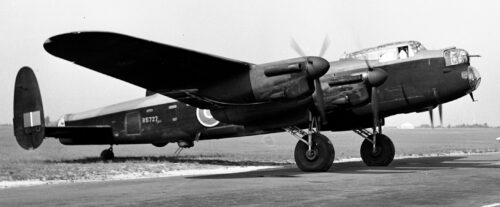
The Lancaster’s design philosophy emphasised simplicity, robustness, and adaptability.
Fuselage
A long, slab‑sided fuselage with a high internal volume.
A continuous bomb bay running nearly the full length of the centre fuselage, allowing unprecedented payload flexibility.
Semi-monocoque construction using aluminium alloy frames and skin.
Wings
A mid-mounted, straight wing with a large span and thick root chord.
The wing housed four Merlin engines, fuel tanks, and the main landing gear.
High lift characteristics enabled heavy takeoff weights and stable low‑speed handling.
Tail Unit
A twin-fin and rudder arrangement mounted on a broad tailplane.
Provided excellent directional stability, especially important for night operations and asymmetric thrust scenarios.
Landing Gear
Conventional tail‑dragger configuration.
Wide‑track main gear for stability on rough wartime airfields.
The Lancaster’s structural strength allowed it to absorb battle damage and still return home, a trait frequently cited by crews.
Powerplant and Performance
Engines
Most Lancasters were powered by four Rolls‑Royce Merlin XX, 22, or 24 engines, each producing roughly 1,250–1,640 hp depending on variant.
Later Canadian-built aircraft used Packard-built Merlins.
A small number of late‑war variants used Bristol Hercules radial engines due to Merlin shortages.
Performance Characteristics
Maximum speed: ~275–287 mph (440–462 km/h) at altitude.
Cruise speed: ~210 mph (338 km/h).
Range: ~1,500–2,500 miles depending on bomb load and fuel configuration.
Service ceiling: ~24,000 ft (7,300 m), though operational altitudes were often lower.
The Lancaster was not the fastest bomber of the war, but its combination of range, altitude, and payload made it exceptionally effective.
Armament and Bomb Load
Defensive Armament
Standard configuration:
Nose turret: 2 × .303 Browning machine guns.
Dorsal turret: 2 × .303 Brownings.
Tail turret: 4 × .303 Brownings.
Ventral turret: Rarely fitted; some aircraft used improvised ventral guns.
While adequate early in the war, the .303 calibre became increasingly insufficient against late-war German fighters.
Bomb Load
The Lancaster’s defining feature was its massive bomb bay, capable of carrying:
Up to 14,000 lb (6,350 kg) in standard configuration.
Modified bays allowed 22,000 lb (10,000 kg) “Grand Slam” bombs.
The aircraft could carry the 4,000 lb “Cookie”, 8,000 lb, and 12,000 lb blast bombs.
Specialised versions carried Upkeep bouncing bombs for the Dambusters raid.
No other Allied bomber matched the Lancaster’s ability to carry such oversized ordnance.
Operational Use and WWII Context
The Lancaster became the principal instrument of RAF Bomber Command’s strategic bombing campaign against Germany.
It flew more than 156,000 sorties and dropped over 600,000 tonnes of bombs, representing the majority of the RAF’s heavy bomber tonnage.
Night Bombing Doctrine
The RAF, unable to sustain daylight losses, adopted night bombing.
The Lancaster’s stable handling, long range, and large payload made it ideal for this role.
It participated in:
The Battle of the Ruhr
The bombing of Hamburg (Operation Gomorrah)
The Berlin campaign
Attacks on industrial centers, transportation networks, and oil facilities
Special Operations
The Lancaster was central to several famous precision missions:
Operation Chastise (Dambusters Raid), May 1943
Modified Lancasters of No. 617 Squadron used Barnes Wallis’s Upkeep bouncing bombs to breach the Möhne and Eder dams.
Attacks on the Tirpitz
Lancasters delivered Tallboy bombs that ultimately crippled and sank the German battleship.
Grand Slam operations
The 22,000‑lb Grand Slam earthquake bomb was used against hardened targets such as viaducts and submarine pens.
Losses and Crew Experience
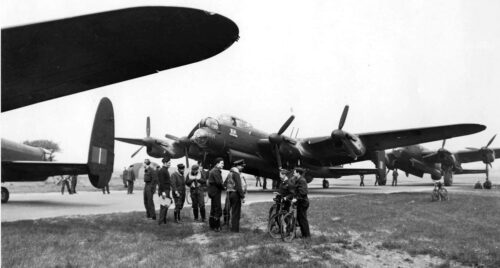
Lancaster crews faced formidable defences: night fighters, radar‑directed flak, and searchlights.
Despite its durability, the Lancaster suffered heavy losses—over 3,200 aircraft were lost in action.
Crews often spoke of the aircraft’s forgiving handling and its ability to bring them home even when severely damaged.
Variants
Lancaster Mk. I Primary production model.
Powered by Rolls‑Royce Merlin engines.
Featured Frazer-Nash turrets.
Lancaster Mk. III
Essentially identical to the Mk. I powered by Packard-built Merlins.
Produced in large numbers.
Lancaster Mk.X
Canadian‑built version.
Packard Merlins, Canadian/US instrumentation, and minor structural differences.
Lancaster Mk.II
Powered by Bristol Hercules radial engines.
Produced in limited numbers due to inferior high-altitude performance.
Special Variants
Type 464 (Dambuster): modified for upkeep bombs; removed mid‑upper turret; added special bomb‑spinning mechanism.
Tallboy/Grand Slam carriers: Modified bomb bays, strengthened structures, and often removed turrets to reduce weight.
ASR (Air-Sea Rescue): Carried lifeboats and survival equipment.
Postwar Service and Legacy
After 1945, the Lancaster continued in RAF service in roles including:
Maritime patrol
Photo‑reconnaissance
Transport
Testbed for engines and radar
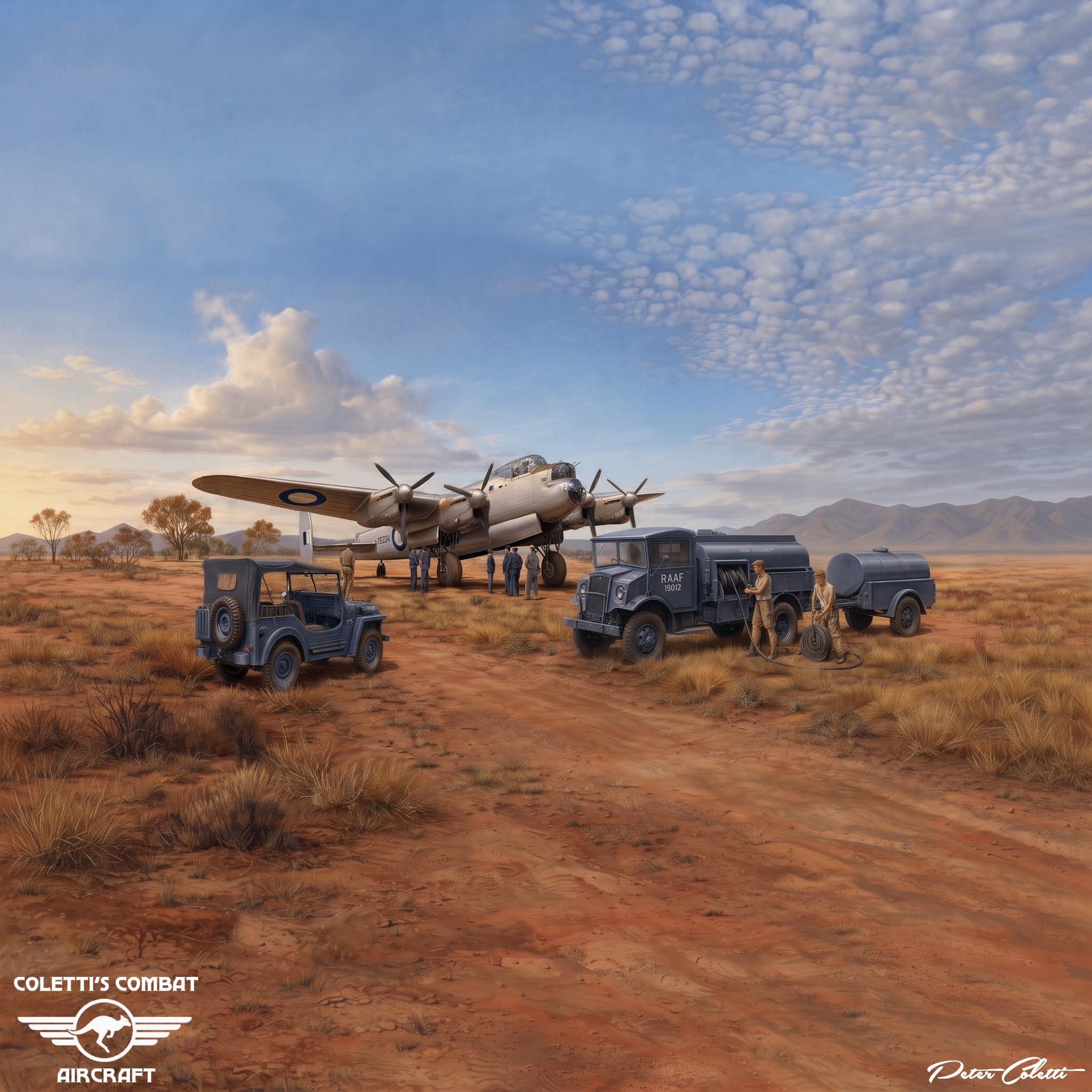
It served with several air forces, including Canada, Australia, France, and Argentina, into the 1950s.
The Lancaster’s legacy is profound:
It became the RAF’s most iconic heavy bomber.
It demonstrated the effectiveness of four‑engine strategic bombers.
It remains a symbol of the Allied air campaign in Europe.
Today, only a handful survive, with two airworthy examples—one in the UK and one in Canada—serving as powerful reminders of the aircraft’s historical significance.