Home
Aircraft
Blog
Contact
Home
Aircraft
Blog
Contact
Search
Home
/
A - Z INDEX
/
A
/ Avro 504N
Avro 504N
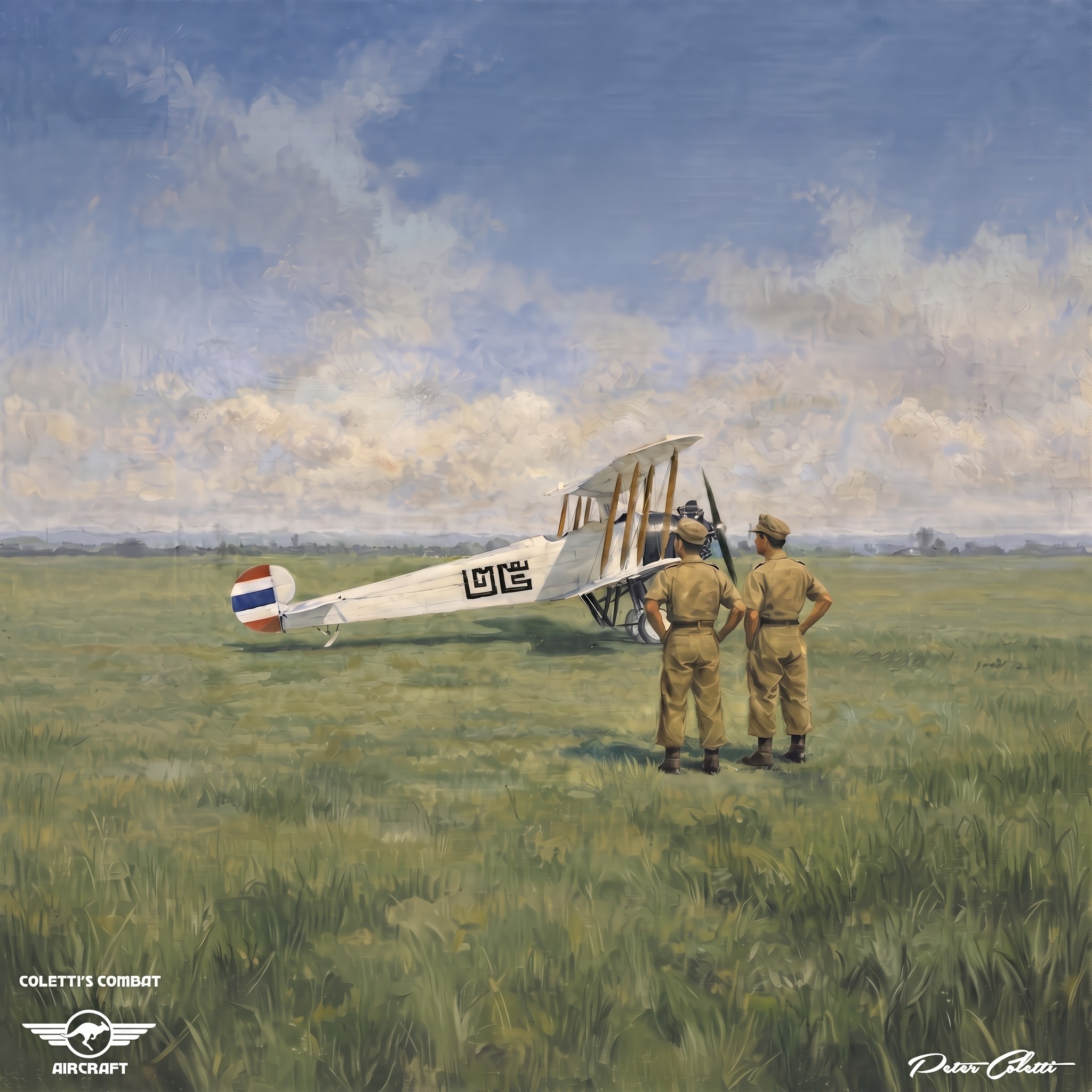
The Siamese / Thai Avro 504N
Origins and Pre‑WWII Service
Thailand (then Siam) acquired the Avro 504N through local licensed production by the Royal Thai Aeronautical Service Workshops.
This made Thailand one of the few countries outside Europe to manufacture the type.
Why Thailand chose the 504N
In the mid‑1920s, Siam evaluated the 504N against the Consolidated PT‑1 as a basic trainer.
The 504N was selected because it was simple, rugged, and easy to maintain—ideal for a developing air arm.
Role before WWII
Used primarily as elementary flight trainers for the Royal Siamese Air Force (RSAF).
Also used for liaison, courier flights, and pilot familiarisation.
By the late 1930s, the type was already outdated, but Thailand kept them in service due to limited budgets and slow modernisation.
The Avro 504N During World War II (1939–1945)
By the outbreak of WWII, the Avro 504N was a 20‑year‑old design.
In most countries it had been retired, but Thailand still operated a small number.
Franco‑Thai War (1940–41)
Although not part of WWII proper, this conflict overlapped with the global war.
The RSAF used more modern aircraft (Hawk III, Hawk 75N, and Martin B‑10) in combat.
The Avro 504N did not participate in combat operations. It remained strictly a training aircraft.
Japanese invasion and alliance (1941–45)
When Japan invaded Thailand on 8 December 1941, the RSAF was caught by surprise.
The 504Ns were not used in resistance operations.
After Thailand aligned with Japan, the RSAF continued to use the 504N only for the following:
Basic pilot training
Non‑combat liaison flights
Continuation training for cadets
Late‑war status
By 1944–45:
Most Thai 504Ns were worn out.
Training shifted to more modern types supplied by Japan.
The remaining 504Ns were gradually retired after the war.
Why the 504N Had No Combat Role in Thailand
The Avro 504N was
Slow (max ~161 km/h)
Unarmed
Structurally outdated
Designed purely as a trainer
Even in secondary roles, it was too vulnerable for reconnaissance or patrol duties in wartime South-east Asia.
Summary
The Siamese/Thai Avro 504N served mainly as a basic trainer throughout the 1920s–1940s.
During WWII, it remained in rear‑area training units and never saw combat.
Its significance lies in the following:
Being one of Thailand’s earliest domestically produced aircraft
Training the generation of Thai pilots who later flew in regional conflicts
Representing Thailand’s early aviation modernisation efforts
Digital Artworks by Peter Coletti.
Share on facebook