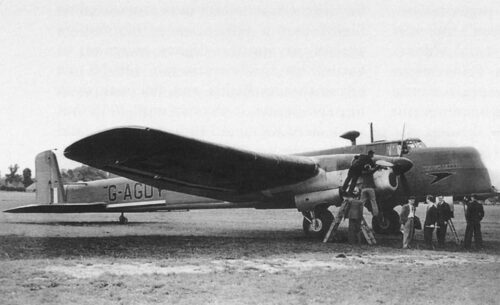
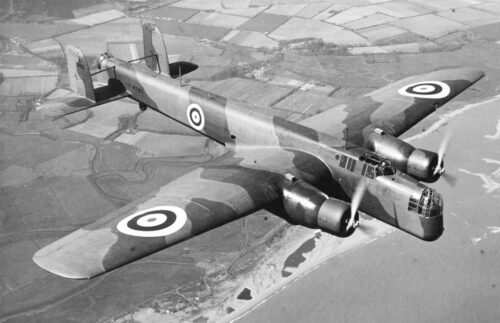
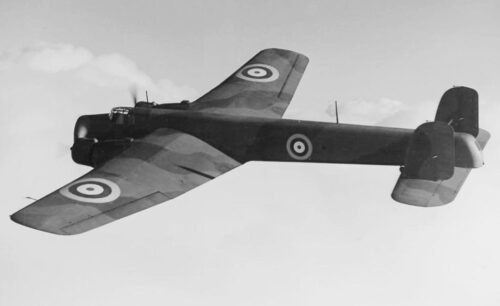
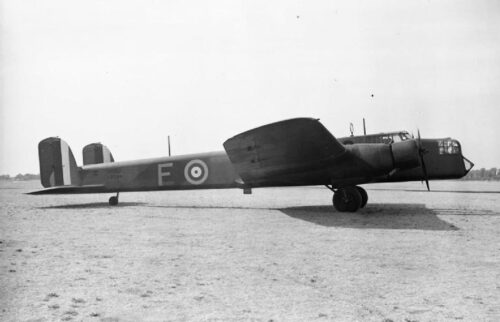
The Armstrong Whitworth Whitley emerged from a period of rapid doctrinal change in the Royal Air Force during the mid‑1930s.
The Air Ministry’s Specification B.3/34 called for a new heavy night bomber capable of doubling as a troop transport, replacing the ageing biplane Heyford fleet.
This dual‑role requirement reflected Britain’s interwar belief that future conflicts might require rapid deployment of forces across the Empire, with bombers expected to fly troops into remote theatres and then transition to combat operations.
Chief designer John Lloyd of Armstrong Whitworth responded with the A.W.38, a development of the earlier AW.23 transport‑bomber concept.
The new design was named after Whitley, a district of Coventry where the company’s main plant was located.
Even before the prototype flew, the Air Ministry—eager to modernise—ordered the aircraft “off the drawing board”, accelerating its path into production.
The first prototype flew on 17 March 1936, and by March 1937, the Whitley was already entering squadron service.
Development and Evolution
Early Prototypes and Mk I–III
The first Whitleys were powered by Armstrong Siddeley Tiger IX radial engines, later replaced by improved Tiger variants.
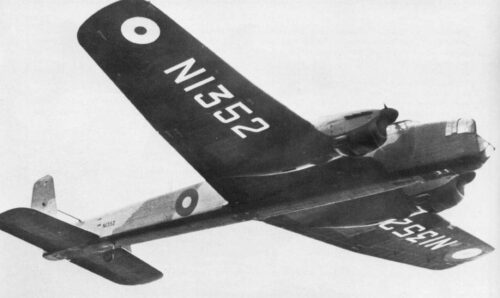
Lloyd, unfamiliar with large‑aircraft flap design, initially omitted flaps entirely, compensating by giving the wing a steep 8.5° angle of incidence.
Even after flaps were added late in development, the wing incidence remained unchanged, giving the Whitley its characteristic nose‑down cruising attitude and high drag.
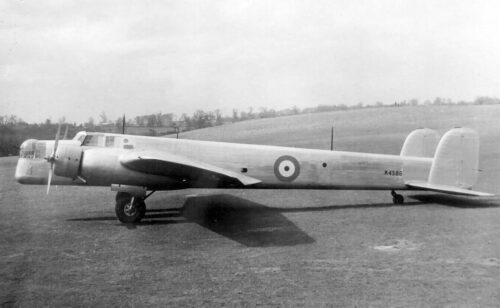
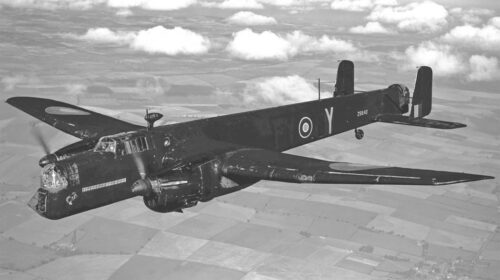
The fuselage introduced a major structural innovation for the RAF: a semi‑monocoque, slab‑sided design built from light‑alloy sections and corrugated sheets. This made the aircraft robust and relatively easy to manufacture.
The Mk II and Mk III introduced reliability improvements, powered turrets, and—on the Mk III—a retractable ventral “dustbin” turret.
Although innovative, the ventral turret proved drag-heavy and difficult to operate and was not repeated on later marks.
The Merlin Era: Mk IV and Mk V
A major leap came with the adoption of the Rolls‑Royce Merlin IV engine in 1938.
The Merlin transformed the Whitley’s performance, improving speed, altitude, and reliability.
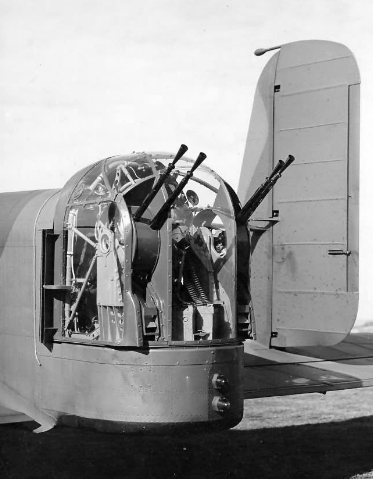
The Mk IV also introduced a powerful Nash & Thompson four‑gun tail turret, making the Whitley one of the best‑defended RAF bombers from the rear during its early service years.
The definitive Mk V incorporated aerodynamic refinements, an extended rear fuselage, de-icing equipment, and increased fuel capacity.
It became the most numerous version, with 1,466 built, and formed the backbone of Whitley operations throughout the war.
Coastal Command: Mk VII
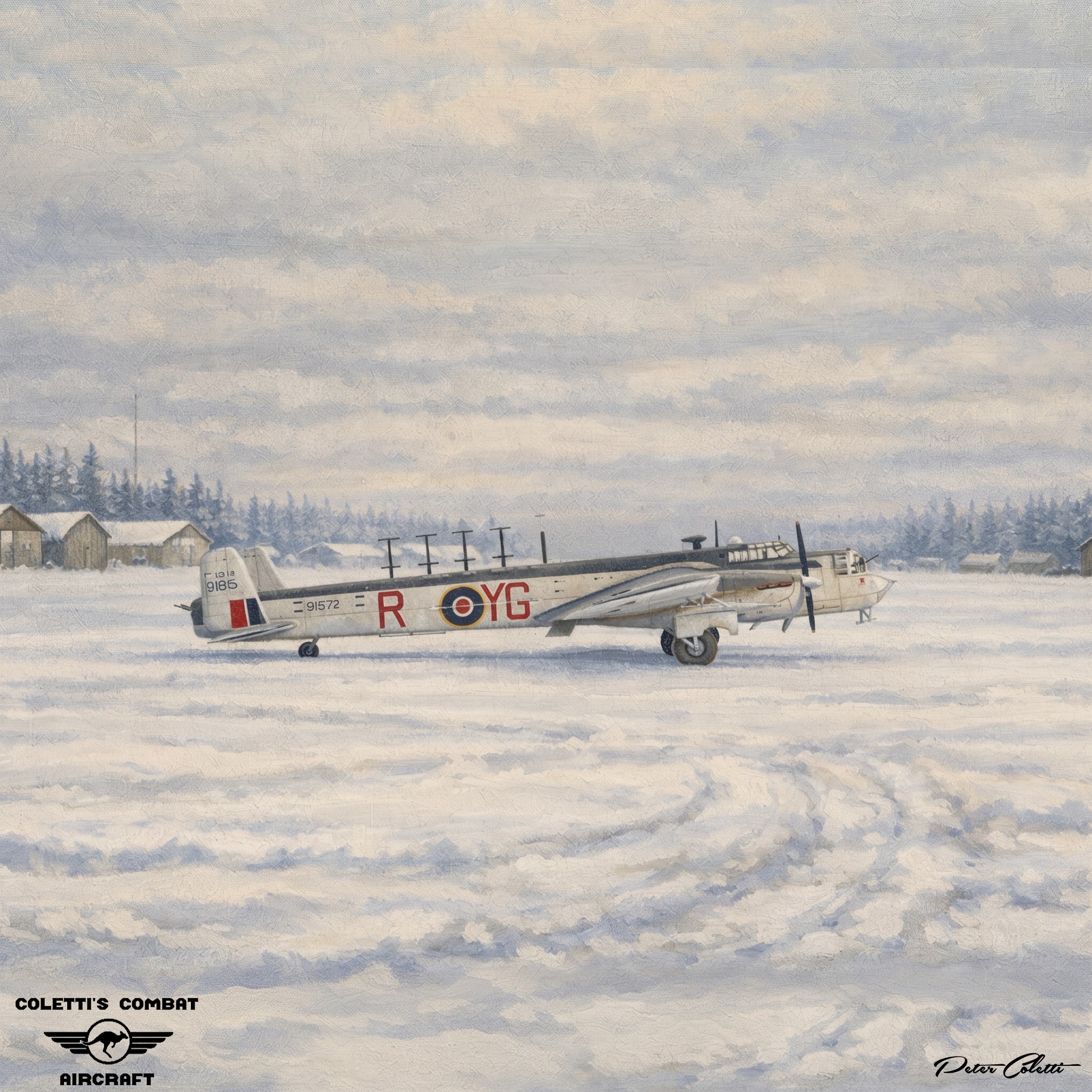
The final production variant, the Mk VII, was tailored for maritime reconnaissance.
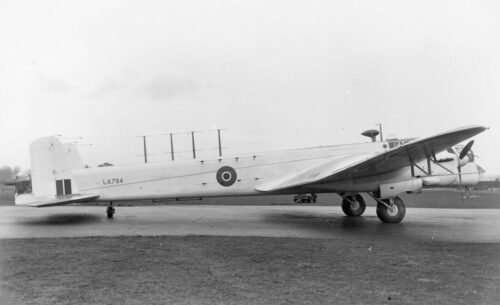
It carried ASV Mk II radar, additional fuel tanks, and a sixth crew member to operate the radar equipment.
The radar aerials increased drag, and the aircraft could not maintain altitude on one engine, but it provided long‑range coverage during a critical phase of the Battle of the Atlantic.
Design Characteristics
Airframe and Structure
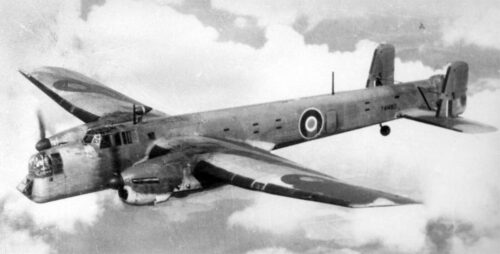
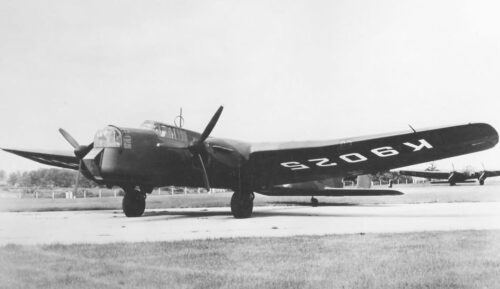
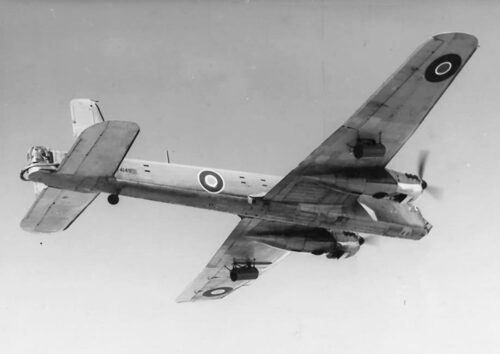
The Whitley was a twin‑engine, mid‑wing monoplane with a distinctive rectangular wing planform that earned it the nickname “the flying barn door”.
The wing was built around a large box spar, with smooth metal leading edges and fabric‑covered trailing surfaces.
The fuselage was divided into three main sections, with the bomb bay occupying the central portion.
Crew Layout
A typical crew of five operated the aircraft:
Pilot
Co‑pilot/navigator
Wireless operator
Bomb aimer
Rear gunner
The navigator’s seat could slide and pivot to access the chart table, while the bomb aimer occupied the nose beneath the forward turret.
The rear fuselage housed the tail turret, and the main entrance was located aft of the bomb bay.
Armament
Early marks carried manually operated nose and tail turrets with single .303 machine guns.
Later versions adopted:
Powered nose turret (Mk III onward)
Retractable ventral turret (Mk III only)
Four-gun powered tail turret (Mk IV onward)
This made the Whitley one of the most heavily armed RAF bombers from the rear during the late 1930s.
Bomb Load
The Whitley could carry up to 7,000 lb (3,175 kg) of bombs in its fuselage and wing cells.
Early aircraft used bungee‑held bomb bay doors that opened under the weight of falling bombs, causing delays and inaccuracy.
Hydraulic doors introduced on the Mk III greatly improved bombing precision.
Performance (Whitley Mk V)
Engines: 2 × Rolls‑Royce Merlin X, 1,145 hp each
Maximum speed: ~230 mph at 16,400 ft
Range: 1,650 miles (ferry range 2,400 miles)
Service ceiling: 26,000 ft
Rate of climb: 800 ft/min
These figures placed the Whitley behind later wartime bombers but adequate for early-war night operations.
Operational History
Early War Service
At the outbreak of WWII, the Whitley was one of the RAF’s three frontline medium bombers, alongside the Wellington and Hampden.
Crucially, 4 Group, equipped with Whitleys, was the only fully trained night‑bomber force in the world in 1939.
The Whitley flew.
The first RAF penetration of German airspace, dropping propaganda leaflets on the night the war began.
The first bombing raid on German soil attacked the Hörnum seaplane base on 19/20 March 1940.
The first RAF raid on Italy, striking Turin and Genoa in June 1940 after refuelling in the Channel Islands.
Special Operations and Airborne Forces
The Whitley played a pioneering role in British airborne warfare:
Operation Colossus (Feb 1941): the first British airborne assault, delivering paratroopers to attack the Tragino Aqueduct.
Operation Biting (Feb 1942): the Bruneval Raid, capturing German radar components.
Paratroopers exited through a floor hatch, often receiving the infamous “Whitley kiss”—facial injuries caused by the slipstream dragging them against the hatch lip.
Coastal Command and Anti-Submarine Warfare
The Mk VII served in long‑range maritime patrols.
Whitleys contributed to U-boat hunting, including participation in the sinking of U-751 in July 1942.
Retirement from Frontline Service
By 1942, the Whitley was outclassed by four‑engined “heavies” such as the Lancaster.
It transitioned to:
Training
Transport
Glider towing
Special Duties flights
The last bomber‑squadron Whitley operation occurred in April 1942, though Coastal Command aircraft served into early 1943.
Civilian Use
In 1942, BOAC operated 15 converted Whitley Mk Vs as freighters.
Armament was removed, cargo space added, and extra fuel tanks installed.
They flew hazardous night supply missions to Malta and long‑distance courier flights to Stockholm.
Their high fuel consumption and limited payload led to their replacement later that year.