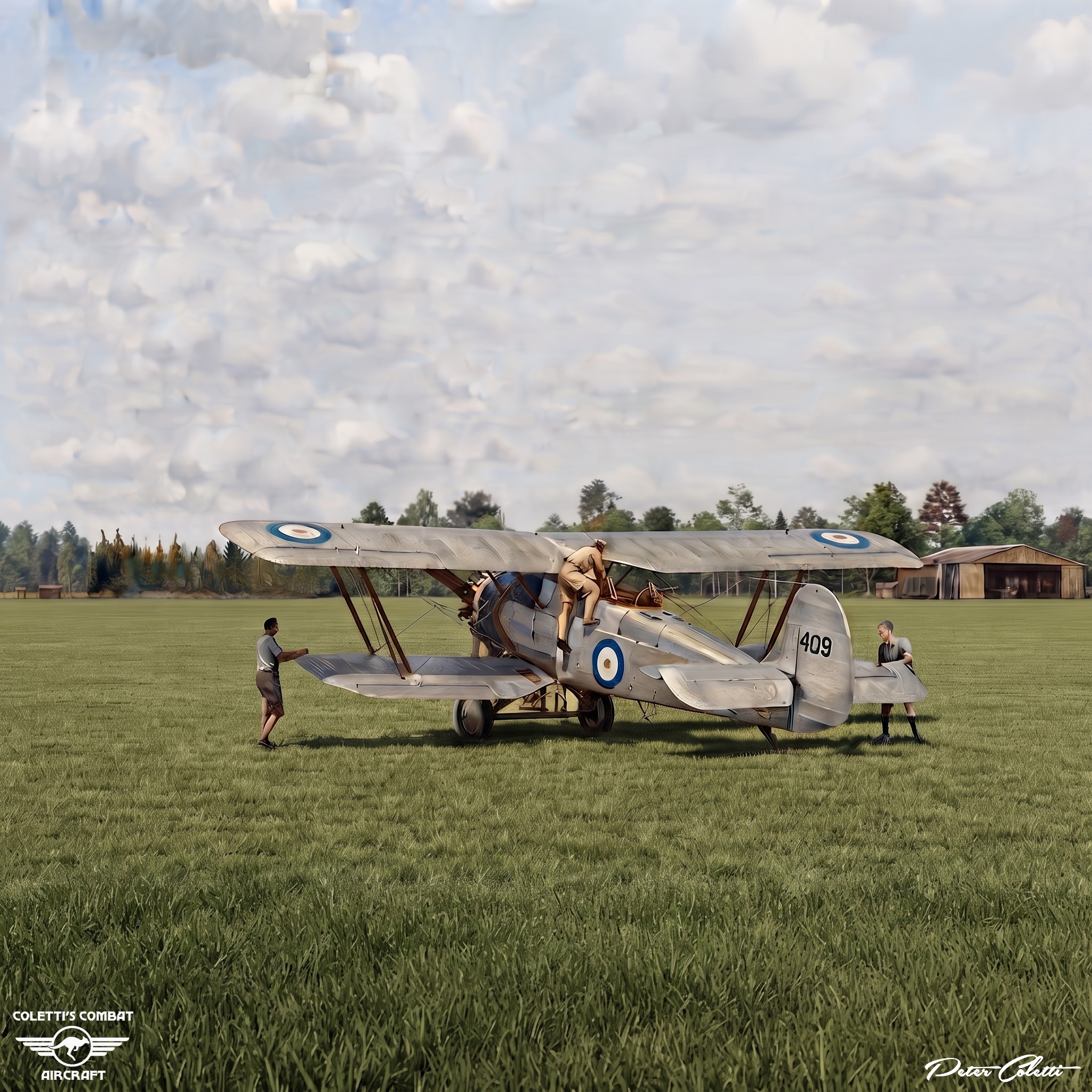
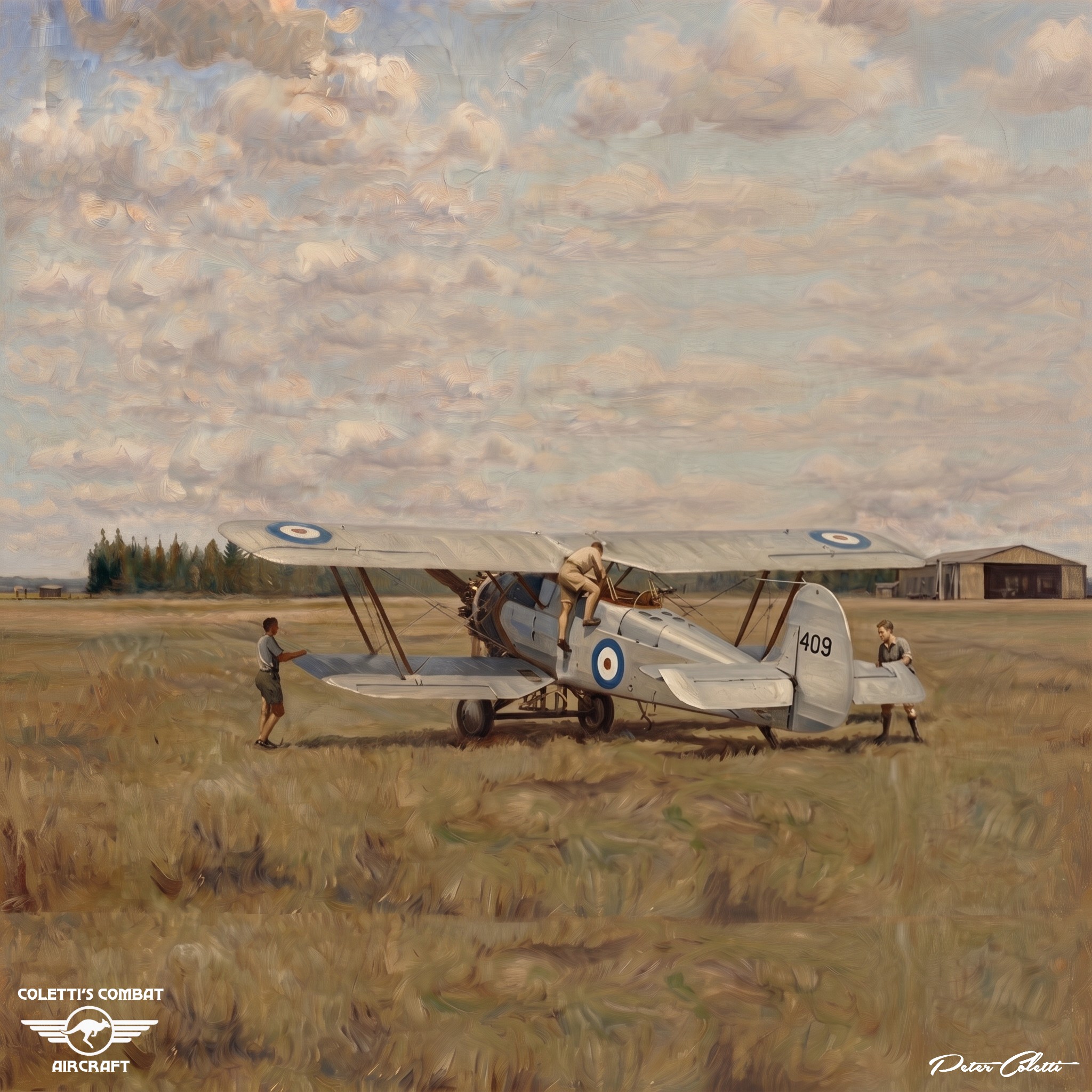
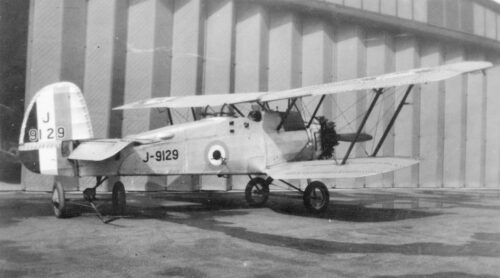
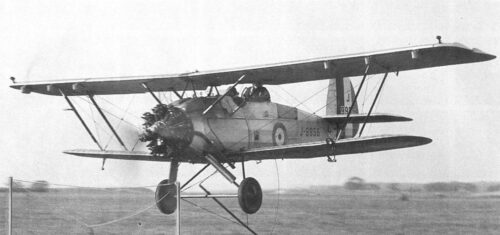
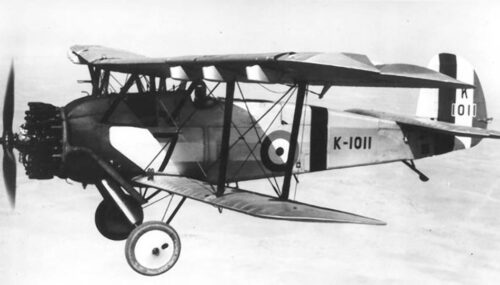
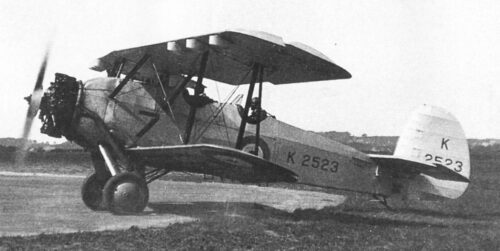
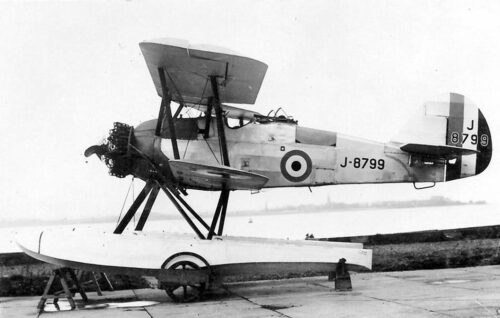
The Armstrong Whitworth Atlas emerged during a transitional period in British military aviation, when the Royal Air Force sought to replace its ageing DH.9A and Bristol Fighter in the army cooperation role.
Designed under the leadership of John Lloyd, Armstrong Whitworth’s chief designer, the Atlas began as a private-venture aircraft intended to meet several Air Ministry specifications, including 8/24, 30/24, and 20/25.
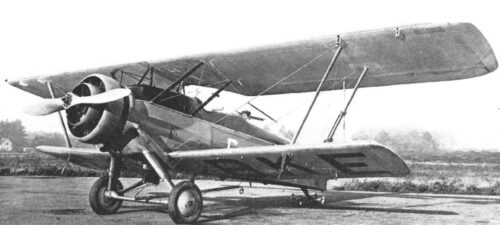
The prototype, registered G‑EBLK, first flew on 10 May 1925 and was delivered to the Aeroplane and Armament Experimental Establishment at Martlesham Heath for competitive evaluation.
It outperformed rivals such as the Bristol Boarhound, de Havilland Hyena, Vickers Vespa, and Short Chamois, earning a recommendation for production due to its superior handling and performance.
However, early testing revealed a critical flaw: the prototype could not be sideslipped steeply, a vital manoeuvre for army co‑operation missions.
Armstrong Whitworth responded by fitting sweptback metal wings with a revised airfoil, but this introduced dangerous stall behaviour.
Despite these issues, the Atlas had already been ordered into production, and the first months of service saw several accidents.
The problem was ultimately solved by adding automatic leading‑edge slats and increasing the wing sweep, restoring safe handling characteristics and allowing the type to enter widespread service.
Design and Construction
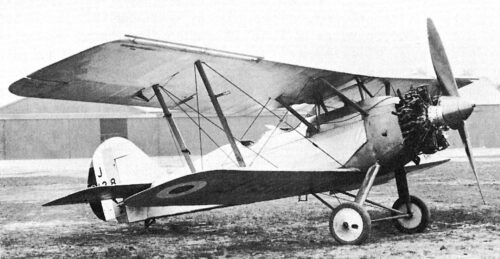
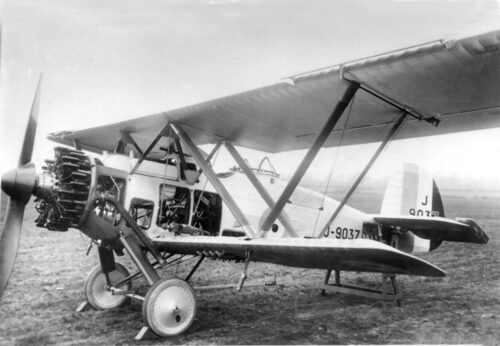
The Atlas was a single‑engine, two‑seat biplane built around a steel‑tube fuselage with fabric covering.
Its wings were single‑bay, swept metal structures, a modern feature for the mid‑1920s.
The aircraft was designed for rugged field operations, with easy maintenance access and the ability to operate from rough airstrips.
Key design features included:
Crew of two: pilot and observer/gunner
Armament: one fixed forward-firing. 303 Vickers gun and one. 303 Lewis gun on a Scarff ring in the rear cockpit
Bomb load: up to four 112‑lb bombs under the wings
Special equipment: a message‑pickup hook under the fuselage, enabling rapid communication with ground units
The Atlas was powered in its main RAF form by the Armstrong Siddeley Jaguar IVC, a 14‑cylinder two‑row radial engine producing 450 hp.
This gave the aircraft a maximum speed of 142 mph at sea level, a service ceiling of 16,800 ft, and an endurance of 3 hours 25 minutes.
Operational Service
RAF Service
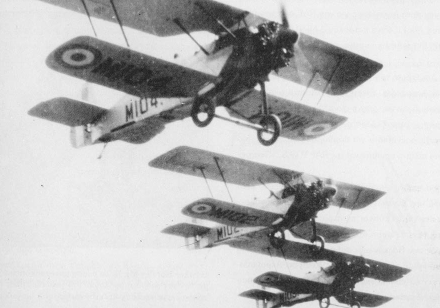
The first production order—37 aircraft—was placed in 1927, with the Atlas entering service that same year with No. 13 Squadron and No. 26 Squadron RAF.
Once the handling issues were corrected, the Atlas proved well suited to the army cooperation role, performing tasks such as the following:
Artillery spotting
Reconnaissance
Message pickup and delivery
Liaison and communications
Light bombing
The type served both in Britain and overseas. No. 208 Squadron became the first to operate the Atlas outside the UK, replacing Bristol Fighters at Heliopolis, Egypt, in 1930.
The Atlas also became a widely used advanced trainer, with 175 dual‑control versions built.
It remained in RAF service until 1935, when it was replaced by the Hawker Audax and the Hart Trainer in their respective roles.
Canadian Service and the Second World War
The Royal Canadian Air Force received 16 Atlas aircraft in 1927, primarily for No. 2 (Army Co‑operation) Squadron.
Remarkably, these aircraft remained in service long after the RAF had retired the type.
At the outbreak of the Second World War in 1939, Canadian Atlases were pressed into a new role: maritime reconnaissance patrols over the Bay of Fundy, operating from Halifax and Saint John.
Later that year, they were transferred to No. 118 (Coast Artillery Co-operation) Squadron, continuing coastal patrol duties until replaced by the Westland Lysander and Blackburn Shark in 1940.
The final Canadian Atlas was retired in 1942, marking the true end of the type’s operational life.
Variants
The Atlas family included several notable derivatives:
Atlas I Standard RAF army cooperation model; 271 built.
Atlas Trainer Dual‑control training version; 175 built.
Atlas II A refined, more powerful version fitted with a 525 hp Armstrong Siddeley Panther engine. Rejected by the RAF in favour of the Audax; 15 built for the Kwangsi Air Force in China.
Ajax A closely related general-purpose aircraft with minor differences; 4 built.
Aries An improved Atlas I with easier maintenance access and increased dimensions, one built.
EAF Atlas A Greek-built, lower-cost version with changes to wing structure, engine, and propeller; 10 produced by KEA after 1931.
Technical Specifications (Atlas I)
Crew: 2
Length: 28 ft 6½ in
Wingspan: 39 ft 6½ in
Height: 10 ft 6 in
Wing area: 391 sq ft
Empty weight: 2,550 lb
Max takeoff weight: 4,020 lb
Engine: 1 × Armstrong Siddeley Jaguar IVC, 450 hp
Max speed: 142 mph at sea level
Range: 400 miles
Service ceiling: 16,800 ft
Armament:
1 × fixed .303 Vickers
1 × .303 Lewis on Scarff ring
Up to 4 × 112‑lb bombs
Assessment and Legacy
The Armstrong Whitworth Atlas occupies a distinctive place in RAF history as the first purpose‑designed army cooperation aircraft to enter service.
Although its early handling issues nearly compromised its career, the Atlas ultimately proved reliable, adaptable, and well‑suited to its mission set.
Its longevity—especially in Canadian service—demonstrates the robustness of its design.
While overshadowed by more famous interwar aircraft, the Atlas was a crucial stepping stone in the evolution of British tactical aviation, bridging the gap between the Great War’s two‑seat biplanes and the more modern, faster, and more capable army co‑operation aircraft of the 1930s.