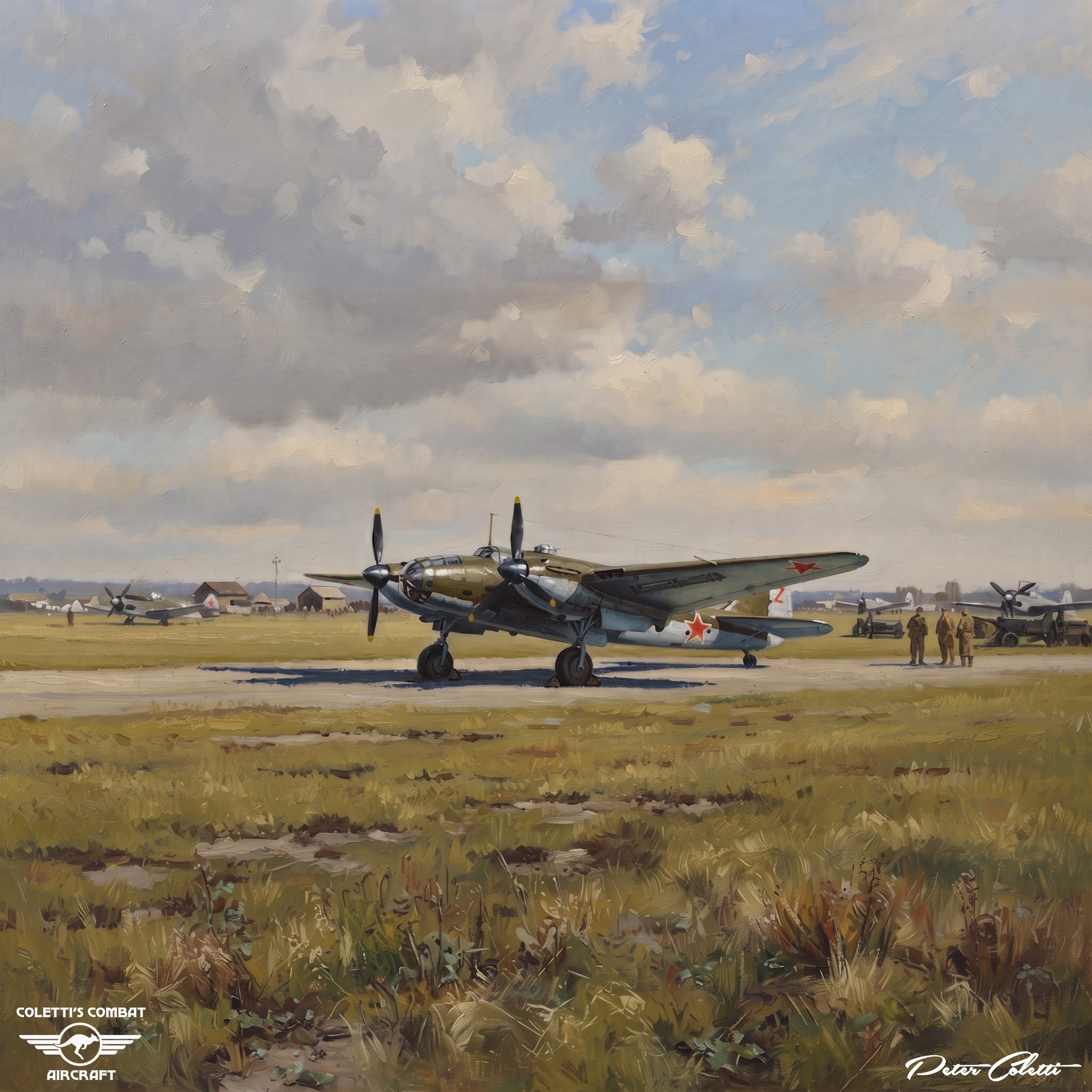
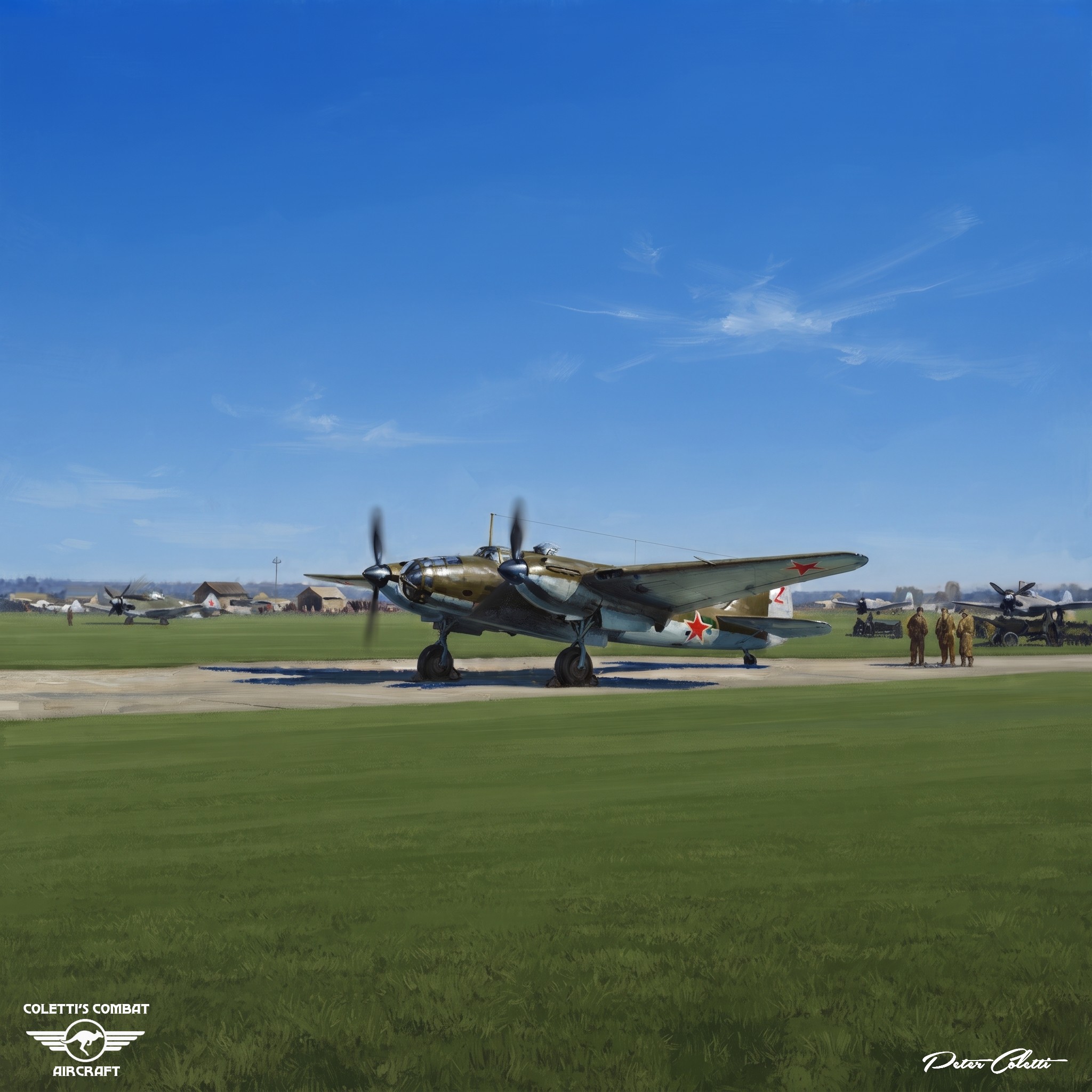
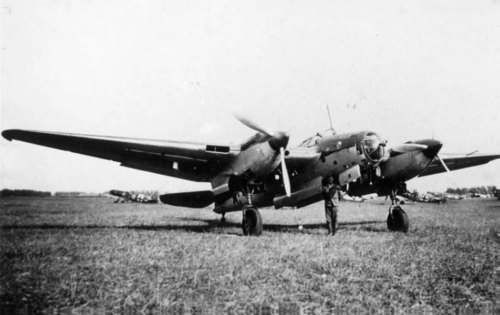
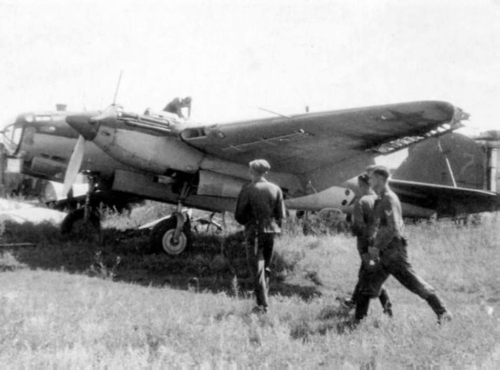
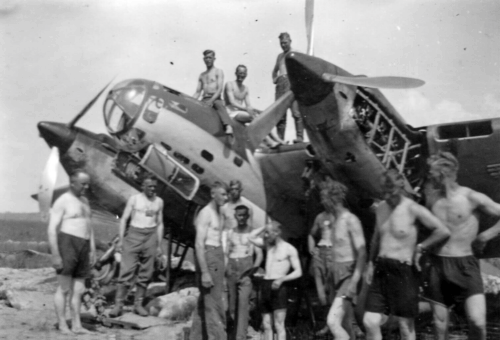
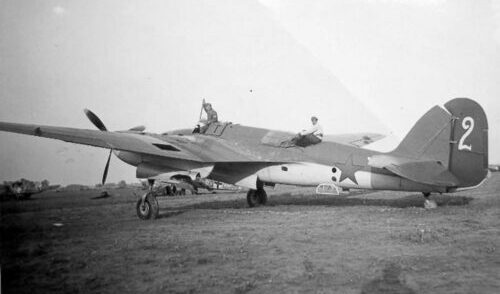
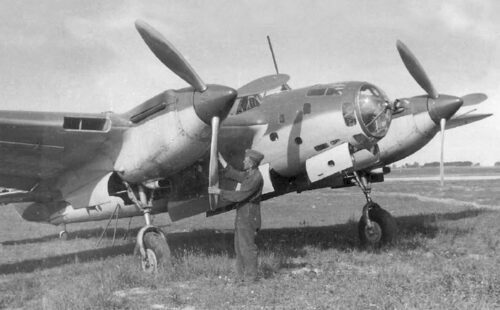
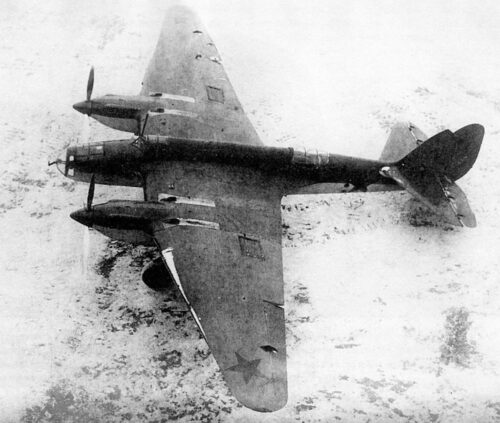
The Arkhangelsky Ar‑2 was the final and most advanced evolution of the Tupolev SB (Skorostnoi Bombardirovshchik) family, a series of fast twin‑engine bombers that had dominated Soviet bomber aviation in the late 1930s.
By 1940, the SB—once cutting‑edge—was rapidly becoming obsolete.
The Soviet Air Force demanded a bomber capable of dive-bombing, higher speeds, and improved survivability.
At the 22nd Aircraft Factory, Aleksandr Arkhangelsky’s design bureau undertook a deep modernisation of the SB, pursuing two parallel paths:
Minor modernisation: aerodynamic refinement to reach ~500 km/h.
Major modernisation: structural redesign aimed at ~600 km/h.
The Ar‑2 emerged from the “minor” modernisation programme, originally designated SB‑RK.
It incorporated aerodynamic improvements tested on the experimental MMN and SB‑RK 2M‑105 prototypes.
The Soviet government mandated rapid transition to improved SB variants with new engines (M‑105 and M‑106), and Arkhangelsky’s team was tasked with delivering a modernised dive‑capable bomber on an extremely compressed schedule.
By late 1940, the SB‑RK had matured sufficiently to enter state trials.
In December 1940, it was officially renamed Ar‑2.
Design and Technical Characteristics
Airframe and Aerodynamics
The Ar‑2 retained the basic SB layout—a twin‑engine, mid‑wing monoplane with a crew of three—but incorporated extensive aerodynamic refinements.
New streamlined nose section (F‑1 type), improving visibility and reducing drag.
Revised canopy with a lower, more aerodynamic dorsal “turtleback” fairing.
Re-engineered engine nacelles with improved cowlings and radiator tunnels.
Reinforced structure to withstand dive-bombing stresses up to ~4.5 g during recovery.
The upper centre-section skin was replaced with balinite plywood bonded to wooden frames, improving smoothness and rigidity.
Powerplant
The aircraft used two Klimov M‑105 liquid‑cooled V‑12 engines, driving VISH‑22E variable‑pitch propellers.
However, the M‑105 engines were a persistent source of trouble:
Overheating of water and oil systems
Frequent failures of water‑oil radiators
Cracked crankcase covers
Fuel overflow and carburettor fires
These issues significantly limited operational reliability.
Dive-Bombing Equipment
The Ar-2 was designed as a true dive bomber, incorporating:
Hydraulically operated dive brakes under the wings
Automatic dive‑recovery system, triggered upon bomb release
PBP‑1 dive sight for the pilot
PB‑3 bomb cradles enabling safe bomb release in steep dives
Dive tests reached angles up to 75°, with stable tracking for ~9 seconds—sufficient for accurate bombing.
Armament
Defensive armament consisted of three 7.62 mm ShKAS machine guns:
One in the nose (sharovaya installation)
One in the dorsal TSS‑1 turret
One in the retractable ventral MV‑2 turret
The defensive system was improved over the SB but still considered inadequate by 1941 standards.
Bomb load:
Normal: 1,000 kg
Maximum: 1,500 kg (including dive release capability)
Could carry up to 3 × FAB‑500 or 4 × FAB‑250 in dive-bombing configuration
Chemical tanks (VAP‑500, UKhAP‑500) could also be fitted externally.
Performance
State trials (January 1941) produced the following results:
Maximum speed: 475 km/h at 4,700 m (standard Ar‑2)
Up to 512 km/h on an improved prototype with refined engines and propellers
Ceiling: 10,000 m (normal weight)
9,000 m with external bombs
Range: ~990 km with two FAB‑250 bombs
Takeoff run: ~340 m at 7,100 kg
Handling was generally good, but longitudinal instability occurred at aft centre-of-gravity positions.
Only forward CG settings produced stable flight.
Variants
The Ar‑2 programme was short‑lived, and only a few variants existed:
SB‑RK (Prototypes)
Early aerodynamic testbeds incorporating the new nose, radiators, and dive equipment.
Ar‑2 (Production Model)
The standardised dive-bomber version, built in limited numbers at Factory No. 22.
Improved Ar‑2 (February 1941 Prototype)
Featured:
Engines moved forward 150 mm for stability.
New VIT‑1T‑22E propellers
Reduced-drag dive brakes
Exhaust ejector stacks
Improved surface finish
This version achieved the best performance but never entered production.
Operational Use and WWII Context
Entry into Service
The Ar‑2 entered service in early 1941, just months before the German invasion.
Production was extremely limited—likely around 190 aircraft—as factories were already transitioning to the more modern Petlyakov Pe‑2.
Combat Employment
At the outbreak of Operation Barbarossa, Ar‑2s served in several bomber regiments.
Their missions included:
Tactical bombing
Dive‑bombing of bridges, troop concentrations, and fortifications
Occasional reconnaissance
Despite good dive-bombing accuracy, the Ar‑2 suffered from the following:
Engine overheating and failures
Vulnerability to fighters due to light defensive armament
Short range and modest speed compared to the Pe‑2
Losses were heavy, and surviving aircraft were gradually replaced by Pe‑2s through late 1941–1942.
Why Production Ended
The Soviet government terminated Ar‑2 production in February 1941, even before the war began.
Reasons included:
The Pe‑2 demonstrated higher speed (540 km/h) and better growth potential.
The Ar‑2’s M‑105 engines were unreliable and difficult to cool.
The Soviet Air Force wanted a unified, modern dive bomber rather than another SB derivative.
Arkhangelsky’s design bureau was reassigned to other projects, and the Ar‑2 became a technological dead end despite its promising accuracy and payload.
Assessment and Legacy
The Arkhangelsky Ar‑2 represents a transitional moment in Soviet bomber development:
It was the most capable SB‑derived aircraft, with excellent dive‑bombing precision and a heavy bomb load.
Its performance, while improved, lagged behind contemporary designs such as the Pe‑2 and Ju 88.
Engine reliability issues severely limited its operational value.
Its short service life and small production run made it a rare but historically significant aircraft of the early Eastern Front.
Soviet analyses later concluded that the Ar‑2 could have been an effective front‑line bomber if supported by better engines and more time for refinement.
Nevertheless, the urgency of wartime production and the superior potential of the Pe‑2 sealed its fate.