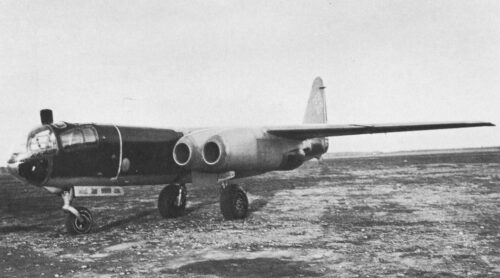
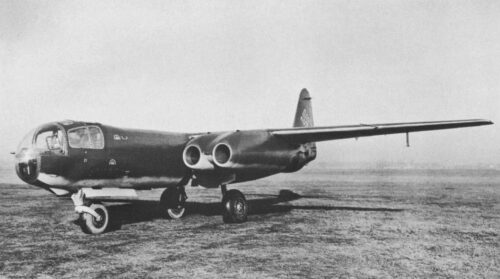
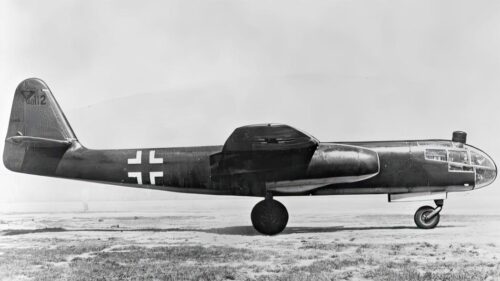
The Arado Ar 234 Blitz (“Lightning”) was the world’s first operational jet‑powered bomber and also the first jet aircraft to perform operational reconnaissance missions.
Entering Luftwaffe service in September 1944, it represented a dramatic technological leap, combining high speed, clean aerodynamics, and advanced systems at a time when Germany’s war situation was rapidly deteriorating.
Only 214 aircraft were completed, but the Ar 234’s performance demonstrated the future direction of bomber design.
Origins and Development
Early Requirements (1940–1941)
In late 1940, the Reichsluftfahrtministerium (RLM) issued a requirement for a high‑speed jet reconnaissance aircraft capable of outrunning Allied fighters.
Arado responded with the E.370 design, the only submission to meet the tender. An initial order for prototypes followed, designated Ar 234.
By the end of 1941, the first prototypes were structurally complete, but the new Junkers Jumo 004 turbojets were not yet available, delaying flight testing.
Prototype Phase (1943)
The first prototype, Ar 234 V1, flew on 30 July 1943 once engines became available.
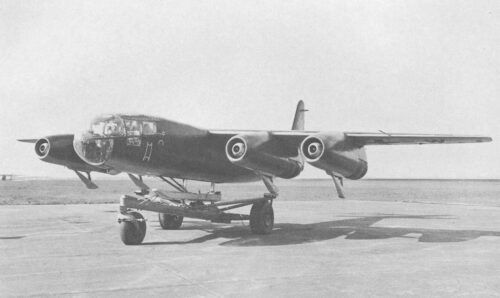
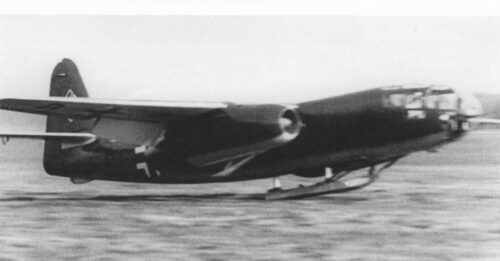
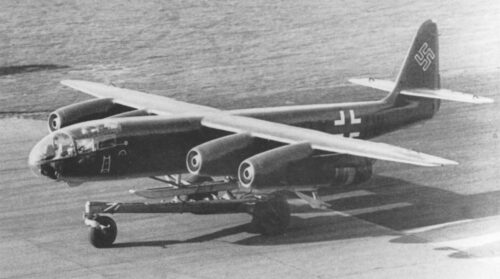
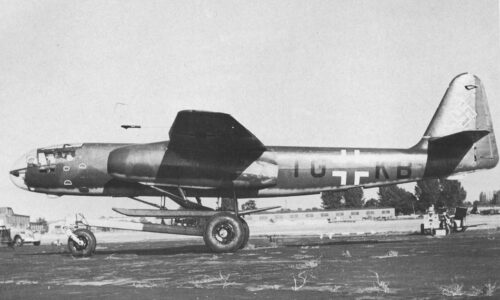
Early prototypes used a radical trolley‑and‑skid system:
Takeoff on a jettisonable wheeled trolley
Landing on retractable skids
This saved weight but proved operationally impractical, as aircraft had to be lifted onto the trolley by crane after each mission.
Despite this, the prototypes demonstrated exceptional speed, exceeding 460 mph, confirming the aerodynamic promise of the design.
Transition to the Ar 234B
Operational impracticalities forced a redesign.
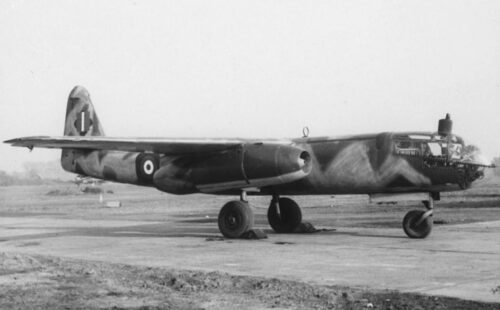
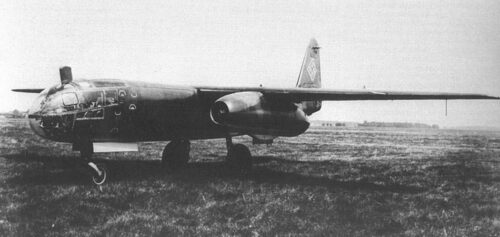
Arado widened the fuselage to incorporate a conventional tricycle landing gear, creating the Ar 234B, the first true production model.
This slightly increased drag but made the aircraft viable for combat operations.
The B‑series became the backbone of all operational Ar 234 units.
Airframe and Design Features
Aerodynamic Layout
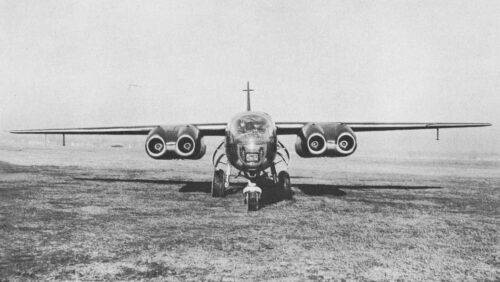
The Ar 234 featured:
A slender, stressed-skin duralumin fuselage
High-mounted straight wings
A fully glazed, pressurised cockpit in the nose
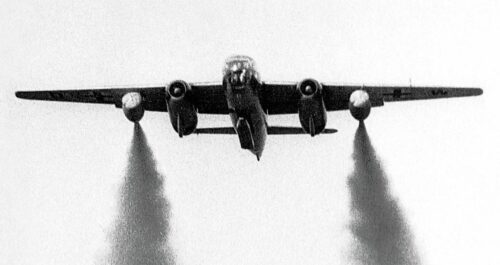
Two underwing pods housing Jumo 004B‑1 turbojets
The cockpit’s forward placement gave superb visibility but made spatial orientation difficult for some pilots, as no wings or engines were visible from the seat.
Landing Gear
Two systems existed:
Prototype System
Jettisonable trolley
Retractable landing skids
Tail ski with braking capability (in some prototypes)
Production System
Fully retractable tricycle undercarriage
Greatly improved ground handling and turnaround time
Cockpit and Systems
The cockpit included:
Pressurisation for high-altitude operations
A glazed nose for reconnaissance and bombing visibility
A periscopic bombsight
A basic autopilot, allowing the pilot to act as bombardier
Powerplant
Production aircraft used:
2 × Junkers Jumo 004B‑1 turbojets
Thrust: 8.8 kN (1,980 lbf) each
These engines were advanced but fragile, with slow throttle response and short service life—limitations common to early jet technology.
Performance Characteristics
Ar 234B Performance (typical figures)
Max speed: 461 mph (743 km/h) at altitude
Range: ~1,000–1,100 miles (1,013–1,100 km) depending on load
Service ceiling: ~32,800 ft (10,000 m)
Rate of climb: ~2,362 ft/min (approx. 15 m/s)
These figures made the Ar 234 faster than most Allied piston fighters and nearly impossible to intercept in reconnaissance missions.
Armament and Payload
Reconnaissance Variants
Typically unarmed
Carried three aerial cameras
Bomber Variants
External racks only (no internal bay due to slender fuselage)
Up to 1,500 kg total:
4 × 250 kg bombs,
or
2 × 500 kg bombs
Defensive Armament
Optional 2 × 20 mm MG 151/20 rear‑firing guns
Rarely installed due to weight and limited usefulness
Operational History
Reconnaissance Dominance (Late 1944–1945)
The Ar 234 first entered service as a high‑speed reconnaissance aircraft, forming Kommando Sperling.
Its speed and altitude made it virtually immune to interception, restoring the Luftwaffe’s ability to gather intelligence after months of Allied air superiority.
It conducted:
Reconnaissance over the Normandy front (August 1944)
Deep penetrations into Allied rear areas
The last Luftwaffe overflight of the UK in April 1945
Bomber Operations
The first bomber unit, III./KG 76, received aircraft in mid‑1944.
Pilots praised the Ar 234’s speed and handling, though its wide turning radius and slow throttle response were noted limitations.
Most Famous Combat Use: Remagen Bridge
Between the 7th and 17th March 1945, Ar 234s repeatedly attacked the Ludendorff Bridge at Remagen, attempting to halt the Allied advance.
Despite precision attacks, the bridge remained standing until it collapsed from structural stress.
End of Service
By early 1945, many Ar 234s were grounded due to the following:
Engine shortages
Fuel scarcity
Allied airfield overruns
The type was retired with Germany’s surrender in May 1945.
Variants
Ar 234A (Prototypes)
Trolley-and-skid system
Pure reconnaissance prototypes
Never mass-produced
Ar 234B (Main Production Model)
Tricycle landing gear
Two Jumo 004B engines
Sub‑variants:
B‑1: reconnaissance
B‑2: bomber
Ar 234C (Advanced Development)
Proposed four‑engine version using BMW 003 turbojets
Improved speed and climb
Limited prototypes only
Proposed Night Fighter and Other Roles
Several experimental concepts were included:
Night fighter with radar
Improved cockpit arrangements
Alternative engines
None reached operational status.
Assessment and Legacy
The Ar 234 was a technological milestone:
First operational jet bomber
First jet reconnaissance aircraft
Demonstrated the future of high‑speed strike and reconnaissance aviation
Its operational impact was limited by:
Late introduction
Engine unreliability
Material shortages
Small production numbers
Nevertheless, the Ar 234’s performance—speed, altitude, and aerodynamic refinement—made it a harbinger of postwar jet bomber design, influencing early Cold War aircraft development.