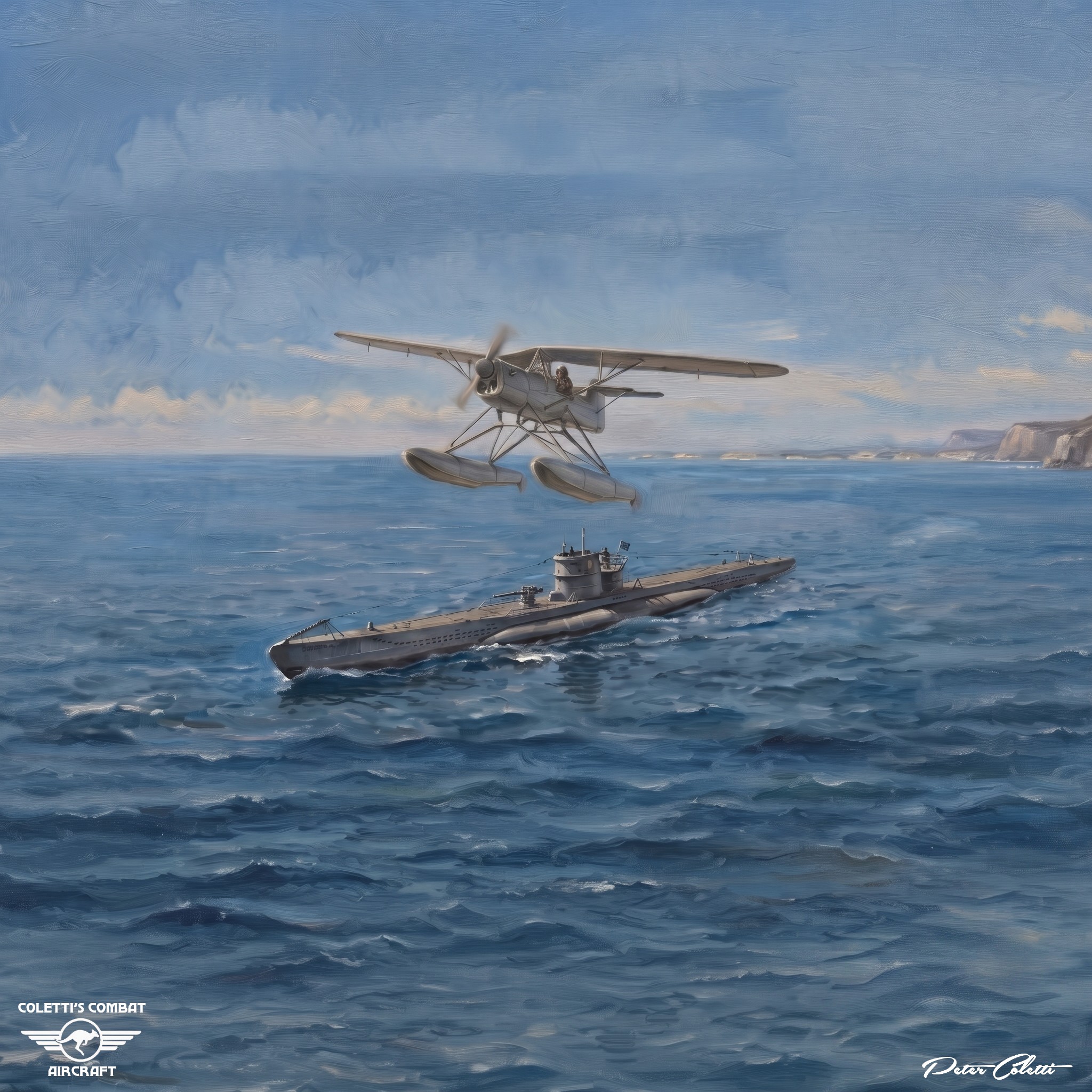
The Arado Ar 231 emerged from a very specific and unusual requirement within the Kriegsmarine’s Z‑Plan naval expansion programme of the late 1930s.
As Germany prepared to field long-range “U-boat cruisers” such as the projected Type XI B submarines, naval planners envisioned a submarine capable of operating far from Europe and conducting independent reconnaissance.
To make this viable, the submarine needed a compact, quickly deployable aircraft that could be launched at sea, scout ahead, and return for recovery.
In February 1938, the Oberkommando der Kriegsmarine (OKM) formally requested a single‑seat, single‑engine floatplane that could be folded into a cylindrical container mounted vertically within the submarine’s hull.
The aircraft had to be assembled or stowed in under one minute, survive rough‑water operations, and provide a reconnaissance radius of roughly 450 km out and 450 km back.
These requirements were later refined into a more realistic endurance of 3.5 hours, a cruising speed of ~210 km/h, and a service ceiling of 3,000 m.
Most German manufacturers declined the challenge due to the extreme constraints.
Arado Flugzeugwerke, however, accepted the contract in mid‑1938.
The project was initially designated E.300, later receiving the official designation Arado Ar 231.
By early 1939, the RLM (Reich Air Ministry) ordered four prototypes (V1–V4), with a full‑scale mock‑up completed in December 1939 and flight testing beginning in July 1940.
Design Philosophy and Structural Features
General Configuration
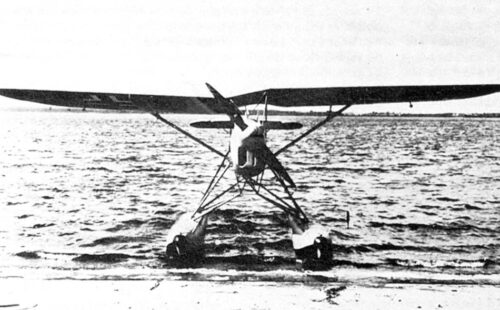
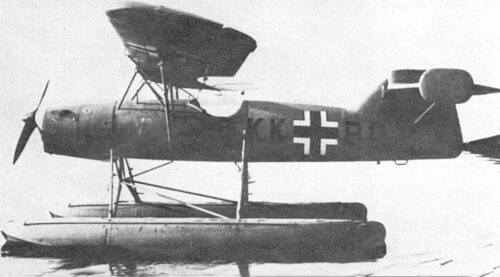
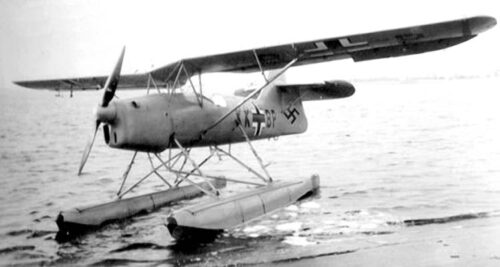
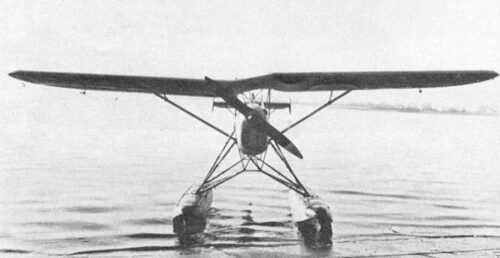
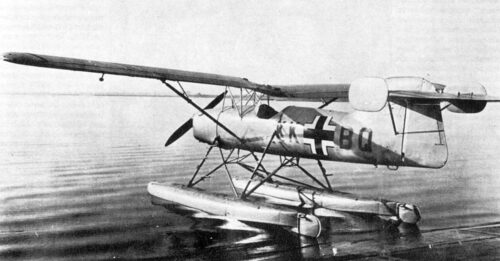
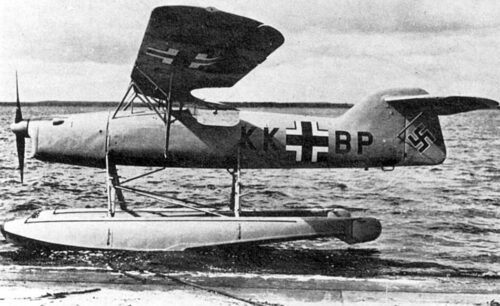
The Ar 231 was a lightweight parasol-wing floatplane, powered by a 160 hp Hirth HM 501 inverted inline engine.
Its empty weight was approximately 833–834 kg, with a wingspan of 10.16–10.18 m and a length of 7.8 m.
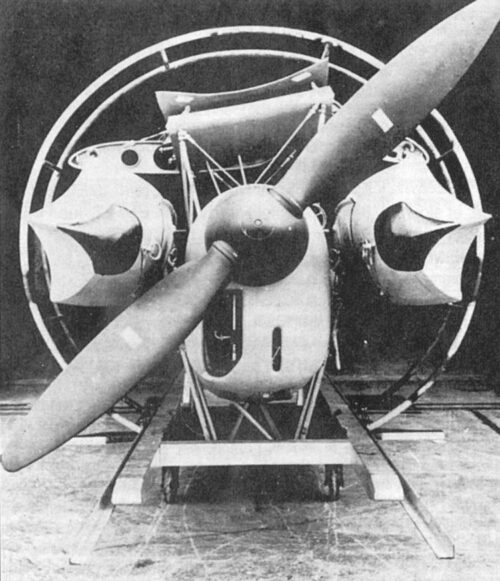
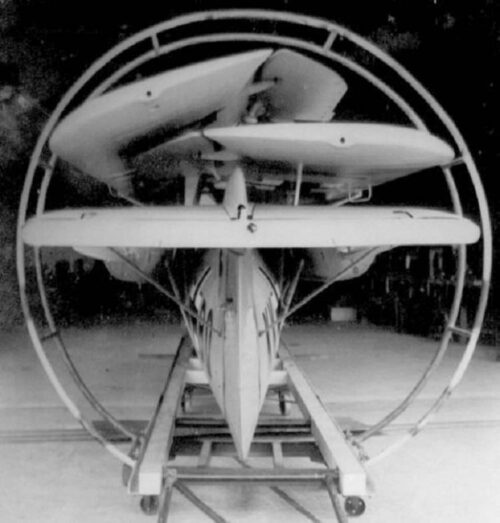
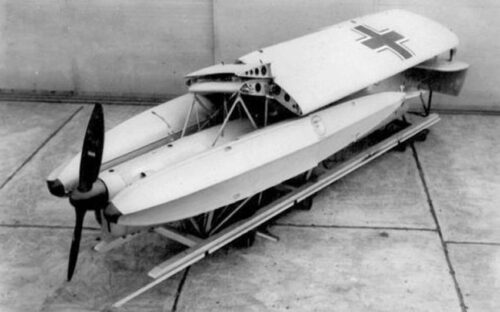
The aircraft’s defining characteristic was its ability to be disassembled and stored inside a 2–2.25 m diameter cylindrical container, only 7.5 m long, mounted vertically inside the submarine’s pressure hull.
This requirement dictated nearly every aspect of the design.
Folding Wing System
To minimise storage volume, Arado engineers devised a unique offset wing‑root arrangement:
The right wing root is attached lower than the left.
When folded, the wings overlapped vertically, reducing width.
Two men could remove or reattach the wing panels in under six minutes.
This asymmetry had aerodynamic consequences, contributing to the aircraft’s handling difficulties.
Floats and Airframe Strength
The Ar 231 used twin floats mounted on a lightweight strut system.
Because the aircraft had to be extremely light to meet performance goals, the floats and their supports were structurally fragile, a flaw that would later prove critical during operational trials.
The fuselage was designed to withstand rough‑water landings in moderate seas (wind force 2, wave height 0.3–0.6 m), but in practice the aircraft struggled even in mild conditions.
Cockpit and Equipment
The cockpit was extremely minimalistic:
One pilot
FuG VII radio (medium/short-wave) with ~50 km minimum effective range
Basic blind‑flying instruments
Signal pistol with coloured flares
No armour, no self‑sealing tanks, and no armament of any kind
The aircraft was intended purely for reconnaissance and visual scouting.
Flight Testing and Technical Performance
Prototype Trials
The first prototype, Ar 231 V1, flew on 25 July 1940 and was delivered to the Travemünde seaplane test centre in December 1940.
Additional prototypes followed through mid‑1941.
Testing quickly revealed several problems:
Underpowered: The 160 hp engine struggled to lift the aircraft with full fuel.
Structurally fragile: Float struts frequently bent or failed.
Difficult handling: The offset wing geometry and light construction made the aircraft unstable.
Poor seaworthiness: Takeoff and landing required calm seas.
The aircraft could reach a maximum speed of 170 km/h, cruise at 130 km/h, and have a range of 500 km—adequate on paper but difficult to achieve in real conditions.
Submarine Compatibility Problems
The Ar 231 was designed for the Type XI B submarine class, but these submarines were never completed.
When the Kriegsmarine shifted focus to the more conventional Type IX boats, the Ar 231 no longer had a suitable platform.
Attempts to adapt it to other submarines proved impractical due to cost, time, and structural limitations.
Operational Use on the Auxiliary Cruiser Stier
With no submarines available, the Kriegsmarine experimented with deploying the Ar 231 aboard the auxiliary cruiser Stier in 1942.
Two prototypes—V3 and V4—were loaded aboard during refit in Stettin.
At-Sea Trials
During Stier’s Atlantic cruise:
The aircraft was launched by winch, not catapult.
Performance was marginal even in calm seas.
To improve takeoff, crews reduced fuel loads to ¾ capacity, saving ~50 kg.
Repeated structural failures occurred:
On 3 July 1942, V4 suffered a float support failure, filling the float and tail with water.
On 5 July, another float strut collapsed during takeoff, nearly sinking the aircraft.
The aircraft were eventually deemed unsafe for further use.
Loss of the Prototypes
When the steer engaged the American Liberty ship SS Stephen Hopkins on 27 September 1942, the German raider was fatally damaged and burnt.
Both Ar 231 aircraft aboard were destroyed.
The remaining prototypes (V1 and V2) were retired and scrapped in March 1943.
Variants
Only six aircraft were built:
V1–V4: Primary prototypes used for testing and Stier trials.
V5–V6: Additional airframes, likely used for structural or systems evaluation.
No production models were ordered.
Why the Ar 231 Failed
Several factors doomed the project:
Unrealistic Requirements
The need to fit inside a narrow submarine cylinder forced extreme compromises in strength, stability, and power.
Fragility
Float struts and fuselage components failed repeatedly under normal sea conditions.
Poor Handling
The offset wing design and low power made the aircraft difficult to fly.
Even test pilots struggled with it.
Changing Naval Strategy
The cancellation of the Type XI B submarines eliminated the aircraft’s intended platform.
Better Alternatives
By 1942, the Kriegsmarine adopted the Focke‑Achgelis Fa 330 “Bachstelze” gyroglider—cheaper, simpler, and safer for submarine reconnaissance.
Technical Specifications (Ar 231 V1)
Crew: 1
Length: 7.81 m
Wingspan: 10.18 m
Height: 3.12 m
Wing area: 15.2 m²
Empty weight: 833 kg
Gross weight: 1,050 kg
Engine: 1 × Hirth HM 501, 160 hp
Max speed: 170 km/h
Cruise speed: 130 km/h
Range: 500 km
Endurance: 4 hours
Service ceiling: 3,000 m
Assessment and Legacy
The Arado Ar 231 stands today as one of the most unusual aircraft of the Second World War—an ambitious but ultimately unsuccessful attempt to give submarines an organic aerial reconnaissance capability.
Its legacy is defined by:
Innovative engineering driven by extreme constraints
Operational impracticality due to fragility and poor performance
Historical significance as part of Germany’s broader experimentation with submarine‑borne aircraft
Although it never entered service, the Ar 231 remains a fascinating example of the lengths to which wartime designers would go to meet unconventional military requirements.