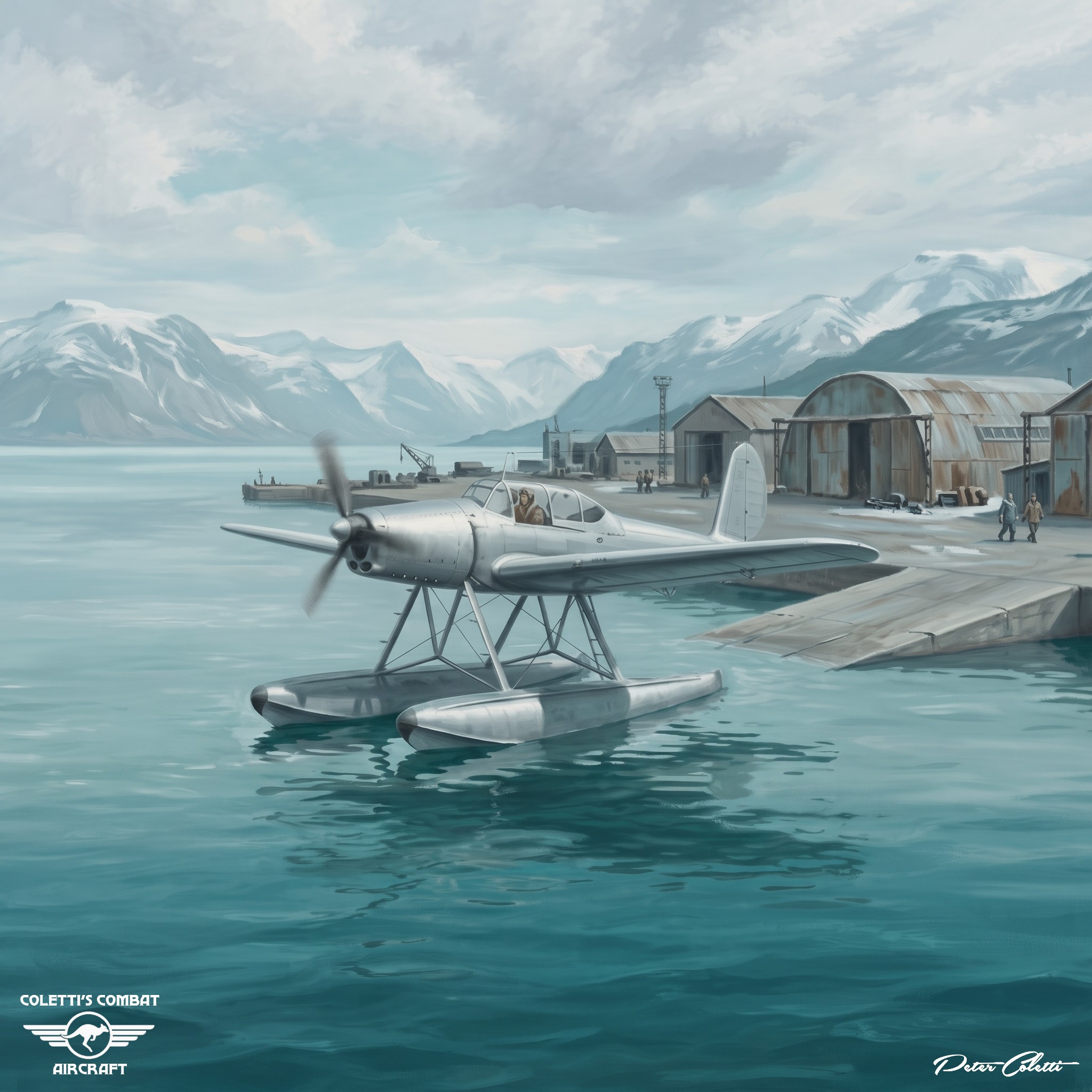
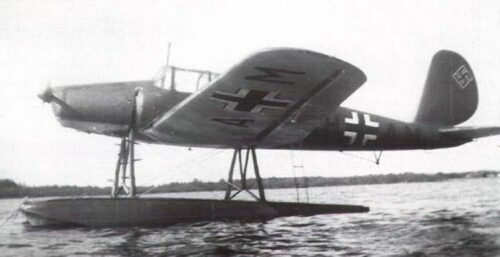
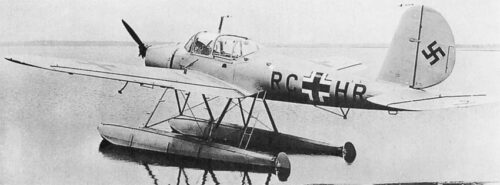
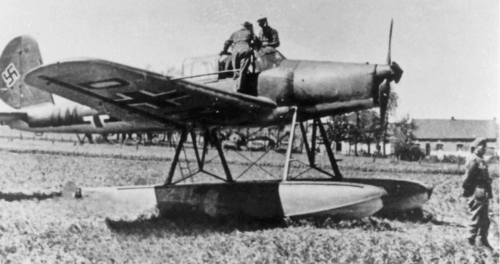
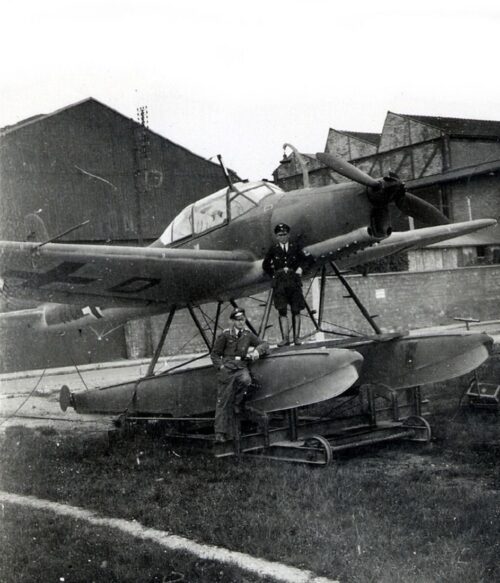
The Arado Ar 199 was a German three‑seat training floatplane developed in 1938–1939 for the Luftwaffe.
It was intended for seaplane pilot training, navigator/radio-operator instruction, and catapult-launch training for naval aviation.
Although technically successful, it remained a prototype-only aircraft, with only a handful built.
Development
Designed by Arado Flugzeugwerke in 1938 as a low‑wing, twin‑float monoplane for maritime training duties.
Featured side‑by‑side seating for instructor and student, with a third seat for a navigator or radio operator.
Powered by a 450 hp Argus As 410C inverted V‑12 engine.
The first flight occurred in 1939.
Despite good performance, the aircraft never entered series production due to shifting Luftwaffe priorities.
Design Characteristics Key structural and operational features included the following:
All‑metal construction with a low wing.
Twin floats mounted on a complex strut framework.
Enclosed cockpit with excellent visibility for training.
Designed for catapult launch, making it suitable for naval reconnaissance training.
Performance (Ar 199V‑2 prototype)
Maximum speed: 260 km/h
Cruise speed: 212 km/h
Range: 740 km
Service ceiling: 6,500 m
Rate of climb: 4.5 m/s
Wingspan: 12.70 m
Length: 10.57 m
Empty weight: 1,675 kg
Crew: 3
These figures show it was a modest-performance trainer, not intended for combat roles.
Variants
Only prototype variants were built:
Ar 199V‑1 and Ar 199V‑2
The only two fully documented prototypes.
Both served in air-sea rescue (Seenotdienst) and training roles in northern Norway.
Total built
Some sources state 31 were built, though this likely includes incomplete airframes or planned units; most other sources claim only 2–5 prototypes were completed.
Operational History
Although designed as a trainer, the Ar 199 saw limited operational use:
Training Role
Used for seaplane pilot training, navigator training, and radio‑operator instruction.
Air-Sea Rescue (Seenotdienst)
Two prototypes (D‑IFRB and D‑ISBC) were deployed in northern Norway for air‑sea rescue missions.
Combat Encounter
On 14 August 1942, an Ar 199V‑2 (tactical code NH+AM) was shot down over a lake near Urd Lake and recovered by Soviet forces, who initially misidentified it due to its rarity.
Fate
The second known prototype was likely evacuated from Norway in 1944 with retreating German forces.
Assessment
The Arado Ar 199 was
Technically sound
Well-suited for maritime training
Hampered by changing Luftwaffe priorities, which favored land-based trainers and operational aircraft
As a result, it became a rare and obscure aircraft, remembered mainly for its role in Seenotdienst operations and its unusual appearance.