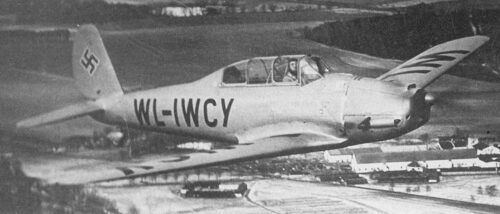
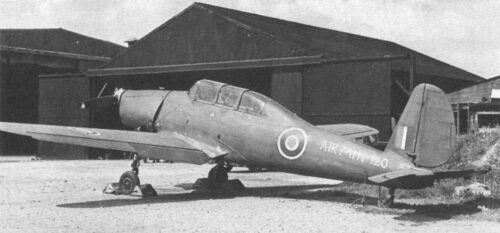
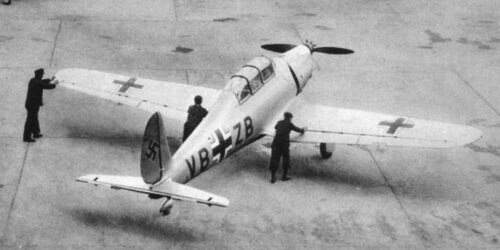
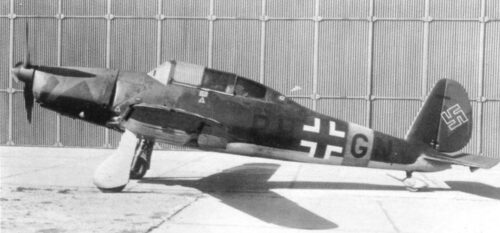
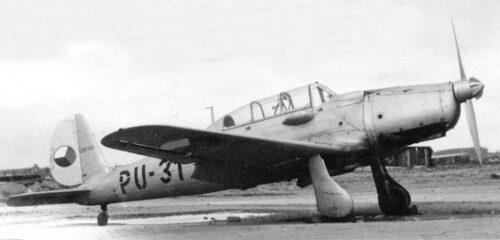
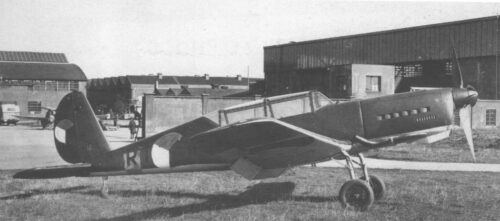
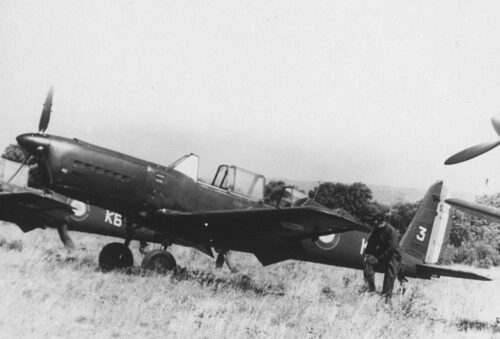
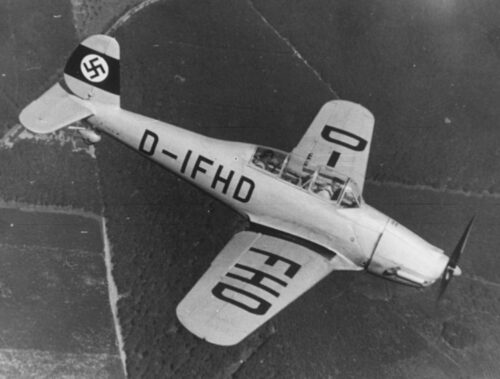
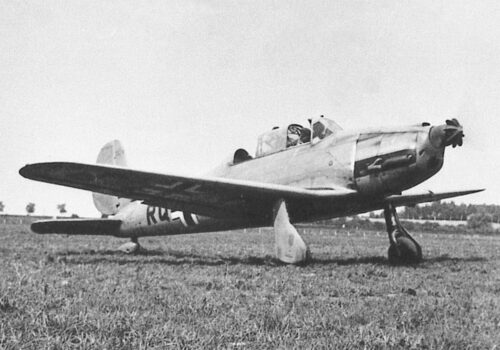
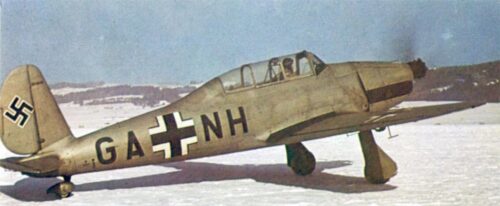
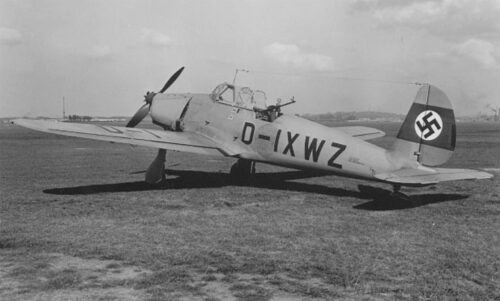
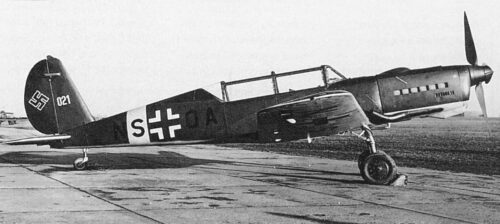
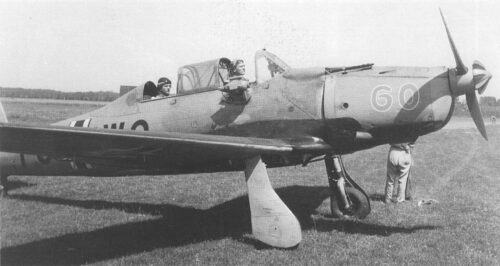
The Arado Ar 96 emerged in the mid‑1930s as Germany’s first truly modern, purpose‑built advanced trainer—an aircraft intended to bridge the gap between basic flight instruction and the high‑performance monoplane fighters entering Luftwaffe service.
Its creation reflected a decisive shift in German aviation thinking: biplane trainers could no longer prepare pilots for the speeds, handling, and systems of the new generation of combat aircraft.
The Ar 96 became the Luftwaffe’s standard advanced trainer throughout the Second World War, and its longevity, adaptability, and postwar production made it one of the most influential training aircraft of its era.
Origins and Development
The RLM Requirement
By 1935–36, the Reichsluftfahrtministerium (RLM) recognised that the Luftwaffe needed a modern monoplane trainer to replace outdated types such as the Focke‑Wulf Fw 55W.
Arado Flugzeugwerke, under chief designer Walter Blume, responded with a clean‑sheet design: a low‑wing, all‑metal monoplane with retractable landing gear and a fully enclosed cockpit.
The RLM’s specification demanded an aircraft capable of:
Advanced flying and aerobatics
Night and instrument training
Radio-operator instruction
Aerial reconnaissance training
Gunnery and even light bombing practice
These broad requirements shaped the Ar 96 into a versatile, rugged, and forgiving platform suitable for pilots transitioning to frontline fighters such as the Bf 109.
Prototype Evolution
The first prototype, Ar 96 V1, flew in late 1936–1937, powered by the Argus As 10C, a 240 hp inverted V‑8.
Early testing revealed several shortcomings, prompting significant redesign:
A new continuous wing spar replaced the original steel-tube bridge.
The landing gear track was widened for safer student landings.
Automatic leading-edge slats were added.
Canopy glazing was increased.
The rudder horn balance was removed.
Subsequent prototypes introduced the more powerful Argus As 410 inverted V‑12, delivering around 360–465 hp depending on the version.
This engine transformed the aircraft’s performance and became standard on the main production series.
Design and Technical Characteristics
Airframe and Construction
The Ar 96 was built around a semi‑monocoque fuselage of light alloy, with a low‑mounted cantilever wing and hydraulically actuated landing gear. Its design emphasised:
Stability and predictability for inexperienced pilots
Aerodynamic balance on all control surfaces
Automatic flap deployment if the pilot forgot to lower them
Manual backup systems for hydraulics
These features made the aircraft notably safe and forgiving—qualities repeatedly praised by Luftwaffe instructors.
Cockpit and Training Systems
The tandem cockpit was fully enclosed, with excellent visibility after the seating was raised in later prototypes.
Dual controls were standard.
Depending on the variant, the aircraft could be equipped with the following:
Blind‑flying instruments
Radio navigation equipment
Camera mounts for reconnaissance training
A fixed forward-firing MG 17 or a rear flexible gun for gunnery instruction
Powerplant
The principal production engine, the Argus As 410A‑1, was a compact, air‑cooled inverted V‑12 producing 465 hp.
It drove a two‑blade variable‑pitch metal propeller.
Performance (Ar 96B‑2)
Max speed: ~330 km/h
Cruise: ~295 km/h
Range: ~990 km
Service ceiling: ~7,100 m
Rate of climb: ~5 m/s
Crew: 2
These figures placed the Ar 96 squarely between basic trainers and frontline fighters—ideal for advanced instruction.
Production and Industrial Context
German Production
Early production of the Ar 96A began in 1939, but shortages of As 410 engines forced the first batch to use the weaker As 10.
The definitive Ar 96B series entered mass production in 1940, featuring the As 410 engine and a slightly lengthened fuselage to accommodate it.
Production was shared among:
Arado (initial batches)
AGO Flugzeugwerke (major wartime producer)
Avia (Czechoslovakia)
Letov (Czechoslovakia)
Czech factories ultimately produced the majority of all Ar 96 airframes.
Material Shortages and the Ar 396
By 1943, Germany’s worsening strategic situation forced Arado to redesign the aircraft to use non‑strategic materials, especially wood.
The resulting Ar 396 was simplified and less refined aerodynamically but easier to build.
Production was assigned to:
SIPA (France)
Avia and Letov (Czechoslovakia)
The French continued building the type postwar as the SIPA S.10/S.11/S.12.
SIPA S.11
Operational History
Luftwaffe Service
The Ar 96 entered Luftwaffe training schools in late 1939 and rapidly became the backbone of advanced pilot instruction.
It served in:
Jagdschulen (fighter schools)
Blind‑flying and night‑flying schools
Officer training units
Conversion units preparing pilots for Bf 109s and Fw 190s
Its reputation for ruggedness, reliability, and modern handling made it indispensable.
Combat‑Adjacent Use
Although not a combat aircraft, the Ar 96 occasionally appeared in frontline situations.
The most famous episode occurred on 28 April 1945, when test pilot Hanna Reitsch evacuated Generalfeldmarschall Robert Ritter von Greim from Berlin in an Ar 96 under Soviet fire.
Axis Operators
Several German allies used the Ar 96, including:
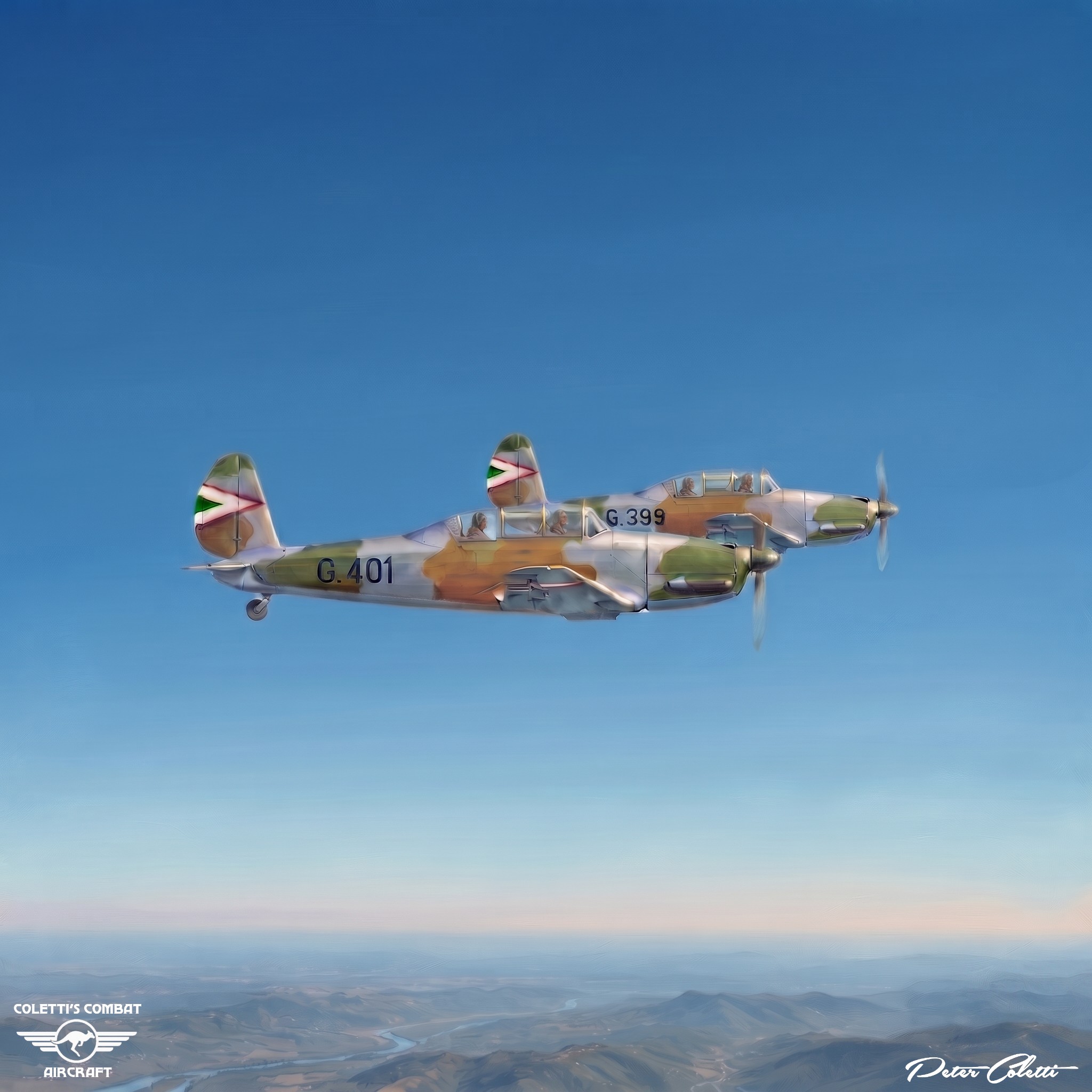
Hungary (65 Ar 96A and 45 Ar 96B)
Slovakia
Bulgaria
Hungary even attempted limited licensed production.
Postwar Service
After 1945, the design enjoyed a second life:
Czechoslovakia built and operated the Avia C‑2B
France produced the SIPA S.10/S.11/S.12 series until 1958.
The S.11 and S.121 saw action in the Algerian War, armed with guns, rockets, and light bombs.
Variants
Ar 96A Series
AR 96A‑0 / A‑1 – Initial production with an As 10 engine; used for basic advanced training.
Ar 96B Series (Main Production)
B‑1 – Unarmed trainer
B‑2 – Gunnery trainer with MG 17 or camera gun
B‑3 – Minor structural changes
B-5 – Equipped with FuG 16ZY VHF radio
B‑6/B‑7 – Tested and operational versions with underwing bomb racks for attack pilot training
Ar 96C
Pre-series ground-attack and bomber-trainer variant with As 410C engine and a glazed floor panel
Ar 296 Proposed high‑power development with the As 411 engine; abandoned in favour of the wood‑built Ar 396
Ar 396 / SIPA S‑Series
Ar 396A‑1 – Single‑seat gunnery trainer
Ar 396A‑2 – Unarmed instrument trainer
SIPA S.10 – French production of Ar 396
SIPA S.11 – Armed version with Renault 12S engine
SIPA S.12 / S.121 – All‑metal French developments
Assessment and Legacy
The Arado Ar 96 was not glamorous, but it was indispensable.
It trained thousands of Luftwaffe pilots, provided a safe and modern stepping stone to high‑performance fighters, and proved adaptable enough to survive the collapse of the Third Reich and continue in production for more than a decade afterwards.
Its combination of:
forgiving handling
robust construction
modern systems
and multi‑role training capability
made it one of the most successful advanced trainers of the 1930s–1950s.
The aircraft’s postwar service in Czechoslovakia and France underscores the soundness of its design and its importance in European aviation history.