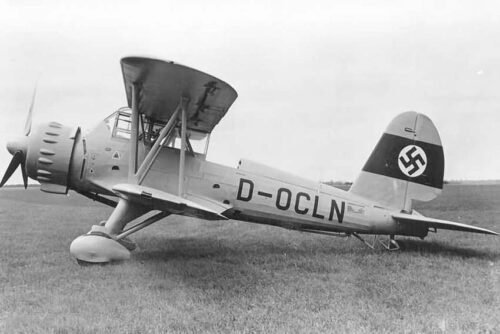
The Arado Ar 95 emerged from a mid‑1930s Reichsluftfahrtministerium (RLM) requirement to replace the Heinkel He 60 as the Kriegsmarine’s standard ship‑borne reconnaissance floatplane.
By early 1935, the He 60 was considered outdated, prompting the RLM to solicit a successor design.
Arado’s design team, led by chief engineer Walter Blume, proposed a modern, compact, all‑metal biplane capable of performing multiple naval roles—coastal patrol, reconnaissance, artillery spotting, target towing, and even torpedo or light bombing attacks.
Although the competing Heinkel He 114 was ultimately selected, the RLM encouraged Arado to continue development, partly because the aircraft showed promise for export markets and for potential adaptation to other naval roles, including carrier operations on the projected Graf Zeppelin-class carriers.
Prototype Phase
The first prototype, powered by a BMW 132 radial engine, flew on 3 December 1936.
A second prototype used a Junkers Jumo 210 liquid‑cooled engine, and both were evaluated against the Focke‑Wulf Fw 62.
The BMW‑powered version proved superior and was selected for further development, including operational trials with the Legion Condor in Spain, where six aircraft were dispatched and saw combat during the Spanish Civil War.
Subsequent prototypes refined the design:
The third prototype introduced a three‑blade variable‑pitch propeller and expanded the crew to three.
The fourth prototype tested a landplane configuration with fixed landing gear, though the RLM declined to adopt it due to performance concerns.
Despite not being selected as the He 60’s replacement, the Ar 95 remained in limited production for export and secondary roles.
Airframe and Technical Design
The AR 95 was conceived as a rugged, seaworthy aircraft optimised for maritime operations.
Its structure reflected Arado’s experience with metal naval aircraft.
Fuselage and Structure
The fuselage employed monocoque construction using duralumin, providing strength and corrosion resistance in marine environments.
Continuous wing spars passed through the fuselage, enhancing rigidity and simplifying maintenance.
Two equipment bays were located ahead of the pilot, accessible via external hatches, while the observer’s compartment extended vertically through the fuselage and could accommodate two personnel if needed.
Fuel tanks were positioned beneath the cockpit area.
Wings and Control Surfaces
The biplane wings were all-metal with fabric covering on the underside.
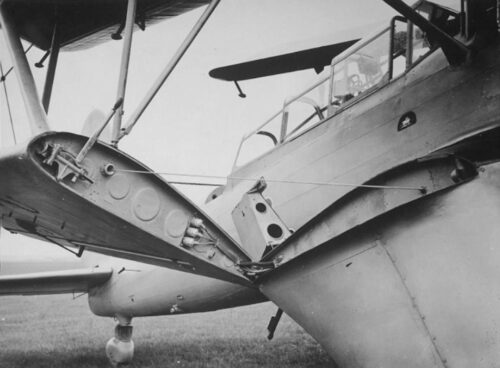
They were foldable, a critical feature for shipboard storage and catapult operations.
All control surfaces were counterbalanced; the horizontal stabiliser was adjustable in flight, while the ailerons and vertical stabiliser were ground‑adjustable.
Landing Gear / Floats
Two primary configurations existed:
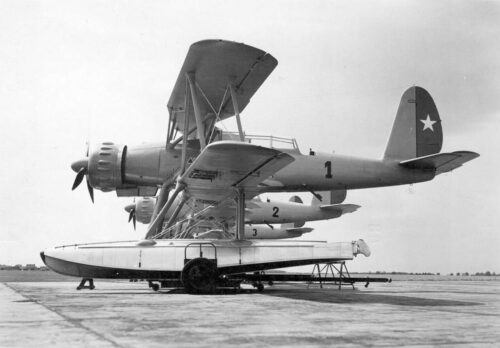
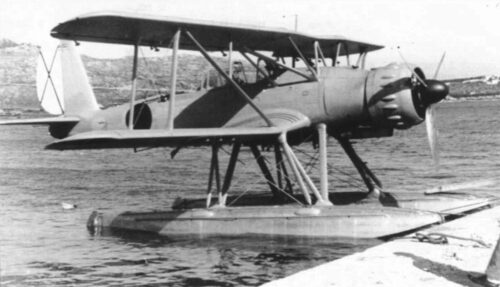
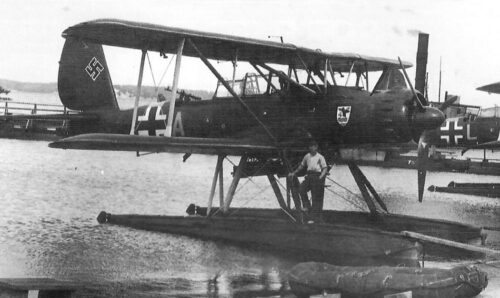
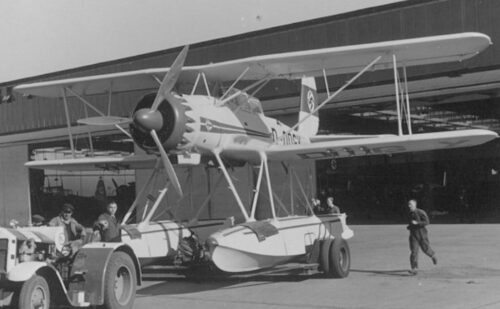
AR 95W — twin-float seaplane version for naval use.
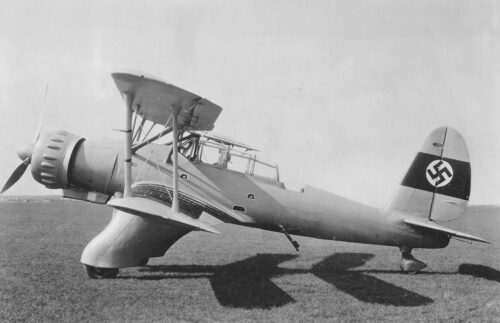
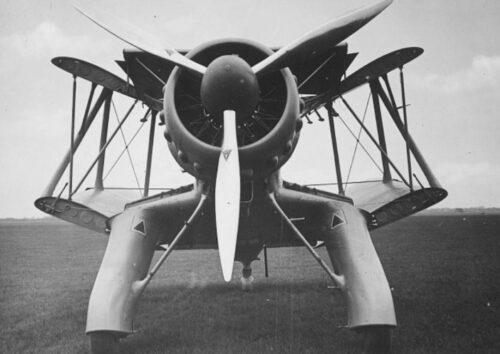
The Ar 95L — a landplane version with a fixed, spatted undercarriage, which also housed auxiliary fuel tanks in the wheel spats.
Powerplant
Production aircraft used the BMW 132De, a nine‑cylinder air‑cooled radial engine producing 656 kW (880 hp), giving the aircraft respectable performance for a late‑1930s biplane.
Performance and Capabilities
The Ar 95A‑1’s performance reflected its role as a multi‑purpose naval workhorse:
Maximum speed: 310 km/h at 3,000 m
Cruise speed: 255 km/h
Range: 1,100 km
Service ceiling: 7,300 m
Rate of climb: 7.5 m/s
These figures placed it roughly on par with other late‑biplane‑era reconnaissance floatplanes, though it was soon outclassed by monoplane designs.
Armament
The standard armament consisted of:
1 × fixed forward-firing 7.92 mm MG 17
1 × flexible rear 7.92 mm MG 15
Ordnance:
1 × 800 kg torpedo,
or
1 × 500 kg bomb on a centreline rack
This made the Ar 95 unusually heavily armed for a reconnaissance biplane, enabling it to perform limited strike missions.
Variants
Ar 95W (Floatplane) The primary production version, intended for naval reconnaissance and patrol duties.
Most aircraft built were of this type.
Ar 95L (Landplane)
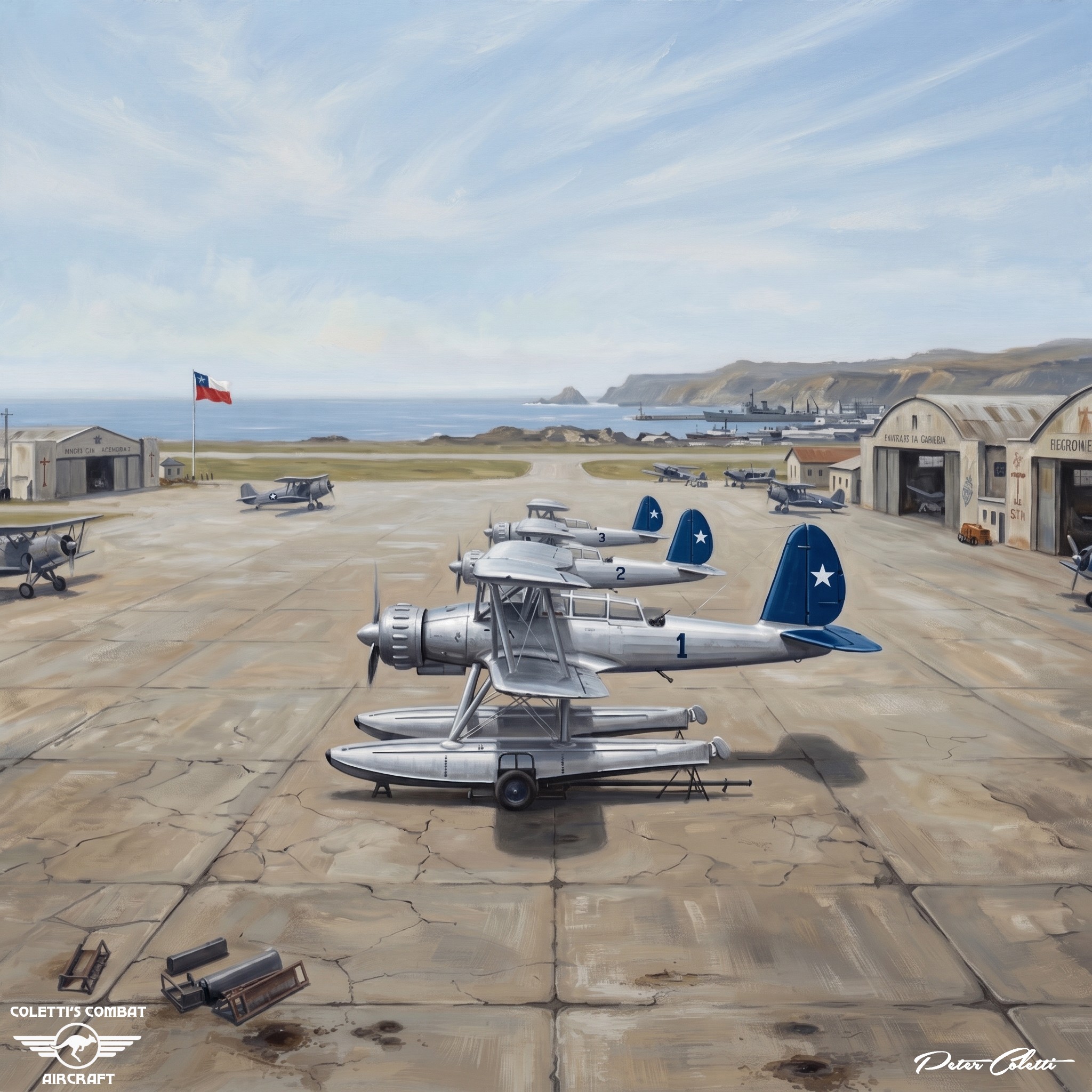
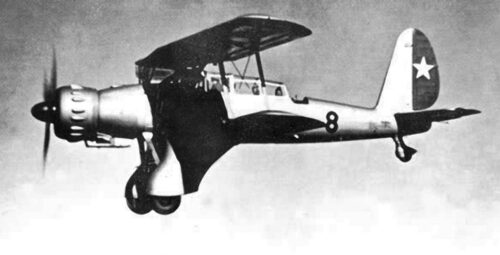
A fixed‑gear landplane variant aimed at export customers. Chile ordered six examples, delivered before WWII began.
Ar 195 (Derived Torpedo Bomber)
A heavily modified derivative intended for carrier operations aboard the Graf Zeppelin.
Although related, it was a distinct design and did not enter mass production.
Operational History
Spanish Civil War
Six early Ar 95s were deployed with the Legion Condor, where they flew reconnaissance and patrol missions.
This represented the aircraft’s only significant combat use before WWII.
Export Service
Chile received six Ar 95Ls, which served reliably and remained in use into the 1940s.
Turkey ordered floatplane versions, but none were delivered due to the outbreak of WWII; these aircraft were seized by Germany instead.
German Service in WWII
Although never adopted as a frontline type, the requisitioned Turkish aircraft—designated Ar 95A‑1—were used by SAGr 125, 126, and 127 for the following:
Coastal patrol
Training
Reconnaissance around the Baltic Sea, including Latvia, Estonia, and the Gulf of Finland
Despite their small numbers, Ar 95s remained operational until late 1944, a testament to their durability.
Post‑war Use
Spain continued to operate at least one Ar 95 until 1948, marking the final known service life of the type.
Assessment and Legacy
The Arado Ar 95 represents the last generation of German military biplane floatplanes, designed at the cusp of the transition to modern monoplane naval aircraft.
Although overshadowed by the He 114 and later the Arado Ar 196, the Ar 95 demonstrated:
Solid engineering
Strong maritime suitability
Versatility across reconnaissance, patrol, and light strike roles
Its limited production—42 aircraft built—reflects its niche role and the rapid evolution of naval aviation in the late 1930s.
Nevertheless, its operational longevity and export success give it a distinct place in interwar and early WWII aviation history.