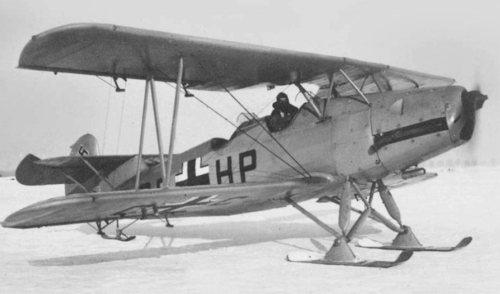
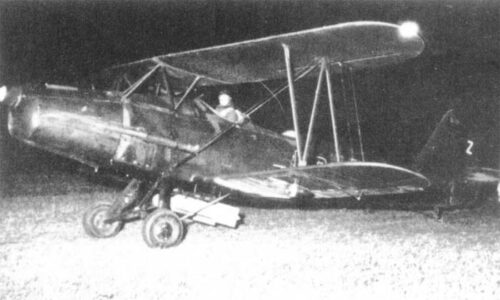
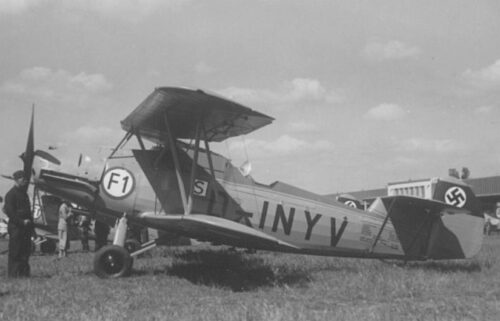
The Arado Ar 66 emerged during a pivotal moment in German aviation history.
In the early 1930s, the newly reorganised German Air Ministry (Reichsluftfahrtministerium, RLM) sought a modern, standardised primary and intermediate trainer to support the rapid expansion of the clandestine Luftwaffe.
Germany’s earlier training aircraft—mostly light biplanes of the 1920s—were becoming obsolete, lacking the performance and handling characteristics needed to prepare pilots for the increasingly powerful monoplane fighters and bombers envisioned for the future air arm.
Arado Flugzeugwerke, already experienced in producing trainers and reconnaissance aircraft, responded to the RLM’s requirement with a clean-sheet design.
Work began in 1931 under chief designer Walter Rethel.
The prototype, designated Ar 66 V1, flew in early 1932.
It demonstrated excellent low-speed handling, forgiving stall behaviour, and robust structural strength—qualities essential for novice pilot training.
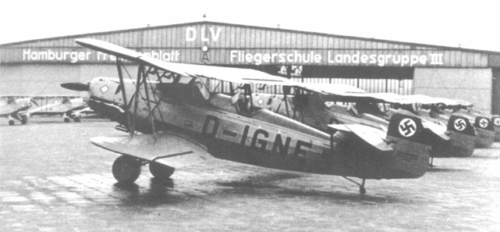
The RLM quickly approved the aircraft for mass production, and the Ar 66 became one of the Luftwaffe’s foundational training types during its formative years.
Production expanded through several sub‑variants, and the aircraft remained in service well into the Second World War.
Design Characteristics
General Configuration
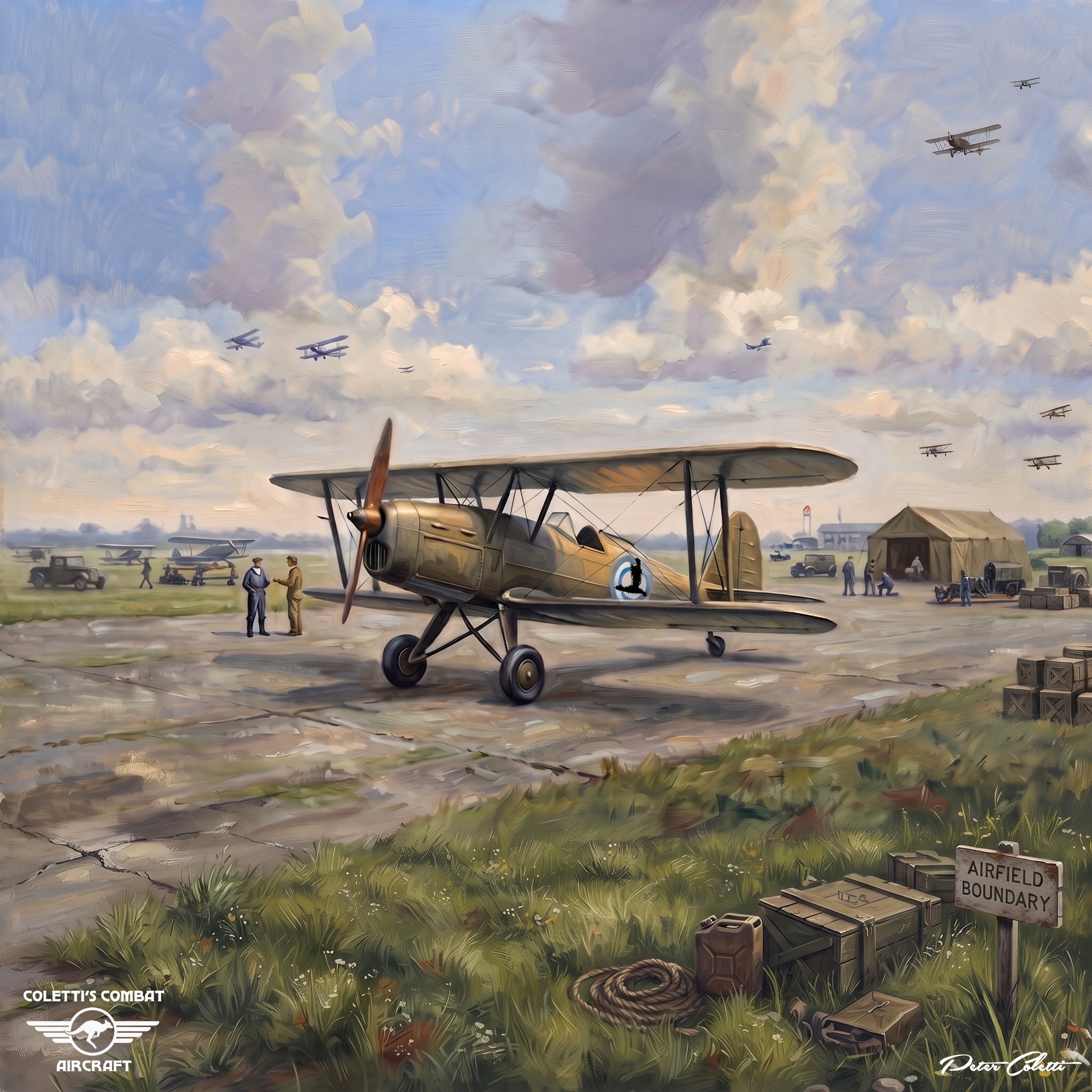
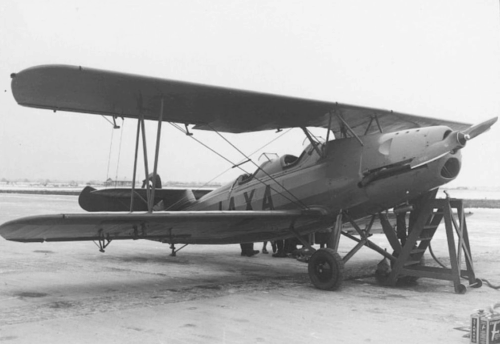
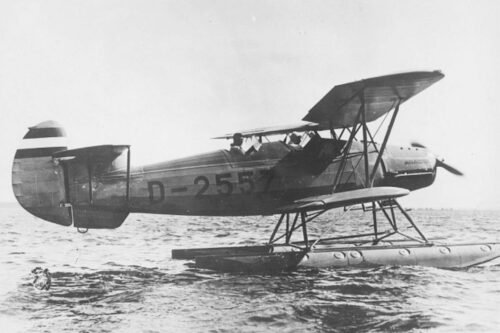
The Ar 66 was a two-seat, single-engine biplane of conventional layout.
Its design emphasised simplicity, ruggedness, and predictable flight behaviour.
Structure: Mixed construction.
The fuselage used a welded steel tube frame with fabric covering, while the wings were wooden with fabric skin.
Cockpits: Tandem open cockpits with dual controls, allowing instructors to override student inputs.
Landing Gear: Fixed, wide‑track undercarriage with a tail skid, designed to withstand rough field operations.
Aerodynamics and Handling
The biplane wing arrangement provided generous lift at low speeds, enabling short takeoff runs and gentle stall characteristics.
A large tailplane and broad rudder contributed to stable directional control, making the aircraft ideal for teaching basic manoeuvres, spins, and recovery techniques.
Powerplant The Ar 66 was powered by the Argus As 10, an air‑cooled, inverted V‑8 engine producing around 240 hp.
This engine was widely used in German light aircraft and trainers, valued for its reliability and ease of maintenance.
Performance
While not fast, the Ar 66 offered performance well suited to its training role:
Maximum speed: ~215 km/h (134 mph)
Cruise speed: ~180 km/h (112 mph)
Range: ~500 km (310 miles)
Service ceiling: ~3,500 m (11,500 ft)
These figures placed it squarely within the performance envelope expected of early‑1930s trainers.
Operational Use and Training Role
Pre‑War Service As the Luftwaffe expanded from 1933 onward, the Ar 66 became one of its most common elementary and intermediate trainers.
It was used to teach the following:
Basic flight control
Takeoff and landing
Aerobatics
Navigation
Night flying (in later variants)
The aircraft’s forgiving nature made it a favourite among instructors, and its rugged construction allowed it to survive the inevitable mishaps of student pilots.
Training Schools
The Ar 66 served in:
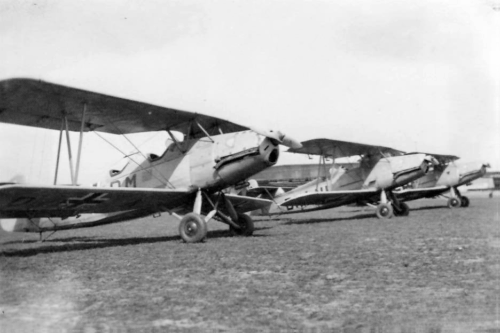
Fliegerausbildungsregimenter (pilot training regiments)
Blindflugschulen (instrument‑flying schools)
Ergänzungsgruppen (replacement training units)
By the late 1930s, more advanced trainers such as the Bücker Bü 131 and Arado Ar 96 began to supplement it, but the Ar 66 remained widely used due to its availability and low operating cost.
The Ar 66 in the Second World War
Although obsolete as a frontline aircraft by 1939, the Ar 66 continued to serve in large numbers as a trainer.
However, the demands of the Eastern Front created unexpected new roles.
Night Harassment Operations
From 1942 onward, several Luftwaffe units—particularly on the Eastern Front—formed Störkampfstaffeln and, later, Nachtschlachtgruppen, dedicated to low‑level night harassment missions.
These units used outdated or surplus aircraft, including the Ar 66, to do the following:
Attack frontline positions
Disrupt troop movements
Harass supply lines
Drop small bomb loads at night
The Ar 66’s slow speed and excellent low‑altitude handling made it surprisingly effective in this role.
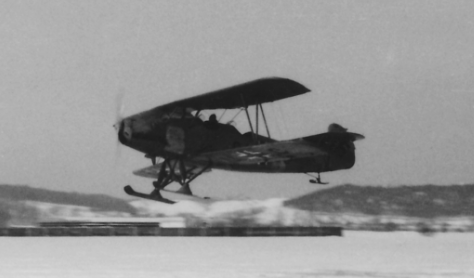
Flying at treetop height, often with engines throttled back to reduce noise, these aircraft were difficult for Soviet fighters to intercept.
Combat Modifications
For night attack duties, the Ar 66 could carry the following:
Up to 200 kg of small bombs on under-fuselage racks
Simple night-flying equipment
Occasionally, exhaust flame dampers
Despite its vulnerability, the aircraft’s low cost and availability ensured its continued use until late in the war.
Variants
Ar 66a (Prototype Series)
The initial prototypes were used to refine the design.
These aircraft established the basic configuration that would define all later variants.
Ar 66B
A pre‑production and early production trainer version.
Minor structural and equipment changes were introduced based on testing feedback.
Ar 66C
The principal production model and the most numerous variant.
It incorporated:
Improved instrumentation
Revised cockpit layout
Optional night‑flying equipment
Strengthened airframe for training stresses
The Ar 66C became the standard Luftwaffe elementary trainer through the mid‑1930s.
Ar 66D (Night Harassment Conversion)
A field‑modified or factory‑adapted version for night attack duties.
Features included:
Bomb racks
Flame dampers
Basic navigation lights
Sometimes additional cockpit shielding
This variant saw operational use on the Eastern Front.
Production and Legacy
Production of the Ar 66 ran from 1933 into the late 1930s, with several hundred aircraft built by Arado and subcontractors.
Although overshadowed by more advanced trainers later in the decade, the Ar 66 played a crucial role in preparing the Luftwaffe’s first generation of wartime pilots.
Its legacy rests on:
Its contribution to early Luftwaffe pilot training
Its adaptability to secondary combat roles
Its representation of early‑1930s German biplane design philosophy
While not as famous as frontline fighters or bombers, the Ar 66 was one of the quiet workhorses that underpinned the Luftwaffe’s early development.
Technical Summary
Type: Two‑seat primary/intermediate trainer; later night harassment aircraft